
Build faster with Web3 tools. Learn which API I can use to add onchain wallet data to your dApp, from transaction history to live token prices.
You're tracking the best memecoins, watching wallet movements, and analyzing trading patterns, only to suddenly hit a wall. You know the data is there, but how do you actually pull it into your application without building a massive indexing engine from scratch? What API can I use to add onchain wallet data? Whether you're creating a portfolio tracker, researching whale activity, or building tools to monitor token holdings across dozens of chains, accessing a reliable blockchain API is the foundation. This article walks you through the top solutions, like Moralis, Alchemy, and Covalent, that let you integrate wallet data quickly. By using these specialized endpoints, you can fetch transaction histories, token balances, and NFT holdings instantly, avoiding the headache of wrestling with raw blockchain nodes.
Getting started doesn't require deep technical expertise when you choose the right platform. Bullpen's buy Crypto solution simplifies the process by offering straightforward API access to onchain wallet information, making it easier for developers and analysts to retrieve the data they need. Instead of managing complex infrastructure or decoding blockchain responses manually, you get clean, structured data that powers your memecoin analysis, portfolio apps, or trading dashboards right away.
Summary
Pulling wallet data from a single blockchain is straightforward, but building systems that deliver reliable, real-time intelligence across multiple chains becomes a data engineering challenge involving incompatible networks, inconsistent standards, and processing demands that scale faster than most teams anticipate.
The median lifespan of a fraudulent token is just 5 seconds before identification, according to Chainalysis's 2025 Crypto Crime Mid-Year Update. When opportunities and risks move that fast, API latency transforms from a minor inconvenience into the difference between catching a breakout and watching it pass.
Onchain wallet data encompasses far more than token balances. It includes transaction history, DeFi positions locked in smart contracts, NFT holdings, cross-chain movements through bridges, and behavioral patterns that reveal how an address participates in the broader Crypto economy.
Most APIs restrict request volume to protect infrastructure, and high-frequency monitoring of active wallets can quickly hit those limits. Reliability issues compound the problem, as outages or delayed indexing produce gaps precisely when markets move fastest.
The majority of retail traders and many professionals rely on third-party platforms rather than maintaining their own data infrastructure. According to the Firecrawl Blog's Best Web Search APIs for AI Applications in 2026, for projects with fewer than 1,000 searches per month, free tiers are sufficient, and the same principle applies to onchain data.
Bullpen's buy Crypto addresses this by connecting onchain insights directly to execution, tracking whale wallets, surfacing breakout opportunities before they trend, and integrating trading across Bitcoin, Solana memecoins, Hyperliquid perpetuals, and prediction markets from a single interface.
Table of Content
Why Adding Onchain Wallet Data is Harder Than it Sounds

Pulling a wallet balance from one blockchain is simple. Building a system that turns multi-chain activity into reliable, real-time intelligence is a problem entirely different from the one it solves.
What starts as a straightforward API call quickly becomes a data engineering puzzle involving:
Incompatible networks
Inconsistent standards
Processing demands that scale faster than most teams anticipate
The Fragmentation Problem
Crypto assets exist across dozens of independent blockchains. Bitcoin, Ethereum, Solana, Polygon, Arbitrum, each with its own:
Architecture
Transaction model
Data format
Even within a single ecosystem, tokens follow different standards. A system designed for Ethereum ERC-20 tokens won't automatically handle:
NFTs
DeFi positions
Wrapped assets
Building a complete view of a single wallet involves gathering data from disparate sources, normalizing it, and reconciling discrepancies without introducing errors or delays.
Advanced Heuristics for Pattern Recognition
The challenge multiplies when you consider that meaningful trading intelligence requires tracking not just one wallet but patterns across hundreds or thousands of wallets. Whale movements, early accumulation signals, coordinated buying behavior.
These insights demand cross-chain correlation at scale, not isolated balance checks.
Real-Time Indexing Under Pressure
Blockchains produce new blocks continuously. Tracking activity as it happens, especially for high-frequency wallets or during volatile market conditions, requires systems that ingest and process this stream without falling behind.
According to the Chainalysis 2025 Crypto Crime Mid-Year Update, the median lifespan of a fraudulent token is just 5 seconds before it's identified and flagged. When opportunities and risks move that fast, latency isn't a minor inconvenience. It's the difference between catching a breakout and watching it happen in your rearview mirror.
The Reality of Maintaining Low-Latency Infrastructure
Running your own infrastructure to achieve this speed means:
Storage
Monitoring across multiple chains
Relying on third-party services:
Introduces rate limits
Dependency risks
The kind of delays that turn real-time data into stale news
Teams often report that what looked like a simple integration evolved into managing a complex pipeline before it became genuinely useful.
Historical Data is Messy
Transactions:
Span years
Chain migrations
Token contract upgrades
Rebrands
Some assets disappear entirely.
Others move to new addresses, leaving incomplete or ambiguous records. Token metadata, such as names, decimals, symbols, and prices, isn't standardized or always reliable. Calculating accurate portfolio values over time requires reconciling this mess, not just querying an endpoint.
Address Attribution and Entity Resolution
The real difficulty surfaces when you need to understand behavior, not just balances.
Two wallets holding identical tokens can represent completely different strategies:
Long-term accumulation
Active day trading
Liquidity provision
Collateral for leveraged positions
Meaningful insights come from:
Patterns
Inflows and outflows
Interaction timing
Relationships with other addresses
That requires interpretation layers built on top of raw data, not just access to the raw data.
From Raw Data to Trading Edge
Platforms like Bullpen address this by transforming wallet data into social discovery features that surface actionable intelligence.
Instead of developers stitching together:
Multiple providers and building interpretation layers from scratch
The system tracks whale wallets
Indexes top trader positions
Surfaces breakout opportunities before they trend
The infrastructure handles multi-chain normalization, real-time indexing, and behavioral analysis, enabling traders to achieve performance transparency without the engineering overhead.
The Hidden Hurdle of Data Normalization
What begins as “just show wallet data” often evolves into substantial technical and operational friction. Developers must handle inconsistencies, maintain infrastructure across chains, and build the logic that turns raw blockchain data into actionable information.
What Onchain Wallet Data Actually Includes
Onchain wallet data encompasses far more than a token balance.
It includes:
Transaction history
DeFi positions
NFT holdings
Cross-chain movements
Behavioral patterns that reveal how an address participates in the broader Crypto economy.
A single wallet might hold assets, provide liquidity, stake tokens, trade derivatives, and bridge funds across networks, all leaving permanent records that require reconstruction and interpretation.
Token Holdings and Transfers
Account-based chains like Ethereum store token balances inside smart contracts, not within wallet addresses themselves. To determine what someone holds, you query the contract state for each token standard.
ERC-20 tokens follow one pattern
ERC-721 NFTs, another, wrapped assets, yet another
Each requires separate calls and normalization logic.
Transfer events show accumulation and distribution behavior. When large amounts move toward centralized exchanges, traders interpret it as potential selling pressure. When tokens flow from exchanges to private wallets, it signals accumulation. These patterns matter more than static balances because they reveal intent and timing.
Transaction History
Every onchain action generates a permanent record:
Swaps
Approvals
Contract interactions
Failed transactions
Frequency and timing distinguish passive holders from active participants. A wallet executing dozens of trades daily behaves differently from one making quarterly transfers, even if both hold similar assets.
The Computational Architecture of Transaction Models
Bitcoin's UTXO model treats transactions fundamentally differently from Ethereum's account system.
On Bitcoin, you spend entire outputs and receive change back.
On Ethereum, you adjust account balances directly.
Cross-chain analysis requires handling both paradigms without introducing errors or misinterpreting activity.
NFT Positions
Non-fungible tokens represent unique items, tracked by standards such as ERC-721 and ERC-1155. A wallet might hold digital art worth thousands while appearing to have minimal fungible token balances.
During cycles dominated by collectibles, NFT holdings drive wallet behavior more than token portfolios. Ignoring them creates an incomplete picture.
DeFi Positions (Staking, Liquidity, Lending)
Assets deployed in protocols don't sit idle in wallets. They're locked in smart contracts, earning yield, providing liquidity, or serving as collateral.
A wallet showing zero balance might control millions in:
Staked ETH
Liquidity pool tokens
Lending positions
Understanding true exposure requires querying protocol-specific contracts and decoding position data that isn't standardized across platforms.
Distinguishing Liquid Capital From Staked Positions
According to Chainalysis, the median lifespan of a fraudulent token is just 5 seconds before it is identified. When opportunities move that fast, knowing whether a wallet's assets are liquid or locked in DeFi protocols becomes critical. Traders who mistake deployed capital for available capital miss the real risk profile.
Cross-Chain Movements
Bridges lock assets on one blockchain while minting equivalents on another.
Tracking a wallet's complete activity means following funds as they move between:
Ethereum
Solana
Polygon
Arbitrum and other networks
Each chain operates independently, so reconstructing cross-chain behavior requires correlating events across multiple data sources with different timestamps and finality guarantees.
Wallet Labels and Behavioral Classification
Raw addresses are anonymous strings.
Analytics platforms transform them into interpretable signals by labeling known entities:
Centralized exchanges
Institutional custodians
DeFi protocols
Whale wallets
Smart money addresses
Without labels, you see transactions between meaningless identifiers. With them, you understand that funds moved from a known whale to a major exchange during a price spike.
Decoding the Speed of Accumulation
Behavioral classification goes further. Some wallets consistently buy early and sell profitably. Others accumulate during downturns and hold through volatility. Identifying these patterns requires historical analysis, not just the current state. The same wallet holding identical assets today might represent disciplined accumulation or panic buying, and only transaction history reveals which.
Two wallets holding 10,000 of the same token tell completely different stories: one accumulated gradually over months, while the other bought everything in a single transaction yesterday. Context separates signal from noise.
The Ethics and Risks of Social Discovery and Copy Trading
Platforms like Bullpen address this by transforming raw wallet data into social discovery features that surface actionable intelligence.
Instead of manually tracking addresses across chains and interpreting transaction patterns, the system:
Identifies whale movements
Indexes top trader positions
Surfaces breakout opportunities before they trend
The infrastructure handles:
Labeling
Behavioral analysis
Multi-chain correlation
Traders get performance transparency without having to build interpretation layers from scratch.
Why Context Matters More Than Raw Data
A balance snapshot cannot reveal intent, risk, or strategy. Is that wallet preparing to sell, providing liquidity, holding as collateral, or accumulating for the long term? Only by combining holdings, flows, positions, and labels does the data become meaningful.
Onchain wallet data isn't about what a wallet owns. It's about what the wallet is doing, and more importantly, what it's likely to do next.
Related Reading
7 Popular APIs for Onchain Wallet Data
No single API provides a complete view of all wallet activity across the Crypto ecosystem.
Different providers specialize in different layers:
Raw node access
Indexed balances
DeFi positions
Enriched analytics
Choosing the right one depends on whether you prioritize coverage, speed, depth of insight, or control over infrastructure.
1. Moralis Wallet API
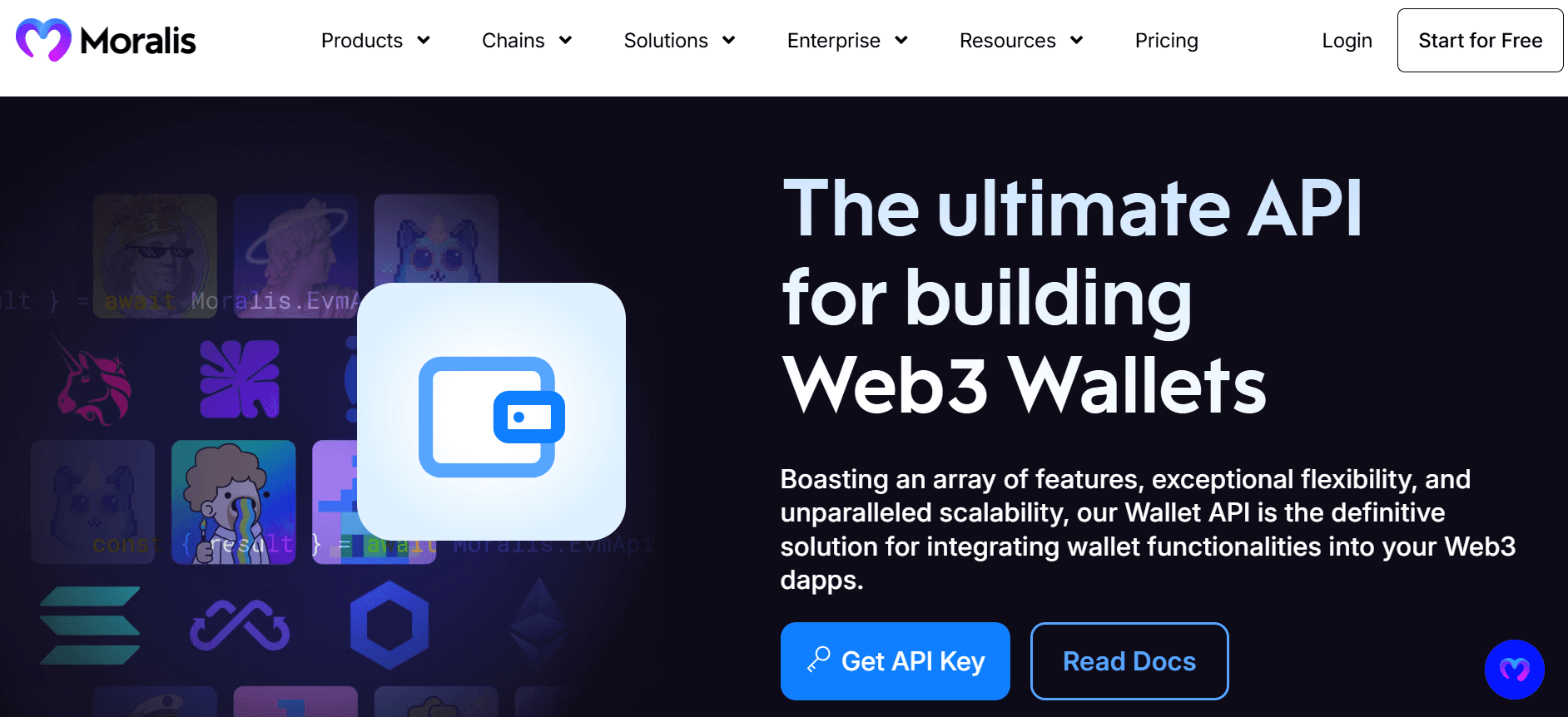
Best for unified balances, NFTs, and DeFi positions across EVM chains. Moralis covers 20+ EVM-compatible networks.
Moralis provides a high-level wallet view without requiring you to parse raw blockchain data yourself.
It aggregates:
Token balances
NFT holdings
Transaction history
Many DeFi positions into standardized responses
It makes it attractive for dashboards and portfolio trackers. The abstraction layer handles much of the normalization, though this convenience comes at the cost of limited customization when you need granular control over data interpretation.
2. Coinbase Prime Onchain
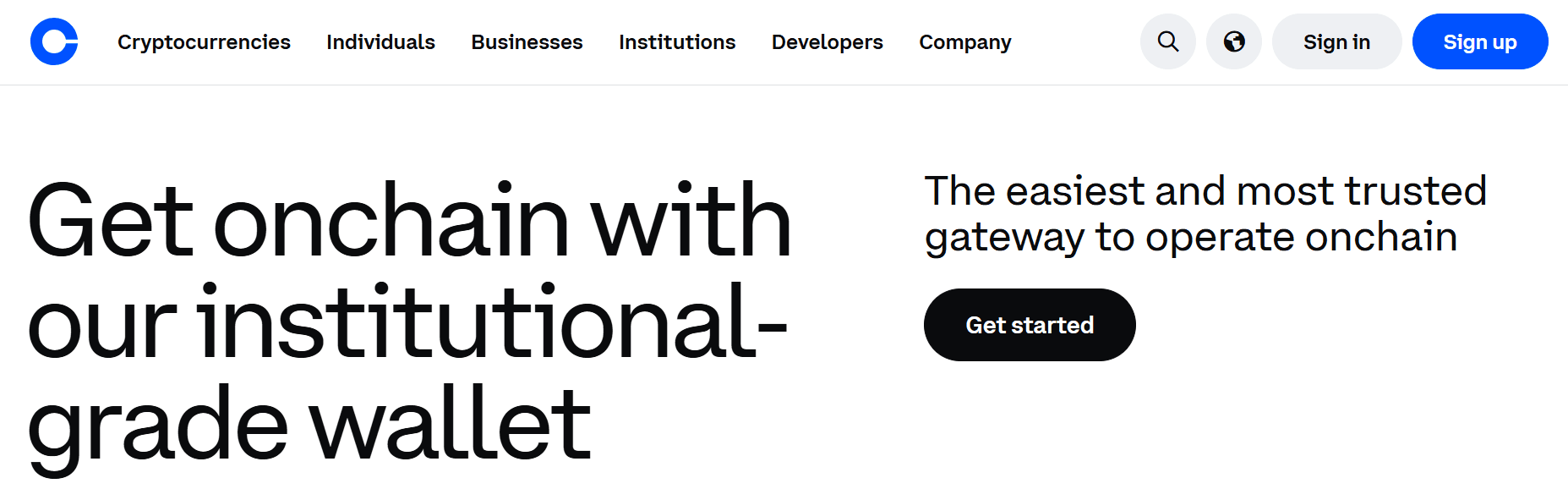
Best for institutional-grade balances and transaction data across:
Ethereum
Bitcoin
Solana
Coinbase Prime's onchain tools focus on reliability and compliance, reflecting institutional use cases such as:
Custody
Reporting
Large-scale monitoring
The data emphasizes accuracy and stability rather than experimental features. If you're building systems where regulatory oversight or audit trails matter more than bleeding-edge chain support, this provider prioritizes those requirements.
3. Alchemy Wallet API
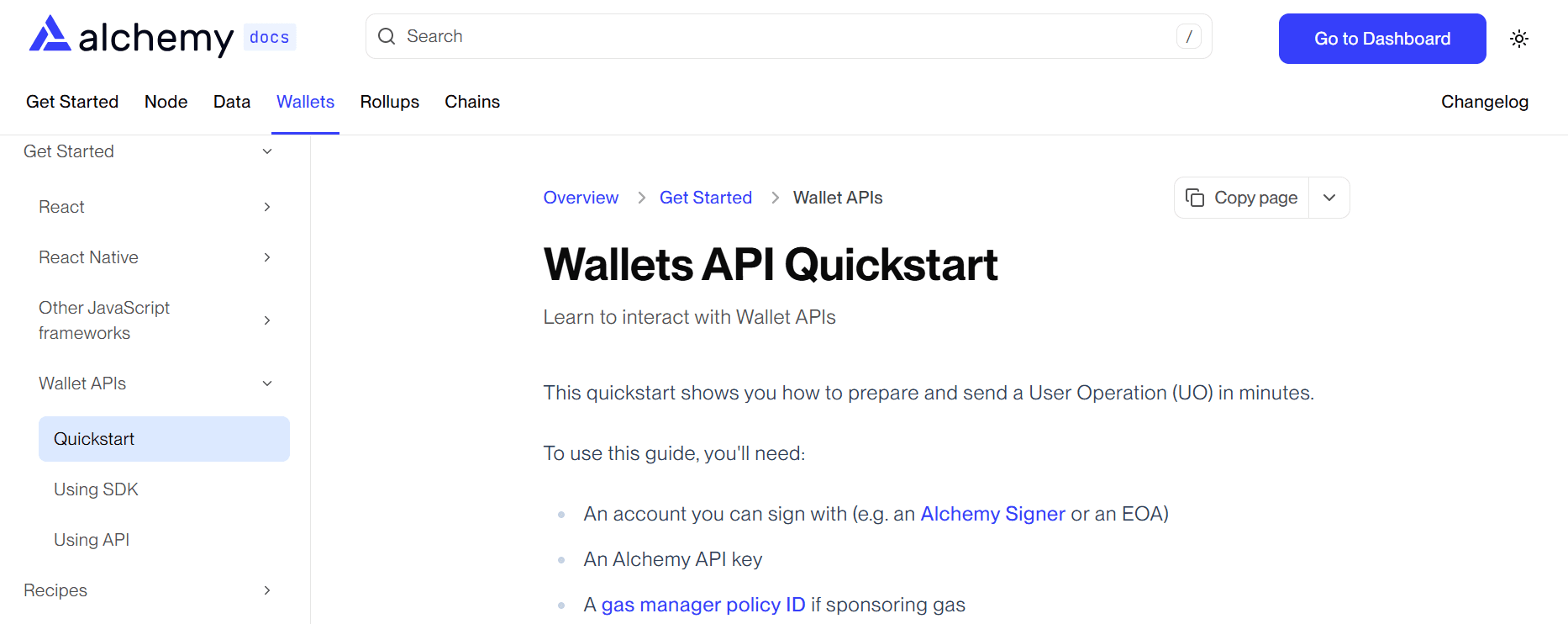
Best for deep transaction decoding and developer tooling across 10+ EVM-compatible networks.
Alchemy enhances raw blockchain data with:
Decoded transaction details
Token metadata
Historical insights
Its infrastructure is widely used by dApps that need reliable indexing without running their own nodes. The platform excels at making complex smart contract interactions readable, transforming cryptic transaction logs into structured events that developers can actually use. This depth matters when you're trying to understand not just that a transaction happened, but what it actually accomplished.
4. QuickNode Add-ons
Best for low-latency RPC access plus analytics extensions across multi-chain environments (both EVM and non-EVM).
QuickNode focuses on performance. It provides direct node access with optional add-ons for wallet insights, making it suitable for applications that need real-time data and granular control over requests. When milliseconds matter, and you can't tolerate the abstraction layers that other providers introduce, QuickNode's architecture prioritizes speed. The trade-off is that you handle more of the data processing yourself.
5. Covalent
Best for historical balances and cross-chain portfolio data.
Zerion reports coverage across 100+ blockchains, making Covalent one of the widest-reaching providers for multi-chain analytics.
Covalent specializes in deep historical indexing across a very wide set of networks. It is useful for analytics, research, and applications that need consistent multi-chain coverage rather than ultra-low latency. When you're building tools that analyze wallet behavior over months or years, or tracking assets across obscure chains that newer providers haven't prioritized, Covalent's breadth becomes the deciding factor.
6. Zapper and Zerion APIs
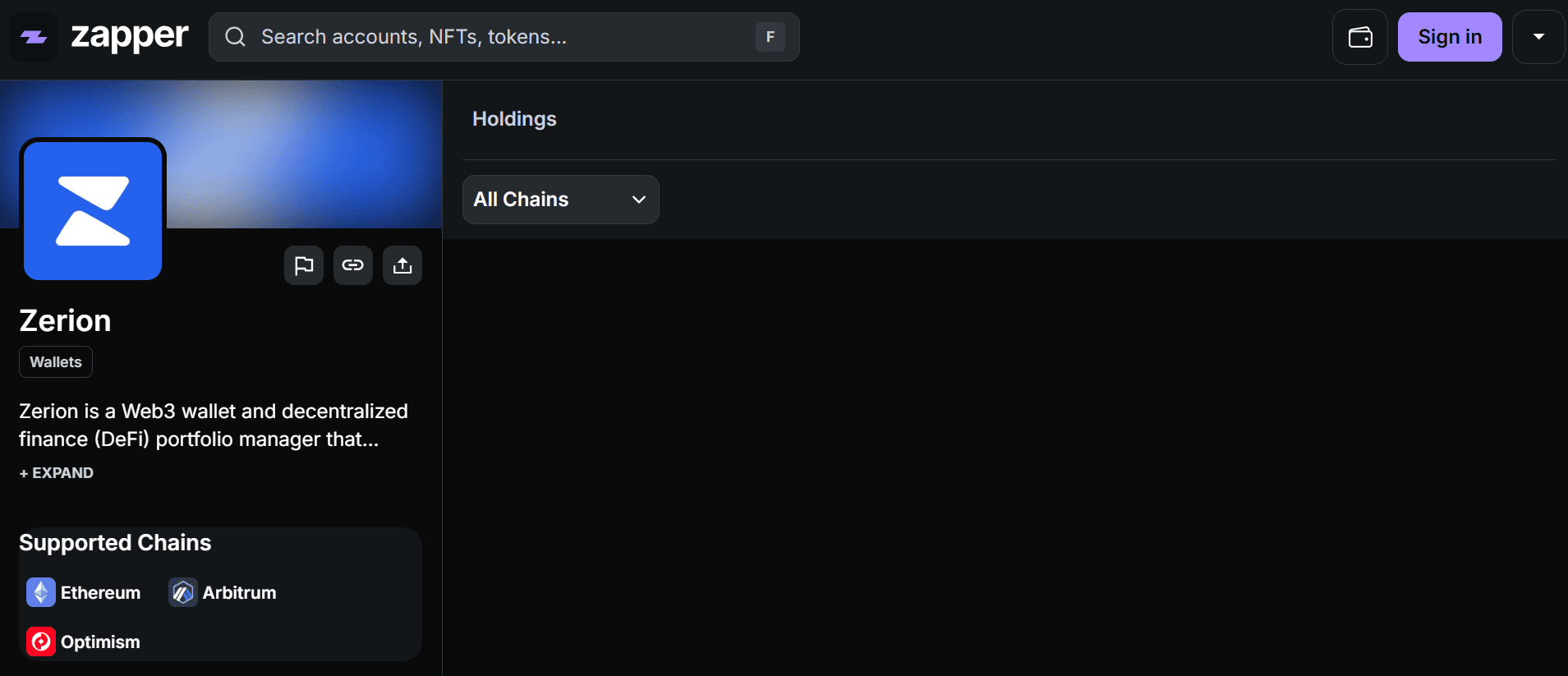
Best for DeFi portfolio aggregation and user-facing dashboards, primarily within EVM ecosystems.
These platforms focus on interpreting complex DeFi activity into human-readable portfolio views:
Liquidity pools
Staking
Lending
Yield strategies
They provide enriched insights rather than raw transaction streams. If your goal is to show users what their assets are actually doing instead of just listing token addresses and balances, these providers have already built the interpretation layers that would otherwise require significant engineering effort.
7. Understanding the Trade-Offs
No provider dominates across all dimensions. Selecting an API requires balancing competing priorities.
Coverage versus latency: broad multi-chain support often comes at the cost of slower updates. Real-time performance typically requires a narrower scope or direct node access.
Control versus convenience: raw RPC services give maximum flexibility but require significant engineering effort. Aggregated APIs reduce complexity but limit customization.
Raw data versus enriched insights: some APIs deliver low-level blockchain events, leaving interpretation to you. Others provide decoded transactions, labels, and portfolio views, which are easier to use but less transparent.
Redundancy and Failover Strategies for Mission-Critical Data
Most advanced applications combine multiple providers to achieve both breadth and depth. Teams often start with one API, discover its limitations under real-world conditions, then layer in a second or third to fill gaps.
The wallet that seemed simple to track via a single endpoint turns out to have DeFi positions on one chain, NFTs on another, and bridged assets moving across three more.
Social Signaling and the Behavioral Economics of Onchain Alpha
Platforms like Bullpen address this by transforming fragmented wallet data into social discovery features that surface actionable intelligence.
Instead of developers stitching together multiple providers and building interpretation layers from scratch, the system:
Tracks whale wallets
Indexes top trader positions
Surfaces breakout opportunities before they trend
The infrastructure handles:
Multi-chain normalization
Real-time indexing
Behavioral analysis
Traders get performance transparency without the engineering overhead of managing multiple API integrations. The core challenge is not simply accessing wallet data. It turns fragmented blockchain data into a coherent, actionable picture that reveals what wallets are actually doing and what they're likely to do next.
Related Reading
Limitations Developers and Traders Encounter

Access to onchain wallet APIs creates the impression that actionable insight is just a few requests away. In reality, raw blockchain data introduces new problems that many teams underestimate.
APIs can deliver information, but turning that information into reliable trading decisions requires substantial additional work.
Cross-Chain Data Must Be Normalized Manually
Each blockchain uses different:
Data structures
Transaction formats
Token standards
Time conventions
Even basic concepts such as balances, transfers, or fees are represented differently across networks.
Building a Unified Translation Layer
Developers must reconcile:
Different token decimal systems
Inconsistent metadata
Chain-specific event logs
Bridged or wrapped asset
Without normalization, comparisons across chains are misleading. A wallet's total exposure cannot be calculated accurately until these differences are resolved. Two wallets holding identical token quantities might show completely different values depending on whether you're reading from Ethereum's 18-decimal standard or Solana's 9-decimal convention. The API returns numbers, but those numbers mean nothing until you translate them into a common language.
Rate Limits and Reliability Constraints
Most APIs restrict request volume to protect infrastructure. High-frequency monitoring of active wallets can quickly hit those limits, leading to throttling or incomplete data. Reliability is another concern. Outages, degraded performance, or delayed indexing can produce gaps precisely when markets are moving fastest. For trading applications, stale data is often worse than no data at all.
According to the Chainalysis 2025 Crypto Crime Mid-Year Update, the median lifespan of a fraudulent token is just 5 seconds before identification. When opportunities and risks move that fast, an API that refreshes every 30 seconds might as well be showing you yesterday's news. The window between signal and action collapses faster than most infrastructure can handle.
Lack of Trading Context
Wallet activity does not explain intent.
A transfer could signal:
Accumulation
Liquidation
Collateral movement
Arbitrage
Internal rebalancing
APIs typically provide facts, not interpretations.
Without additional context, such as derivatives positioning, liquidity conditions, or market structure, it is difficult to determine whether an observed action is bullish, bearish, or neutral. You see 50,000 tokens leave a wallet. Was that a whale selling into weakness, a trader moving funds to stake elsewhere, or someone consolidating holdings across addresses? The transaction happened. The reason remains invisible.
No Built-In Alerts or Signals
Raw APIs return data only when queried. They do not inherently notify users when something important happens.
Building meaningful alerting requires:
Continuous monitoring infrastructure
Threshold definitions for significant activity
Filtering false positives
Prioritization logic
In fast markets, delays of even a minute can eliminate any potential edge. You cannot manually refresh an endpoint. You need systems that watch, interpret, and notify. That infrastructure doesn't come with the API. It's a separate engineering project.
Infrastructure and Dashboard Development Required
Data must be:
Stored
Processed
Visualized
Maintained
Teams often need to build databases for:
Historical tracking
Data pipelines for ingestion
Analytical models
User interfaces or dashboards
Monitoring and maintenance systems
This engineering overhead can dwarf the original goal of adding wallet data. What started as “let’s track a few whale wallets” became a multi-month project involving backend engineers, data scientists, and frontend developers. The API was supposed to save time. Instead, it became the starting point for building an entire analytics platform from scratch.
From Raw Logs to Verified Performance
Platforms like Bullpen address this by transforming fragmented wallet data into social discovery features that surface actionable intelligence.
Instead of developers stitching together multiple providers and building interpretation layers from scratch, the system tracks:
Whale wallets
Indexes top trader positions
Surfaces breakout opportunities before they trend
The infrastructure handles:
Multi-chain normalization
Real-time indexing
Behavioral analysis
Traders get performance transparency without the engineering overhead of managing multiple API integrations.
Execution Remains a Separate Problem
Even if insights are generated successfully, APIs do not enable action. Traders still need:
Access to exchanges
Liquidity routing
Risk controls
Order management systems
In volatile markets, the time required to switch from analysis to execution can determine profitability. Observing a signal without the ability to act quickly turns information into hindsight. You spot the whale accumulation pattern, understand what it means, and then spend three minutes:
Opening your exchange app
Navigating to the right market
Placing an order
By then, the price has moved. The insight was correct. The execution was too slow.
Data Does Not Equal Decisions
Onchain wallet APIs provide visibility, not outcomes.
Useful trading intelligence:
Emerges only after normalization
Contextual analysis
Infrastructure development
Integration with execution tools
For many users, the gap between data access and actionable decisions is far larger than expected.
When You Don’t Need an API at All
APIs are powerful tools for building products, but most traders and analysts are not trying to build software.
They are trying to:
Make better decisions
Detect opportunities early
Execute trades before the market moves
In many real-world situations, constructing a custom onchain data pipeline adds complexity without improving outcomes.
When Your Goal is to Track Smart Money, Not Raw Data
Many market participants want to know what influential wallets are doing:
Large holders
Funds
Historically successful traders
This behavior is already widely monitored without custom infrastructure.
Public dashboards from analytics firms routinely track large Bitcoin holders (“whales”) and exchange flows because these signals influence sentiment and liquidity. During major market events, spikes in exchange inflows are closely watched as potential indicators of selling pressure.
The Science of Signal Extraction: Latency vs. Fidelity
These insights come from aggregated analytics, not individual developers querying nodes. The interpretation has already been done. The signal has already been extracted. Building your own version doesn't make the signal arrive faster or become more accurate.
When You Need Early Signals, Not Complete Datasets
Crypto markets move quickly. A signal is valuable only if you can act on it before it becomes widely known.
Onchain analytics providers such as Glassnode and CryptoQuant publish standardized metrics precisely because interpreting raw transactions in real time is impractical for most users, such as:
Exchange balances
Active addresses
Long-term holder behavior
Building a custom pipeline to reconstruct these metrics would require significant engineering effort while delivering little advantage over existing tools. The critical difference is not who owns the data infrastructure. It's the one who acts first when the signal appears.
When Execution Speed Matters More Than Data Ownership
Observing activity without the ability to trade immediately can negate any informational edge. Markets often react within minutes to onchain movements that are widely visible.
Liquidation Cascades and the Cost of Click-Latency
Large liquidations in derivatives markets can trigger cascading price moves across spot and perpetual futures venues. Traders who must switch between analytics dashboards, exchanges, and wallets may miss the opportunity. The delay isn't caused by bad data. It's caused by fragmented workflows.
In these cases, integrated execution is more valuable than owning the raw data source. You don't need perfect visibility into every transaction if you can't do anything about it before the price adjusts.
When You Trade Across Multiple Markets
Modern Crypto trading rarely happens in one place.
Opportunities often span:
Spot markets (Bitcoin or altcoins)
Perpetual futures
Memecoins on alternative chains
Prediction markets
Each venue has different liquidity, interfaces, and settlement mechanisms. Building an API pipeline to monitor wallets does not solve the operational challenge of acting across these fragmented markets.
You still need:
Accounts on multiple platforms
Capital is distributed across exchanges
The mental overhead of managing positions in different systems
The wallet data tells you what's happening. It doesn't tell you:
Where to execute
How to route orders
Which venue has the best liquidity at that moment
When You are Not Building a Product
APIs are most useful when you are:
Developing an application
Research system
Infrastructure service
If your goal is simply to trade, allocating time to software engineering can be inefficient.
The Transition From Data Management to Decision Intelligence
According to the Firecrawl Blog's Best Web Search APIs for AI Applications in 2026, for projects with fewer than 1,000 searches per month, free tiers from Google Custom Search or the Bing Web Search API are sufficient. The same principle applies to onchain data: most traders don't need enterprise-scale infrastructure. They need answers.
The majority of retail traders and even many professionals rely on third-party platforms rather than maintaining their own data infrastructure. The opportunity cost of building and maintaining pipelines can exceed any informational advantage gained. You could spend three months building a system to track whale wallets, or you could spend three months actually trading.
Outcomes Matter More Than Data Access
Most users do not actually need blockchain data feeds.
They need answers:
What is happening in the market right now?
Who is positioning aggressively?
Where is liquidity moving?
How can I act before the move is over?
An integrated environment that combines data, interpretation, alerts, and execution often delivers more practical value than raw APIs alone. When the objective is trading rather than building software, the most efficient solution is usually the one that connects insight directly to action.
The Science of On-Chain Behavioral Analysis
Platforms like Bullpen address this by transforming wallet data into social discovery features that surface actionable intelligence.
Instead of developers stitching together multiple providers and building interpretation layers from scratch, the system:
Tracks whale wallets
Indexes top trader positions
Surfaces breakout opportunities before they trend
The infrastructure handles:
Multi-chain normalization
Real-time indexing
Behavioral analysis
Traders get performance transparency without the engineering overhead. More importantly, it integrates execution directly into the same interface where insights appear, eliminating the workflow fragmentation that turns good information into missed opportunities. You don't need to own the infrastructure if you can act on the insight faster than everyone else.
How Bullpen Lets You Act on Onchain Insights Without Building Anything

Most traders do not struggle to find data. They struggle to act on it in time. Onchain signals, wallet movements, and market flows only matter if you can translate them into positions before the opportunity disappears.
Bullpen is designed as the execution layer for those insights, removing the need to build:
Custom dashboards
Data pipelines
Trading infrastructure
Observable Performance Over Anonymous Wallets
Instead of tracking anonymous wallet addresses and guessing intent, Bullpen focuses on observable positioning by real traders. You can see what high-performing participants, including those active on X, are actually doing through verified PNLs, not self-reported screenshots or narratives. This shifts the emphasis from speculation to measurable performance.
A live leaderboard highlights who is consistently winning in current market conditions. Because it reflects real results rather than popularity, it helps filter signal from noise. A critical advantage in an ecosystem dominated by hype cycles.
Instant Alerts When Top Performers Move
Timing is addressed through instant alerts when top performers open positions. Rather than manually monitoring wallets or refreshing dashboards, traders receive actionable notifications, enabling faster responses to emerging opportunities.
The difference between seeing a whale accumulate and acting on it often comes down to seconds. Alerts compress that gap. You get the signal when it still matters, not after the price has already moved.
Unified Execution Across Market Segments
Execution happens within the same environment. Bullpen supports trading across multiple segments of the Crypto market from a single interface, such as:
Bitcoin
Solana memecoins
Hyperliquid perpetuals
Prediction markets
Intent-Centric Architecture and Cross-Chain Liquidity
This matters because capital often rotates between these areas, and switching platforms mid-move can cost valuable seconds or minutes.
Operational friction is further reduced by eliminating the need to juggle wallets, bridges, or separate exchange accounts. Funds remain accessible within one system, allowing traders to move between opportunities without complex transfers.
Streamlined Onboarding and Capital Deployment
Getting capital onto the platform is also streamlined. Users can fund accounts through options such as Apple Pay or bank transfer, removing the delays associated with traditional Crypto on-ramps. Leverage is available for traders who want amplified exposure during fast-moving conditions.
Most platforms make you choose between convenience and capability. Bullpen removes that trade-off. You get institutional-grade execution without the institutional-grade complexity.
Performance Transparency Without Infrastructure Overhead
The goal is not just convenience but speed. The ability to convert insight into action while the edge still exists.
Together, these features create a unified workflow:
Observe performance
Receive signals
Execute trades
Manage positions without leaving the platform
You don't need to build anything. You need to be faster than the person who spent three months building their own system while you were already trading.
Related Reading
Buy Crypto Today With Bullpen
The real advantage is turning observation into ownership before the window closes. If you want to stop building tools just to keep up with the market and start acting on real signals immediately, Bullpen gives you everything you need to trade smarter, faster, and in one place.
Intent-Based Execution and Cross-Chain Solver Networks
Buy Crypto with Bullpen today. New users earn a 500-point bonus when they deposit, and deposits of $1,000 or more include a free introductory call to help traders get oriented quickly.
The platform removes the friction between seeing what matters and taking action.
No dashboards to build
No APIs to manage
No delays between insight and execution
Last Updated:
March 23, 2026