
Compare the best DEXTools alternatives. Find out which tool offers the fastest price updates and most accurate rug pull alerts.
The Crypto trading space moves fast, and if you've been tracking the “best memecoins” or hunting for the next breakout token, you know that timing matters. DEXTools has been a go-to platform for many traders, but rising subscription costs, occasional downtime, and feature limitations have pushed traders to explore alternatives that deliver real-time data, chart analysis, and token tracking without breaking the bank. This article walks you through powerful DEXTools alternatives that can sharpen your trading edge, helping you spot opportunities faster and make informed decisions across decentralized exchanges.
Finding the right tools is only half the battle. Once you've identified a promising memecoin or emerging token, you need a seamless way to act on that information. That's where Bullpen's buy Crypto solution comes in, giving you a straightforward path to purchase tokens quickly without juggling multiple platforms or missing critical entry points. Whether you're comparing portfolio trackers, exploring wallet integrations, or seeking platforms with better analytics for faster Crypto trading, having a reliable buying mechanism ensures you can move from research to action without friction.
Summary
Traders lose more money from slow execution than bad analysis in fast-moving Crypto markets. When a memecoin moves 200% to 500% within the first hour of liquidity formation, the difference between immediate capital deployment and waiting for bridge confirmations often determines whether you capture gains or provide liquidity for an exit.
Over 60% of traders report dissatisfaction with DEXTools' pricing structure, but the real problem isn't the cost. The deeper issue is paying for analytics without integrated execution, which creates a mismatch between seeing opportunities and acting on them. During the May 2021 crash, Ethereum gas fees exceeded $300 for complex transactions while prices moved 30% in hours, effectively locking smaller traders out of repositioning capital while those with instant buying power responded immediately.
Capital fragmentation across chains and wallets reduces deployable funds at critical moments. Public blockchain data shows cross-chain bridges process tens of billions of dollars annually, indicating how frequently traders must relocate funds to chase opportunities. Each transfer introduces fees, waiting periods, and the risk of failure during network congestion.
Only 15% of companies extract meaningful value from their data investments, according to recent analysis, suggesting that access to information alone doesn't guarantee better outcomes. In Crypto markets saturated with high-quality free analytics, the true constraint isn't knowing what to trade but deploying capital quickly enough to capitalize on that knowledge.
Over 90% of DeFi traders rely on DEX screeners as of 2025, yet most still face execution friction that separates analysis from action. The $87B DeFi market is pushing traders toward all-in-one solutions precisely because tool fragmentation creates measurable drag on performance.
Transparent performance tracking helps separate skill from noise in retail trading environments where social platforms amplify dramatic wins but rarely show full histories or drawdowns.
This is where buy Crypto fits in: consolidating discovery, execution, and portfolio management into a single environment to eliminate the operational overhead that separates conviction from positioning.
Table of Contents
Why Traders are Looking for a DEXTools Alternative
DEXTools excels at surfacing new tokens and visualizing on-chain activity, but it stops exactly where traders need to move fastest: execution. You can spot:
A breakout setup
Track whale movements
Analyze liquidity depth
None of that converts into an actual position without leaving the platform, switching contexts, and introducing friction that often costs more than the edge you just identified. The breakdown happens in the gap between insight and action. According to research from The Defiant, the $87B DeFi market is pushing traders toward all-in-one solutions precisely because tool fragmentation creates measurable drag on performance. Charts show opportunity. They don't execute it.
Charts Without Execution Create Expensive Delays
DEXTools tells you what's happening. It doesn't help you act on it. After identifying a setup worth trading, you still need to:
Open a separate wallet interface
Confirm you have funds on the right chain
Navigate to a DEX
Manually input contract addresses
Adjust slippage tolerances
Hope the transaction confirms before momentum shifts
In slow-moving markets, this workflow is merely inconvenient. In fast markets, especially during memecoin cycles that move in minutes rather than hours, every additional step between the signal and the fill directly erodes profitability. Being directionally correct becomes irrelevant if your entry arrives after the move already happened.
Liquidity Dynamics and Slippage Mathematical Models
When a token starts trending and liquidity spikes, the traders who profit aren't necessarily the ones with better analysis. They're the ones who can deploy capital before the crowd catches up. Speed isn't about being reckless. It's about eliminating operational latency so conviction can translate into positioning without manual overhead eating the edge.
Constant Wallet and Bridge Switching Fragments Focus
Today's opportunities don't respect ecosystem boundaries. A trader might spot a Solana token gaining traction, a Base memecoin with unusual volume, and an Ethereum DeFi play all within the same hour. Capturing any of those setups requires:
Switching wallets
Checking balances across chains
Bridging funds if capital is stranded elsewhere
Managing separate transaction queues
The Cost of Choice Overload
Instead of evaluating market structure or refining strategy, you become a system administrator for your own capital. Mental energy that should focus on timing entries and managing risk is consumed by logistics:
Which wallet holds what
Whether a bridge transaction is confirmed
Whether gas fees spiked during the transfer
This isn't just frustrating. It's cognitively expensive. Decision fatigue accumulates faster when you're juggling interfaces instead of interpreting price action. The setup that looked compelling five minutes ago may have already exhausted its momentum by the time:
You've moved funds
Reconnected wallets
Confirmed approvals
Slow Reaction Time Turns Strong Setups Into Late Entries
Memecoin markets compress entire volatility cycles into narrow windows. A token can move 300% in twenty minutes, consolidate briefly, then retrace half that gain before most traders finish executing their first buy. Early positioning often determines the majority of returns in high-beta assets, and delays converting high-conviction ideas into crowded trades with weaker upside. Over 60% of traders report dissatisfaction with DEXTools' pricing structure, but the deeper issue isn't cost. It's that paying for analytics without integrated execution creates a mismatch between what you can see and what you can actually do about it. The platform shows you the opportunity. You still have to scramble across multiple tools to act on it, and by then, you're often late. Being correct about direction doesn't matter if your entry happens after the initial surge. The difference between catching a breakout at the start versus chasing it ten minutes later can be the difference between a 5x and a breakeven exit.
Capital Stranded on the Wrong Chain is Dead Capital
Fragmentation doesn't just slow you down. It traps capital where the opportunity isn't. Funds sitting in an Ethereum wallet can't capture a Solana breakout without:
Bridging and bridging introduces fees
Time delays
Sometimes, failed transactions occur during network congestion
Trust Assumptions and Bridge Security Stages
Idle capital earns nothing while the market moves elsewhere. Even worse, rushed bridge transactions during volatile periods often fail or get stuck in pending states, leaving you with neither liquidity on the target chain nor the ability to redeploy elsewhere. You're forced to watch opportunities pass while your own funds are inaccessible. This creates a perverse incentive to keep smaller balances spread across:
Multiple chains just to maintain optionality
Which fragments tracking
Increases operational complexity
Makes it harder to deploy a meaningful size when a real setup appears
No Unified Portfolio View Compounds Risk During Volatility
Positions scattered across wallets, chains, and platforms make it nearly impossible to assess total exposure in real time. You might know what you hold in one wallet, but calculating:
Aggregate profit and loss
Understanding true leverage
Evaluating overall risk requires manually aggregating data from multiple dashboards
During volatile periods, this lack of clarity leads to overexposure or premature exits. You can't manage what you can't see clearly, and when prices move fast, guessing at total exposure invites mistakes that disciplined risk management would otherwise prevent.
The Shift From Imperative to Declarative Trading
Traders don't just want better charts. They want the operational gap between spotting an opportunity and holding a position to disappear entirely. Platforms like buy Crypto address this by unifying:
Discovery
Execution
Portfolio tracking in a single interface
It eliminates the context-switching that can turn strong ideas into missed trades. Everything from transaction optimization to bridging happens natively, so capital moves as fast as conviction. But knowing you need unified execution is only half the equation. The harder question is what actually separates a true alternative from just another analytics layer with the same old friction underneath.
What to Look for in a True DEXTools Alternative

Not all alternatives solve the problem that traders are actually trying to fix. Many platforms add more charts, more indicators, or more data layers, but leave the core workflow unchanged. If you still have to move funds, open multiple interfaces, and manually execute trades, the bottleneck remains. A true DEXTools alternative should be evaluated not by how much information it provides, but by how efficiently it turns insight into action.
Speed From Signal to Trade
In fast markets, delay is the enemy. The time between spotting an opportunity and entering a position often determines whether a trade captures momentum or chases it. Look for platforms that minimize steps between discovery and execution. You should be able to act immediately without:
Switching contexts
Approving multiple transactions
Waiting for funds to arrive from another venue
According to the Veritas Protocol Blog, over 90% of DeFi traders rely on DEX screeners, yet most still face execution friction that separates analysis from action. The platforms that matter most aren't the ones showing you what happened. They're the ones letting you respond before the window closes.
Execution Capabilities, Not Just Analytics
Analytics platforms help you understand the market. Trading platforms let you participate. Many tools excel at one but not the other. A strong alternative should support actual order placement, position management, and exits directly within the same environment where opportunities are identified. Without integrated execution, analysis becomes a spectator sport. You see:
The setup development
Recognize the pattern
Scramble to act somewhere else while the edge evaporates
The distinction matters more during volatility. When price action accelerates, the trader who can execute in two clicks beats the one who needs to:
Open three different tabs
Reconnect wallets
Manually paste contract addresses
Cross-Chain or Cross-Market Access
Opportunities no longer live on a single network. A trader may want exposure to:
Bitcoin
Altcoins
Memecoins
Derivatives
Prediction markets within the same session
Constantly relocating capital across ecosystems slows response time and introduces risk. Platforms that provide access to multiple markets from a single location dramatically improve agility. The alternative is maintaining balances across:
Five chains
Remembering which wallet holds what
Accepting that half your capital sits idle while the other half chases setups
Addressing Capital Fragmentation Through Native Cross-Chain Execution
Most traders handle multi-chain exposure by keeping separate wallets funded on each network. As opportunities multiply across ecosystems, this approach fragments capital and creates blind spots. Funds stuck on Ethereum can't capture a Solana breakout without bridging, and bridging during volatile periods often means choosing between speed and cost, neither option ideal. Platforms like buy Crypto address this by enabling cross-chain execution natively, so capital can deploy where the setup exists without manual transfers or waiting for confirmations.
Capital Efficiency
Idle funds are hidden opportunity costs. When balances are scattered across wallets or chains, only a fraction of total capital is deployable at any moment. An effective alternative should maximize usable capital, allowing traders to allocate funds quickly without costly transfers or long confirmation delays. The difference between having 30% of your portfolio ready to deploy versus 90% often determines whether you can size positions meaningfully or settle for token exposure that barely moves your performance. Capital efficiency isn't just about speed. It's about maintaining optionality without operational overhead. The more friction there is between deciding to trade and actually holding the position, the more capital sits waiting rather than working.
Usability During Volatility
Interfaces that feel manageable in calm conditions can become overwhelming during rapid price swings. Cluttered dashboards, slow updates, or complex workflows increase the likelihood of errors. Prioritize tools that remain clear, responsive, and easy to navigate when markets are moving quickly. Simplicity under pressure is a competitive advantage. A clean interface with fast load times beats a feature-rich dashboard that freezes during high-volume periods.
Dynamic Stop-Loss Management in DeFi
The real test of usability isn't how a platform performs when you're casually browsing. It's whether you can trust it when you need to exit a position in seconds, adjust stop losses across multiple trades, or evaluate new setups while managing existing exposure.
Reliability of Data and Signals
Speed is meaningless if the underlying information is inaccurate or delayed. Traders rely on:
Real-time pricing
Liquidity data
Transaction activity to make decisions
A dependable platform should provide consistent, timely data that can be trusted without cross-checking multiple sources. If you're second-guessing whether the price you see matches reality, or if liquidity depth updates lag by thirty seconds, you're effectively trading blind. Reliable data infrastructure separates platforms that help you make informed decisions from those that force you to verify everything elsewhere before committing capital.
Algorithmic Execution for Manual Traders
The key insight is simple but often overlooked: the best alternative is not the one with the most indicators. It is the one that removes friction between opportunity and execution. In modern Crypto markets, traders rarely fail because they lack information. They struggle because acting on that information is:
Slow
Fragmented
Operationally complex
A true upgrade simplifies the entire workflow, allowing you to focus on strategy instead of logistics. But knowing what to look for only matters if you know where to look, and the landscape of alternatives is crowded with platforms that promise unified trading but deliver familiar friction under new branding.
Related Reading
10 Popular DEXTools Alternatives

The platforms traders compare most often fall into distinct categories: discovery tools that:
Surface new tokens
Analytics dashboards that interpret on-chain data
Safety scanners that flag contract risks
Execution environments that let you actually trade
Understanding what each does well, and where it still forces you to work across multiple interfaces, clarifies which gaps remain unsolved.
1. Bullpen

Bullpen treats execution as the starting point rather than an afterthought. Instead of showing you opportunities and leaving you to figure out how to act on them:
It consolidates Bitcoin
Solana memecoins
Perpetuals
Prediction markets into a single interface where capital can deploy without leaving the app.
The design assumes you already know what slows traders down:
Switching wallets
Bridging funds
Reconnecting accounts
Manually pasting contract addresses while momentum evaporates
Trust Calibration in Automated Alerts
The platform emphasizes verified performance through live leaderboards that rank traders by actual profit and loss, not follower count or engagement metrics. When top performers open positions, you receive real-time notifications that turn social proof into actionable intelligence. Funding is available through Apple Pay or a direct bank transfer, reducing the gap between deciding to trade and holding the position. For traders tired of stitching together five tools to execute one idea, Bullpen removes the operational overhead that turns conviction into missed entries.
2. Dexscreener

Dexscreener built its reputation on speed and coverage. It tracks newly launched tokens across dozens of chains, updating price data and liquidity metrics in real time. The interface loads quickly and displays clean charts without unnecessary visual clutter, making it effective for monitoring multiple pairs simultaneously. Traders use it primarily for discovery. When a token starts gaining traction, Dexscreener often surfaces it before larger aggregators catch up. The limitation appears when you want to act. You still need to:
Open a wallet
Confirm the correct network
Locate the DEX
Manually execute the trade
During volatile periods, that sequence introduces enough delay to turn a strong setup into a late entry.
3. Birdeye
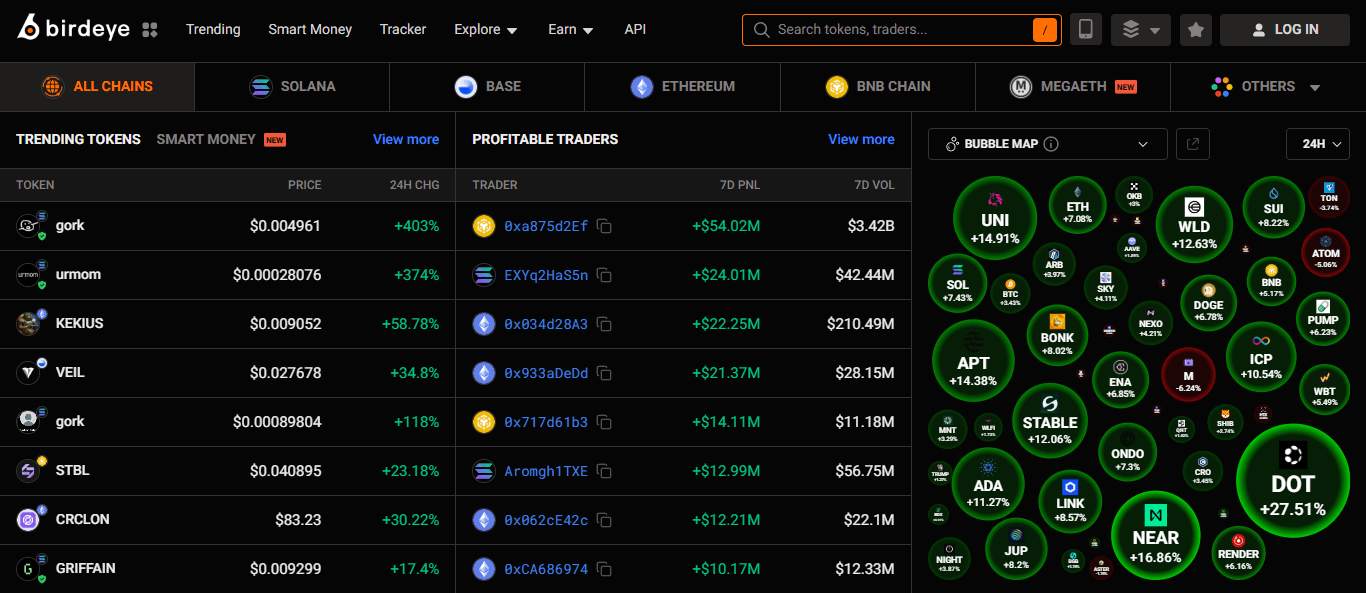
Birdeye specializes in Solana analytics, offering granular visibility into token performance, wallet behavior, and liquidity shifts. Its dashboards help traders identify high-volume assets and understand market structure before committing capital. Many Solana-focused participants rely on it as a research layer, cross-referencing data before placing trades elsewhere.
Implementation Shortfall and the Analysis Tax
The platform excels at interpretation. It translates raw blockchain activity into readable insights, which is crucial for evaluating whether a token's volume surge reflects genuine interest or coordinated manipulation. It remains an analytics tool. Execution still requires switching to another platform, reconnecting wallets, and managing transaction approvals separately.
4. GeckoTerminal
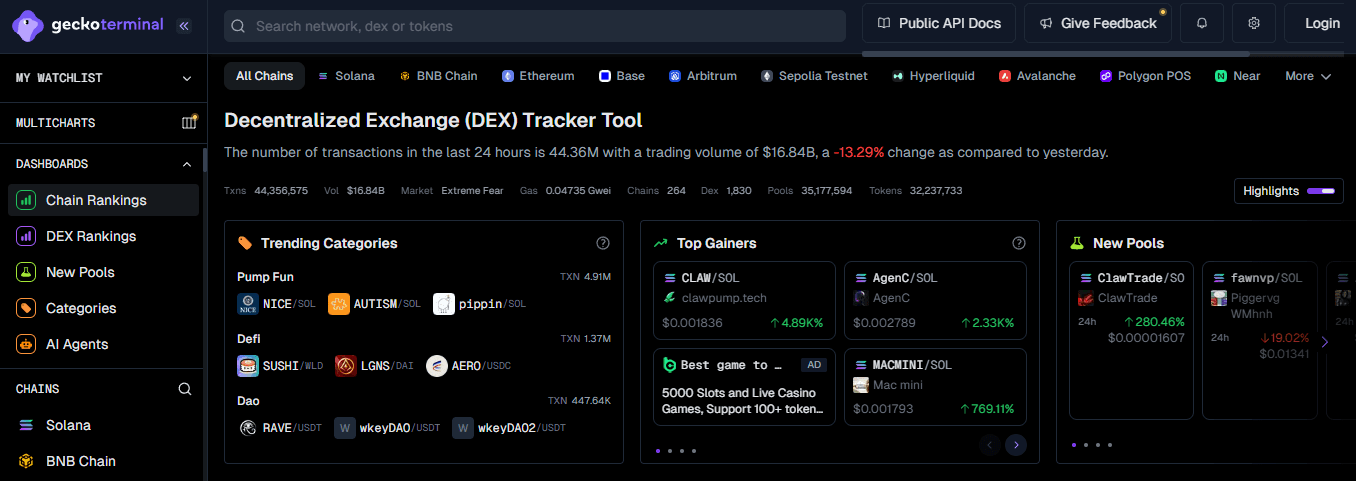
GeckoTerminal aggregates data from decentralized exchanges across multiple networks and integrates closely with CoinGecko's broader ecosystem. It provides cross-chain comparison tools that help traders evaluate tokens without visiting each network's native DEX individually. The emphasis is on transparency and data coverage rather than speed.
Professionalizing the Dapp Store Workflow
For screening opportunities and conducting preliminary research, it serves its purpose well. Traders often use it to compare liquidity depth or identify tokens gaining traction across different chains. According to the Alchemy Dapp Store, 64 alternatives exist in this category as of early 2025, reflecting the fragmented nature of the discovery landscape. GeckoTerminal distinguishes itself through breadth, though it doesn't streamline the actual process of entering positions once you've identified them.
5. TokenSniffer
TokenSniffer addresses a different problem: contract safety. It scans tokens for characteristics commonly associated with scams, such as:
Hidden minting functions
Suspicious ownership structures
Malicious code patterns
Traders consult it before interacting with newly launched assets, particularly in memecoin markets where rug pulls remain common.
The Safety Latency Penalty
The platform functions as a protective filter rather than a trading tool. It tells you what to avoid, not what to buy or how to execute. Most traders use it alongside other platforms, checking contract safety before committing capital elsewhere. It reduces risk but doesn't accelerate execution.
6. DexCheck
DexCheck combines on-chain analytics with artificial intelligence to:
Surface trends
Wallet behavior
Potential risks
Its tools help traders interpret complex blockchain data more efficiently, identifying patterns that might otherwise require manual analysis across multiple sources.
Implementation Shortfall and the Analysis Tax
The platform operates on a freemium model, offering basic features at no cost and advanced capabilities behind a subscription. It's designed for traders who want a deeper analytical context before making decisions. Despite its sophistication, it remains an analytical layer. You still need separate tools to actually:
Place trades
Manage positions
Bridge funds across chains
7. Phantom
Phantom became the dominant Solana wallet by prioritizing user experience. It allows token storage, transfers, and basic swaps directly within the wallet interface, simplifying access to decentralized applications. With roughly 1.5 million users, it serves as the primary gateway to Solana for many participants. Its strength is accessibility. Phantom makes interacting with Solana straightforward, even for traders unfamiliar with blockchain infrastructure. The limitation is the scope. It focuses exclusively on one network and, while it supports basic swaps, lacks the discovery tools, advanced analytics, and cross-chain flexibility that traders need when opportunities span multiple ecosystems.
8. CoinBrain

CoinBrain specializes in identifying newly launched tokens and trending assets. It highlights early-stage opportunities that may not yet appear on larger tracking platforms, making it popular among traders seeking exposure to emerging projects. With an estimated user base of around 200,000, it occupies a niche focused on discovery rather than execution. Traders use it to spot tokens gaining momentum before they reach broader awareness. The challenge remains familiar: once you identify a promising asset, you still need to:
Move funds
Connect wallets
Execute trades elsewhere
CoinBrain shows you what's starting to trend. It doesn't help you act on that information quickly.
9. TradingView for Crypto Markets
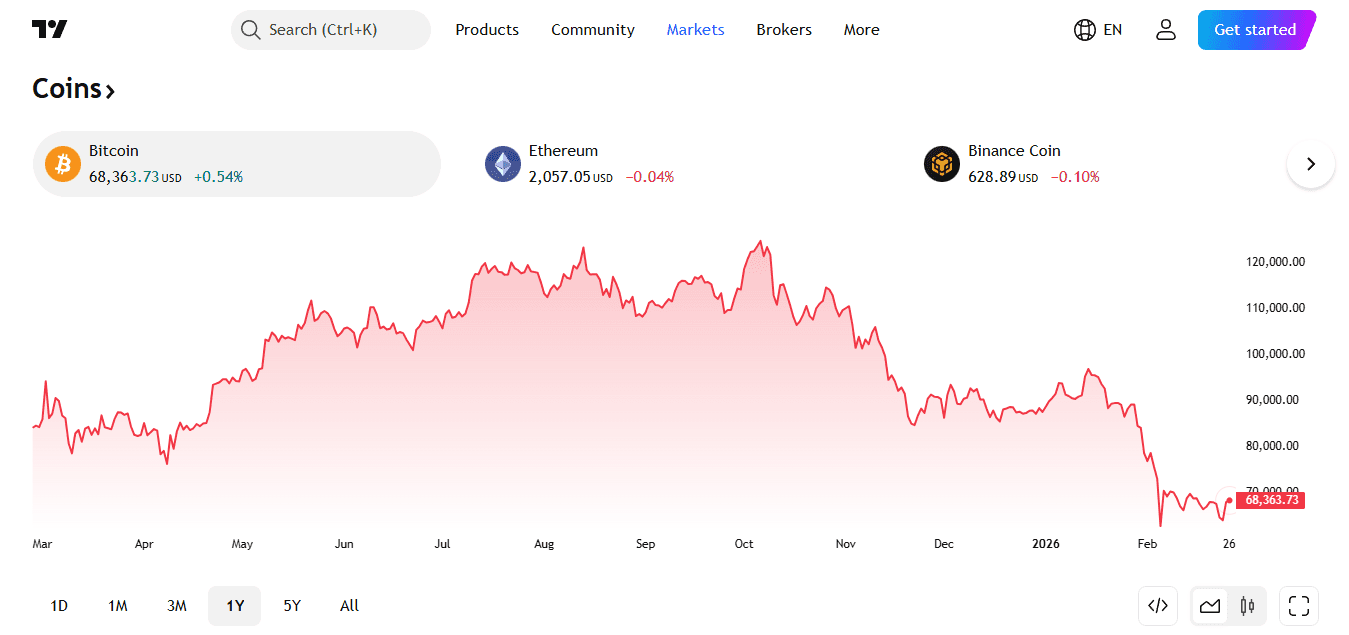
TradingView is a general-purpose charting platform widely used across financial markets, including the Cryptocurrency market. It offers advanced technical indicators, customizable layouts, and community-shared analyses. Many traders rely on it for macro-level charting and strategy development. For decentralized tokens, it typically serves as an analytical companion rather than a direct trading venue. You can build sophisticated chart setups and identify patterns, but executing trades still requires switching to another platform. TradingView excels at visualization and technical analysis. It doesn't integrate execution or portfolio management.
10. Zapper
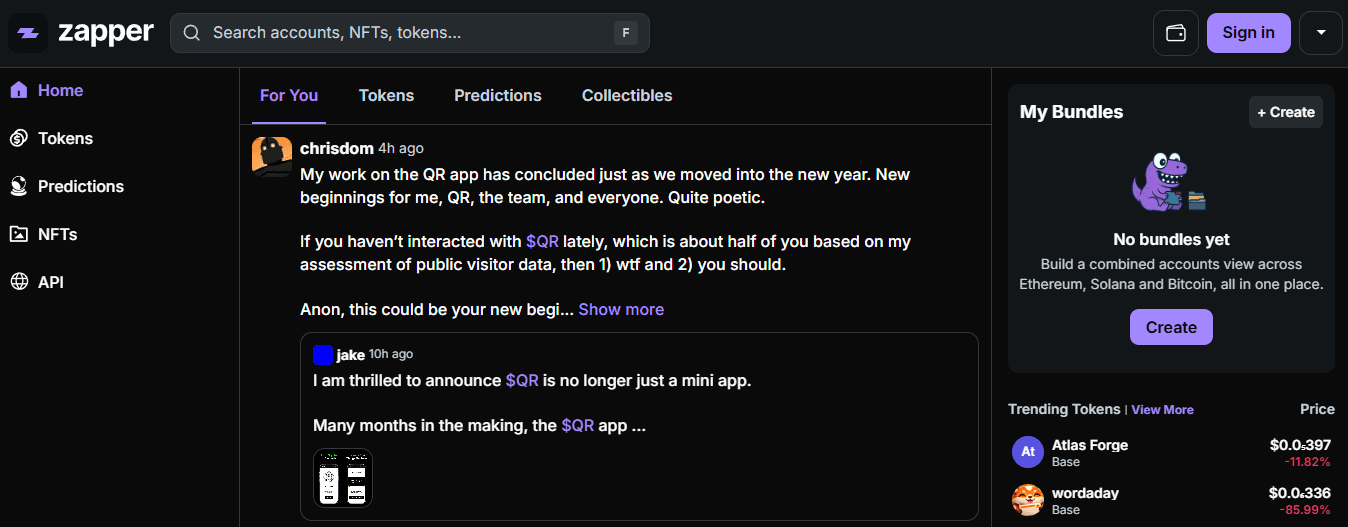
Zapper provides portfolio tracking across multiple chains and decentralized finance protocols. It aggregates balances, positions, and historical activity into a single dashboard, helping users understand overall exposure. CoinTracking reports support over 300 easy imports as of February 2025, reflecting how fragmented portfolio management has become across wallets and protocols. This makes Zapper particularly useful for long-term investors and DeFi participants managing complex portfolios. It answers the question: what do I own, and where? It doesn't help you act on new opportunities quickly. Zapper tracks positions. It doesn't streamline the process of opening them.
Chain Abstraction: Making Networks Invisible
Most alternatives improve specific parts of the workflow:
Discovery
Analytics
Safety
Portfolio visibility
Few address the operational friction between identifying an opportunity and actually holding the position. Traders still assemble execution themselves, moving:
Funds across chains
Reconnecting wallets
Managing transaction approvals while momentum shifts
The real question isn't whether better tools exist, but whether they eliminate the context-switching that turns strong setups into late entries.
Why Most Alternatives Still Don’t Solve the Real Problem

Most tools positioned as DEXTools alternatives improve visibility into the market, not the ability to act within it. They deliver faster charts, richer dashboards, or better screening, but leave the execution workflow fragmented. This creates a structural mismatch: analytics platforms diagnose opportunities, while trading infrastructure determines whether those opportunities can actually be captured.
Analytics Tools are Not Trading Infrastructure
The core failure mode is simple. Data platforms tell you what to buy. They do not ensure you can buy it:
Quickly
Efficiently
At scale
Crypto markets, especially in speculative segments, reward speed and coordination of capital. A tool that surfaces signals without enabling immediate execution forces traders into a multi-step process where delays compound. Research across electronic markets consistently shows that execution quality materially affects returns. Even small timing differences can turn profitable signals into breakeven trades.
Fragmented Capital Means Reduced Opportunity Capture
Most alternatives operate independently of custody or trading accounts. Funds remain scattered across:
Wallets
Exchanges
Chains
It reduces deployable capital at any given time. This fragmentation is not theoretical. Public blockchain data shows that cross-chain bridges process tens of billions of dollars annually, indicating how frequently traders must relocate funds to chase opportunities.
Each transfer:
Introduces fees
Waiting periods
Risk of failure during network congestion
Idle capital on the wrong network is effectively sidelined while markets move elsewhere.
No Cross-Market Trading in One Interface
Opportunities now span:
Spot markets
Memecoins
Derivatives
Even prediction markets
Yet most analytics tools focus on a single domain or ecosystem. A trader who wants exposure to multiple sectors must open separate platforms, each with its own balances, risk controls, and interfaces. This slows decision-making and makes portfolio-level management difficult. During high volatility, switching contexts can cost critical seconds or minutes.
Manual Execution Introduces Delay and Error
Manual workflows require traders to translate insight into action step by step. Every step introduces latency and operational risk, especially under time pressure. Industry data on decentralized exchanges highlights this gap. According to Business Insider, data refresh intervals of 30 seconds or longer can introduce significant lag in fast-moving markets. In memecoin cycles that move in minutes rather than hours, those delays can erase the edge that prompted the trade in the first place. Manual execution also increases the likelihood of mistakes, such as entering the wrong token contract or setting inappropriate slippage tolerances.
Lack of Verified Performance Tracking
Many tools surface trending tokens or wallet activity, but provide little context about whether the actors behind those moves are consistently profitable. Social media amplifies this problem, as screenshots of gains are easy to fabricate or selectively present. Without verified performance data, traders often rely on noisy signals rather than demonstrably successful strategies. This shifts the burden of evaluation onto the individual, adding cognitive load and uncertainty.
Continued Dependence on External Wallets and Exchanges
Even when analytics platforms integrate wallet connections, they typically do not replace the need for:
Separate custody
Bridging services
Centralized exchanges
Traders still manage approvals, signatures, deposits, and withdrawals across multiple systems. Each integration point introduces security considerations as well. The more frequently assets move between environments, the greater the exposure to operational errors or malicious interfaces.
Real-World Workflow: Where the Edge Disappears
Consider a common scenario in the Solana memecoin market, where prices can move dramatically within minutes of a catalyst. A trader spots an emerging token on a charting platform showing rapidly increasing volume and liquidity. To act, they must first confirm that funds are available on the correct chain. If not, they initiate a bridge transfer, which may take several minutes. They open a decentralized exchange interface, connect the appropriate wallet, approve the transaction, and execute the swap. After entering the position, they monitor performance on yet another dashboard.
Liquidity-Based Price Inflation (LPI)
By the time the process is complete, early buyers may have already taken profits. The trader enters:
At a higher price
Accepts worse slippage
Faces increased downside risk
On-chain data frequently shows extreme early concentration of gains in new token launches, with the largest percentage moves occurring before broad discovery. Late entrants often provide liquidity at exit rather than capturing upside.
Context-Switching Stress and Decision Fatigue
The familiar approach is to use analytics platforms for research, then switch to separate tools for execution. As opportunities multiply across chains and asset types, this workflow fragments attention and capital. Traders spend more time managing infrastructure than evaluating setups. Platforms like buy Crypto address this by unifying discovery, execution, and portfolio management in one environment, eliminating the operational overhead that separates conviction from positioning.
The Real Bottleneck is Not Information
The dominant belief in retail trading is that better data leads to better performance. In reality, modern Crypto markets are saturated with information. High-quality analytics are widely accessible, often for free. What remains scarce is frictionless execution. The true constraint is not knowing what to trade. It is deploying capital quickly and efficiently enough to capitalize on that knowledge.
The Psychology of Flow State in Trading
Traders who can move funds instantly, enter positions without multi-step workflows, and manage risk from a unified interface hold a structural advantage over those juggling disconnected tools. According to Turning Data Into Wisdom, only 15% of companies get meaningful value from their data investments, suggesting that access to information alone does not guarantee better outcomes. In today's environment, capital mobility and execution speed often matter more than analytical sophistication.
Related Reading
What a Modern Crypto Trading Platform Should Provide Instead

The solution isn't another chart with more indicators. It's an environment where capital moves as fast as conviction, where discovering an opportunity and holding a position happen in the same interface without manual bridging, wallet switching, or transaction approvals that arrive after momentum already shifted. Execution infrastructure matters more than analytical depth when markets compress entire volatility cycles into minutes.
Trade Multiple Asset Types From One Account
Crypto opportunities span Bitcoin, altcoins, memecoins, perpetual futures, and prediction markets. Platforms that restrict access to a single segment force traders to constantly reposition capital while leadership shifts elsewhere.
Institutional-Grade Execution Management Systems (EMS)
During major market cycles, Bitcoin dominance can surge above 50 percent, then speculative phases send volume into altcoins or memecoins within weeks. A trader locked into one venue risks missing entire phases. Professional trading firms solved this decades ago by consolidating execution across products. Retail platforms are only catching up now. Unified access allows traders to follow momentum wherever it appears, without maintaining separate balances or managing multiple custody systems. The alternative is spreading capital thin across five chains, each with a balance too small to deploy meaningfully when a real setup appears.
Immediate Access to Capital
Speed of funding determines whether you capture the setup or watch it happen. Traditional exchange deposits can take hours or days, depending on the method. Blockchain transfers may slow down during congestion, and on-chain fees spike when you need to move fastest. During the May 2021 market crash, Ethereum gas fees briefly exceeded $300 for complex transactions, effectively locking smaller traders out of repositioning capital. Major exchanges reported surges in traffic and transaction backlogs, while prices moved 30 percent in a matter of hours. Traders with instant buying power could respond. Others waited for confirmations while the opportunity evaporated. Platforms that provide instant buying power or integrated funding options eliminate this delay. You respond when markets are moving, not after the move is over.
Real-Time Opportunity Discovery
Information still matters, but it must sit inside the execution environment. Consulting separate data sources creates the same friction you're trying to eliminate. Professional desks monitor flows, positioning, and market structure in the same system where orders are placed. The closer discovery sits to execution, the less friction exists between insight and action. In fast segments like memecoins, early volume spikes often precede large price moves. A significant portion of gains occurs within the first hours of liquidity formation. Discovery tools disconnected from execution make it difficult to capture that window.
Implementation Shortfall and Delay Cost
The familiar approach is to use analytics platforms for research, then switch to separate tools for execution. As opportunities multiply across chains and asset types, this workflow fragments attention and capital. Traders spend more time managing infrastructure than evaluating setups. Platforms like buy Crypto address this by unifying discovery, execution, and portfolio management in one environment, eliminating the operational overhead that separates conviction from positioning.
Performance Transparency
One of the biggest challenges in retail trading is separating skill from noise. Social platforms amplify dramatic wins but rarely show:
Full trading histories
Drawdowns
Consistency
Moving From Anecdotes to Attribution Analysis
In traditional finance, professional managers publish audited track records, Sharpe ratios, and risk metrics. Crypto trading has historically lacked comparable standards, making it easier for misinformation to spread. Platforms that surface verified performance data, rather than anecdotal claims, reduce guesswork and enable more informed decision-making. Transparent performance metrics help traders evaluate strategies objectively. You see who consistently profits across market conditions, not just who posts the loudest wins during bull runs.
Reduced Operational Complexity
Complex workflows increase both cognitive load and error rates. Aviation, medicine, and finance all demonstrate that simplified systems produce more reliable outcomes under stress. Crypto markets are uniquely stressful environments, with assets capable of moving 10 to 50 percent in a single day. When traders must manage multiple dashboards, wallets, and confirmations simultaneously, mistakes become more likely. Consolidation improves clarity. A single interface showing balances, positions, and risk exposure makes it easier to size trades appropriately and avoid unintended leverage or duplication.
Why This Structure Improves Outcomes
An integrated platform directly affects performance in measurable ways. Faster entries and exits capture intended setups. Markets reward early participation. Even a short delay can mean entering after momentum traders or automated systems have already moved the price. Reducing the number of steps between the signal and the order increases the likelihood of capturing the setup you identified.
Unified Netting and Liquidity Buffering
Lower fees from fewer transfers preserve capital.
Repeated bridging
Withdrawals
On-chain swaps accumulate costs
Active traders can execute dozens or hundreds of transactions per month. Eliminating unnecessary transfers keeps more capital working instead of paying network fees. Clear risk management reduces overleveraging. A unified view of positions enables traders to understand total exposure rather than treating each account in isolation. This prevents unintentional concentration of bets or the deployment of more capital than intended across fragmented accounts.
Human-Computer Interaction (HCI) in Finance
Ability to act on opportunities instantly. Markets do not wait for capital to arrive. Traders with deployable funds and direct execution capability can respond immediately, while others are still preparing infrastructure. The broader trend is already visible. Just as early internet users moved from managing multiple standalone tools to integrated platforms, Crypto traders are gravitating toward environments that centralize their workflow. Instead of stacking more analytics sites, wallets, and exchanges, many are adopting platforms that combine discovery, execution, and capital access into a single system.
Related Reading
How Bullpen Replaces the Entire Multi-Tool Stack
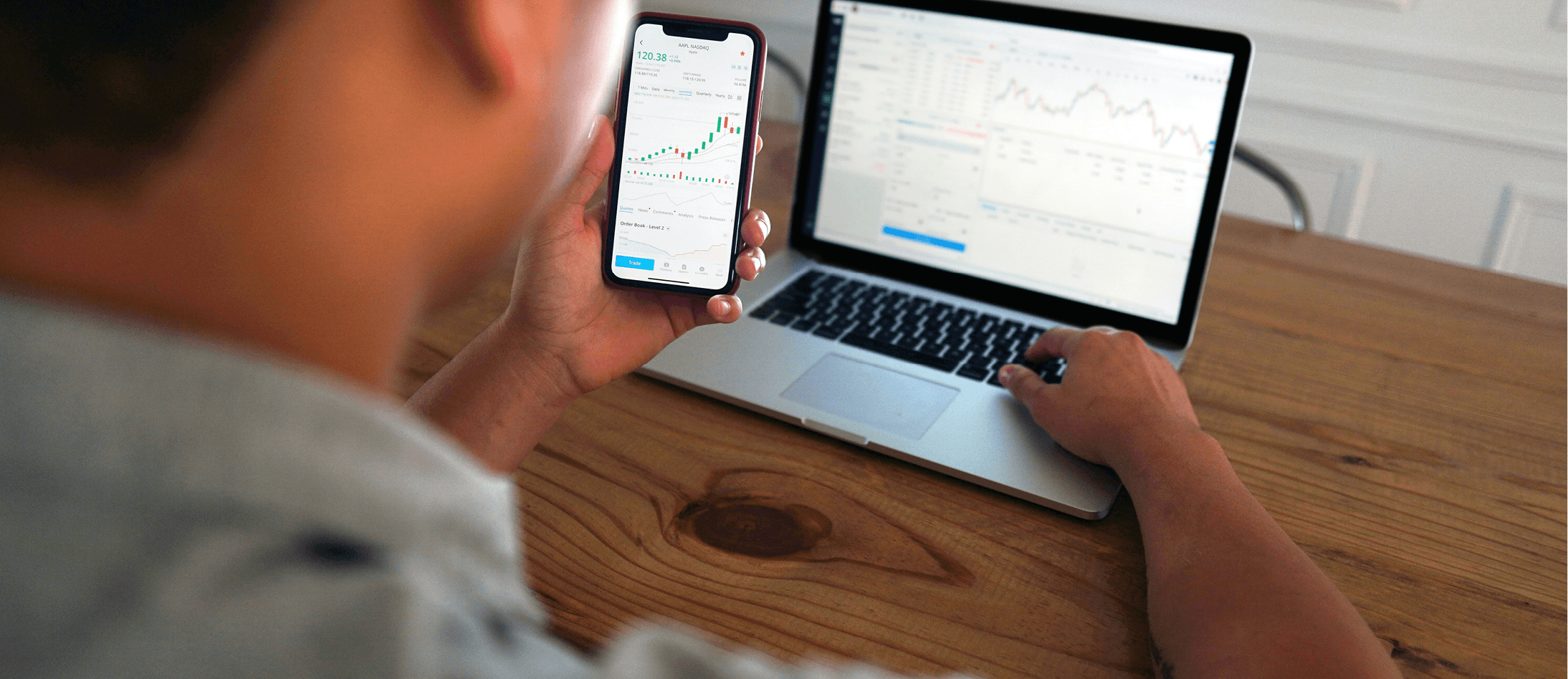
Most platforms that claim to replace DEXTools still assume you'll maintain separate infrastructure for execution, custody, and capital movement. Bullpen eliminates that assumption entirely. Instead of improving one piece of the workflow, it rebuilds the entire stack around a single principle:
Capital should move as fast as conviction
Without switching contexts
Reconnecting wallets
Waiting for confirmations while price action accelerates past your entry point
Trade Across Markets Without Moving Funds
Capital fragmentation creates a hidden tax on opportunity. When Bitcoin momentum shifts to Solana memecoins or Hyperliquid perpetuals spike in volume, traders with funds locked on the wrong chain watch setups develop while their capital sits inaccessible. Bullpen removes this constraint by supporting multiple markets within a single account. You can trade Bitcoin, Solana tokens, perpetual futures, and prediction markets without bridging assets between chains or maintaining balances across five different platforms.
The Structural Alpha of Instant Buying Power
This isn't just convenience. It's a structural advantage. During the March 2024 memecoin surge, on-chain data showed that tokens often moved 200 to 500 percent within the first hour of liquidity formation. Traders who needed to bridge funds from Ethereum to Solana during that window missed most of the gains. Those with capital already positioned captured the move. Bullpen ensures your capital is always positioned, regardless of where momentum appears.
Act Immediately on Opportunities
Speed determines whether you capture early price action or provide liquidity for exits. Bullpen shortens the path from insight to execution by enabling instant funding through Apple Pay or direct bank transfers. You don't need to pre-position capital across multiple venues or wait for on-chain transfers during volatile periods when network congestion can delay transactions by minutes or hours.
Social Learning vs. Herd Mentality
This capability matters most during sudden market moves. A token trending on social feeds can gain 100 percent in the time it takes for a traditional exchange deposit to be confirmed. By the time funds arrive, early buyers have already taken profits, and price action has stalled. Immediate buying power means you respond when the setup appears, not after it's exhausted.
Follow Traders Who are Actually Profitable
Retail Crypto trading suffers from a signal-to-noise problem that most platforms ignore. Screenshots of isolated wins circulate widely, but full trading histories, drawdowns, and consistency remain invisible. Bullpen addresses this by surfacing traders with verified profit and loss records through live leaderboards that rank performance based on actual results, not follower counts or engagement metrics.
The Selective Disclosure Bias
The familiar approach is to follow traders based on their social media presence or anecdotal claims, only to discover later that their public wins are the result of selective disclosure rather than repeatable skill. As opportunities multiply across chains and asset types, this guesswork compounds risk. Platforms like buy Crypto address this by providing transparent performance data and real-time notifications when top traders open positions, so you can react immediately rather than discovering trades after momentum has already shifted.
Sentiment Analysis vs. Direct Execution
You also receive instant notifications when consistently profitable traders enter positions. This transforms social proof from entertainment into actionable intelligence. Instead of scrolling through feeds hoping to catch alpha before it's stale, you see verified moves as they happen and can respond in real time.
Simplify Your Entire Workflow
Operational complexity drains attention that should be focused on market structure, timing, and risk management. Managing positions across multiple dashboards creates blind spots. You might know what you hold in one wallet but lose track of aggregate exposure, especially during volatile periods when prices move faster than you can manually update spreadsheets or check balances across five different interfaces.
The Split-Attention Effect in Rapid Markets
Bullpen centralizes positions, balances, and activity in one view. You quickly assess total exposure, identify concentrated risk, and adjust sizing without switching between platforms or reconstructing your portfolio from fragmented accounts. During rapid price movements, this clarity prevents mistakes that fragmented systems encourage:
Overleveraging because you forgot about an open position elsewhere.
Missing an exit signal because you were checking another dashboard when the setup deteriorated.
The result is a cleaner decision environment where cognitive load decreases, and execution quality improves. You spend less time managing infrastructure and more time evaluating whether the setup still makes sense.
Buy Crypto Today With Bullpen
If you recognized that your biggest trading losses often come from slow execution rather than poor ideas, the most impactful change is consolidating your workflow. Deposit on Bullpen today to earn a 500-point bonus. If you deposit $1,000 or more, you will receive a free introductory call where a specialist will help you identify:
Traders aligned with your strategy
Set up real-time alerts for high-probability opportunities
Build a faster execution plan so you can enter trades before momentum peaks
You can move from discovery to position without juggling wallets, bridges, or multiple platforms. Buy Crypto with Bullpen today and experience what trading looks like when everything is finally in one place.
Last Updated:
March 23, 2026