
What is Polymarket? It is the world's largest decentralized prediction market, where you can bet on highly anticipated real-world outcomes in real time.
The Crypto space moves fast, and making informed decisions about where to put your money requires more than gut feelings or social media hype. Whether you're tracking the best memecoins or trying to predict the next big market move, you need real data and collective intelligence to guide your choices. To help you navigate this landscape, this article explores what Polymarket is: a decentralized prediction market platform where users bet on real-world outcomes using Cryptocurrency. We’ll show how these markets are changing how traders gather information and make strategic decisions in an unpredictable economy.
Once you understand how prediction markets work and what Polymarket offers, you'll want access to the actual tokens needed to participate in these platforms. Bullpen's buy Crypto solution makes acquiring digital assets simple and direct, giving you the tools to engage with prediction markets, trade tokens, and explore opportunities across the Crypto ecosystem without unnecessary barriers or confusion.
Summary
Prediction markets force participants to stake capital behind their forecasts, creating accountability that commentary never provides. When shares trade at $0.68, that price represents a 68% probability derived from thousands of participants risking real money, not analyst opinions insulated from consequence. Polymarket processed over $3.2 billion in trading volume during the 2024 election cycle, according to Forbes, demonstrating that these platforms aggregate conviction at an institutional scale.
Most traders consume information after prices have already adjusted, turning news into explanation rather than opportunity. A 2015 Microsoft research study found that the average human attention span for digital content had dropped to roughly eight seconds, less time than it takes to process a single economic indicator.
Binary outcomes create asymmetric risk that punishes overconfidence brutally. A forecast that's 90% correct still pays zero if the outcome lands in the other 10%. Three winning trades at modest size get erased by one oversized loss on a position treated as certain. Successful traders on Polymarket often hold positions for less than 10 minutes, according to Jayson Beatty's LinkedIn analysis, capturing an edge before crowds reprice rather than betting on final outcomes.
Liquidity varies dramatically between high-profile events and niche markets. A $500 order can move prices 15 cents in thinly traded markets, turning a $0.60 entry into a $0.75 fill. Paper profits stay paper when no counterparty will take the other side at reasonable prices. Traders who ignore market structure discover their edge means nothing if they can't execute or exit cleanly.
Regulatory uncertainty sits at the top of risk lists because access can disappear overnight, and settlement rules can change mid-market. Compliance requirements might suddenly exclude entire regions or user types. A position that looks profitable today could become inaccessible tomorrow, not because your forecast was wrong, but because policy moved faster than the platform could adapt.
Bullpen's buy Crypto addresses execution friction by consolidating Polymarket access into one interface, removing the wallet juggling and chain bridging that typically delay action when probabilities shift after breaking news.
Table of Content
Most Market News is Noise, Traders Want Signals They Can Act On
What is Polymarket? The Internet’s Real-Time Forecast Engine
How Traders Actually Use Polymarket for Edge (Not Just Speculation)
How Bullpen Helps Traders Use Polymarket Without the Usual Crypto Friction
Most Market News is Noise, Traders Want Signals They Can Act On

Markets don't move because of what happened. They move because of what participants expect to happen next. The problem is that most of the information traders consume arrives after prices have already adjusted, turning news into an explanation rather than an opportunity. What looks like insight is often just narrative wrapped around moves that algorithms and institutional desks reacted to hours or days earlier.
The gap between information and action has never been wider. Traders have access to more data than any generation in history, yet most of it fails the only test that matters: can you position ahead of the move, or are you reading about it after the fact?
The Overload Paradox
A typical trading day delivers:
Hundreds of headlines
Dozens of analyst updates
Thousands of social media posts claiming to explain market direction
According to Microsoft research from 2015, the average human attention span on digital content had already dropped to roughly eight seconds. That's less time than it takes to process a single economic indicator, let alone evaluate whether it contains an actionable signal or just adds to the pile of retrospective commentary.
Cognitive Bias and the Signal-to-Noise Ratio
When every piece of information feels urgent, nothing actually is.
Traders consume markets as fragments:
A headline about inflation
A tweet about earnings
A chart that makes yesterday's move look obvious
The result isn't clarity. It's a constant sense that you're missing something, that the real signal is buried somewhere in the noise if you just scroll a little further.
The Physiology of FOMO: Why Your Brain Sabotages Your Strategy
The emotional cost shows up in how people describe their experience. Many traders report feeling like they're on a constant emotional rollercoaster, where following news closely creates more anxiety than confidence.
Markets move, and despite consuming every update, the direction still feels unpredictable. That stomach-tying sensation isn't a personal failing. It's the natural result of trying to trade based on information that was never designed to help you position in the first place.
What Gets Priced in, and What Doesn't
The status quo belief is simple: follow the news closely enough, and you'll predict where markets go next. In practice, this approach confuses storytelling with probability.
A report might say growth is “resilient” or inflation is “cooling,” but those narratives don't answer the question that determines whether a trade makes sense: what are the odds of each outcome, and what has the market already priced in?
The Wisdom of Crowds vs. the Noise of Experts
Widely disseminated information gets incorporated into prices quickly. What everyone knows is already reflected in the current quote. What moves markets forward isn't the headline itself but the collective shift in expectations about future events. That's why sophisticated participants increasingly look past commentary toward mechanisms that aggregate forward-looking beliefs directly.
The distinction matters because it changes what you're looking for. Instead of asking analysts what they think will happen, you observe environments where participants must put capital behind those beliefs. Prices in those markets represent real-time probabilities, not retrospective explanations. They show you what the crowd expects, not what already occurred.
The False Comfort Of Hindsight
After a major market move, timelines fill with charts that make the direction look obvious. Trendlines appear perfectly drawn. Support and resistance levels seem clear. The narrative feels inevitable.
This creates a dangerous illusion: that markets were predictable all along, and you just missed the signal everyone else apparently saw.
Probabilistic Thinking: Moving from What if to ‘How Likely’
That illusion reinforces the idea that more information would have helped. In reality, the charts that look obvious in hindsight were ambiguous in real time. The signal-to-noise ratio doesn't improve by adding more sources. It improves by changing the type of information you consume.
Traders often describe wanting to “banish emotion and trade with clarity and confidence” rather than being driven by fear and FOMO. That desire makes sense, but it can't be satisfied by consuming more of the same fragmented content. Clarity comes from structured probability assessments, not from following ten news sources instead of five.
What Sophisticated Traders Look for Instead
Professional desks and quantitative funds don't ignore news, but they don't treat it as their primary signal either.
They focus on mechanisms that reveal what the market collectively expects:
Options pricing
Futures curves
Order flow imbalances
Increasingly, prediction markets in which participants stake capital on specific outcomes. These tools share a common characteristic: they force participants to commit. A headline can be confident and wrong with no consequence. A position requires conviction backed by risk. That difference filters noise in a way that commentary never can.
On-Chain Transparency: Using the Public Ledger as a Truth Engine
Platforms such as buy Crypto make it possible for retail traders to access the same type of forward-looking information that institutional participants use. Instead of consuming fragmented headlines, traders can observe real-time probabilities across:
Tokens
Perpetuals
Prediction markets from a unified interface
The shift isn't just about convenience. It's about moving from retrospective explanation to forward-looking signal, from narrative to probability, from noise to structure. The question isn't whether you're consuming enough information. It's whether the information you're consuming actually helps you position before the move, or just explains what already happened.
What is Polymarket? The Internet’s Real-Time Forecast Engine
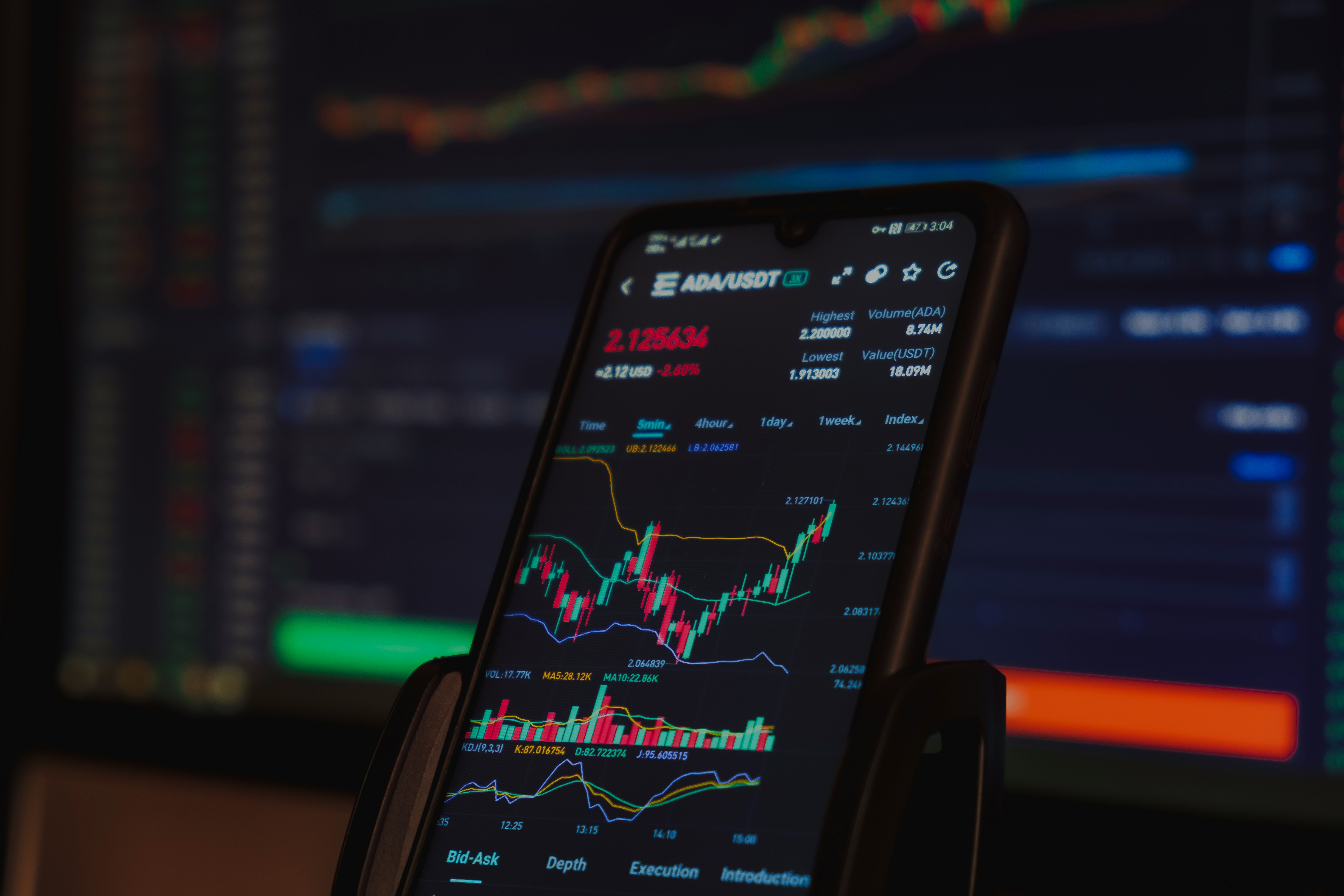
Polymarket is a decentralized prediction market where traders stake capital on the outcomes of real-world events. Unlike news feeds or analyst reports, it translates belief into price.
Every share represents a probability
Every trade reflects conviction
Every market resolves to a verifiable yes or no
You're not reading someone's opinion about whether interest rates will drop or whether a product will launch on schedule. You're watching what people with money at risk believe will happen, updated continuously as new information arrives.
The Mechanics of Incentive-Aligned Forecasting
Each market asks a specific, falsifiable question.
Will inflation exceed 3% this quarter?
Will a candidate win the election?
Will a company announce layoffs by year-end?
Participants buy shares representing “yes” or “no” at prices between $0 and $1. That price corresponds to the implied probability. A share trading at $0.68 suggests the market assigns roughly a 68% chance to that outcome. When the event resolves, correct shares pay $1, incorrect shares pay nothing.
Traders can enter or exit positions at any time before resolution, meaning prices adjust in real time as campaigns shift, economic data drop, or corporate announcements land.
Prediction Markets vs. Traditional Polling
The platform operates onchain, meaning trades settle transparently without intermediaries controlling access or execution. According to Forbes, Polymarket processed over $3.2 billion in trading volume during the 2024 election cycle.
That volume didn't come from passive observers. It came from participants willing to put capital behind their forecasts, creating a live aggregation of expectations across:
Politics
Economics
Technology
Culture
How Prices Become Probabilities
The mechanism is straightforward. If you believe an event has a 70% chance of occurring but shares are trading at $0.50, you can buy at a discount and profit when the market reprices or the event resolves in your favor. If you think the crowd is overconfident and shares are trading at $0.85 when the true odds are closer to 60%, you can sell.
This constant tension between differing views creates liquidity and keeps prices tethered to collective belief rather than editorial judgment.
Why Markets Lead, and Media Follows
Traditional forecasting relies on:
Models
Surveys
Expert panels
Those methods produce point estimates that age quickly and rarely update between publication cycles. Polymarket produces a live number that adjusts in real time as participants change their positions.
Traders react immediately:
When a Federal Reserve official hints at policy direction
When polling data shifts
When a CEO steps down unexpectedly
The price moves before the headline gets written.
Asymmetric Information: The Institutional vs. Retail Gap
That responsiveness matters because markets don't wait for consensus to form. Institutional desks and algorithmic systems are positioned based on expected outcomes rather than confirmed ones.
Retail traders who rely on retrospective news are always a step behind. Prediction markets compress that lag by showing you what informed participants expect right now, expressed as a single tradable figure.
Why Conviction Filters Noise Better Than Commentary
Anyone can publish a confident take with no accountability. Analysts issue forecasts, pundits make predictions, and social feeds overflow with certainty. When those calls turn out wrong, there are no financial consequences. The incentive structure rewards attention, not accuracy.
Polymarket changes that dynamic. Every position requires capital. If you're wrong, you lose money. If you're right, you profit. That simple stake filters out performative confidence and rewards participants who can actually read signals the crowd hasn't yet priced in. The result is a marketplace where prices reflect genuine belief, not just narrative momentum.
The Science of Information Aggregation: Why Markets Outperform Experts
Many traders describe feeling trapped on an emotional rollercoaster, where constant updates create anxiety without improving their positioning. That frustration stems from mistaking volume for value. More headlines don't produce better forecasts.
What changes the equation is access to mechanisms where participants must commit, where prices update faster than articles, and where probability replaces storytelling.
Reducing Cognitive Load in High-Stakes Trading
Platforms like buy Crypto bring prediction markets into the same interface as tokens and perpetuals, treating them as legitimate trading venues rather than novelty bets.
Instead of toggling between news apps, charting tools, and separate platforms for each asset class, traders can monitor:
Real-time probabilities alongside price action
Execute across markets from one dashboard
Track performance publicly
The shift isn't about adding another feed to follow. It's about replacing fragmented commentary with structured, forward-looking data that updates as fast as the information does.
Markets as Information, Not Just Speculation
The common misconception is that prediction markets are gambling dressed up as finance. In reality, they function more like:
Futures contracts or options pricing
Where the underlying isn't a commodity
Equity is but a future state of the world
Participants aren't betting on randomness. They're expressing views on measurable outcomes tied to:
Economic reports
Corporate decisions
Geopolitical developments
Technological milestones
The Information Alpha of Real-Time Prediction Markets
The value isn't only in the potential payout. It's in the information embedded in the price itself. If shares on a rate cut are trading at $0.72, that tells you something the latest analyst note doesn't: what the collective expects, weighted by conviction and capital. If that price suddenly drops to $0.58, you know expectations shifted before the explanation hits your feed.
For traders who want to position ahead of moves rather than react to them, that distinction is everything. You're not asking what might happen. You're observing what the market believes will happen, updated continuously, with every participant's capital enforcing honesty.
Related Reading
Why Prediction Markets Can be More Accurate Than Experts
When participants stake capital on outcomes rather than just offering opinions, the quality of forecasting changes fundamentally. Prediction markets filter beliefs through financial consequences, creating environments where accuracy compounds over time and errors become costly.
The price you see isn't someone's guess wrapped in confidence. It's the aggregate expectation of everyone willing to risk money on being right, updated continuously as new information emerges.
Incentives Enforce Honesty in Ways Commentary Never Can
Traditional forecasting separates prediction from consequence. Analysts publish reports, pundits make calls, and even when those forecasts prove wrong, the professional cost is minimal. Reputation might take a small hit, but there's no immediate financial penalty that forces recalibration. That structure allows overconfidence and bias to persist because the feedback loop between prediction and outcome stays abstract.
The Evolutionary Edge of Prediction Markets
Prediction markets collapse that distance. If you believe an event has a 40% chance of occurring but shares trade at $0.65, you can sell and profit when the market corrects or the event resolves. If you're wrong, you lose capital.
That simple mechanism creates accountability no opinion column can match. Participants who consistently misjudge probabilities see their influence shrink as their capital depletes. Those who read signals accurately gain both capital and market weight.
Markets as Information Processors
The University of Iowa's Iowa Electronic Markets demonstrated this dynamic across multiple U.S. election cycles, producing vote-share forecasts with average errors of 1-2 percentage points. Traditional polls during the same periods typically showed larger deviations.
The difference wasn't access to proprietary data or sophisticated models. It was structured. Traders adjusted positions in real time, incorporated new information instantly, and faced immediate consequences for overconfidence.
Diversity of Viewpoint Beats Expert Consensus
Experts often share similar training, read the same research, and operate within overlapping professional networks. That homogeneity can produce groupthink, where consensus forms not because the evidence is overwhelming but because everyone is looking at the problem through the same lens.
When a widely held view turns out wrong, entire industries are surprised at once.
The Three Pillars of Crowd Wisdom: Diversity, Independence, and Decentralization
Prediction markets aggregate thousands of independent perspectives. Domain specialists trade alongside:
Local observers
Data analysts
Contrarian investors
Participants have entirely different information sets
Each contributes a fragment of insight, and the price synthesizes those fragments into a single probability estimate. The crowd doesn't need to be individually brilliant. It needs to be diverse, motivated, and accountable.
The Diversity of Information: Why Markets Beat Models
According to Polymarket's 2024 election cycle research, the platform processed over $8 billion in trading volume across:
Political
Economic
Cultural events
That volume represented real capital from participants worldwide, each bringing different:
Assumptions
Risk tolerances
Information sources
The resulting prices reflected a broader intelligence than any single analyst or institution could produce.
Real-Time Updating Compresses The Information Lag
Polls capture snapshots. Reports are published periodically. Expert panels convene on schedules. All of these methods introduce a delay between the time information becomes available and the time forecasts adjust. In fast-moving situations, that lag turns predictions stale before they're even released.
Markets update continuously. When unexpected news breaks, prices can shift within seconds. A policy hint from a central banker, a surprise corporate announcement, or a geopolitical development gets incorporated immediately as participants reposition. You're not waiting for the next quarterly forecast or the next polling cycle. The probability adjusts as soon as someone with capital believes the odds have changed.
The Integration of Prediction Markets for Proactive Narrative Positioning
Many traders describe wanting to move past the constant anxiety of trying to interpret fragmented news into actionable positions. That frustration stems from consuming information designed for explanation rather than anticipation.
Platforms such as buy Crypto treat prediction markets as legitimate trading venues alongside tokens and perpetuals, allowing participants to monitor real-time probabilities within the same interface they use for other onchain assets. Instead of toggling between news feeds and separate platforms, traders observe how expectations shift across multiple markets simultaneously, positioning ahead of narrative consensus rather than reacting to it.
Manipulation Attempts Often Strengthen Accuracy
The common fear is that well-funded actors can distort prediction market prices by placing large trades that push probabilities away from reality. In practice, this concern misunderstands how markets self-correct. Attempting to manipulate a price requires committing significant capital to maintain an artificial level. That creates a profit opportunity for anyone who recognizes the distortion.
The Anti-Fragility of Prediction Markets: Turning Manipulation Into Information
If someone tries to push shares to $0.80 when the true probability is closer to $0.50, informed traders can sell at the inflated price and buy back later when the market corrects. The manipulator effectively subsidizes more accurate participants. Sustained distortion becomes prohibitively expensive because every dollar spent holding the price away from fair value is a dollar available for others to arbitrage.
This dynamic makes prediction markets resilient in ways that commentary-based forecasting is not. You can't arbitrage a bad opinion. You can't profit by correcting a biased analyst report. But you can profit by trading against mispriced shares, which means the market continuously pulls itself toward the collective best estimate.
The Crowd Self-Filters for Competence Over Time
Individual participants may be biased, emotional, or misinformed. But markets don't weigh all opinions equally. Capital flows toward those who forecast well and away from those who don't.
A trader who consistently overestimates probabilities loses money and influence. A trader who identifies underpriced outcomes compounds returns and gains market weight.
Financial Selection as a Filter for Truth
This self-filtering mechanism doesn't require anyone to verify credentials or audit expertise. Accuracy reveals itself through profit and loss. The crowd effectively curates itself, amplifying the signal from participants who demonstrate predictive skill and diminishing noise from those who don't.
Over time, the aggregate becomes smarter not because individuals improve but because the market rewards competence and penalizes error.
The Math of Changing Your Mind
For traders focused on positioning rather than speculation, this adds an additional layer of intelligence.
The price itself becomes a data point you can compare against your:
Own analysis
Positioning elsewhere in your portfolio
You're not asking what one analyst thinks. You're observing what thousands of participants with capital at risk collectively expect, filtered through the discipline of profit and loss.
Related Reading
How Traders Actually Use Polymarket for Edge (Not Just Speculation)

Skilled traders treat Polymarket as an information layer rather than a lottery. The price of each share becomes a real-time probability signal that can be cross-referenced against:
Other data sources
Macro indicators
Portfolio positioning
When discrepancies emerge between what Polymarket prices imply and what fundamentals suggest, that gap represents a potential edge. The goal isn't to guess outcomes. It's to identify where the market has mispriced probability relative to measurable reality.
Spotting Probability Dislocations Before They Close
Information arbitrage starts with recognizing when Polymarket probabilities diverge from verifiable data. During Federal Reserve policy announcements, for instance, markets tied to interest rate decisions sometimes trade at levels inconsistent with bond futures or economist consensus.
If Treasury yields imply a 75% chance of a rate hold, but Polymarket shares sit at $0.58, one of those signals is wrong. Traders who identify the discrepancy early can position before the gap closes, profiting as the market reprices toward the more accurate signal.
Finding Alpha in the Gaps Between Assets
The opportunity exists because Polymarket participants don't always have access to the same data that institutional desks monitor. A retail trader focused on political markets might overlook how derivatives markets are pricing the same event.
A bond trader might not even watch Polymarket. That fragmentation creates brief windows where prices lag reality. Speed matters, but so does breadth. Traders who monitor multiple information streams simultaneously can spot misalignments faster than those anchored to a single source.
Reading Conviction Through Capital Deployment
Social sentiment can manufacture excitement without substance. A hashtag trends, a narrative gains traction, but none of it requires financial commitment. Polymarket forces participants to stake capital, which filters performative confidence from genuine belief.
When a market sees sudden spikes in volume or large position changes, it signals that informed participants are repositioning based on new information rather than reacting to headlines.
Why Prediction Markets Outrun Traditional Polling
During the 2024 election cycle, political markets on Polymarket often shifted days before polling data reflected similar movement. Probability changes weren't driven solely by public sentiment. They reflected capital flows from participants willing to risk significant sums on specific outcomes.
Traders monitoring those shifts gained an early read on how expectations were evolving, independent of media narratives or official forecasts. The price became a leading indicator rather than a lagging one.
Using Market as Portfolio Hedges
Traders holding concentrated positions that are vulnerable to specific outcomes can use prediction markets to mitigate tail risk. If a portfolio benefits from favorable regulatory decisions, taking the opposite side in a related policy market creates a natural hedge.
Should regulation turn adverse, losses on core holdings get partially cushioned by gains on the prediction contract. The hedge isn't perfect, but it's precise. You're not buying broad protection against market volatility. You're insuring against a specific, measurable event.
The Difference Between Event Contracts and Portfolio Insurance
This approach works because prediction markets isolate discrete catalysts. Traditional hedging tools like options or futures protect against price movement but don't isolate the underlying cause. A put option on an equity index protects against a downturn, but it doesn't distinguish between downturns driven by:
Rates
Earnings
Geopolitical shocks
A prediction market tied to a regulatory announcement does. That specificity allows traders to hedge the exact risk they're concerned about without paying for protection against unrelated factors.
Positioning Around Discrete Catalysts With Precision
Event-driven strategies benefit from markets driven by clear triggers. Product launches, court rulings, earnings surprises, or policy announcements all create tradable events with binary outcomes. Instead of broadly shorting a sector ahead of negative news, traders can express that view directly through a prediction market tied to the catalyst itself.
If the event unfolds as expected, the position pays. If it doesn't, the loss is contained to the capital committed, not the broader portfolio exposure.
The Microstructure of Event Markets: Latency as a Risk Management Tool
According to Jayson Beatty's LinkedIn analysis, successful traders on Polymarket often hold positions for less than 10 minutes, capitalizing on short-term mispricings as information hits the market.
That speed reflects how quickly probabilities adjust once new data becomes public. Traders who react within seconds can capture an edge before the crowd reprices. Those who wait for confirmation are already too late.
Expected Value (EV) vs. Gut Conviction: The Math of Systematic Trading
The common mistake is treating Polymarket like a sportsbook, where you pick a side and hope for the best. Professional use looks different. Traders compare implied probabilities against independent analysis, size positions based on expected value rather than gut conviction, and exit when the edge disappears, regardless of whether the event has resolved.
The market itself is the trade, not the outcome.
Extracting Signal From Price Movement Patterns
Beyond individual positions, traders monitor how quickly markets reprice in response to new information.
A market that adjusts instantly suggests participants are well-informed and actively monitoring.
A market that lags suggests inefficiency.
Slow-moving markets create opportunities for traders who can process information faster than the crowd.
The Convergence of Event-Driven and Quantitative Trading
Platforms like buy Crypto integrate prediction markets alongside tokens and perpetuals, allowing traders to track probability shifts in the same interface they use for other onchain assets. Instead of switching between separate platforms to:
Monitor political odds
Macro event probabilities
Token price action
Everything updates in one view.
That consolidation reduces friction and allows traders to spot correlations between movements in prediction markets and broader portfolio positioning. When a policy-related market shifts sharply, traders can immediately assess whether that movement should trigger adjustments elsewhere, executing across asset classes without delay.
Timing Entries and Exits Around Information Flow
Edge doesn't just come from being right about an outcome. It comes from entering when probabilities are mispriced and exiting before they correct. Traders watch for moments when markets overreact to noise or underreact to substance.
A headline might temporarily spike a market, creating a selling opportunity if the underlying fundamentals haven't changed. Gradual probability drift without corresponding news can signal that informed participants are quietly repositioning ahead of an announcement.
Why Markets Overprice the Unlikely
Jayson Beatty's research also highlighted a favorites strategy in Grammy betting that generated a 10% return on amount wagered in 2025, demonstrating that disciplined approaches to probability assessment can produce consistent results even in entertainment markets.
The principle applies across categories. When market prices deviate from statistical likelihoods, traders who recognize the gap and act quickly can extract returns independent of whether they personally care about the event outcome.
Treating Prices as Data, Not Predictions
The most sophisticated use of Polymarket isn't betting on events. It's observing what the market believes and comparing that belief against your own analysis. If your research suggests a 60% probability but Polymarket trades at $0.45, either your model is wrong or the market is mispricing.
That discrepancy forces discipline. You can't ignore contradictory signals when real capital is involved. You either adjust your view or take a position against the consensus, knowing that one of you will be proven wrong when the event resolves.
Calibration and the Brier Score: Measuring the Accuracy of Your Beliefs
This dynamic turns prediction markets into a feedback mechanism.
Every trade you make gets tested against collective intelligence.
Every position forces you to quantify conviction.
Every outcome teaches you whether your probability assessments were calibrated or overconfident.
Over time, traders who engage seriously with prediction markets develop a sharper intuition for how often their forecasts align with reality, because the market grades every call.
The Real Risks and Limitations Beginners Miss
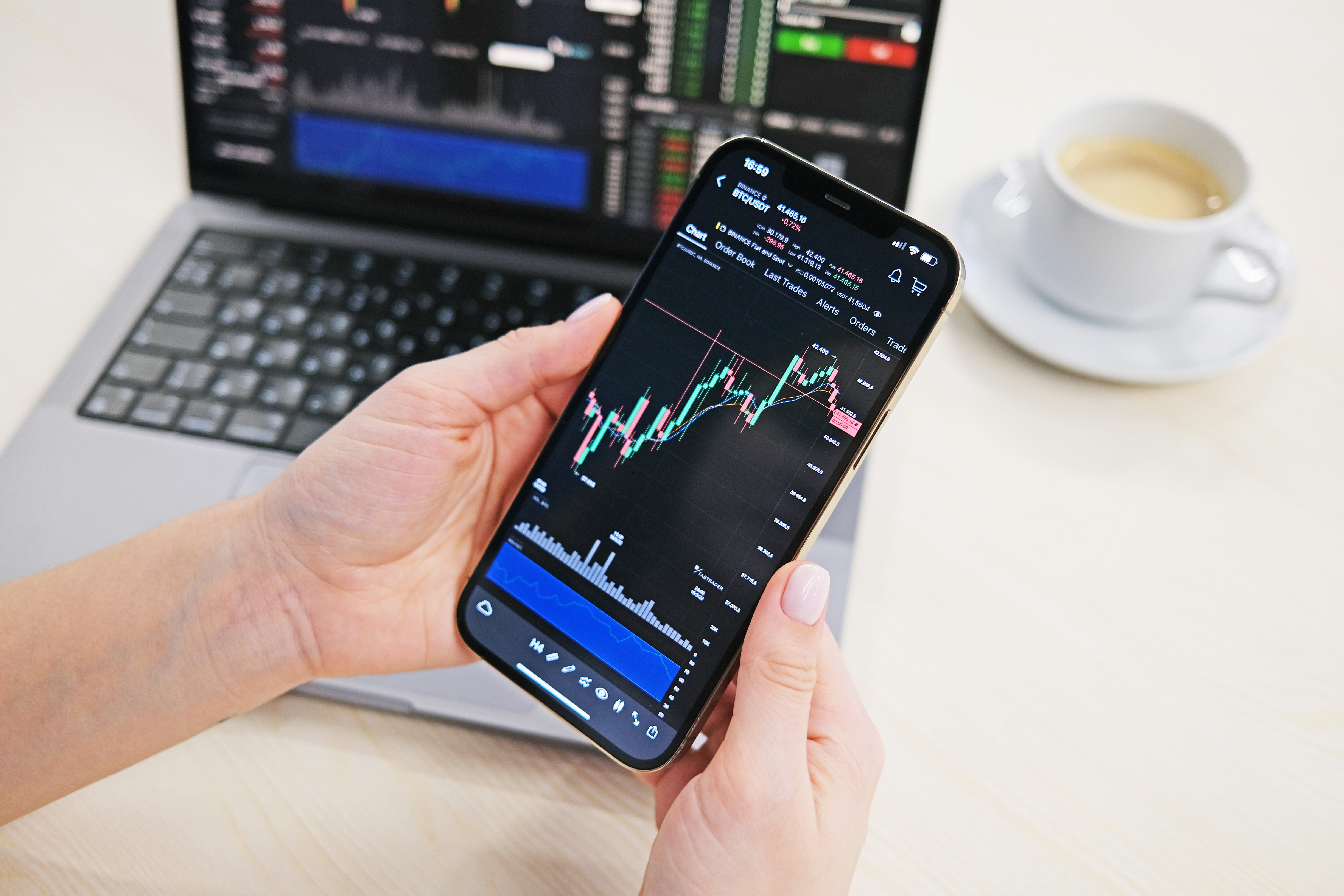
Regulatory uncertainty tops the list. Prediction markets operate in a legal gray zone that varies by jurisdiction and shifts without warning. Access can disappear overnight. Settlement rules can change mid-market. Compliance requirements might suddenly exclude entire regions or user types.
A position that looks profitable today could become inaccessible tomorrow, not because your forecast was wrong, but because policy moved faster than the platform could adapt. Traders who ignore this dimension discover too late that their edge means nothing if they can't execute.
The Hidden Costs of Slippage and Impact
Liquidity creates the second trap. High-profile events draw deep order books where you can enter and exit cleanly. Niche markets trade thin. A $500 order might move the price by 15 cents in a low-participation market, turning what looked like a $0.60 entry into a $0.75 fill.
Worse, when you try to exit, there may be no counterparty willing to take the other side at any reasonable price. Paper profits stay paper. The position that seemed smart becomes a hostage to market structure.
Binary Outcomes Amplify Risk Asymmetrically
Traditional assets appreciate gradually. Equities drift higher over quarters. Bonds compound predictably. Prediction markets resolve to $1 or $0, nothing in between. A forecast that's 90% correct still pays zero if the outcome lands in the other 10%.
This structure punishes overconfidence brutally. Three winning trades at modest size get erased by one oversized loss on a position you treated as certain. The math doesn't forgive being “almost right.”
Distinguishing Narrative Shifts From Probability Shifts
Beginners often chase momentum during high-stakes events.
Elections generate intense coverage.
Geopolitical crises flood feeds with breaking updates.
Corporate announcements move fast.
Prices swing as participants react to headlines rather than recalculating actual probabilities.
That $0.55 share jumps to $0.72 because a poll dropped, not because the underlying odds shifted that much. Traders who mistake volatility for signal end up buying peaks and selling troughs, turning probability assessment into emotional whiplash.
Misunderstanding What Probabilities Actually Mean
A market pricing an outcome at 70% isn't declaring it will happen. It's stating that similar configurations resolve favorably seven times out of ten. The other three aren't flukes. They're part of the distribution.
Treating high-probability positions as guarantees leads to catastrophic sizing. You bet heavily because it “can't lose,” then discover that 30% events occur roughly 30% of the time. The loss feels shocking only because you confused likelihood with certainty.
Metacognitive Detachment: Moving from ‘Being Right’ to ‘Process Fidelity’
Many beginners describe feeling trapped on a constant emotional rollercoaster, where following markets closely creates more anxiety than clarity. That sensation stems from treating each position as a belief to defend rather than a probability to manage.
When your identity attaches to an outcome, every price move against you feels personal. The market isn't punishing you. It's updating based on information you either missed or weighted differently. The discomfort comes from refusing to accept that your forecast was just one input among thousands.
How Event Signals Propagate Through a Portfolio
Platforms like buy Crypto integrate prediction markets alongside tokens and perpetuals, treating them as legitimate trading venues within the broader onchain economy. Instead of isolating prediction market activity from the rest of your portfolio, you monitor probability shifts in the same interface where you track token positions and perp exposure.
That consolidation doesn't eliminate risk, but it does surface correlations faster. When a policy-related market moves sharply, you see immediately whether that shift should trigger adjustments elsewhere, executing across asset classes without toggling between separate platforms or losing context.
Emotional Conviction Masquerading as Analysis
Personal beliefs distort probability assessment more than most beginners realize. You want a candidate to win, so you interpret polling noise as a signal. You expect a company to stumble, so you overweight negative headlines and dismiss positive data.
The market doesn't care what you want. It prices what participants collectively expect, weighted by capital and conviction. When your position aligns with your preferences rather than dispassionate analysis, you're expressing identity, not edge.
Position Sizing and the Kelly Criterion: The Math of Staying in the Game
Responsible participants size positions so any single loss stays manageable. Capital is diversified across independent events rather than concentrated in a single narrative. Trades get evaluated on expected value, not gut certainty. Outcomes get framed as distributions, not promises.
The difference between disciplined use and reckless speculation isn't intelligence. It's accepting that every share represents a probability, and probabilities only reveal themselves across many trials, not one.
Why Price is a Proxy, Not a Guarantee
Used carefully, prediction markets provide targeted exposure to real-world catalysts and compress information lag in ways traditional assets can't match.
Used carelessly, they concentrate risk through binary payoffs, illiquid exits, and emotional decision-making that mistakes conviction for correctness.
The platform doesn't determine which path you take. Your understanding of what the price actually represents does.
Related Reading
How Bullpen Helps Traders Use Polymarket Without the Usual Crypto Friction
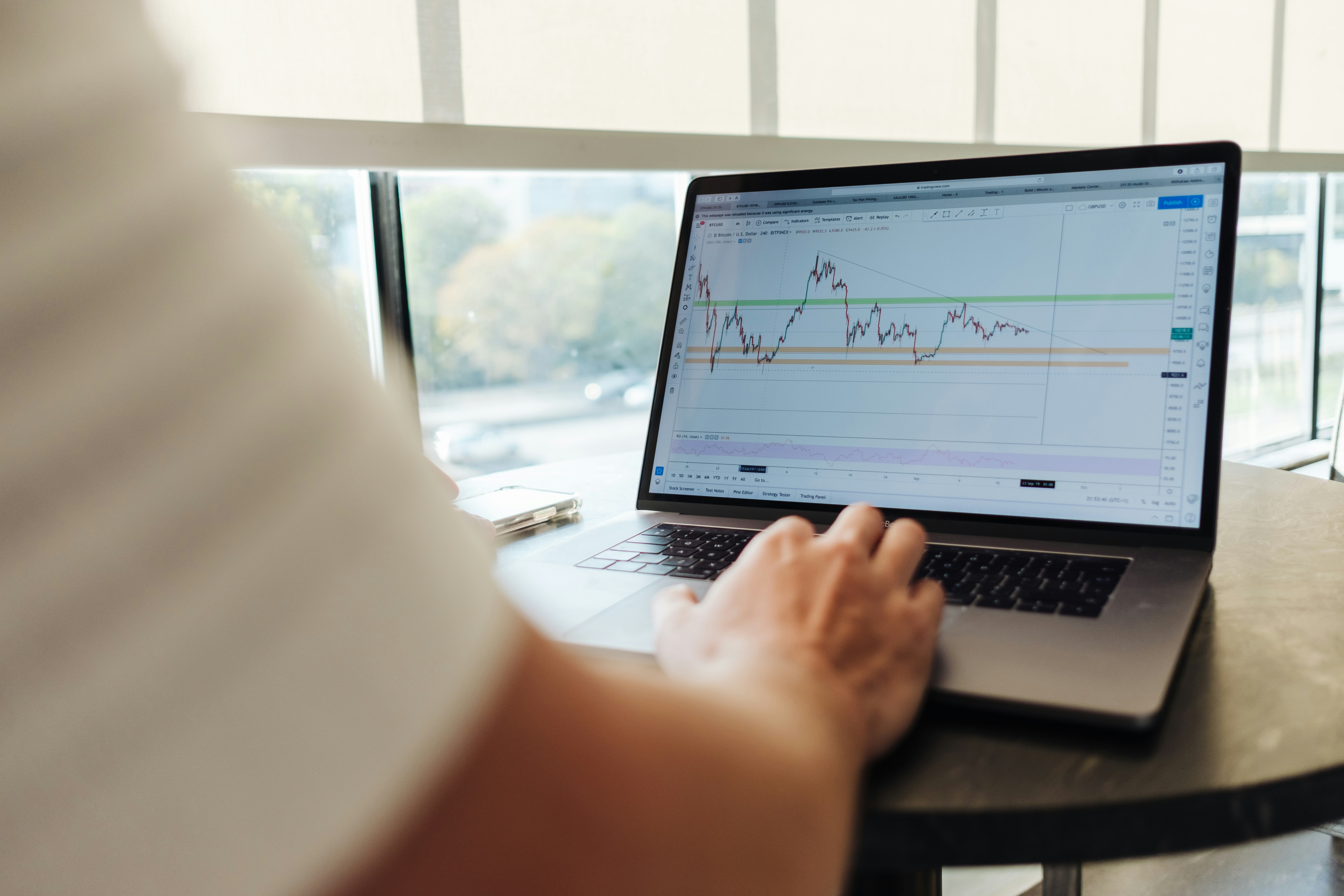
Execution speed determines whether you capture mispricing or watch it disappear. Bullpen consolidates Polymarket access into one interface, removing:
Wallet juggling
Chain bridging
Account fragmentation that typically delay action
When probabilities shift after breaking news, you position immediately instead of scrambling through multiple platforms while the window closes.
Unified Interface Eliminates Platform Switching Costs
The standard workflow forces traders to:
Monitor news feeds
Check Polymarket in a separate browser tab
Manage wallet extensions
Bridge funds across chains
Track positions through disconnected dashboards
Each transition burns seconds that compound into minutes. In event-driven markets where probabilities reprice within moments of new information, those delays turn edge into missed opportunity.
Reducing the Hidden Cost of Context Switching
Bullpen treats prediction markets as legitimate trading venues within the broader onchain economy, not isolated curiosities. You monitor probability shifts alongside token price action and perpetual funding rates from the same screen.
When a policy-related market moves sharply, you see immediately whether that shift correlates with token positioning elsewhere in your portfolio. Execution happens without context switching, preserving the mental clarity needed to assess whether the move represents signal or noise.
Real-Time Performance Data Surfaces Who's Actually Winning
Leaderboards displaying verified PNL separate consistent performers from loud voices. You observe which traders are profitably positioning in specific event categories, how quickly they enter after probability shifts, and whether they hold through resolution or exit early. That transparency reveals patterns the market hasn't fully priced yet.
Notifications alert you when top performers open new positions. Instead of reverse-engineering their logic from fragmented social posts, you see their conviction expressed through capital deployment in real time. This doesn't replace your own analysis. It provides a cross-check against collective intelligence from participants who've demonstrated predictive skill through auditable results.
Funding Friction Drops When Onramps Match How People Actually Hold Money
Traditional Crypto onboarding requires converting fiat to stablecoins, transferring across chains, and managing gas fees before capital becomes usable. Each step introduces delay and technical overhead, discouraging rapid repositioning. When a market opportunity emerges at 2 AM after an unexpected announcement, complexity becomes the barrier between recognizing the edge and capturing it.
Bullpen supports Apple Pay and direct bank transfers, compressing the path from decision to execution. Capital moves from familiar payment rails into active positions without requiring blockchain literacy or multi-step conversions. That simplicity matters less for planned entries and more for reactive trades, where minutes determine whether you get favorable pricing.
Consolidation Reduces Operational Risk Across the Execution Chain
Managing multiple wallets, tracking positions across platforms, and reconciling performance through spreadsheets creates failure points. A forgotten password locks the capital. A misplaced seed phrase erases access. Monitoring scattered dashboards means missing probability shifts in markets you're not actively watching.
Centralized visibility doesn't eliminate risk, but it surfaces it faster. You see aggregate exposure across prediction markets, tokens, and perpetuals in one view, making it easier to identify concentration before it becomes catastrophic. Position sizing stays disciplined when you can evaluate total capital deployment at a glance rather than reconstructing it from memory.
Guided Onboarding Addresses the Confidence Gap
Most hesitation around prediction markets stems not from doubting the concept but from uncertainty about the mechanics of execution.
Which markets offer sufficient liquidity?
How do you size positions when probabilities feel ambiguous?
What alerts prevent you from missing repricing events while you're offline?
Moving From Strategic Theory to Tactical Execution
When you deposit, Bullpen provides a structured implementation session.
You identify a current high-impact event market
Review how consistently profitable traders are positioned
Configure notifications so probability shifts reach you immediately
Leave with a specific plan for your first trade
This converts theoretical understanding into operational confidence, addressing the gap between knowing prediction markets work and actually using them effectively.
The Operational Efficiency of Unified Onchain Prediction Markets
The question isn't whether prediction markets provide an edge. It's whether you can access that edge without the infrastructure becoming the bottleneck.
Bullpen removes that friction by treating Polymarket as part of the onchain trading ecosystem rather than a separate platform requiring separate workflows. Speed, visibility, and execution clarity matter more than feature lists when probabilities are moving, and capital needs to follow.
Buy Crypto Today With Bullpen
The infrastructure is already built. You don't need to become a blockchain expert or manage three different platforms to access the same forward-looking signals institutional desks monitor. Platforms like buy Crypto collapse the distance between recognizing probability dislocations and acting on them, treating prediction markets as legitimate trading venues alongside tokens and perpetuals rather than isolated experiments requiring separate workflows.
You can start small to understand how the interface responds during live events, or deposit $1,000 or more to receive direct onboarding focused on your specific trading objectives, plus bonus points. Either path moves you from watching probabilities shift to positioning ahead of them, from consuming retrospective commentary to trading real-time expectations.
Last Updated:
March 23, 2026