
Trade smarter with alternatives to DexScreener that filter scams. Find hidden gems using advanced security scores and rug-detection alerts today.
The hunt for the best memecoins can feel like walking through a minefield. You spot a promising token on DexScreener, only to discover hours later that it was a honeypot scam that drained someone's wallet. To avoid these traps, many traders are turning to alternatives to DexScreener that filter scams before they ever reach your screen. This article reveals platforms that go beyond basic token tracking by actively filtering out rug pulls, scam tokens, and fraudulent projects, helping you identify legitimate opportunities without the constant fear of losing your investment.
Finding the right screening tools can make all the difference when you're ready to buy Crypto with confidence. Bullpen simplifies this process by connecting you with verified platforms that combine real-time data analysis with anti-scam features, so you can focus on discovering genuine projects rather than second-guessing every transaction. Whether you're searching for token analytics, liquidity verification, or contract auditing tools, you'll learn which alternatives offer the protective layers that DexScreener lacks.
Summary
DexScreener's core problem is that it shows everything without filtering, which means traders see legitimate opportunities and sophisticated scams side by side. Chainalysis documented over 117,629 scam tokens deployed on-chain in 2022, and scam revenue reached $14.1 billion in 2024 (a 67% increase from 2023). When speed matters, and thousands of new tokens launch daily, the absence of protective layers turns discovery into a minefield where momentum and malicious intent look identical until capital is already trapped.
Real-time visibility creates a fundamental tension: the faster you discover opportunities, the less information you have to evaluate them safely. Early-stage tokens lack audits, community history, or independent verification, yet DexScreener surfaces them immediately after launch. The platform serves 10 million users who rely on this speed advantage, but newly launched tokens carry the highest risk because contract permissions, liquidity locks, and holder distribution haven't been verified.
Rug pulls succeed because early charts look identical to legitimate launches, showing the same momentum, volume patterns, and community activity. The Squid Game token surged from cents to over $2,800 through professional branding and coordinated promotion, only to have liquidity drained in seconds, leaving holders unable to sell.
Honeypots allow purchases but prevent sales through hidden smart contract rules that only reveal themselves during exit attempts. Contract code can include blacklist functions, transfer delays, or sales taxes approaching 100% that stay invisible until triggered.
Wash trading creates momentum through coordinated buying and selling across controlled wallets, pushing tokens onto trending lists and attracting real buyers who interpret the activity as organic demand. The U.S. Securities and Exchange Commission notes this distorts market perception by making assets appear more liquid than they are, and in decentralized markets with no listing requirements, this tactic operates without meaningful oversight.
Bullpen addresses this by combining scam detection with social transparency, showing not just what's moving but who's actually profiting and their verified track record, creating an environment where discovery happens alongside validation, using signals that reflect documented performance rather than manufactured hype.
Table of Contents
Why Traders are Searching for Scam-Filtering Alternatives to DexScreener
Top 9 Alternatives to DexScreener That Help Filter Risky Tokens
Why Traders are Searching for Scam-Filtering Alternatives to DexScreener

Traders want tools that help them avoid getting ruined before they even realize what happened. DexScreener shows everything, which makes it powerful for discovery but dangerous for decision-making. When speed matters, and thousands of new tokens appear daily, the absence of filtering turns opportunity into a minefield.
The Platform Shows Activity, Not Legitimacy
DexScreener aggregates on-chain data without editorial judgment. If a token has liquidity and trading volume, it appears on the dashboard. This neutrality reflects the platform's design philosophy: show what's happening, not what's trustworthy. On Solana alone, new tokens launch constantly. Some represent genuine projects with roadmaps and committed teams. Others exist solely to extract capital from traders who mistake momentum for validation. The dashboard treats both identically because it measures activity, not intent. This creates a fundamental problem. The tool that helps you find opportunities early also exposes you to the highest concentration of risk. You're looking at raw market behavior, with no protection between you and malicious actors.
Scam Tokens Dominate New Listings
The scale of fraudulent activity is staggering. Chainalysis documented over 117,629 scam tokens deployed on-chain in 2022, collectively draining billions from victims across the Crypto ecosystem. Rug pulls remain one of the most devastating attack types in decentralized finance. Developers create tokens, attract investor funds through hype or artificial price movement, then withdraw liquidity or abandon the project entirely. By the time traders recognize the pattern, recovery is impossible.
Advanced On-Chain Analysis: Moving Beyond Price
The tokens engineered for quick extraction look identical to legitimate launches in their earliest stages.
Same chart patterns
Same social media presence
Same promises
Distinguishing between them requires contract analysis, liquidity verification, and wallet distribution checks that most traders either skip or don't know how to perform.
New Traders Rely on Signals That Can Be Gamed
Experienced participants check contract permissions before trading. They verify liquidity locks, examine top holder distributions, and look for red flags in token mechanics. This takes time and technical knowledge. Newer traders often make decisions based on trending lists, price momentum, or social buzz. All of these signals can be manufactured. Wash trading inflates volume. Coordinated buying creates artificial breakouts. Paid promotion generates false social proof.
The Psychology of FOMO: How Scammers Exploit Asymmetry
This asymmetry creates an environment where sophisticated actors profit from less informed participants. The dashboard shows you what's moving, but it doesn't tell you why or whether that movement is organic. You're trading on incomplete information, and the people designing scams know exactly which gaps you'll fill with assumptions.
Losses Happen Before Warning Signs Become Obvious
Many scams are designed to appear normal until significant capital is invested. Selling restrictions are hidden within the contract code. Liquidity can be removed in a single transaction. Developer wallets can dump holdings after initial buyers establish a floor. Because DexScreener updates in real time, you see price collapse or failed transactions only after the damage is done. The tool reflects what happened, not what's about to happen. By the time the chart shows danger, your capital is already gone.
Immediacy vs. Due Diligence
The pattern repeats because the same features that attract traders create vulnerability.
Immediacy means less time for due diligence.
Openness means there are no barriers between you and malicious listings.
Early discovery means you're often first into projects that haven't been vetted by anyone.
Speed Favors Both Opportunity and Exploitation
The core tension is unavoidable. The faster you can discover new opportunities, the less information exists to evaluate them. The more open the platform, the more bad actors it attracts. The same tools that help you get in early also help scammers find victims quickly. Traders searching for alternatives aren't abandoning DexScreener's core value. They're looking for something that preserves the discovery advantage while adding protective layers that don't slow them down. Filtering scams is only half the solution. The real need is for tools that help you identify legitimate opportunities before they trend, using signals that can't be easily manipulated.
Social Trading vs. Copy Trading: Knowing the Difference
Platforms like Bullpen address this by combining scam detection with social transparency. Public performance data, whale tracking, and real-time leaderboards create an environment where you can see who's actually winning and what they're trading, not just which tokens have the most artificial volume. When discovery tools show you both the opportunity and the track record of traders already in position, you're filtering by outcomes, not hype. But understanding why traders need better filtering only matters if you know what makes DexScreener so effective in the first place, and why that same effectiveness creates the risk you're trying to avoid.
What DexScreener Does Well and Why That Creates Risk
If traders are exposed to scams on open dashboards, it's largely because those dashboards are doing exactly what they were designed to do. DexScreener's core strength is neutrality. It surfaces on-chain market activity as it happens, without judging which projects are legitimate. That makes it extremely powerful for discovery and equally challenging for risk management.
Real-Time On-Chain Price Tracking
DexScreener aggregates live pricing from decentralized exchanges, enabling users to monitor token movements as trades occur. This immediacy is essential in markets where prices can shift dramatically within minutes. Real-time visibility also means traders encounter assets before any meaningful track record exists. Early data reveals momentum, not credibility. You see a chart moving up and liquidity flowing in, but you don't see whether the developer wallet holds 90% of the supply or whether sell functions are disabled in the contract. Speed gives you access, not understanding.
Liquidity and Volume Monitoring
The platform highlights trading volume and liquidity levels, helping users identify where capital is flowing. Large inflows can signal rising interest or institutional participation, but they can also be artificially generated. Wash trading, coordinated buying, or temporary liquidity injections can create the appearance of strength without long-term support. The numbers look real because the transactions are real. What's missing is context about who's behind them and whether the activity represents genuine market interest or manufactured hype designed to attract exit liquidity.
Rapid Discovery of Newly Launched Tokens
One of DexScreener's most valued features is its ability to surface brand-new trading pairs almost immediately after launch. For traders seeking outsized returns, early entry is often essential. According to the DEX Screener Case Study, the platform serves 10 million users who rely on this speed advantage to identify opportunities before they trend. The downside is that newly launched tokens carry the highest uncertainty. At that stage, there may be no:
Audits
Community history
Independent verification
It is making it difficult to distinguish genuine projects from opportunistic scams. You're trading on potential, not proof, and the window to decide is measured in minutes, not days.
Multi-Chain Coverage
DexScreener supports numerous blockchain ecosystems, enabling users to track opportunities across networks without switching tools. This broad coverage reflects the fragmented nature of decentralized markets. But it also increases exposure. Each chain has its own:
Norms
Tooling
Risk landscape
It can overwhelm traders trying to quickly evaluate unfamiliar projects. A token on Solana behaves differently from one on Base or Arbitrum, and the red flags that matter on one network might be irrelevant on another. The tool doesn't adjust its filtering based on chain-specific risks because it doesn't filter at all.
The Risk Trade-Off: Openness Without Gatekeeping
DexScreener intentionally applies minimal filtering. If a token is tradable on a decentralized exchange, it can appear. This lack of gatekeeping preserves decentralization and transparency, but it also removes protective barriers that centralized platforms might impose.
The Invisible Tax on Speed
Built-in safety indicators are limited, and the platform does not attempt to verify project legitimacy. As a result, users must perform their own due diligence. The problem is that due diligence takes time, and the platform's entire value proposition is speed. You're forced to choose between moving fast and staying safe, and most traders lean toward speed because that's where the returns are.
Data Shows Activity, Not Trustworthiness
The key distinction is that DexScreener measures what is happening, not whether it should. Price spikes, liquidity changes, and transaction flows are signals of behavior, not endorsements of quality. A token can have impressive volume and still be a rug pull in progress. Liquidity can look deep until the developer removes it in a single transaction. The chart shows the outcomes of trades, but it doesn't show the intent behind them. You're interpreting signals without knowing who's sending them or why.
A Powerful but Neutral Data Layer
DexScreener is best understood as infrastructure rather than guidance. It excels at delivering raw market intelligence quickly and comprehensively. For experienced traders with strong risk controls, this neutrality can be an advantage. For others, especially those seeking early-stage opportunities, the same openness can amplify exposure to dangerous assets. The platform does not create risk; it reveals it in real time, without filtering, leaving safety entirely in the user's hands.
Moving Toward Data-Driven Conviction
The familiar approach is to cross-reference DexScreener data with:
External contract scanners
Liquidity checkers
Holder distribution tools
As complexity grows, this workflow fragments across multiple tabs and platforms, slowing decision-making and creating gaps where critical warnings go unnoticed. Platforms like Bullpen combine scam detection with social transparency, allowing traders to see not just what's moving, but who's winning and what they're trading. Public performance data, leaderboards, and whale tracking create an environment where discovery happens alongside validation, compressing the time between opportunity identification and informed execution.
Related Reading
Common Types of Crypto Scams Traders Encounter
These schemes are not rare outliers. They represent a systematic extraction layer built into unfiltered discovery environments, designed to look credible until the moment capital becomes unrecoverable. Chainalysis reported scam revenue reached $14.1 billion in 2024, representing a 67% increase from 2023. Understanding the mechanics matters because recognition is the only defense that works before funds disappear.
Rug Pulls That Drain Liquidity Instantly
Developers create tokens, attract buyers, then remove all liquidity from the trading pool in a single transaction. The price collapses to zero within seconds. Because decentralized exchanges rely on pooled capital for trading, draining it eliminates any exit path for holders. The Squid Game token in 2021 demonstrated this pattern at scale. It surged from a few cents to over $2,800 by leveraging the popularity of the Netflix series, using professional branding and coordinated social media promotion. Developers then drained liquidity and disappeared, leaving holders unable to sell. The entire collapse happened faster than most traders could react.
Advanced Smart Contract Red Flags
Rug pulls succeed because early charts look identical to legitimate launches. Same momentum, same volume patterns, same community activity. The difference exists in contract permissions and developer intent, neither of which appears on a price chart.
Honeypots That Block Your Exit
A honeypot allows purchases but prevents or heavily penalizes sales through hidden smart contract rules. You can:
Buy the token
Watch the price rise
See active trading on the chart
The restriction only reveals itself when you attempt to exit. Contract code can include blacklist functions, transfer delays, or sales taxes that approach 100%. These mechanisms stay invisible until triggered. By the time you discover the limitation, your capital is trapped in an asset you cannot liquidate.
Wallet Distribution and Shadow Holders
Security researchers regularly identify honeypots among newly launched tokens, but detecting them requires contract analysis that most traders skip. The transaction history looks normal because the buys execute without issue. Only sells expose the trap.
Wash Trading That Manufactures Momentum
Coordinated buying and selling between controlled wallets creates artificial volume and price movement. This pushes tokens into trending lists on analytics platforms, attracting real buyers who interpret the activity as organic demand. Automated bots can execute these trades continuously, generating charts that appear to show strong interest. The volume is real in the sense that transactions occurred, but it represents no actual market depth. When real traders enter, the coordinated wallets exit, leaving new buyers holding an asset with no genuine liquidity.
The SEC’s Back to Basics Approach
The U.S. Securities and Exchange Commission has noted in enforcement actions that wash trading distorts market perception by making assets appear more liquid and popular than they actually are. In decentralized markets with no listing requirements, this tactic operates without meaningful oversight.
Contract Permissions That Allow Post-Launch Manipulation
Some tokens include built-in functions that let developers:
Adjust supply
Freeze wallets
Modify transaction rules after launch
These permissions hide in contract code that most traders never review.
Post-Deployment Manipulation: Minting and Blacklisting
Mint functions can create unlimited new tokens, instantly diluting holders. Blacklist functions can freeze specific addresses from selling. Transaction fee adjustments can make exits economically impossible. All of these capabilities can be triggered after initial buyers establish positions, making early chart analysis irrelevant. The code is public and verifiable, but verification requires technical knowledge and time. Speed-focused traders often skip this step, trusting that visible liquidity and active trading indicate safety.
Social Coordination That Amplifies False Signals
Not all scams rely on malicious code. Many depend on coordinated promotion to create urgency and FOMO. Influencers, anonymous accounts, and viral posts generate rapid buying pressure before insiders exit at peak prices. This pattern leverages the same discovery mechanisms that help legitimate projects gain traction. The difference lies in intent and coordination. A genuine project builds community over time. A coordinated pump creates the appearance of community through paid promotion and bot activity, then disappears once extraction is complete.
Consumer Protections and the Duty of Care
According to the FBI, Cryptocurrency investment scams resulted in losses exceeding $3.94 billion in 2023. The scale reflects how effectively these schemes exploit the gap between visible momentum and underlying legitimacy.
Why Most Scams Look Legitimate at First
The critical danger is not obvious fraud. It's a credible appearance during the window when decisions happen. Early charts show strong momentum. Liquidity appears adequate. Communities seem active. Social proof accumulates quickly. Decentralized exchanges require no approval process to list tokens, which means no vetting occurs before trading begins. The same openness that enables permissionless innovation also removes protective barriers that might filter malicious projects.
The Speed-Accuracy Trade-off in High-Frequency Trading
For traders using real-time discovery tools, this creates overlap between the highest-growth opportunities and the highest-risk assets. The tokens moving fastest are often the ones engineered for extraction. By the time warning signs become visible on the chart, capital is already trapped or gone. The familiar approach involves cross-referencing multiple tools:
Contract scanners
Liquidity checkers
Holder distribution analyzers
As complexity grows, this workflow fragments across tabs and platforms, creating gaps where critical warnings get missed.
Behavioral Analytics: Reading the Whale Mindset
Platforms like Bullpen compress this verification layer by combining scam detection with social transparency, allowing traders to see not just what's moving, but who's actually profiting and what their track record shows. Public performance data and whale tracking create a “LARP-proof” environment where discovery happens alongside validation, reducing the time between opportunity identification and informed execution.
Related Reading
What to Look for in a Safer DexScreener Alternative
A safer alternative needs to compress the gap between discovery and validation without slowing you down. That means automated contract analysis, transparent social signals showing who's actually winning, and execution tools that let you switch platforms when you're ready to trade. The goal is not just avoiding bad tokens, but identifying legitimate opportunities before they trend, using signals that can't be easily manufactured.
Automated Contract Scanning That Runs Before You Click
Manual contract verification takes the time most traders don't have. By the time you've checked mint functions, liquidity locks, and wallet permissions, the entry price has moved, or the opportunity has passed.
Integrated Risk Scoring: Contextualizing Red Flags
Effective alternatives integrate automated scanning that flags dangerous contract features instantly. Honeypot detection, hidden sell taxes, blacklist functions, and unlimited mint permissions should surface as warnings the moment you view a token. This doesn't eliminate risk entirely, but it removes the most obvious traps without requiring technical expertise or additional tools. The scan needs to happen in context, not as a separate step. If you have to copy a contract address, open another site, paste it, wait for results, then return to your chart, you've already lost the speed advantage that makes early discovery valuable.
Liquidity Lock Verification and Depth Analysis
Liquidity can disappear in seconds if it's not locked or if the pool is shallow enough that a single transaction drains it. Knowing the total value locked matters less than understanding whether that liquidity can be exited or is controlled by addresses that can remove it. Look for platforms that display lock duration, percentage of supply in the pool, and whether liquidity provider tokens are held by the developer or burned. A token with $50,000 in liquidity looks stable until you realize 90% can be withdrawn by a single wallet tomorrow.
The Death Spiral of Thin Liquidity
Depth analysis also reveals how much capital is required to move the price significantly. Thin liquidity means small trades incur large slippage, making both entry and exit more expensive than the chart suggests. This information should be visible without calculation, presented as a risk indicator rather than raw numbers you have to interpret.
Transparent Wallet Distribution and Holder Concentration
When a small number of wallets control most of the supply, exit risk increases dramatically. Those holders can coordinate dumps, manipulate prices through coordinated buying, or simply exit at peaks, leaving smaller participants with no liquidity. Safer alternatives surface this data immediately. Top holder percentages, wallet distribution, and whether those wallets have a history of dumping other tokens all provide context that price charts cannot. If three wallets hold 80% of the circulating supply and were all funded by the same source, that's not a community-driven project. It's a coordinated operation.
Deanonymizing the Shadow Developer
This becomes especially important for newly launched tokens where holder concentration is highest. Early buyers often include the developer team, insiders, and bots. Distinguishing between these groups requires tracking wallet behavior over time, not just taking a snapshot of current holdings.
Real-Time Social Validation Through Performance Tracking
Volume and momentum can be faked. Performance history cannot. Platforms that show you which traders are consistently profitable, what they're holding, and how long they've held it create accountability that charts alone don't provide.
The Rise of On-Chain Reputation
When you see experienced wallets with strong track records entering a position and holding through volatility, that's a different signal than anonymous volume spikes. Public leaderboards, verified PnL data, and wallet transparency turn discovery into a social layer where reputation matters. You're not just looking at what's moving. You're seeing who's moving it and whether they have credibility.
Tracing Information Diffusion
This also filters out coordinated pump schemes. If the wallets driving volume have no history, were created recently, or show patterns of coordinated behavior across multiple tokens, that's visible in their transaction history. Scammers can fake momentum, but they can't fake months of profitable trading across diverse positions.
Whale Tracking That Shows Intent, Not Just Size
Large wallets move markets, but not all whale activity signals the same thing. A wallet accumulating slowly over days suggests conviction. A wallet that buys, pumps social channels, then exits within hours suggests extraction.
Machine Learning in Rug Pull Detection
According to Veritas Protocol, over 90% of Crypto scams involve rug pulls, making it critical to distinguish between genuine accumulation and coordinated exit setups. Effective whale tracking shows transaction patterns, not just balances.
When did they enter?
Have they sold portions or held through volatility?
Do they have positions in similar projects, or is this their only holding?
This level of detail turns whale watching from speculation into pattern recognition. You're not guessing whether a large holder will dump. You're observing behavior that either aligns with long-term conviction or short-term extraction.
Integrated Execution That Doesn't Fragment Your Workflow
The familiar approach involves discovery on one platform, verification across multiple scanners, and execution through a separate interface. As complexity grows, this workflow creates gaps where critical warnings get missed, or opportunities slip away while you're switching tabs.
The Psychology of Compressed Decision Making
Platforms like Bullpen compress this process by combining:
Scam detection
Social transparency
Execution into a unified interface
You discover tokens through real-time feeds, validate them through automated contract scans and whale tracking, see who's profiting from similar positions, and execute trades without leaving the platform. This eliminates the friction that forces traders to choose between speed and safety.
The Science of Cognitive Load in High-Stakes Trading
When discovery, validation, and execution exist in the same environment, you're not just filtering scams faster. You're identifying legitimate opportunities and acting on them before they trend, using signals that reflect actual performance rather than manufactured hype.
Multi-Chain Coverage Without Sacrificing Depth
Opportunities exist across ecosystems, but each chain has different:
Risk profiles
Contract standards
Community norms
A tool that simply aggregates data without adjusting for chain-specific risks creates blind spots.
The Rise of Financial-Grade L2s
Safer alternatives account for these differences.
Solana's speed and low fees attract both innovation and high-frequency scams.
Ethereum's higher costs create natural barriers that filter some low-effort projects but don't eliminate sophisticated fraud.
Base, Arbitrum, and other Layer 2 networks each have unique characteristics that affect how scams present and how quickly they can be detected.
The platform should surface chain-specific warnings and adjust risk indicators based on a token's deployment location. What looks normal on one network might be a red flag on another. Generic scanning misses this context.
Historical Data That Reveals Patterns Over Time
A token's first hour tells you almost nothing about its long-term behavior. Patterns emerge over days and weeks as developer actions, holder behavior, and market response become visible. Look for platforms that:
Track tokens beyond launch
Showing how liquidity changes
Whether developers follow through on commitments
How holder distribution evolves
Projects that survive initial volatility and maintain liquidity without developer intervention behave differently from those that require constant promotion to maintain interest.
Serial Scammers and Attack of the Clones
This historical layer also helps identify repeat offenders. Developers who've launched multiple failed or abandoned projects often reappear with new tokens under different names. Tracking wallet relationships and deployment patterns across time reveals these connections, turning individual token analysis into ecosystem-level pattern recognition.
Top 9 Alternatives to DexScreener That Help Filter Risky Tokens
1. Bullpen

Bullpen focuses on filtering for opportunities based on trader performance rather than token popularity. Instead of scanning thousands of new listings, users can follow traders with verified profit-and-loss records and observe their positions in real time.
Key scam filter: Verified performance signals reduce reliance on anonymous hype
Chains: Multiple markets, including Solana assets
Best for: Traders who prefer following proven operators instead of evaluating unknown tokens
The main advantage is behavioral filtering. If experienced traders avoid a token, that absence itself can be informative. The limitation is that Bullpen emphasizes execution and signal following rather than deep contract-level analysis.
2. DexTools
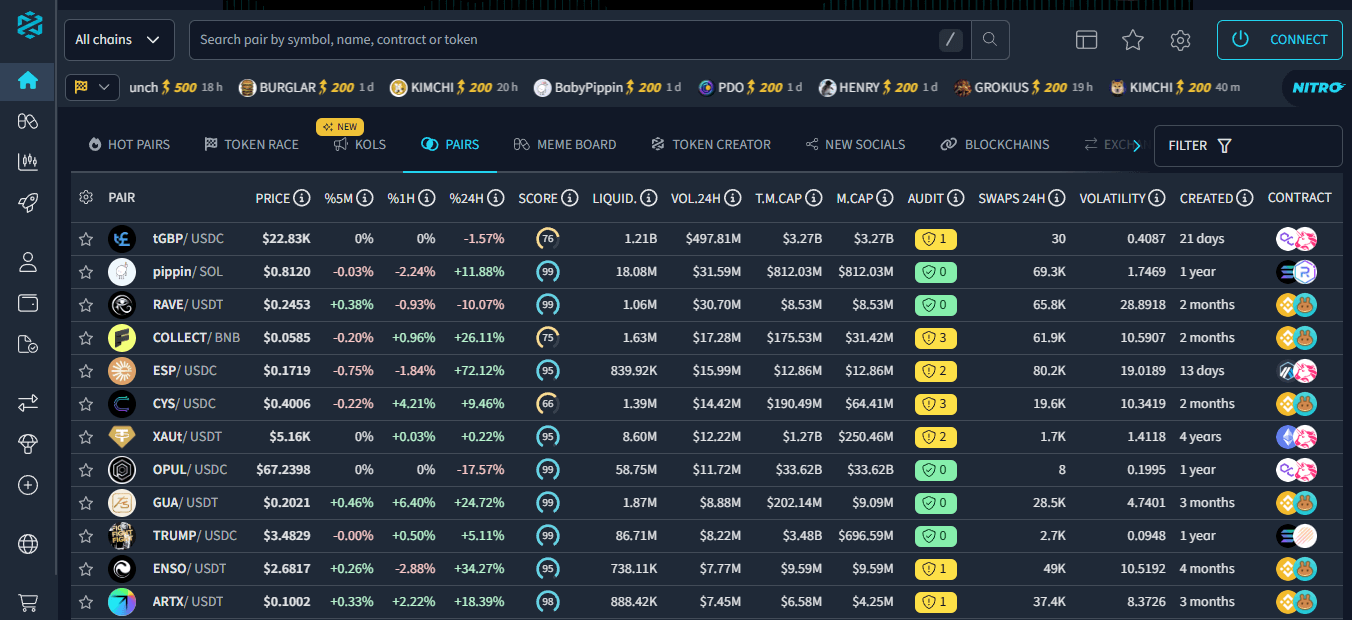
DexTools combines analytics with safety indicators, including:
Liquidity data
Holder distribution
Project activity
It is one of the most widely used research platforms for decentralized markets.
Key scam filters: Liquidity checks, pair analytics, community signals
Chains: Multi-chain
Best for: Traders who want detailed charting plus risk context
DexTools can highlight warning signs such as thin liquidity or suspicious trading patterns, but users must still interpret the data themselves.
3. TokenSniffer
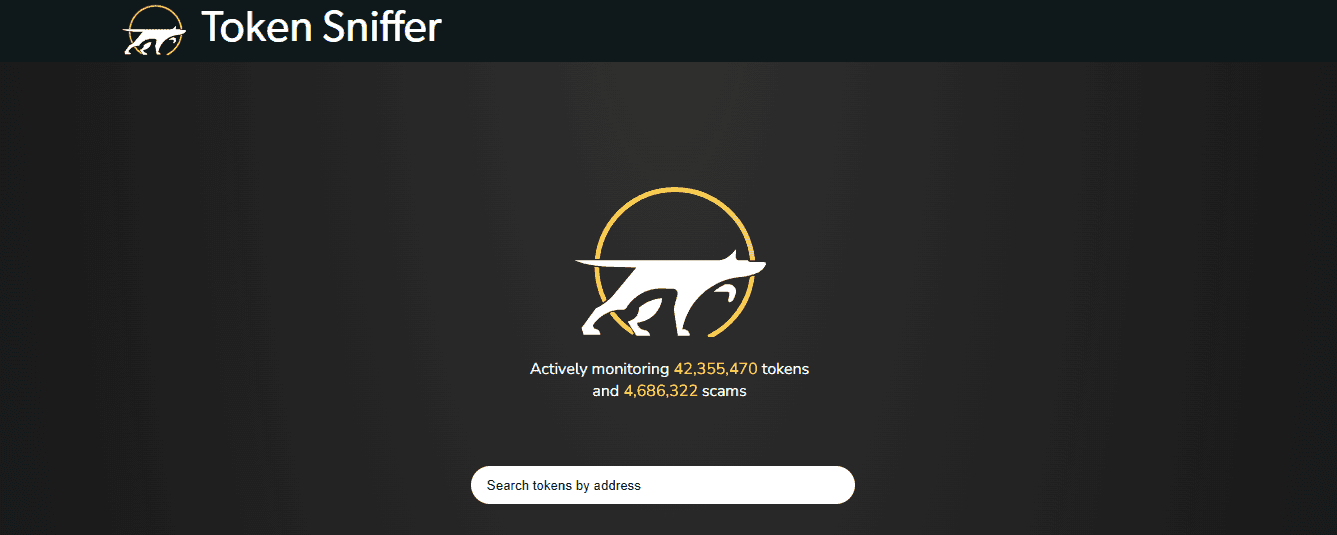
TokenSniffer performs automated smart contract analysis and assigns scores based on known risk factors. It checks for similarities to previously identified scams and flags dangerous permissions.
Key scam filters: Contract audit scoring, similarity detection, and permission risks
Chains: Multiple major networks
Best for: Traders who want quick technical vetting before buying
Its strength is code-level insight. It does not evaluate market behavior or project fundamentals.
4. GoPlus Security Tools
GoPlus provides real-time on-chain security assessments through APIs and browser tools. It evaluates:
Token contracts
Transaction risks
Wallet interactions before execution
Key scam filters: Permission analysis, malicious contract detection, transaction safety checks
Chains: Multi-chain
Best for: Users who want preventative safety checks during trading
GoPlus focuses on security infrastructure rather than market intelligence, so it works best alongside analytics platforms.
5. GMGN.ai
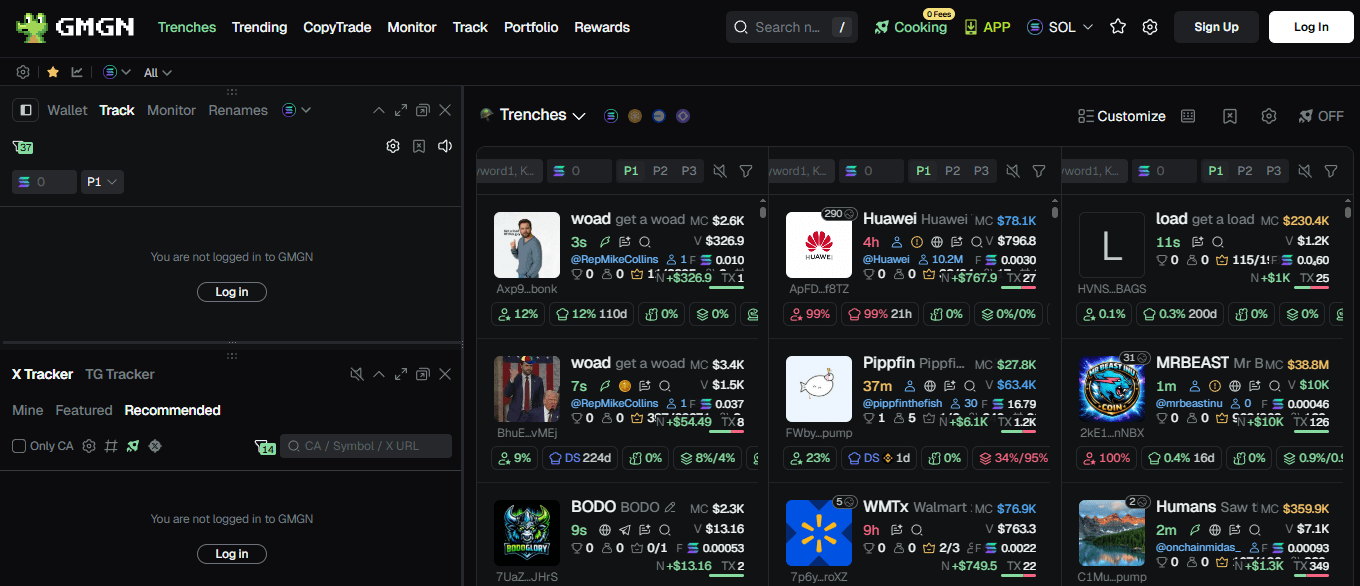
GMGN uses data analysis to track “smart money” wallets and unusual activity patterns. Instead of analyzing projects directly, it monitors how sophisticated traders behave.
Key scam filters: Rug detection signals, profitable wallet tracking, activity alerts
Chains: Multi-chain
Best for: Traders seeking early behavioral signals
Following capital flows can reveal confidence or skepticism before the price reflects it. The limitation is that wallet behavior is not always transparent or interpretable.
6. GeckoTerminal
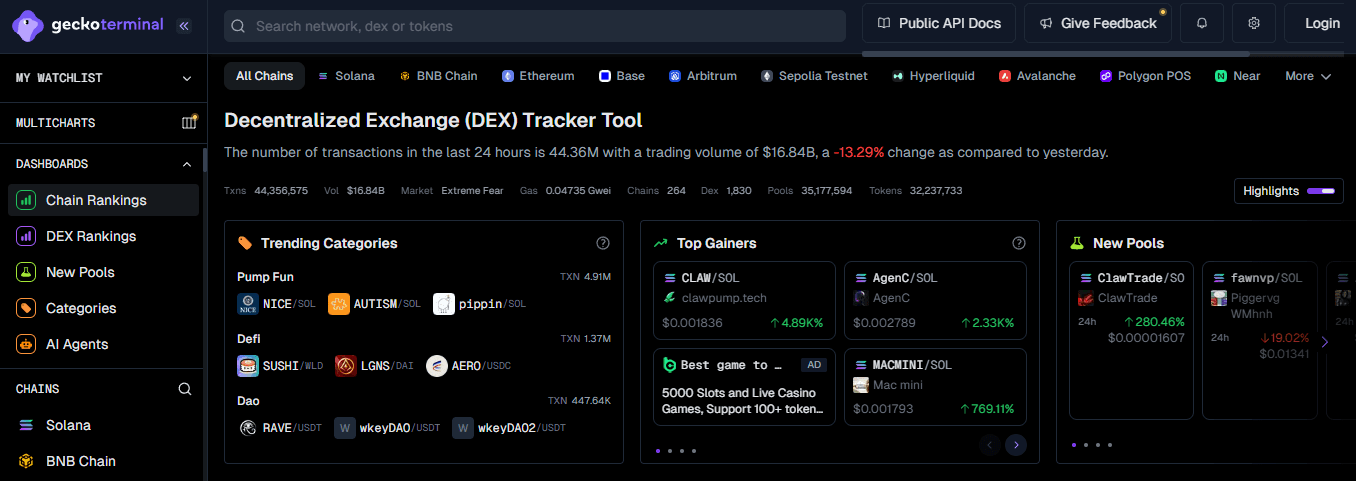
GeckoTerminal emphasizes transparency in liquidity, volume, and trading activity across decentralized exchanges. It provides reliable data on where liquidity resides and how it changes.
Key scam filters: Liquidity visibility, volume analysis, market transparency
Chains: Multi-chain
Best for: Researchers evaluating whether trading activity appears sustainable
It helps identify fragile liquidity conditions that could precede a rug pull, but it does not actively label tokens as safe or unsafe.
7. BullX Neo
BullX Neo targets high-speed traders focused on newly launched tokens, particularly in memecoin ecosystems. It incorporates specific indicators related to liquidity safety and wallet behavior.
Key scam filters: Rug pull signals, liquidity pool lock indicators, bubble wallet detection
Chains: Solana and Ethereum
Best for: Traders seeking early entries with risk flags
Its speed is an advantage, though the environment remains inherently high risk.
8. DexCheck

DexCheck applies artificial intelligence to on-chain data, producing analytics and risk scores that summarize complex information into actionable insights.
Key scam filters: AI-based anomaly detection, risk scoring, wallet analysis
Chains: Multi-chain
Best for: Data-driven traders
AI summaries can accelerate decision-making, but results depend on model quality and interpretation.
9. Defined.fi
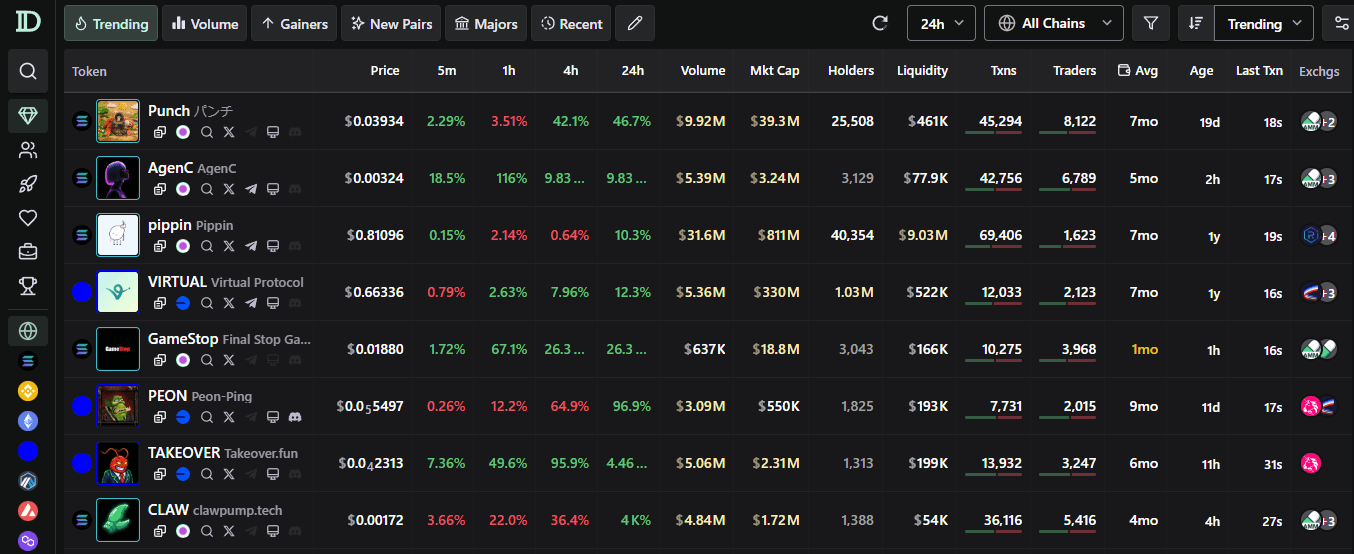
Defined.fi offers advanced analytics and vetting tools tailored for participants in the decentralized finance space. It emphasizes rapid insights into:
Liquidity
Trading patterns
Wallet activity
Key scam filters: Advanced market analytics, behavioral indicators
Chains: Strong Solana focus
Best for: Speed-oriented traders who still want analytical depth
While powerful, it assumes users can quickly interpret complex signals.
Why Quantity Alone Does Not Solve the Problem
According to Alchemy's Dapp Store, there are 58 alternatives to DexScreener as of January 2025. The number of options creates its own friction.
More tools mean more tabs
More workflows
More time spent cross-referencing data instead of making decisions
The familiar approach involves opening multiple platforms to verify what one dashboard shows. You check contract permissions on:
TokenSniffer
Liquidity locks on DexTools
Whale movements on GMGN
Return to your chart to decide
As complexity grows, this workflow fragments attention, leading to gaps in which critical warnings are missed.
The Psychology of Cognitive Load in High-Stakes Trading
Platforms like Bullpen compress this verification layer by:
Combining scam detection
Social transparency
Execution into a unified interface
You discover tokens through real-time feeds, and validate them through:
Automated contract scans and whale tracking
See who's profiting from similar positions
Execute trades without leaving the platform
This eliminates the friction that forces traders to choose between speed and safety.
Combining Tools Creates Better Coverage
No single platform covers every risk vector.
Contract scanners miss behavioral red flags.
Whale trackers do not audit code.
Liquidity monitors do not show holder concentration.
The most effective approach is to layer multiple perspectives.
Start with automated contract scanning to eliminate obvious traps.
Add liquidity verification to confirm depth and lock status.
Layer in wallet tracking to see whether experienced traders are entering or avoiding positions.
Cross-reference with performance data to understand whether similar tokens have succeeded or failed.
The High Cost of Informational Switching
This multi-layered approach takes time if tools do not integrate. The speed advantage that makes early discovery valuable disappears when verification requires switching between:
Platforms
Copying addresses
Waiting for separate scans to complete
What Filtering Actually Protects Against
These tools reduce exposure to the most common attack patterns. Automated contract scans catch honeypots and hidden mint functions.
Liquidity checks reveal rug pull risk.
Whale tracking exposes coordinated dumps.
Performance data filters LARP from legitimate conviction.
But filtering is defensive. It helps you avoid bad trades, not identify good ones. The real opportunity exists in platforms that combine protection with discovery, showing you not just what to avoid but what sophisticated traders are accumulating before it trends.
Hard vs. Soft Information: Decoding the Social Signal
When social transparency reveals who's winning and what they're holding, you're not just filtering scams faster. You're identifying legitimate opportunities and acting on them before they appear on trending lists, using signals that reflect actual performance rather than manufactured hype.
How Bullpen Helps Traders Avoid Scams While Acting Fast

Bullpen shifts the filtering mechanism from token analysis to trader verification. Instead of evaluating thousands of unverified contracts, users observe where consistently profitable traders allocate capital. When real performance data replaces anonymous hype, the decision framework changes from “Is this safe?” to “Are skilled operators actually positioned here?”
Performance Verification Replaces Speculation
A live leaderboard surfaces traders whose on-chain profit-and-loss records are verified. This separates sustained skill from temporary luck. When you see someone with a three-month track record of profitable positions across volatile markets, that carries more weight than a token's 48-hour chart.
Accountability as an Economic Driver
The critical difference is accountability. Anonymous promoters disappear after extraction. Verified traders stake their reputations on every publicly taken position. Their entire history becomes visible, including:
Losses
Hold times
Exit patterns
You're not trusting marketing copy. You're observing documented behavior.
Instant Alerts Compress Decision Windows
Top performers opening positions trigger immediate notifications. This shortens the gap between insight and execution without requiring you to constantly monitor dashboards. By the time a token trends on public feeds, early positioning has already occurred. Alerts tied to verified activity let you react when moves happen, not after they've been discussed. Speed matters because legitimate opportunities move fast. But speed without context creates exposure. When alerts connect to performance history, you know whether the signal comes from someone who's been right before or someone making their first public trade.
Unified Market Access Reduces Launch Exposure
Access to established assets, derivatives, and prediction markets on a single platform eliminates the need to chase every new token launch. You can engage with opportunities that have track records alongside emerging plays, distributing risk across asset types rather than concentrating it in unverified launches.
Consolidating Execution to Reduce Operational Risk
The familiar approach involves jumping between platforms to access different markets, each with its own:
Interface
Wallet connection
Security assumptions
As complexity increases, this workflow increases operational risk and the likelihood of encountering malicious contracts. Platforms like Bullpen consolidate execution across multiple market types, reducing the number of external connections required and keeping capital within a verified environment. This doesn't eliminate risk, but it narrows the attack surface by reducing the number of unfamiliar interfaces you need to trust.
Direct Execution Eliminates Contract Interaction Risk
Trades execute inside the platform without copying addresses, connecting new wallets, or navigating unknown interfaces. This removes friction that slows decision-making and reduces exposure to phishing attempts or malicious contract interactions when moving between tools. Every additional step between discovery and execution creates an opportunity for error.
Pasting the wrong contract address
Approving excessive token permissions
Connecting to a compromised interface all happens during transitions between platforms
Consolidating these steps doesn't just save time; it also improves efficiency. It removes failure points where scams most often succeed.
Behavioral Filtering Surfaces Capital Allocation Patterns
Rather than guessing which tokens are legitimate, you align with participants who've demonstrated the ability to navigate volatile markets successfully. Their positioning becomes a filter. If experienced traders avoid a token despite visible momentum, that absence communicates as much as their presence elsewhere. This creates a LARP-proof environment where performance matters more than narrative. Promotional campaigns lose influence when you can see whether traders with verified records are actually participating or staying away. The question shifts from “What's the story?” to “Where is proven capital actually moving?”
Buy Crypto Today With Bullpen
If the biggest risk in fast markets is acting on hype instead of verified signals, Bullpen gives you a way to move quickly without flying blind. Deposit to start trading and earn a 500-point bonus, and if you deposit $1,000 or more, you'll receive a free introductory call to help you get set up and focus on real opportunities rather than random launches.
The Economics of Switching Costs
The advantage isn't just protection. It's positioning yourself where proven operators are already active, using tools that compress the time between discovery and execution without fragmenting your workflow across multiple platforms. When scam filtering happens automatically, and social transparency shows you who's actually winning, you're not just avoiding bad trades. You're identifying legitimate opportunities before they appear on trending lists, using performance data that can't be manufactured through coordinated promotion or wash trading.
Related Reading
Last Updated:
March 23, 2026