
Find the right GMGN AI alternative with advanced metrics, real-time updates, and tools that support disciplined trading
The memecoin market moves fast, and if you're hunting for the best memecoins before they explode, you need tools that can keep up with rapid price changes and emerging opportunities. GMGN AI has become popular among traders seeking real-time data and token analytics, but it's not the only platform. This article explores GMGN AI alternatives that can sharpen your Crypto trading strategy, helping you spot trends, analyze on-chain movements, and make informed decisions when seconds matter.
Finding the right platform is only part of the equation. Once you've identified promising tokens through advanced analytics and market intelligence tools, you need a seamless way to act on those insights. Bullpen's buy Crypto solution bridges that gap, letting you move quickly from research to execution without jumping between multiple platforms or missing time-sensitive opportunities in volatile memecoin markets.
Summary
Memecoin traders face a critical gap between discovering opportunities and executing trades. GMGN AI and similar analytics platforms excel at surfacing on-chain patterns and tracking wallet behavior, but they stop at discovery. Research from Kaiko shows that liquidity and prices in smaller-cap tokens can shift dramatically within minutes, meaning every second spent switching between discovery tools, wallets, and DEXs directly erodes potential returns.
Most analytics alternatives fail to improve real trading outcomes because they optimize for information delivery when the actual bottleneck is operational infrastructure. According to Kraken data, slippage on volatile tokens can exceed 5% during rapid price moves. Late entries don't just miss out on upside; they also inherit worse risk profiles.
Capital fragmentation across chains creates structural disadvantage in fast-moving markets. A compelling token launches on Base while your funds sit on Solana, forcing you to bridge assets, wait for confirmations, and absorb fees before considering the original trade. By the time capital arrives where you need it, market conditions have shifted completely.
Unverified social signals compound the problem of fragmented workflows. Wallet addresses are shared after token pumps, screenshots show winning trades while hiding losing ones, and performance claims lack timestamps or complete histories. Without verified data showing full track records, including losses and drawdowns, traders follow narratives rather than results.
Research cited by sharpely indicates that 90% of backtested strategies fail to deliver promised returns in live trading, largely because cognitive overload during volatility degrades judgment. More alerts don't produce better decisions when time pressure is extreme, and attention splits between evaluating opportunities and operating infrastructure across multiple disconnected platforms.
Bullpen addresses this by integrating Bitcoin, Solana meme assets, Hyperliquid perpetuals, and prediction markets into one unified interface where discovery, verified trader performance tracking, and execution happen without switching contexts or moving funds between chains.
Table of Contents
Why Traders are Searching for a GMGN AI Alternative
You can spot a promising token launch in seconds, track whale movements across chains, and analyze liquidity patterns before most people even know a project exists. But discovery without execution is just expensive entertainment. The gap between seeing an opportunity and capturing it has become the most expensive real estate in Crypto trading.
Signal Overload Without Clear Prioritization
Advanced analytics platforms generate hundreds of alerts daily. New token launches. Unusual wallet activity. Liquidity shifts. Trending assets across multiple chains. The volume creates its own problem. More data doesn't equal more clarity. When everything gets flagged as potentially important, nothing actually is. Traders spend more time filtering noise than acting on signals. The valuable insight about a token launching with strong initial liquidity gets buried between seventeen alerts about wallet movements that ultimately meant nothing. Decision fatigue sets in before the first trade executes.
Execution Still Requires External Tools
Discovery platforms focus on showing you what's happening. Acting on that information requires leaving the platform entirely. You spot a token surging on Solana, then switch to:
Your wallet
Navigate to a DEX
Connect
Set parameters
Confirm the transaction
Each step introduces friction. The trader who sees an opportunity five seconds before you but can execute in half the time still wins. Speed compounds in volatile markets. By the time you've moved through three different interfaces, the entry price has moved 8%, liquidity has shifted, and the risk-reward calculation you made two minutes ago no longer applies.
Capital Locked on the Wrong Chain or Platform
Opportunities don't wait for you to move money around. A compelling setup appears on Arbitrum, but your capital sits on Solana.
Now you're bridging assets
Waiting for confirmations
Paying fees
Absorbing slippage
You can even think about entering the position. These delays aren't measured in hours anymore. In memecoin markets, ten minutes might as well be ten days. The token that looked attractive at a $2M market cap is now at $8M, and the risk profile has completely changed. You didn't miss the trade because you were wrong about the opportunity. You missed it because your money was in the wrong place when it mattered.
Difficulty Verifying Trader Performance
Social signals drive many trading decisions. Someone screenshots a winning position, posts about a token before it runs, or shares wallet addresses showing impressive returns. But selective sharing is easy. Posting wins while hiding losses creates the illusion of consistency.
The Difference Between Hype and Evidence in Crypto Signals
Without verified performance data, you're trading on vibes instead of evidence. The wallet that made 50x on one memecoin might have lost on twenty others. The influencer sharing alpha might be sharing the same “exclusive” information with ten thousand other people. You can't separate signal from performance art without transparent, time-stamped records of actual trading history.
The Cost of Fragmentation
When discovery, validation, and execution live on separate platforms, the workflow breaks. You analyze:
On one screen
Verify on another
Execute on a third
Context disappears between transitions. The conviction you felt when you first spotted the setup weakens as you navigate through multiple steps. Fragmentation doesn't just slow you down. It changes how you trade. You start avoiding certain opportunities because they're too complicated to execute quickly. You stick to familiar chains even when better setups exist elsewhere. You simplify your strategy not because it's optimal, but because your tools make complexity too expensive.
Reducing Context Switching and Improving Decision Quality
Platforms like buy Crypto collapse this fragmented:
Workflow into a unified interface where discovery
Social validation through verified trader performance
Execution occurs in a single environment
Tracking top traders, analyzing their positions, and replicating their moves doesn't require switching contexts or losing momentum. The infrastructure handles cross-chain complexity while you focus on the decision itself.
How Workflow Interruptions Hurt Execution and Profitability
The real problem isn't finding opportunities. It's the tax you pay between seeing something and doing something about it. Every extra click, every platform switch, every moment spent moving capital instead of deploying it creates a gap where profits disappear. Traders aren't looking for better signals. They're looking for shorter distances between insight and action.
Related Reading
What GMGN AI Actually Does Well (and Where It Stops)
GMGN AI solves the discovery problem better than most Crypto tools. It surfaces before they hit mainstream radar:
On-chain patterns
Tracks wallet behavior
Flags emerging tokens
But discovery alone doesn't close trades. The platform shows you what's happening without giving you a way to act on it, which means every insight still requires you to leave, connect elsewhere, and hope the opportunity hasn't moved by the time you execute.
Wallet Tracking That Actually Reveals Intent
Following smart money used to mean manually checking block explorers and cross-referencing addresses across chains. GMGN AI automates this. You can monitor wallets that consistently enter positions early, track their buys and sells in real time, and observe patterns that suggest conviction versus speculation. When a wallet that historically called three 20x memecoins suddenly accumulates a new token, that signal carries weight. The platform timestamps these movements, so you're not relying on screenshots or delayed social posts. You see the transaction as it happens, not after someone decides to share it.
Token Discovery Before the Crowd Arrives
New launches flood the market daily. Most disappear within hours. A few become the next narrative driver. GMGN AI filters this chaos by surfacing tokens based on liquidity depth, early transaction velocity, and wallet quality. You spot assets when market caps are still measured in thousands rather than millions. The traders who profit most from memecoins don't find them on trending lists. They find them in the first thirty minutes after launch, when risk is highest, but so is upside. GMGN AI compresses the time between launch and awareness, giving you a chance to evaluate before momentum builds.
Trend Monitoring Across Chains
Volume spikes mean something different on Solana than they do on Base. GMGN AI contextualizes activity by chain, showing you where capital is actually flowing versus where it's just moving between the same wallets. This prevents false signals that appear to be momentum but reflect wash trading or coordinated pumps. You can track narrative shifts as they develop. When DeFi activity surges on Arbitrum while memecoin volume concentrates on Solana, you're watching capital rotate in real time. That information shapes where you deploy attention, not just which specific token you buy.
Where Insight Stops, and Friction Begins
None of this matters if you can't act on it quickly. GMGN AI doesn't execute trades. It doesn't hold your funds. It doesn't connect to DEXs or manage positions. You discover an opportunity, then switch to your wallet, navigate to a separate exchange, manually input contract addresses, set slippage, and confirm the transaction. Each step burns time. The token you spotted at $500K market cap is now at $1.2M. Liquidity shifted. Your entry thesis assumed different conditions. You're not slower because you hesitated. You're slower because your tools aren't connected.
Managing Risk Across Chains and Interfaces
The same fragmentation applies to portfolio tracking. Positions opened across Phantom, MetaMask, and Rabby don't aggregate into a single view. You're managing exposure across interfaces that don't communicate with each other, which makes it nearly impossible to maintain a real-time view of the total risk. You might know what you bought, but do you know what you're currently holding across five wallets and three chains?
Reducing Execution Latency and Workflow Friction
Platforms like buy Crypto eliminate this gap by combining discovery with execution in a single interface.
You track top traders
Analyze their positions
Replicate their moves without switching contexts
Cross-chain complexity gets handled in the background while you focus on the decision. The distance between seeing an opportunity and capturing it shrinks to a single click, not a multi-step workflow across disconnected tools.
Social Signals Without Verification
GMGN AI shows you what wallets are doing, but it doesn't verify who's behind them or whether their track record justifies attention. A wallet might have made one spectacular trade and twenty mediocre ones. Without performance transparency, you're guessing whether the signal reflects skill or luck. Crypto social media amplifies this problem. Influencers share wallet addresses after a token pumps, creating the illusion they called it early. GMGN AI can show you the transaction history, but it can't tell you whether that wallet belongs to the person claiming credit or whether they're sharing the same “alpha” with ten thousand followers simultaneously.
The Platform is Built for Research, Not Trading
GMGN AI excels at answering the question “what's happening?” It struggles with “what should I do about it?” Research tools and trading tools serve different functions. Combining them requires either building execution infrastructure or accepting that users will operate across fragmented systems. Most traders don't want to become researchers. They want actionable intelligence that leads directly to positions. When the tool that finds opportunities can't also capture them, you're left managing the gap manually. That gap costs money every single time.
What to Look for in a True GMGN AI Alternative

If discovery tools surface opportunities but profits depend on execution, the real evaluation question becomes operational: how quickly and reliably can you move from signal to position? A true alternative must solve workflow friction, not just provide more data.
Speed From Signal to Trade
The time between identifying an opportunity and executing an order is often the difference between catching momentum and chasing it. Research from Kaiko shows that liquidity and prices in smaller-cap tokens can shift dramatically within minutes of large trades or news events, meaning delays directly impact entry price and potential returns. In highly volatile markets, even a short delay can result in materially worse fills. An effective platform minimizes steps between alert and action, ideally enabling immediate execution from the same interface where the signal appears.
Integrated Execution Capabilities
Analytics alone cannot capture profits. A true alternative should allow traders to place orders, manage positions, and exit trades without having to switch platforms. Fragmented workflows introduce latency and cognitive load. Each additional tool increases the risk of missed opportunities or mistakes during fast market moves. You spot a wallet accumulating a new token, verify the liquidity looks solid, then realize you need to open three different apps just to get positioned. By the time you're ready, the setup has changed. The conviction you felt two minutes ago now competes with frustration about why this has to be so complicated.
How Unified Interfaces Improve Decision Speed and Accuracy
Platforms like buy Crypto eliminate this friction by:
Combining discovery
Social validation through verified trader performance
Execution into a single interface
You track top traders, analyze their positions, and replicate their moves without switching contexts or losing momentum. The infrastructure handles cross-chain complexity while you focus on the decision itself.
Cross-Chain or Cross-Market Access
Crypto opportunities are distributed across blockchains and trading venues. Liquidity is fragmented across:
Dozens of major exchanges and multiple ecosystems
Spanning Bitcoin, Solana
Derivatives platforms
A practical solution provides access to multiple markets from one account, reducing the need to maintain separate wallets and balances. When capital sits ready across chains without requiring manual transfers, you can act on opportunities wherever they appear.
Capital Mobility Without Bridging Delays
Moving funds between chains or platforms often requires:
Bridging
Conversions
Withdrawals
These processes can take minutes or longer and incur fees. During high-volatility periods, these delays can eliminate an opportunity entirely. Platforms that allow capital to be deployed without constant transfers provide a structural advantage. The token launching on Base doesn't wait for your Solana bridge to complete.
Verified Performance Transparency
Social signals are abundant in Crypto, but verifiable performance data is rare. Traders benefit from seeing objective results rather than relying on screenshots or selective reporting. Leaderboards, track records, or audited performance metrics help identify consistently successful strategies and participants. Without this transparency, you're trusting vibes instead of evidence. The wallet that posted one 50x win might have lost on fifteen other trades nobody saw.
Real-Time Alerts That are Actionable
Notifications should do more than inform. They should enable immediate response. Alerts tied to executable opportunities reduce the gap between awareness and action. Context matters as well. Information about liquidity, position sizing, or trader activity can help determine whether a signal is worth acting on. An alert that just says “new token launched” forces you to do all the validation work yourself. An alert that includes:
Initial liquidity depth
Wallet quality
Transaction velocity
It gives you enough context to decide in seconds whether it deserves attention.
The Key Insight
More indicators do not necessarily produce better outcomes. In fast-moving markets, operational efficiency often outweighs informational advantage. The best alternative is the one that removes friction across the entire workflow, from discovery to execution to capital deployment, allowing traders to act decisively when timing matters most.
Related Reading
9 Popular GMGN AI Alternatives Traders Compare
When traders evaluate alternatives to GMGN AI, they're typically searching for platforms that either compress:
The workflow between discovery and execution
Provide deeper analytics for specific ecosystems
Offer automated strategies that reduce manual intervention
The platforms below appear frequently in comparison discussions because each addresses different parts of the trading stack, from on-chain intelligence to technical charting to bot-based automation.
1. Bullpen
Bullpen approaches the problem differently than pure analytics tools. Rather than stopping at discovery, it combines multiple markets (Bitcoin, Solana meme assets, perpetuals, and prediction markets) into a single trading environment where you can act on what you see immediately.
The Forensic Integrity of On-Chain Performance: Moving Beyond Social Proof to Proof-of-Action
The platform emphasizes verified performance transparency through live leaderboards and profit-and-loss tracking. You can follow top traders, analyze their positions, and replicate their moves without switching between wallets, exchanges, and analytics dashboards. When someone consistently calls winning trades, you see their full track record, not just the screenshots they choose to share. Because execution, capital access, and portfolio visibility exist in one interface, you eliminate the friction that typically exists between identifying an opportunity and capturing it. The infrastructure handles cross-chain complexity while you focus on timing and position sizing.
2. Dexscreener

Dexscreener provides real-time price charts and token discovery across multiple decentralized exchanges. Its lightweight interface makes it popular for scanning newly launched assets and monitoring liquidity shifts in real time. Traders often use it to spot volume spikes or unusual price action across chains. Execution requires connecting an external wallet and navigating to a separate DEX interface, which introduces latency during fast-moving setups.
3. Birdeye
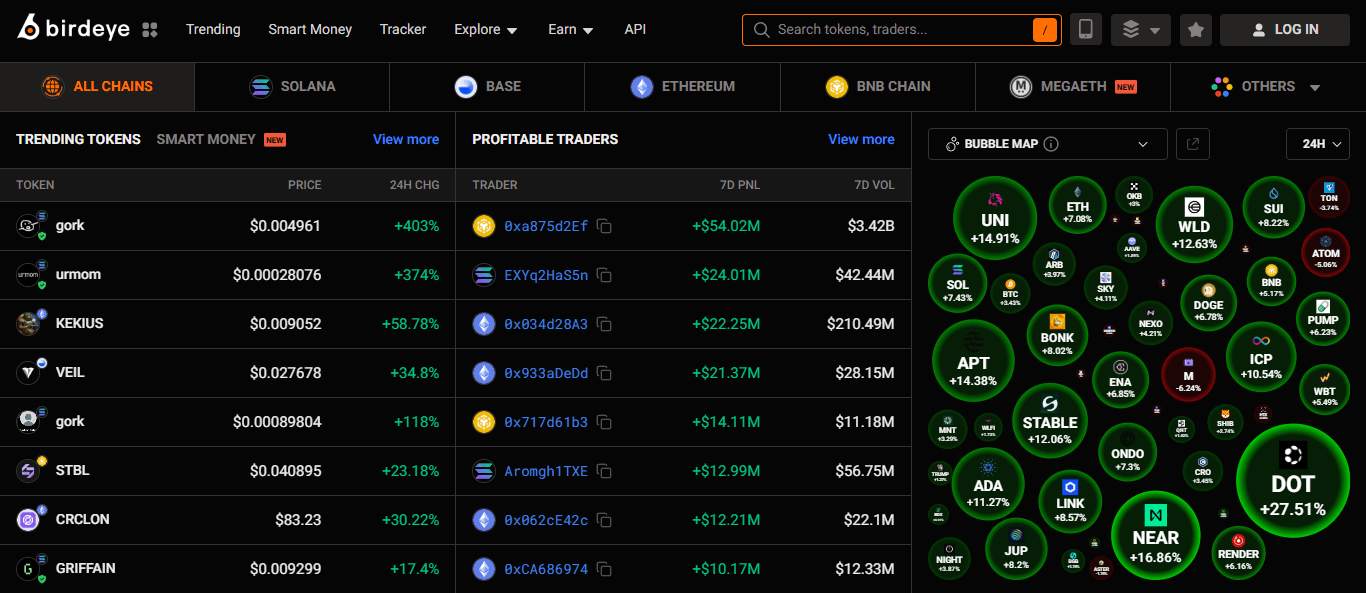
Birdeye focuses heavily on Solana, offering detailed token analytics, wallet tracking, and performance dashboards tailored to high-velocity memecoin markets. You can monitor:
Specific wallets
Track token holder distribution
Analyze trading patterns within the Solana ecosystem
The depth of Solana-specific data makes it valuable for traders concentrated on that chain. Like most analytics platforms, it doesn't function as a standalone trading venue, so execution still happens elsewhere.
4. Nansen
Nansen provides institutional-grade on-chain intelligence, labeling wallets and tracking capital flows across multiple blockchains. Professional traders and funds use it to identify smart money behavior and to understand where large participants are deploying capital. The platform excels at research and pattern recognition. Execution occurs through separate venues, positioning Nansen primarily as an intelligence layer rather than a trading tool.
5. TokenSniffer
TokenSniffer analyzes smart contracts for risk factors, including:
Honeypots
Ownership concentration
Suspicious code patterns
Traders commonly use it as a safety check before entering new or unknown tokens. It complements trading workflows by reducing exposure to scams and rug pulls. It doesn't replace execution infrastructure or portfolio management tools.
6. TradingView
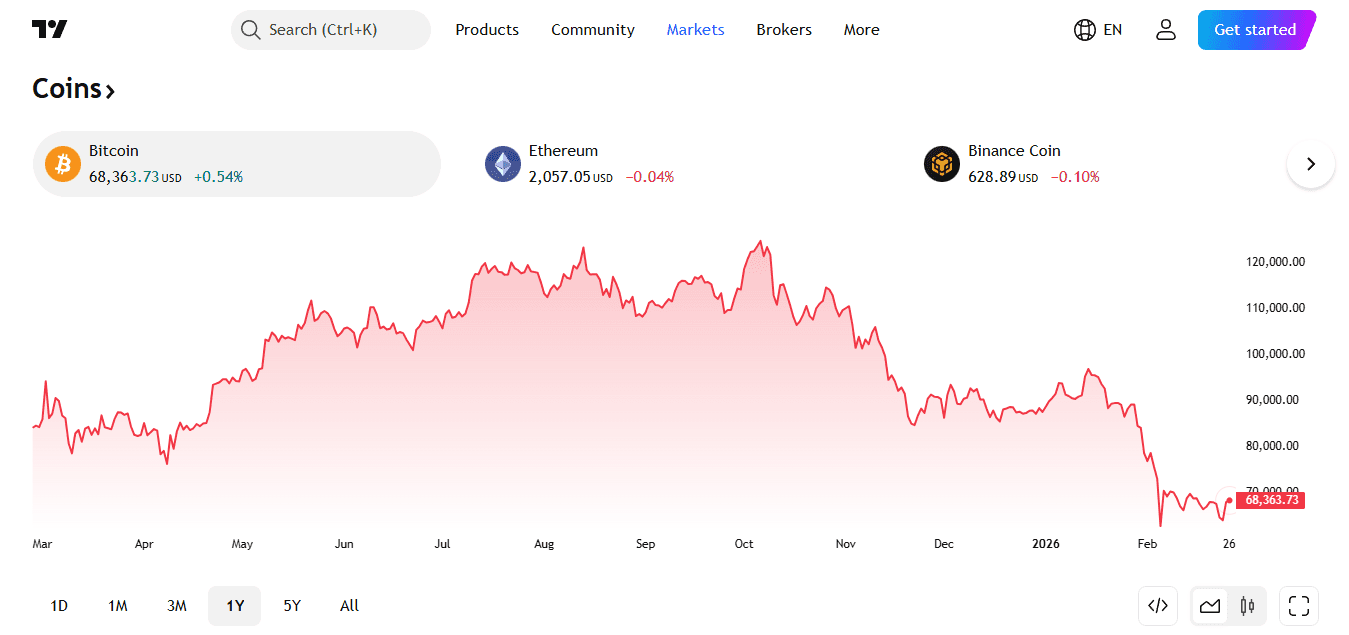
TradingView is one of the most widely used charting platforms globally, covering:
Crypto
Equities
Forex
Commodities
Advanced indicators, community scripts, and customizable alert systems make it valuable for technical analysis across markets. Orders for most Crypto assets are typically placed through connected brokers or exchanges rather than directly on the platform. The charting capabilities are robust, but execution remains separate.
7. Photon
Photon targets fast-moving memecoin markets, emphasizing trend detection and rapid entry capabilities for new launches. Traders seeking early exposure to speculative assets often use it to spot tokens before they gain broader attention. Its focus is narrow. Traders managing broader portfolios or operating across multiple asset types typically need additional tools for comprehensive position management.
8. BullX Neo
BullX Neo combines analytics with automation, including rug-pull filters and Telegram integrations. These tools aim to reduce exposure to scams while streamlining monitoring of new token launches. Access to certain capabilities may require premium tiers. Execution may still involve external components depending on the specific workflow.
9. Axiom
Axiom incorporates trading bots and yield-oriented features across multiple chains. Automation can execute predefined strategies without constant manual intervention, appealing to traders who want to maintain positions overnight or during periods when they can't actively monitor markets. Bot-based systems require careful configuration and oversight. Unintended trades or losses can occur if parameters aren't set correctly or if market conditions shift beyond the bot's logic.
The Operational Gap
Most alternatives improve one part of the workflow. Better charts. Deeper analytics. Faster alerts. Automated execution. But improvement in isolation doesn't solve the core problem: fragmentation. When discovery happens on one platform, validation on another, and execution on a third, you're not just managing tools. You're managing transitions. Each transition costs time, introduces error risk, and weakens the conviction you felt when you first spotted the setup.
Capital Efficiency and the Physics of On-Chain Liquidity
According to Composer, some platforms offer incentives like $200 in cash rebates to attract traders, but financial promotions don't eliminate workflow friction. The trader who acts three seconds faster, even with worse analytics, often outperforms the trader with better data who needs 12 steps to execute. A capital sitting on the wrong chain doesn't care how sophisticated your alerts are. Position tracking across five wallets doesn't matter if you can't see aggregate exposure in real time. Verified performance data loses value if you can't act on it without switching contexts.
Cognitive Load and the Opportunity Cost of Friction
Platforms like buy Crypto collapse this fragmented structure by integrating discovery, social validation through verified trader performance, and execution into a unified interface. You track top traders, analyze their positions, and replicate their moves without leaving the environment. Cross-chain complexity gets handled in the background while you focus on the decision itself. The distance between seeing an opportunity and capturing it compresses to a single action, not a multi-step process across disconnected tools.
The Paradox of Choice and Cognitive Load in High-Frequency Trading Environments
Research from goodcrypto.app identifies 9 popular GMGN AI alternatives that traders compare, reflecting the breadth of options available. Yet breadth doesn't equal effectiveness. More choices often just mean more decisions about which combination of tools will cover the workflow you need. The real question isn't which platform has the most features. It's the one that removes the most friction between insight and action.
Why Most Alternatives Still Fail to Improve Real Trading Outcomes

Analytics platforms solve the wrong half of the problem. They show you what's happening, but that's never been the constraint. The constraint is acting on it before the opportunity changes shape. Most alternatives optimize for information delivery when the actual bottleneck is operational infrastructure.
Analytics Without Infrastructure
Discovery tools flag tokens launching with strong liquidity or wallets accumulating specific assets. Then they stop. You still need to open a separate wallet, navigate to the correct DEX, verify you're on the right network, set slippage parameters, and confirm the transaction. Each interface transition burns seconds that compound into minutes. Research from Kraken shows that slippage on volatile tokens can exceed 5% during rapid price moves. Late entries don't just miss upside. They inherit worse risk profiles. The setup that looked attractive at one price becomes questionable at another, but you're already committed to the workflow.
Scattered Capital Across Chains
Opportunities surface wherever liquidity concentrates. Your funds sit wherever you last deployed them. A compelling token launches on Base, but your capital remains on Solana. Now you're bridging assets, waiting for confirmations, paying fees twice, and absorbing slippage before you can even consider the original trade. Blockchain networks don't coordinate their timing with your portfolio allocation. By the time capital arrives where you need it, market conditions have shifted. The token, with a $2M market cap, is now at $7M. Entry risk has changed completely, but so has your conviction after watching the price move without you.
Manual Steps That Accumulate Latency
Every click introduces a delay.
Connecting wallets.
Switching networks.
Copying contract addresses.
Verifying transaction details.
Approving token permissions.
These aren't just inconveniences. They're structural disadvantages that accumulate during volatility. Human reaction time becomes the limiting factor. Cognitive load increases with each context switch. You're not just trading anymore. You're managing interfaces, which means you're thinking in terms of tools rather than positions.
Unverified Social Signals
Wallet addresses get shared after the tokens pump. Screenshots show winning trades but hide losing ones. Performance claims lack timestamps or complete histories. Without verified data, you're following narratives instead of results. The wallet that made 50x on one memecoin might have lost on fifteen others. Selective sharing creates the illusion of consistency. You can't separate skill from luck when you only see curated outcomes.
Decision Overload During Volatility
According to Sharply, 90% of backtested strategies fail to deliver promised returns in live trading. More alerts don't lead to better decisions under extreme time pressure. Cognitive overload degrades judgment. You start second-guessing setups that looked obvious two minutes earlier. The problem isn't the quality of individual signals. It's the volume arriving simultaneously while you're also managing execution across fragmented tools. Your attention splits between evaluating opportunities and operating infrastructure.
The Execution Gap in Practice
You spot a wallet accumulating a newly launched token. Liquidity looks solid. Early transaction velocity suggests genuine interest rather than wash trading. The setup checks every box. Then reality intrudes.
Funds live on a different chain.
Bridging takes eight minutes.
You open the DEX. Wallet connection fails twice.
You verify the contract address manually.
Set slippage to 12% because volatility is high.
Approve the token spend.
Submit the transaction.
Information Decay and the Pursuit of Operational Alpha
Twelve minutes elapsed. The token moved 40%. Your entry price no longer matches your thesis. You're not buying the opportunity you identified. You're buying what's left after everyone has already positioned faster. The real edge isn't informational anymore. Information spreads instantly. Edge comes from operational speed. From having capital ready where opportunities appear. From executing in one step instead of twelve.
Related Reading
How Bullpen Replaces the Fragmented Trading Stack
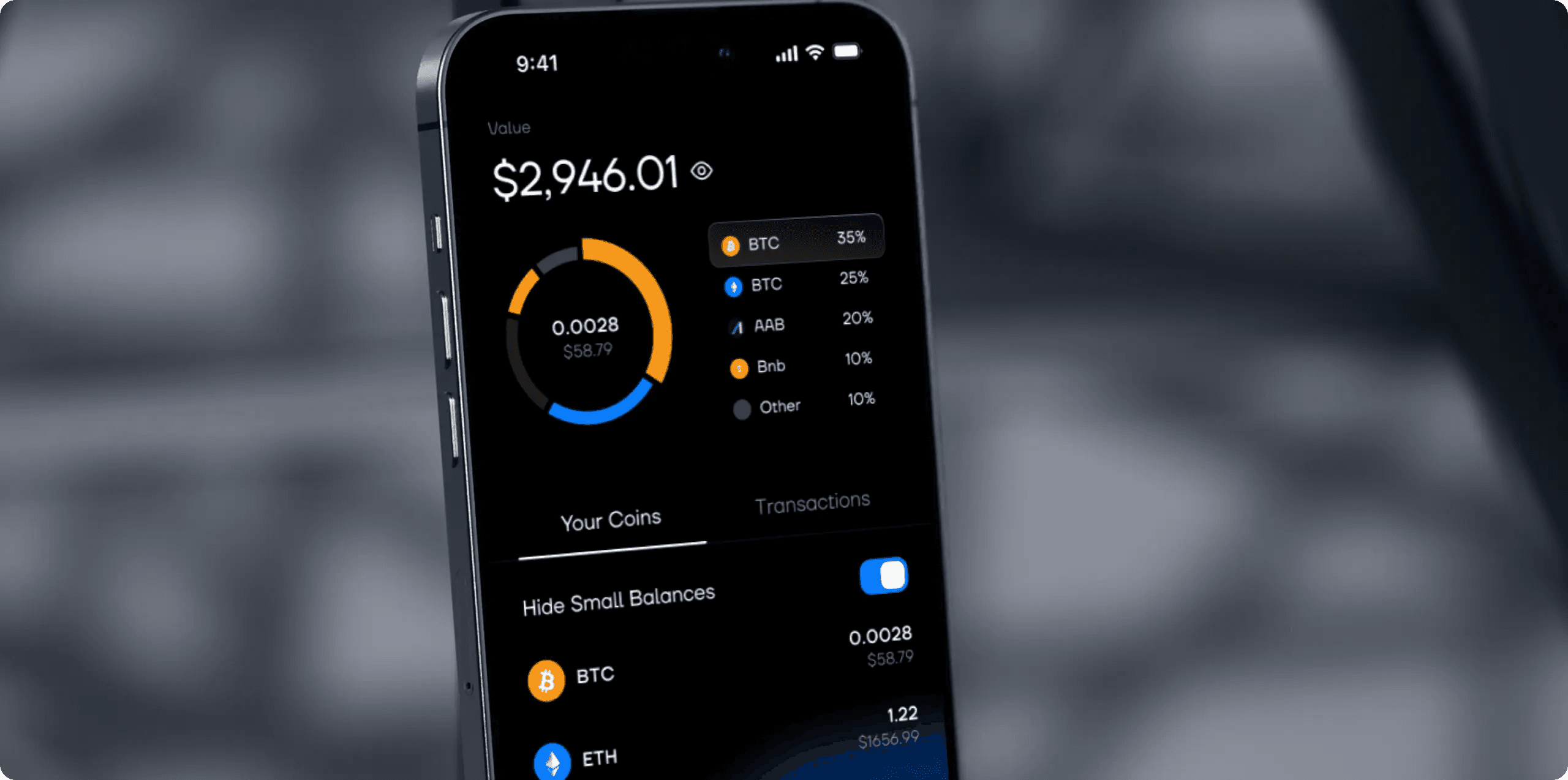
Fragmented workflows cost more than time. They cost conviction. When you need four different platforms to move from idea to position, each transition point becomes a place where certainty erodes. Bullpen collapses that multi-step process into:
A single environment where discovery
Capital deployment
Execution happens without switching contexts
Trade Across Markets Without Moving Funds
Capital trapped on the wrong chain isn't capital at all. It's just numbers on a screen that can't respond when an opportunity appears. Most traders keep funds scattered across Solana wallets, Ethereum addresses, and exchange accounts because different opportunities live in different ecosystems.
Solving the Fragmentation of Multi-Chain Liquidity
Bullpen:
Solana meme assets
Hyperliquid perpetuals
Prediction markets into one unified interface
Your capital sits ready to deploy wherever the setup appears, without bridging delays or transfer fees eating into potential returns. The memecoin launching on Solana and the perps opportunity on Hyperliquid can both be accessed with the same account balance. This isn't just convenience. It's a structural advantage. When a wallet you're tracking suddenly opens a large position, you can mirror that move in seconds rather than minutes. The setup doesn't wait for your bridge transaction to confirm.
Act Immediately on Opportunities
Every interface transition introduces hesitation. You see the signal, then question whether it's worth the effort of switching apps, connecting wallets, and navigating unfamiliar DEX interfaces. That hesitation isn't caution. It's friction disguised as thoughtfulness.
Overcoming Cognitive Load and Execution Bias
Bullpen removes the gap between decision and execution. The moment you identify a trade worth taking, you can enter it.
No wallet switching.
No manual contract address copying.
No wondering if you set slippage correctly or selected the right network.
Capital deploys with a single action, capturing the price you evaluated rather than whatever's left after workflow delays. Speed matters most when volatility is highest. The tokens moving 15% in ten minutes don't offer second chances to traders still navigating through connection screens.
Follow Traders Who are Actually Profitable
Social proof without verification is just storytelling. Wallet addresses get shared after wins. Screenshots show isolated successes. Performance claims lack complete histories or timestamp verification. You're left guessing whether the signal reflects skill or selective memory. Bullpen surfaces verified profit-and-loss data through tracked performance records. The leaderboard shows who consistently generates returns, not just who posts the loudest. When you follow a top performer, you see their full track record, including losing trades and drawdown periods. Pattern recognition becomes possible because the data is complete.
The Science of Filtering Social Sentiment for Actionable Alpha
Real-time notifications trigger when tracked traders open new positions. You're not learning about moves after they've already played out on social media. You're seeing them as they happen, with enough context to evaluate whether the setup aligns with your own risk parameters. Platforms like buy Crypto compress the distance between seeing a profitable trader's move and replicating it. The infrastructure handles execution complexity while you focus on whether the position makes sense for your portfolio.
No screenshots.
No trust-me narratives.
Just timestamped records of what actually happened.
Simplify Your Workflow
Cognitive load accumulates invisibly.
Monitoring three different dashboards means holding three different mental models of your exposure.
Reconciling positions manually means your understanding of total risk is always slightly outdated.
Switching between platforms means reloading context every time you need to act.
Cognitive Load Theory and the Architecture of Holistic Risk Management
A unified view of holdings, trades, and performance across markets eliminates this fragmentation. You see aggregate exposure in real time. Position sizing decisions account for everything you're holding, not just what's visible in the current app. Risk management becomes straightforward when all relevant information appears in one place. The mental energy saved from not managing interfaces can be redirected toward actual trading decisions. You're thinking about market structure instead of which wallet holds which tokens.
Easy Funding Options
Onboarding friction keeps people on the sidelines longer than necessary. Buying Crypto through traditional exchanges, transferring to self-custody wallets, then bridging to the chain where you actually want to trade creates a multi-day process before the first position opens. Bullpen allows funding through Apple Pay or direct bank transfers. The complexity of acquiring and moving Crypto compresses into familiar payment flows. New traders can move from account creation to active positioning in minutes rather than navigating exchange verification, withdrawal limits, and bridge interfaces.
Understanding Capital Velocity in Multi-Chain Markets
Lower barriers don't just help beginners. They help anyone who wants to add capital quickly when opportunities cluster. The ability to fund immediately means you can scale into winning positions without waiting for traditional Crypto onramps to process transfers. The real question isn't whether unified platforms work better than fragmented ones. The question is whether you're willing to keep paying the tax that fragmentation extracts from every trade.
Buy Crypto Today With Bullpen
If your biggest trading losses come from slow execution rather than bad ideas, consolidating your tools into a single trading environment can restore your edge. The difference between profitable trading and watching opportunities slip away often comes down to infrastructure, not intelligence.
Web3 Onboarding and the Shift Toward Institutional-Grade Execution for Retail Traders
Deposit on Bullpen today to earn a 500-point bonus. If you deposit $1,000 or more, you'll receive a free introductory call where a specialist will help you identify high-performing traders to follow, set up real-time alerts, and build a faster execution workflow tailored to your strategy. The onboarding process takes minutes, not days, because the platform handles the complexity of cross-chain positioning while you focus on the setups that actually matter.
The Evolution of Market Architecture: From Siloed Exchanges to Unified Execution Layers
Buy Crypto with Bullpen today and experience what trading looks like when discovery, execution, and capital are finally in one place. The question isn't whether unified platforms work better than fragmented ones. The question is whether you're ready to stop paying the tax that fragmentation extracts from every trade you make.
Last Updated:
March 23, 2026