
Enhance your trading game with insights on what swing trading Crypto is, focusing on strategies, market trends, and profit potential
You watch a coin jump after a news event and ask yourself what makes Crypto go up as you try to catch the next move. Swing trading sits between day trading and buy and hold, where you hold positions for days or weeks and use trend analysis, support and resistance, momentum indicators, chart patterns, and timeframes to time entries and exits. This article explains swing trading Crypto in plain terms, covering trade setups, risk management, stop-loss placement, position sizing, and how to read volatility and market cycles. Ready to trade swing highs and lows instead of chasing every pump?
Bullpen's buy Crypto makes funding an account, placing orders, and monitoring positions simple so you can practice these setups and learn swing trading without getting tangled in tech. It offers clear charts, fundamental indicators, and straightforward fees so you can focus on building skill and confidence.
Summary
Swing trading typically targets modest, repeatable moves rather than lottery tickets, with common profit targets of 5% to 10% per trade and many approaches aiming for 10% to 50% per trade. As a result, disciplined entries and predictable costs matter more than chasing breakouts.
Execution frictions are a hidden tax on every swing, and only about 10% of traders are consistently profitable, which underscores how slippage, failed fills, and on-chain extraction can turn a nominal edge into a loss.
Risk discipline is central, with many successful accounts capping risk per trade at 1% to 2% of equity and sizing positions by volatility (for example, using ATR) so small losses become manageable tests rather than catastrophic failures.
Social discovery accelerates idea flow but crowds out setups. Over 70% of Crypto traders engage in swing trading, so the real edge lies in executing crowded moves cleanly and sizing for participation rather than blindly copying signals.
Measure execution, not just price, by logging fill rate, realized slippage, average hold time, and conditional win rate, and analyze samples of 30 to 50 trades so you can distinguish real edges from chart illusions.
Validate fit with a time-boxed trial, for example, a 60 to 90 day program using 2% to 5% of capital and aiming for 30 to 50 live swing attempts, then judge success by net expectancy after fees and slippage rather than raw wins.
This is where buy Crypto fits in: it addresses execution and funding frictions by offering predictable routing, priority-fee options, MEV protection, and straightforward order types, so traders can practice setups while keeping execution costs predictable.
What is Swing Trading in Crypto?

Swing trading in Crypto is a focused, time-boxed approach to profit from medium-term price moves, entering when momentum is clear and exiting once it fades. You hold positions across days to weeks, treating each trade like a single mission with defined entry, target, and stop rules.
What Moves are You Actually Trying to Catch?
Targets tend to be modest and repeatable, not lottery tickets. According to Trakx Insights, swing trading in Crypto can yield returns of 5% to 10% per trade, which makes disciplined entries and predictable costs far more critical than guessing the next massive breakout.
Other swing strategies aim higher, and the same source, Trakx Insights, notes many approaches set profit targets of 10% to 50% per trade, so your execution plan must match the target you choose.
How Should You Think About Time and Overnight Risk?
Because Crypto runs 24/7, you routinely hold positions overnight and through market gaps, which creates a unique failure mode. When I coached new traders during a month-long bootcamp, almost everyone began with a cautious €100 in paper trades to learn setups without panic, and they quickly realized that gap risk on weekends or at token unlocks can wipe a planned swing in a single event.
That makes position sizing, stop placement, and knowing when to use limit or DCA orders essential, not optional.
Most Traders Follow a Familiar Workflow, But It Has Hidden Costs
Most people execute swings by watching charts, clicking market orders, and hoping liquidity holds, because that workflow is intuitive and straightforward. As trade frequency and size grow, however, slippage, failed transactions, and MEV extraction quietly erode small per-trade gains, turning a predictable 5% edge into a loss.
Institutional-Grade Execution for All
Platforms like Bullpen change that dynamic by offering optimized transaction routing, Jito tips, and priority fees for faster inclusion, MEV protection, and advanced order types such as limit and DCA, which help keep execution costs predictable and preserve the margin that swing traders depend on.
How Much Should You Risk on Each Trade?
This is where discipline wins. A consistent pattern across successful accounts is to cap risk per trade at 1%-2% of equity and size positions based on volatility, using ATR or similar measures. When traders shift from guessing size to sizing by volatility and risk percentage, their learning curve shortens because small, controlled losses allow them to test setups over weeks rather than days.
What Role Does Social Discovery Play in Finding Setups?
Social signals speed up research, but they are an accelerant, not a substitute for verification. Leaderboards, public positions, and one-tap sharing let you spot which top performers are trading faster, while whale or runner insights can highlight momentum you might otherwise miss. The pattern I see is simple: traders who use social discovery as a starting point, then:
Validate execution and risk before following.
Learn faster
Avoid costly mimicry
Why Does Execution Quality Make or Break a Swing Plan?
When your target is a repeatable percentage on each trade, tiny frictions add up. Poor routing, slow fills, or front-running are not academic; they directly reduce realized returns and increase variance. That is why tying order control, predictable fees, and real-time notifications to your strategy matters for converting theoretical edge into actual PnL.
How Swing Trading Crypto Actually Works
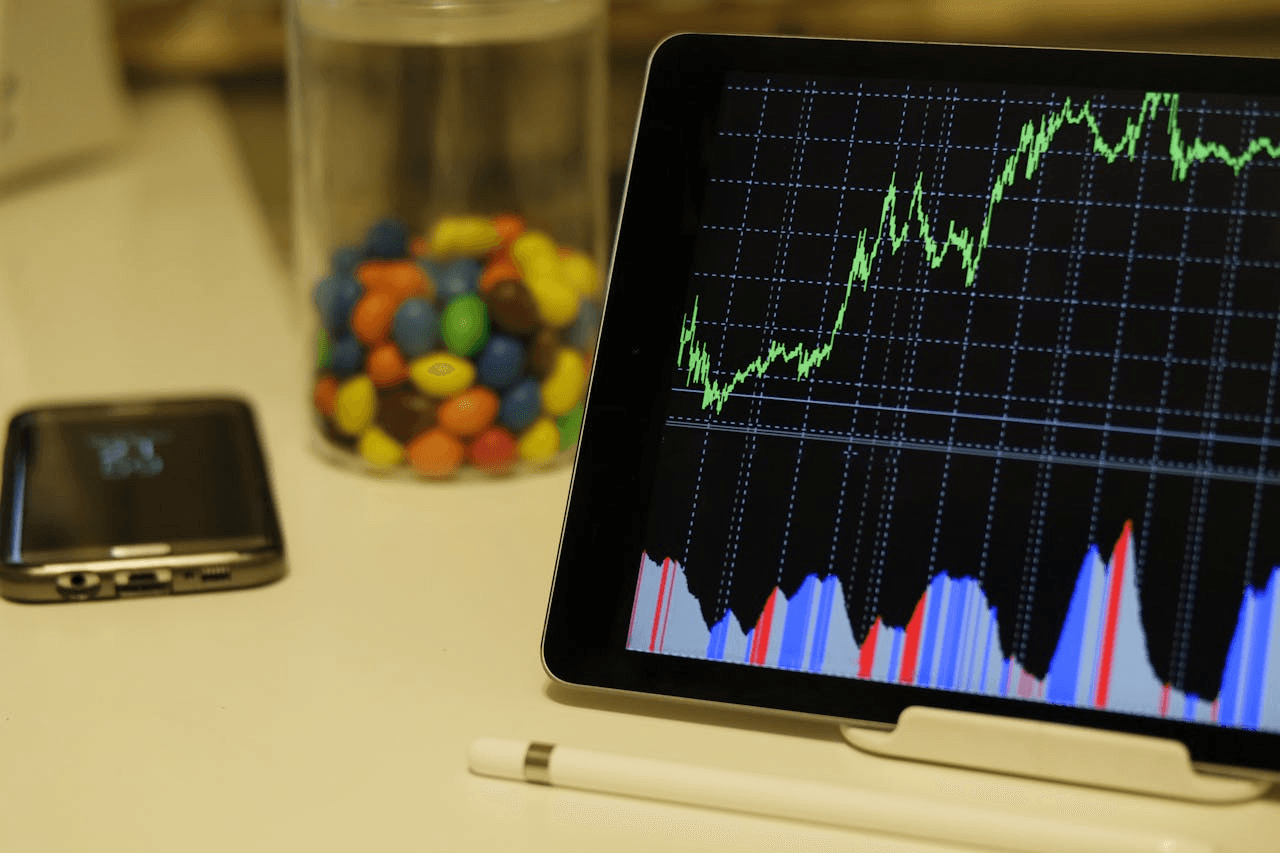
Swing trading in Crypto works by catching a measured trend or momentum swing, entering with a rule-based plan, and managing the position through a lifecycle of scaling, trailing, and execution control so that small frictions do not erode the edge. You win more by preserving gains and avoiding chaotic exits than by predicting the exact peak, so your process must treat entries, sizing, and exits as repeatable systems rather than one-off bets.
How Should You Size and Stage Entries for Real Market Noise?
This pattern appears across small and mid-size accounts: traders treat a swing like a single commitment and then panic when volatility spikes.
Start by converting your subjective conviction into a volatility budget, then split that budget into staggered entries or a DCA ladder to reduce the risk of being early.
Use short, testable fills first, then add only if volume and orderbook structure confirm participation.
Think of it like steering a boat into a river current, nudging the bow in stages rather than slamming the throttle and hoping the rudder holds.
When Do You Lock Profit or Move Stops During a Swing?
The failure mode is usually emotional, not technical, because traders tighten stops at the first sign of noise and hand profits back.
Set explicit, rule-driven triggers for moving stops:
Confirmed trendline breaks
Sustained loss of volume
An intra-session close beyond a volatility band
Use trailing rules that scale with realized volatility so your stop does not sit where regular chop will trigger it. That way, you keep a plan you can follow when pressure builds, instead of improvised exits that feel safe in the moment but wreck your edge over weeks.
What Execution Controls Actually Preserve Repeatability?
Most traders execute market orders because they feel fast, and that works early on. The hidden cost is that as trade frequency and size grow, slippage, failed fills, and on-chain extraction quietly erode returns.
Platforms like Bullpen change the trade-off by routing transactions for lower latency and offering options such as priority fees, MEV protection, and limit or DCA order types, so teams can keep execution costs predictable while preserving timing and control.
Which Tactical Approaches Should You Consider for Different Setups?
Match the tactic to the setup and your time risk, not to wishful thinking, and consult concise tactical lists when you need a checklist to act quickly.
For momentum, look for a strong directional move with widening volume; favor staggered limit entries and take-profit ladders. For range breaks with thin liquidity, smaller position sizes and quicker profit taking reduce tail risk. Keep a simple decision tree to execute under pressure.
What Should You Measure to Improve Your Swings?
If you do not track realized slippage, fill rate, average hold time, and the conditional win rate that follows specific entry signals, you cannot tell whether your edge is real. Log execution metadata for every trade, not just price and PnL.
Over time, you will see which setups survive the chain of execution events and which only look good on a static chart. That empirical loop turns intuition into a repeatable skill by shifting from praising setups to measuring outcomes.
A Realistic Constraint to Plan Around
If your workflow relies on manual fills and ad hoc notifications, you are fine until market friction compounds; then you lose many small edges at once.
Solutions like Bullpen provide predictable routing, MEV protection, and real-time alerts, so traders maintain control as trade frequency or size scales, preserving margins that would otherwise be eaten by slippage or failed transactions.
The Emotional Side That Breaks Plans
This challenge is common among new and intermediate traders: panic during large swings and a shaky understanding of how flows affect prices lead to premature exits or overleveraging, undermining long-term learning. Build simple rules that force calm behavior, and automate the signals that matter so emotion cannot override them.
One More Reality Check Traders Overlook
Ambition often outpaces process, leading to repeat losses. This helps explain why the average Crypto swing-trading strategy can yield 10% to 20% per month. To achieve consistent, testable performance, traders must protect small margins through execution discipline and measurable rules, as preserving gains compounds faster than chasing the next big breakout.
A Unified Hub for Modern Trading
Bullpen puts all of Crypto in one app: Bitcoin, Solana memes, Hyperliquid perps, and Polymarket, so you can stop juggling wallets and bridges. Follow the best traders on X with verified PNLs, see who's really winning on a live leaderboard, and get notified the moment top performers open a position.
Buy Crypto with Apple Pay, use leverage, or buy Bitcoin with your bank account. Bullpen has everything you need to trade smarter, faster, and in one place. Deposit today to earn a 500-point bonus, and get a free introductory call when you deposit $1,000 or more on Bullpen.
Buy Crypto with Bullpen today!
Related Reading
Why Swing Trading Appeals to Crypto Traders
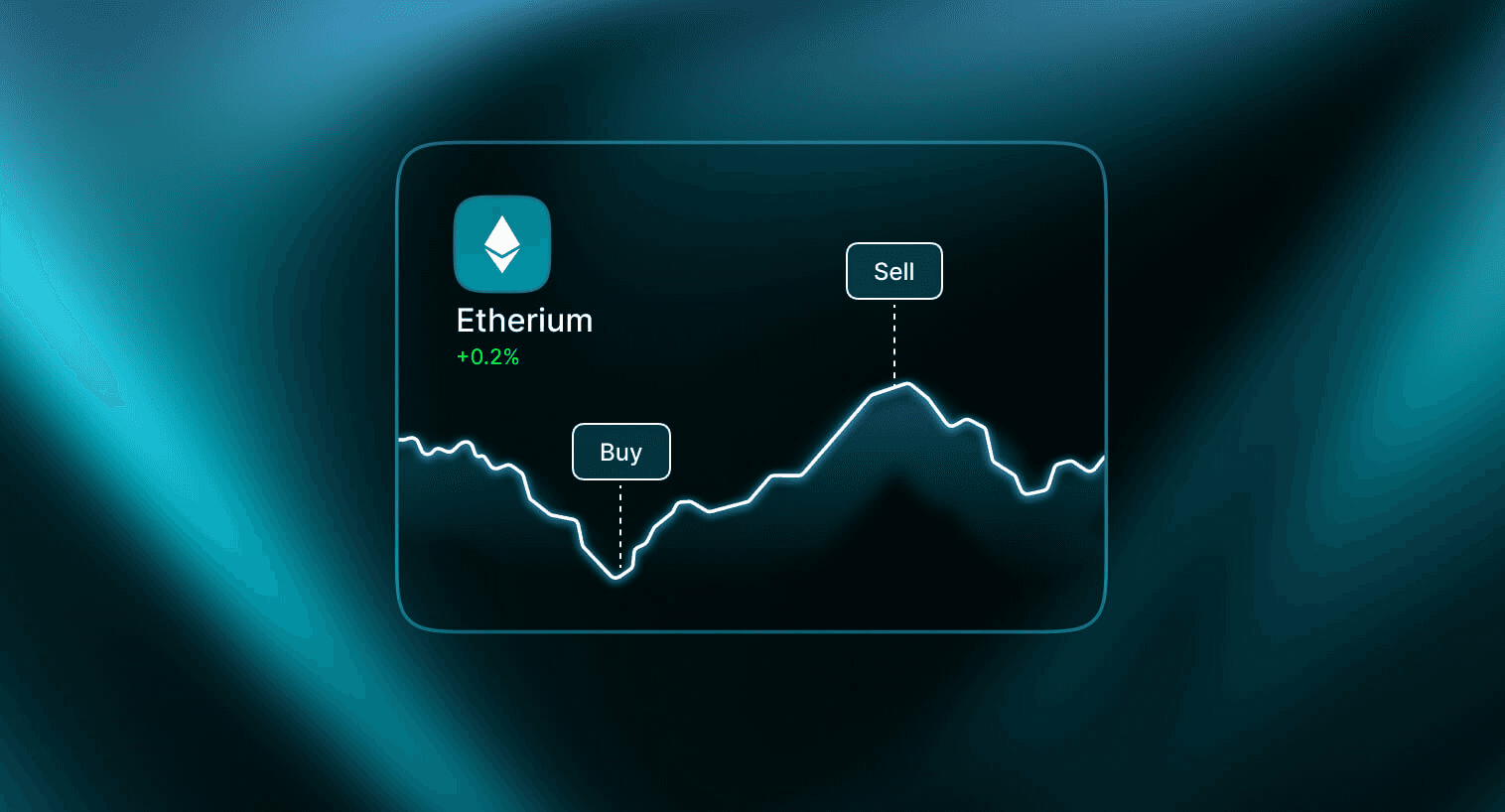
Swing trading appeals because it converts episodic Crypto moves into repeatable experiments you can measure and improve, letting you capture medium-term momentum without acting like a full-time prop trader. It gives you a practical trade-off: keep enough time to let trends breathe, while staying close enough to manage risk and execution.
How Do Traders Turn Swings Into Testable Skills?
Treat each swing like a lab run, not a hunch. Log the signal that triggered entry, the exact order type used, fill rate, realized slippage, hold time, and the conditional win rate for that signal over 20 to 50 trades. That data tells you which setups survive real-world execution and which only look good on charts, and it lets you improve sizing and stop rules with a statistical edge.
Checklists and repeatable rules are the fast path from luck to skill, which is why short tactical playbooks like Top 10 Most Important Swing Trading Rules are helpful starting points for disciplined testing.
Why Do Social Signals Change the Math?
Swing trading is social by design; signal discovery and idea vetting happen faster when you can watch what others are doing. That popularity shows up in adoption: over 70% of Crypto traders engage in swing trading, which means information advantage decays quickly and crowded setups appear frequently.
The "Watchbook" Strategy: Precision Over Hype
The pattern I consistently see is simple: crowded moves become more volatile at boundaries, so your real edge is not first sighting a setup; it is executing that setup cleanly and sizing for the crowd. Use private watchlists, conditional orders, and watchbook signals to convert social discovery into measured entries instead of blind mimicry.
The Scalability Gap in Manual Execution
Most traders handle discovery and execution via screenshots and manual market orders because that workflow is familiar and requires no tools. That works for small, infrequent swings, but it breaks as trade count or size rises. The hidden cost is predictable: late fills, unexpected slippage, and lost fills during fast ramps, which together erode per-trade edge.
Infrastructure for Professional-Grade Swings
Platforms like Bullpen provide optimized routing, priority-fee options, MEV protection, and advanced order types such as limit and DCA, enabling teams to capture social signals and act on them with predictable costs and faster inclusion, preserving the margins that make repeatable swings profitable.
When Does Swing Trading Stop Helping You?
The failure mode is structural correlation and decay, not lack of conviction. Holding several correlated swings across a sector exposes you to a single shock that turns many winners into losses at once. Funding rate bleed on leveraged perps can turn a planned holding period into a slow loss if you ignore carry.
The Spinning Plates: Managing Multi-Sector Risk
Treat these as constraints: cap sector exposure, set a time-based stop for funding-driven positions, and prefer cash trades when funding or liquidity is hostile. Think of it like carrying several spinning plates, each with its own wobble; you can keep them aloft until one gets a gust, so design rules that let you safely drop the least essential plate.
How Should You Choose Targets and Sizing When the Market Changes Fast?
Use volatility-calibrated sizing and explicit time budgets, not gut feelings.
Convert your conviction into a volatility budget, split that budget into staggered entries, and always have a pre-planned exit tied to either a time limit or a confirmed change in participation. A simple rule that scales:
Limit initial size to the position your plan can tolerate losing in 24 to 72 hours of normal churn.
Add only on confirmed liquidity and orderbook participation.
That method turns emotional adding into conditional scaling, which you can evaluate empirically in your trade log.
A Quick Analogy to Keep This Practical
Swing trading is like setting an exposure on an automatic camera to photograph a storm: you choose shutter speed, aperture, and framing to capture motion without blur, and you check the histogram after each shot to see which settings worked. The camera does not trade for you, but disciplined settings and feedback improve every frame you take.
That small victory is only the end of the opening act. What breaks most swing traders next is stranger than you think.
Related Reading
The Biggest Mistakes New Swing Traders Make

Execution and risk-management blind spots, not technical indicators, are the biggest mistakes new swing traders make. Traders who lose track of execution costs, misuse order types, or ignore funding and correlation will see small edges evaporate before a trade matures. Fixing those operational errors is where repeatability begins.
How Does Execution Friction Silently Eat Your Wins?
Execution costs are the hidden tax on every swing. Slippage, failed fills, and on-chain extraction quietly turn a nominal edge into a loss, so the trade that looked profitable on a chart never shows up in your account. That is why only 10% of traders are consistently profitable. Disciplined execution and predictable routing separate the handful that scale from the crowd.
Think of it like tuning a race car, where timing, pit strategy, and suspension settings matter as much as raw horsepower.
Are You Using the Right Order for the Market You’re Actually In?
Market orders feel fast, but speed without context costs you when liquidity thins or gas spikes. Limit orders preserve price at the risk of a missed trade; DCA ladders reduce entry-timing risk but increase fee exposure. The technical trade-off is simple: choose based on liquidity depth, expected volatility, and the level of fill certainty you need relative to price certainty.
What Mistakes Do Traders Make with Leverage and Funding?
Applying leverage to a swing without accounting for funding rates and time budget is a structural error. Funding bleed and carry can convert a correctly directional trade into a slow loss if you have size through multiple funding intervals.
When traders face these invisible drains and burnout, it helps explain why 70% of traders quit within the first year, a pattern that emerges when the process breaks down before skill can be fully developed.
Most swing traders do discovery and execution across screenshots, wallets, and memos, and that familiar approach makes sense at first. As trades scale, fragmentation introduces latency, repeated manual steps, and missed participation signals.
Platforms like Bullpen provide optimized onchain routing, priority-fee options, MEV protection, and conditional order types, enabling teams to capture social signals and execute with predictable costs and faster inclusion, preserving the per-trade margins that matter.
How Does Not Tracking Execution Stop Learning?
If you log only price and PnL, you cannot determine whether a setup failed or your execution did. Track fill rate, average slippage, gas per trade, time-to-inclusion, and conditional win rate by entry signal over at least 30 to 50 trades. That dataset shows which setups survive real-world costs and which are only pretty on backtests; without it, you keep repeating illusions instead of improving.
Which Behavioral Errors Do the Hard Work of Ruining Accounts?
Narrative bias, confirmation bias, and the sunk-cost fallacy are more destructive than any indicator. Treating a losing swing as a story you can will back to life freezes capital and poisons the learning loop. Precommit rules, automate exits where possible, and use peer-proof signals rather than applause to decide when to follow a move.
A Simple, Physical Test You Can Run Tomorrow
Pick your following three signals and record, before entry, the order type, max slippage you will accept, expected funding impact over the holding window, and the exact stop you will use, then execute only if the trade meets those constraints. But the real reason many traders never cross from losing to repeatable is quieter and more human than you expect.
Is Swing Trading Crypto Right for You?
Swing trading can be the right choice if you want a rule-driven way to capture medium-term moves while keeping your life and work outside the markets intact, but only if you treat it like an experiment with limits and measurable criteria. Decide by testing a small, time-boxed program that proves you can follow the rules, survive the operational costs, and produce a positive trading expectancy before you scale.
Do You Have the Temperament and Schedule to Follow Through?
If you need minute-by-minute feedback or only feel calm through constant activity, swing trading will feel like waiting in a noisy room. The real failure mode is psychological, not technical: anxiety about overnight swings and the temptation to nudge stops or add impulsively. This shows up as:
Shorter holding times
Choppy results
Creeping burnout when trades do not resolve on your timetable
That pattern appears among retail and semi-pro traders who treat swings as day trades.
How to Run a Low-Risk Trial That Actually Proves Fit
Design a 60-to-90-day trial with clear pass/fail criteria, not vague hopes.
Commit a fixed allocation, for example, 2% to 5% of your total capital, and aim for 30 to 50 live swing attempts so your sample size is meaningful.
Track these metrics for each trade:
Entry signal
Order type used
Realized slippage
Net expectancy
Hours spent per week
Max intra-trade drawdown
If, after the trial, your net expectancy is negative or fee and slippage drag consumes more than a third of gross gains, your method is not yet viable.
Where Swing Trading Should Live Inside Your Portfolio
Treat swings as a tactical allocation, not the central thesis for your capital. Limit per-swing exposure so that a single thematic shock does not trigger large drawdowns across correlated holdings, and set a calendar stop. This time-based backstop forces reassessment after 7 to 21 days.
Think in terms of position budgets, not hero bets: cap sector exposure, cap leverage, and force exits for funding-cost bleed or concentrated correlation that you did not intend to carry.
A Status Quo Diagnosis and a Different Path Forward
Most traders still find ideas using screenshots and execute them with rapid market orders because that workflow feels fast and familiar. That works initially, but as trade count or size grows, fragmented workflows create predictable waste: missed fills, higher effective fees, and execution delays that quietly destroy per-trade edge.
Platforms like Bullpen provide optimized routing, priority-fee options, MEV protection, and conditional order types, and teams find these capabilities help keep costs predictable while preserving timing and participation when setup matters.
What Obvious Red Flags Mean You Should Stop or Pivot
Be blunt with the data. If your trial shows you cannot follow the rules for three weeks, if fees and slippage consistently wipe out planned profits, or if you feel compelled to micromanage every position, swing trading is not a fit. Remember the cold reality noted in industry analysis: approximately 70% of traders lose money when swing trading Cryptocurrencies, underscoring that execution and behavior often matter more than signal generation.
Also, consider this: only 10% of swing traders consistently make profits, a snapshot that highlights how rare repeatability is when process and costs are ignored.
Practical, Non-Technical Checklist If You Decide to Commit
Decide upfront how many hours per week you will allocate, cap acceptable per-trade cost relative to your target return, pick two order types you will use consistently, and commit to logging every execution metric for post-trade analysis. Treat the first three months as education capital: accept smaller position sizes and measure edge, not ego.
That choice feels decisive now, but the next part uncovers how the right execution layer changes everything.
Related Reading
Buy Crypto Today with Bullpen
If you want swing trading to be a measured experiment that preserves the small per-trade edges you need to compound gains, consider Bullpen as a single place to combine discovery and execution so you can act cleanly and learn faster. Start with a small, time-boxed allocation, run your rules in live conditions, and let the measured results tell you when to scale.
Last Updated:
February 7, 2026