
Automate your trades with the best Crypto algo trading platform. Access pro-level bots, real-time data, and secure tools to maximize your ROI.
Markets move on news, liquidity, adoption, and trader sentiment, so if you have asked what makes Crypto go up you know speed and discipline matter. Many traders struggle to turn signals into profits because they lack tools for automated execution, backtesting, API connectivity, and clear performance analytics. This article shows which algorithmic trading features, order types, risk management, and exchange integrations actually matter when choosing the best Crypto algo trading platforms (what really matters).
Bullpen's buy Crypto offers a simple way to fund accounts, link bots to exchanges, and test strategies with real market data so you can focus on execution and controlled risk rather than setup and friction.
Summary
Overfitting is the single biggest failure mode for retail algo traders, with RMoney India reporting 80% of algorithmic traders lose money due to models tuned to historical noise rather than live robustness.
Execution quality routinely erodes theoretical edges, as RMoney India finds that 70% of traders ignore slippage and suffer unexpected losses due to poor fills, latency, and hidden costs.
Platform choice matters more than UI or templates because algorithmic flow dominates market liquidity, with Coin Bureau estimating over 70% of Crypto trading volume is driven by algorithmic trading.
Fee mechanics are a moving variable that erodes expected returns, with over 50% of traders underestimating the impact of transaction costs when priority fees and routing premiums are required.
Observable, versioned attribution is critical for reproducible edge, given that Nansen reports over 70% of Crypto traders use algorithmic platforms and need per-order metadata to separate signal from execution leakage.
The industry is shifting toward conditional automation, not always-on bots, with survey data showing 63% of organizations moving from blanket automation to market-aware, permissioned execution controls.
Bullpen's buy Crypto addresses this by providing a simple onramp to fund accounts, link bots to exchanges, and test strategies against real market data so teams can focus on execution and controlled risk rather than setup friction.
Table of Contents
Why Most Traders Get Algo Trading Wrong
11 Common Crypto Algo Trading Platforms
Where Most Algo Trading Fails
What the Best Crypto Algo Platforms Actually Provide
The Shift From “Automate Everything” to Market-Aware Automation
Buy Crypto Today with Bullpen
Why Most Traders Get Algo Trading Wrong

We get algorithmic Crypto trading wrong when we treat automation as a fix instead of a tool; automating an unpolished idea only accelerates losses. Bots do what we tell them to do, not what the market needs, so execution, liquidity, and adaptive risk rules matter far more than the UI or automation count.
What Mistakes Actually Destroy Accounts?
Model overfitting and fragile signal selection are the single biggest failure modes, and that shows up in the data, as RMoney India, 80% of algorithmic traders lose money due to overfitting their models, which means most retail strategies that look great on historical data fail to generalize in live market regimes. This pattern appears across simple mean-reversion bots and multi-signal ensembles: you optimize for the past, and the future delivers something else. The emotional cost is real, too; it is exhausting to watch a strategy that felt objective collapse because you mistook noise for an edge.
How Does Execution Quality Erase Theoretical Edges?
Poor fills, hidden costs, and latency convert predicted profit into negative PnL, and many traders never account for these, as highlighted by RMoney India: 70% of traders ignore slippage, leading to unexpected losses and showing that execution assumptions are routinely wrong in practice. Real markets have depth pockets, spread spikes, and onchain priority games that a backtest usually misses. Think of it as giving a race car to someone who only learned to drive in a parking lot, then asking them to race in a wet canyon; the skills and tools required to handle real conditions are different.
Neutralizing the MEV Tax: Protecting Your Order in the ‘Dark Forest’
Most traders choose platforms that promise automation because it is the familiar route, which is understandable. The hidden cost is that automation without native execution quality and MEV-aware routing creates predictable failure as:
Volume and volatility scale
Fragmenting liquidity
Inflating realized costs
Platforms like Bullpen, in contrast, integrate directly with execution engines such as:
Jupiter Ultra and Hyperliquid
Offer real-time transaction optimization, including:
Priority fees
Jito tips
Slippage controls
MEV protection
Traders see materially better fills and lower execution drag when markets move fast.
What Operational Practices Actually Separate Winners From Losers?
Winners build layered defenses:
Strict live risk controls
Realistic fill simulation
Parameter randomization
Walk-forward testing
Active monitoring with automatic kill switches
This is not a theoretical discipline; it is operational engineering:
Teams that instrument latency
Track onchain open interest spikes
Enforce:
Objective decision rules
Stop emotional override
Shut down bad strategies quickly
It is also a social practice: traders who share anonymized fills, leaderboards, and post-trade attribution learn faster and correct blind spots sooner than those who keep results private. You think turning a bot on is the answer, until you see what really determines whether it survives.
Related Reading
11 Common Crypto Algo Trading Platforms
1. Bullpen

Bullpen unifies token, perpetual, and prediction-market execution into a single onchain app, so you stop switching wallets and chains mid-trade. It includes social discovery features such as live leaderboards and verified PnL, so you can follow top performers and replicate high-quality behavior. If you are looking for a streamlined way to buy Crypto and replicate high-quality behavior, Bullpen reduces the operational friction for active traders.
Expect:
Fast onboarding
Native wallet control
Consolidated notifications
It reduces operational friction for active traders and competitors.
What It Trades And Why That Matters
Designed for discretionary and semi-automated strategies across spot, leverage, and perps, Bullpen reduces context switching when you need to execute quickly and learn from visible peer performance. It’s best when you want social discovery plus noncustodial custody without managing several UIs.
Key Tradeoffs
You get consolidation and transparency at the cost of relying on one integrated workflow, so confirm your counterparty and contract access needs before moving large, latency-sensitive positions.
2. 3Commas
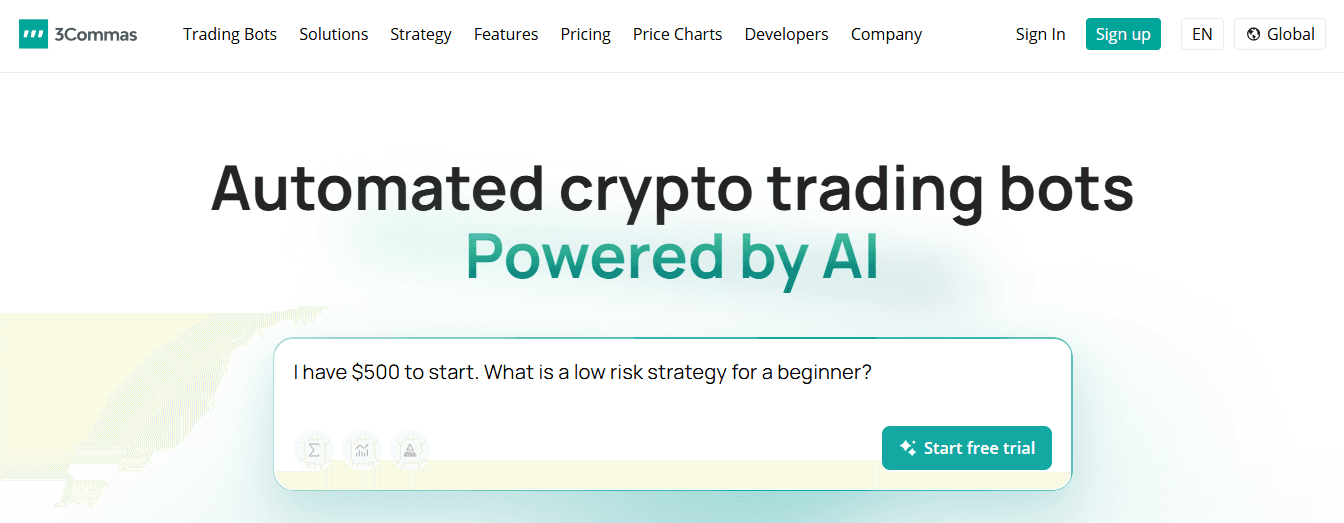
3Commas is a mature bot marketplace and SmartTrade terminal, ideal for:
Grid
DCA
Options-adjacent tactics without coding
Its conditional orders, trailing exit rules, and multi-exchange hooks enable retail traders to automate complex, rule-based workflows.
Who Should Use It
Active retail traders who want to copy strategies and backtest without engineering resources. It’s a pragmatic bridge from manual trading to reliable automation.
Weaknesses And Considerations
Performance depends on the connected exchange fill quality and API limits. If you need sub-millisecond execution or deep MEV protection, this is not the right low-level tool for you.
3. Pionex

Pionex offers a dozen-plus native bots running on its own liquidity, making set-and-forget automation genuinely simple. Grid and arbitrage bots run with minimal parameters, making them ideal for beginners.
Who Should Use It
Hands-off users and those just learning automation; you program risk by ranges and exposure, not code.
Weaknesses And Considerations
Native liquidity simplifies operations but limits customization. Advanced quant traders will find the parameter space shallow; the platform prioritizes convenience over fine-grained execution control.
4. Cryptohopper

Cryptohopper runs in the cloud, combining indicator-based logic with a marketplace for buying and renting strategies.
The strategy editor handles:
RSI
MACD
Bollinger logic
The bots stay live 24/7 without a VPS
Who Should Use It
Traders who want modular, indicator-driven strategies and access to third-party signal providers.
Weaknesses And Considerations
Signal quality varies. Rely on vetted, performance-attributed sellers and run small paper tests before scaling any rented strategy.
5. Hummingbot
Hummingbot is open-source and built for:
Market making
Arbitrage
Liquidity provision
It gives you connectors to centralized and decentralized venues and full control over execution logic.
Who Should Use It
Engineers and quant teams who want:
Custom execution engines
Precise order placement
The ability to run multiple concurrent strategies
Weaknesses And Considerations
Higher setup and maintenance overhead, including hosting and monitoring. You trade convenience for control.
6. Mudrex

Mudrex focuses on systematic portfolio construction and thematic index products, letting users allocate capital to rebalance-based strategies rather than single-trade automation.
Who It’s Best For
Buy-and-hold or rules-based investors who prefer diversified, algorithmic baskets over intraday execution.
Weaknesses And Considerations
Not suited for latency-sensitive tactics. It optimizes for portfolio-level discipline, not microstructure edge.
7. Shrimpy

Shrimpy automates portfolio rebalancing and cross-exchange allocation, with social portfolios you can follow. It takes the emotion out of sticking to allocation targets.
Who It’s Best For
Passive investors and those who want consistent allocation discipline across multiple exchanges.
Weaknesses And Considerations
Rebalancing logic can lag in fast markets, and cross-exchange transfers add execution risk if spreads widen suddenly.
8. Hyperliquid and Bybit APIs (exchange APIs)
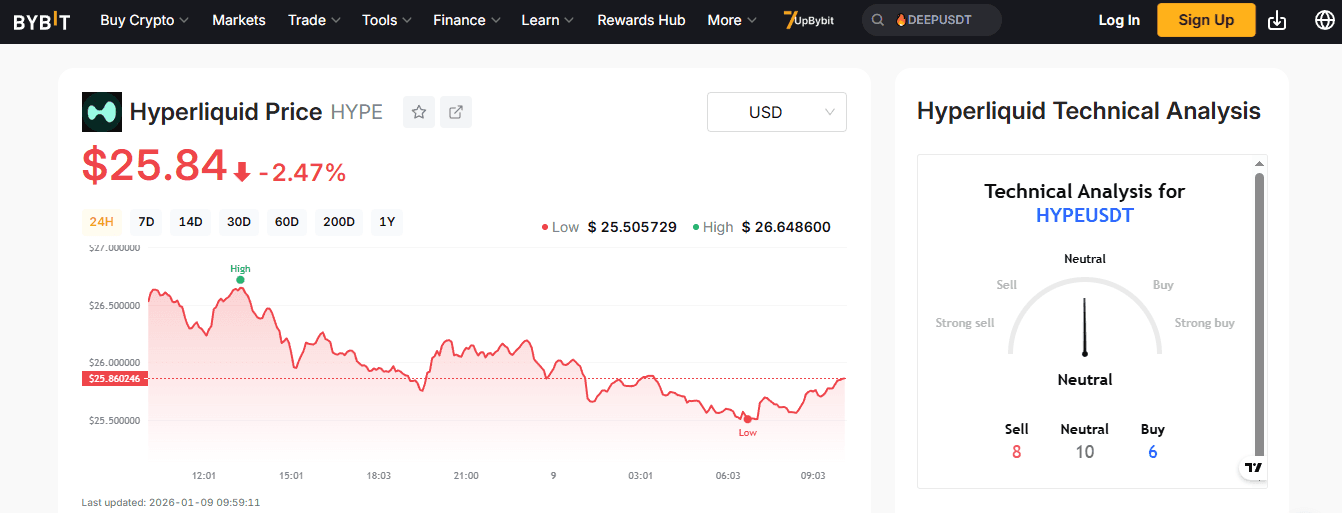
Direct exchange APIs give the lowest-level control for:
Order placement
Cancellations
Advanced order types
They are the route for high-frequency, latency-sensitive algorithms.
Who It’s Best For
Quants, prop desks, and builders running colocated infrastructure who need real-time data and deterministic execution behavior.
Weaknesses And Considerations
You must manage your:
Own connection stability
Rate limits
Monitoring
Exchanges may also offer tiered fees and incentives, so cost engineering matters.
9. HaasOnline
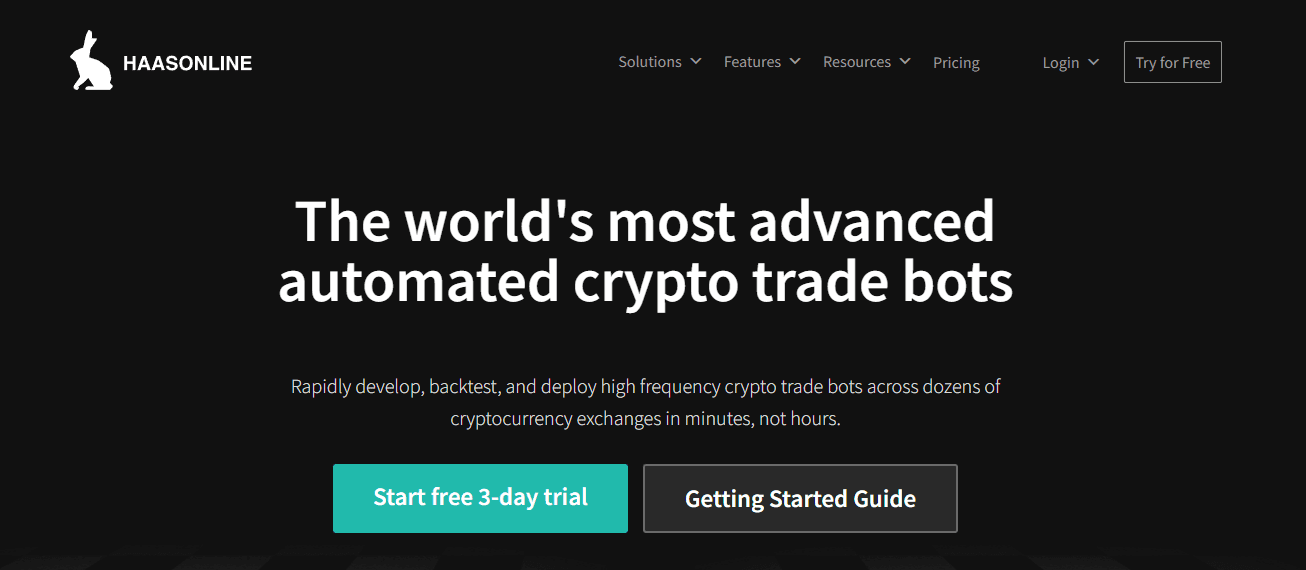
HaasOnline is a customizable automation suite with:
Its own scripting language
Advanced backtesting
Safety filters
It supports multi-step strategies with conditional logic and integrated paper trading.
Who It’s Best For
Experienced algorithmic traders who want to script complex workflows without building everything from scratch.
Weaknesses And Considerations
Complexity requires discipline. Improperly configured condition chains can quickly magnify risk.
10. Coinrule
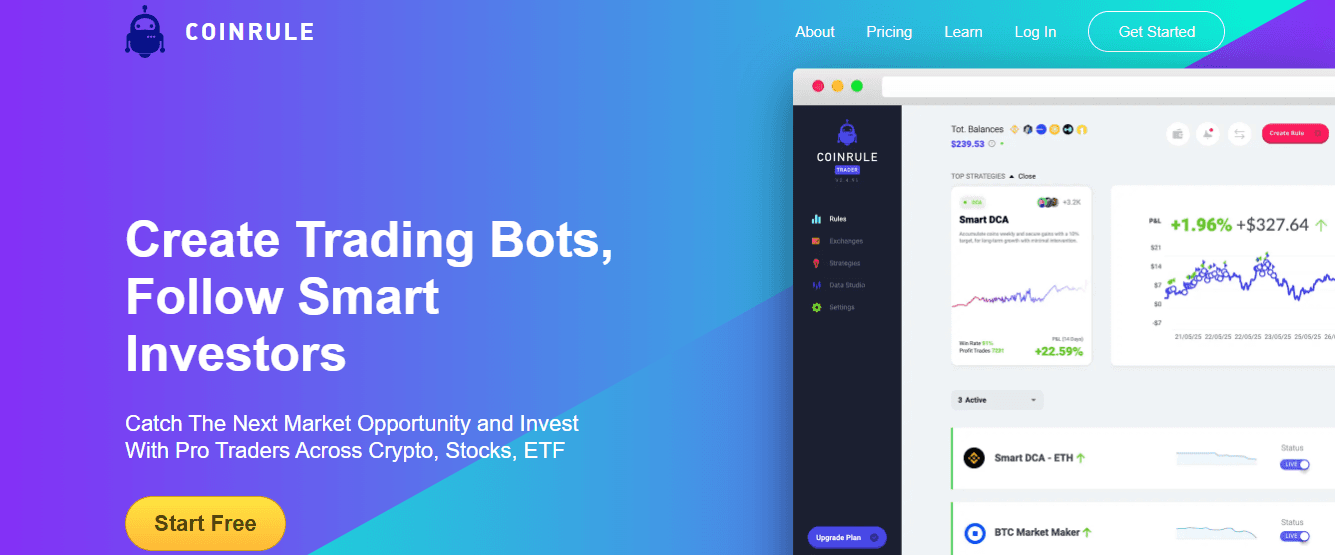
Coinrule provides a no-code rule builder for conditional automation, with hundreds of templates for:
Moving-average crossovers
Breakout rules
Quick-start templates
Who It’s Best For
Traders who want to automate without learning code, but who still expect multi-condition logic.
Weaknesses And Considerations
Rule builders are constrained by operator expressiveness; edge often requires thoughtful templating and rigorous paper-testing.
11. Bitsgap

Bitsgap aggregates liquidity across exchanges and focuses on arbitrage and hybrid grid/DCA bots. It simplifies cross-exchange execution and unified portfolio views.
Who It’s Best For
Traders seeking cross-venue arbitrage opportunities and centralized monitoring of multiple accounts.
Weaknesses And Considerations
Arbitrage requires fast settlement and capital on multiple venues; gaps between exchange rules and transfer times can erode expected profits.
Why Platform Choice Changes Outcomes, Not Just Convenience
This set of tools is not interchangeable. Some prioritize low-friction automation and native liquidity; others give engineering teams full execution control. Before you buy Crypto through an automated interface, you must test if you can measure realistic fills and failure modes under stress. The practical test I use is simple: can you measure realistic fills and failure modes under stress before allocating significant capital? If you cannot, you are guessing.
The “Cognitive Tax” of Fragmented Infrastructure
Most traders combine wallets, exchange accounts, and a set of bot UIs because it is familiar and requires little initial change. That works early, but as you scale, accounts, API keys, and settlement windows multiply:
Producing missed fills
Untracked slippage
Daily reconciliation work that consumes:
Focus
Capital
Platforms like Bullpen provide unified onchain workflows and consolidated social discovery, reducing operational friction and keeping execution context in one place, so traders can focus on strategy refinement rather than juggling infrastructure.
Practical Selection Checklist For Choosing A Platform
Execution sensitivity: Do you need low latency or just consistent order logic?
Cost structure: Are fee tiers, maker rebates, or exchange discounts meaningful to your margin? For example, Coin Bureau, “Binance offers up to 25% trading fee discount for high-volume algo traders,” which means fee engineering can materially change expected returns for volume-heavy bots.
Control versus convenience: Do you want a native bot that runs on platform liquidity, or a framework you host and monitor?
Observability: Can you attach post-trade attribution and connect fills to specific rule sets for learning?
Risk controls: Does the platform offer emergency stop, position limits, or simulated kill-switches?
Community and reproducibility: Are there vetted strategies with transparent, verifiable PnL you can study and mirror? This matters because a learning loop speeds improvement.
Identifying the right place to buy Crypto and manage your assets, based on community performance data, can significantly accelerate your learning loop.
What Most Teams Miss When Evaluating Platforms
They focus on templates and UI while ignoring execution incentives and market structure. When you factor in that algorithmic systems govern much of the flow, the venue and fee mechanics matter immensely, and that is not reflected in a bot builder demo. According to Coin Bureau, “Over 70% of Cryptocurrency trading volume is driven by algorithmic trading.” Algorithmic activity is the dominant source of liquidity and volatility, so platform-level differences shape realized performance more than templates do.
The “Ground Crew” Requirement
Think of Pionex as an autopilot on a commuter plane, safe and low-effort, while Hummingbot is a modular kit plane you assemble to fly a precise mission; both fly, but the mission, crew, and risk profile determine which you pick.
Instrumentation Failure: The Ghost in the API
Paper trade identical rules across two platforms for a three-week window, log fills, slippage, and execution latency, then compare realized PnL and operational overhead. The differences are often the size of the edge you thought your strategy had, not a rounding error. That’s the field of common platforms at a glance; next, we’ll dig into the failure modes most traders never see. That pattern looks settled, until you uncover the hidden mistakes that quietly turn good strategies bad.
Where Most Algo Trading Fails

Most algorithm trading fails after the signal looks good and someone tries to scale it, because execution reality and portfolio controls expose hidden fragility.
Failures cluster in three operational areas:
Risk governance and sizing
Accurate transaction-cost modeling
Real-time observability that informs decisions
What Operational Blind Spots Turn Small Losses Into Account-Level Blowups?
This is a pattern across retail setups and small teams:
You tune a signal for returns
Let position sizing drift as confidence rises
Risk parameters never adapt to rising market stress
The result is not a bad indicator; it is poor policy management, where correlated liquidation and funding-rate flips amplify exposure until a routine drawdown becomes catastrophic. The emotional toll is real; watching positions cascade while your systems keep increasing exposure feels like steering a ship by the engine room gauges instead of the bridge.
Where Does Risk Governance Actually Fail In Practice?
The failure point is governance, not math. Teams rarely use version control risk rules, run staged rollouts, or require multi-step approvals to increase leverage. A single change to a size multiplier, pushed without a rollback plan, can double tail risk overnight. That is why the blunt claim that 80% of algo trading strategies fail due to poor risk management,” lands hard: it means risk architecture, not alpha, is the limiter between a surviving strategy and a blown account.
How Do Fee Mechanics Quietly Erase Your Edge?
Many traders treat fees as a fixed line item rather than a variable that varies with frequency, venue, and priority bidding. In live execution, maker/taker tiers, routing premiums, and priority fees change the math of high-frequency or tight-spread strategies, and that is why over 50% of traders underestimate the impact of transaction costs reflects a common blind spot. Put plainly, if your model assumes static fees but the venue requires priority spending to get fills, your assumed edge shrinks or flips sign when volume spikes.
What Do You Need To Observe To Stop Repeating Mistakes?
Good monitoring is specific.
Tag every order with:
Strategy ID
Rule version
Ticket size
Collect:
Fill-rate
Time-to-first-fill
Partial-fill percentage
Realized spread
Priority-fee spend per order
That telemetry lets you see whether a profit signal actually survived execution or was eaten by routing and gas costs. Without this, teams chase signal tweaks when the real problem is execution leakage.
From Spreadsheet Paralysis to Order-Level Attribution
Most teams manage this with spreadsheets and ad hoc alerts because that approach is simple and familiar. That works for a handful of trades, but as positions and venues grow, operational friction fragments context and reaction lags. Platforms like Bullpen provide consolidated execution and real-time transaction optimization linked to order-level attribution, enabling teams to detect when fills diverge from expectations and stop escalating exposure before it bites.
Where Change Control And Deployment Practices Break Algos
Treat strategy updates like software releases. Rollouts should be canaryed, with capital-limited pilots and automated rollback on defined failure thresholds. When teams skip this, a harmless parameter tweak can interact with live order queuing, creating an execution feedback loop that multiplies losses. Think of it as updating the autopilot mid-flight without a test flight, then wondering why the plane veers.
Why Social Copying Can Be Deceptive, Not Helpful
Following leaderboard winners seems smart until you realize their fills and ticket sizes differ from yours. Copying rules without copying execution, fee structures, and capital allocations is a recipe for surprises.
The right social layer shows:
Verified fills
Ticket-size context
Post-trade attribution
You can tell whether a winner’s edge is replicable or merely an artifact of access and scale. Execution quality, governance, and observability form a three-legged stool; miss one and the system tips. The next section exposes what top platforms actually deliver to stabilize those legs.
What the Best Crypto Algo Platforms Actually Provide

The best Crypto algo platforms provide:
Measurable experiments
Safe staging
Precise economic attribution
You can scale strategies without guesswork.
They do this by turning opaque trades into reproducible runs:
Versioned rules
Replayable market history
Per-order cost accounting
Controlled rollouts that expose true live behavior before you increase size
What Data Should A Platform Surface To Help You Trust A Live Result?
The platforms that matter publish full data lineage, not just a chart.
That means every trade is:
Tagged with strategy ID
Rule version
Ticket size
Routing path
The exact gas or priority fee spent
You can attribute PnL to signal versus cost. This lets you separate a bad idea from a brittle fill, and it makes leaderboards meaningful by allowing you to filter winners by ticket-size band and fee regime. If you want to buy Crypto with this level of transparency, look for platforms that prioritize raw data over marketing charts.
How Do You Validate A Strategy Before Committing Meaningful Capital?
Run the strategy against a replayed mempool and historical matching engine with randomized latency and order queuing, then shadow it on live micro-size tickets while capturing fill-rate and partial-fill statistics. Platforms that support deterministic replay and live shadowing turn deployment into controlled experiments, where a rollback automatically triggers if fills diverge beyond a preset threshold.
What Governance And Deployment Controls Actually Prevent Costly Mistakes?
Treat strategy updates like software releases:
Require versioned change logs
Limit canary rollouts by capital
Automate kill rules tied to observed execution metrics
This enforces discipline as confidence grows and prevents a single parameter tweak from multiplying exposure overnight, exactly where accounts tend to break. For many traders, the first step is choosing a secure environment to buy Crypto that integrates these guardrails natively into the workflow.
Why Do Verified, Contextual Performance Records Matter Now?
According to Nansen, “Over 70% of Crypto traders use algorithmic trading platforms to enhance their trading strategies.” Algorithmic approaches are common, so raw popularity no longer proves quality; what matters is whether a recorded edge survives real costs and scale. Platforms that show ticket-size bands, routing paths, and fee spend let you tell a reproducible edge from a lucky streak.
What Operational Telemetry Should You Demand From A Platform?
You need per-order attributes:
Time-to-first-fill
Split-fill percentages
Realized spread versus mid
Priority-fee burn
Order routing decisions
This is all tied to the strategy version. With those metrics, you build realistic transaction-cost models and avoid optimizing for phantom gains that vanish under live queueing and fee pressure. Before you buy Crypto on a new venue, verify that you can export this telemetry to audit your own performance.
From “Multi-Hour Firefights” to Versioned Risk Governance
Most teams manage strategy changes through ad hoc notes and spreadsheets because they are familiar and require no new tooling. That works initially, but as strategies and venues multiply, approval threads fragment and rollback capability disappears, turning simple updates into multi-hour firefights.
Platforms such as Bullpen provide:
Versioned rule management
Canary funding
Automatic rollback tied to order-level attribution
It compresses review cycles and restores control without adding meetings or manual reconciliation.
What Social And Reproducibility Features Actually Accelerate Learning?
Communities help when they:
Publish verifiable fills
Ticket-sized context
Post-trade attribution
A leaderboard that includes execution metadata becomes a study guide, not a siren. When you can follow a trader’s small-ticket runs and then replay those exact routing conditions in a sandbox, you learn with far less downside. Having a reliable hub to buy Crypto while studying these social signals is often the difference between a gambling habit and a professional strategy.
How Should A Platform Model Market Impact And Fee Dynamics For You?
Use microsimulation to insert your hypothetical orders into historical order books and mempool states, then measure slippage and priority-fee requirements across percentile outcomes. This gives you a distribution of expected costs, not a single optimistic estimate, so you know when an idea is worth scaling and when it is not.
Hybrid Governance: Knowing When to Let the Machine Wait
Think of high-quality platforms as a clinical lab for trading ideas, where every variable is recorded, and every trial can be repeated. That clarity is what separates a scalable strategy from an experiment you only wish had gone better. The next twist is not about more automation; it is about how the market will force you to decide when to let machines act and when to make them wait.
Related Reading
The Shift From “Automate Everything” to Market-Aware Automation

Market-aware automation means you only let machines act when the expected payoff, net of execution cost and market impact, is positive and robust across current conditions. You treat automation as a conditional permissioning layer, not an always-on shortcut, and you build a small set of objective checks that must pass before a strategy can scale.
How Do You Decide When Automation Should Run?
Build a decision function that combines three live inputs:
Signal reliability
Cost-to-fill
Regime alignment
Signal reliability is a probabilistic score that decays with time since the last confirming event. Cost-to-fill models prioritize fees, slippage, and available depth for the ticket size you plan to use. Regime alignment assesses whether current volatility, funding, and orderbook imbalance align with the regime in which the signal historically performed. Only when a composite score crosses a hard threshold does the system permit execution.
What Does A Practical Control Panel Look Like?
Give each strategy an automation maturity score tied to repeatable criteria, for example:
Out-of-sample consistency across multiple volatility bands
Reproducible profits at small tickets
A stability window where spreads remain within historical bounds for N minutes
Treat that score like a license class:
Alpha-class strategies get limited automation
Gold-class ones earn larger permissioned sizes
Failed strategies lose permission automatically
This creates a clear upgrade path from manual to the best Crypto algo trading platform behaviors, rather than a binary on/off switch.
Why Personalize Rules Rather Than Use One-Size-Fits-All Automation?
Automation that ignores account size, fee tier, and routing access is a mismatch.
Personalized:
Automation tailors ticket sizes
Acceptable slippage
Priority-fee budgets to the trader’s economic footprint
The same signal can behave differently for a whale and for a hobbyist. That shift toward customization is already happening industry-wide. As shown by the 2025 Marketing Automation Insights, 45% of companies are now focusing on personalized automation strategies, which is why one-size rulebooks fail at scale.
Consolidating the Stack: From Manual Checklists to “Jupiter Ultra” Speed
Most teams handle deployment with spreadsheets and manual checks because it feels simple and familiar. That works early, but as multiple strategies and venues multiply, decisions scatter, and capital allocation slows.
Platforms like Bullpen offer a different path:
Consolidating execution
Real-time routing
Contextual signals
Teams can compress decision cycles while preserving control, improve fills through native links to Jupiter Ultra and Hyperliquid, and reduce execution surprises with MEV protection and prioritized fee optimization.
What Emotional Mistake Do Traders Keep Repeating?
This pattern appears across retail setups and small teams: you flip automation on because the backtest looks pretty, and then you feel helpless as losses mount when market structure shifts. It is exhausting to watch a bot you trusted keep trading into worse conditions. The fix is procedural, not magical: require reproducible small-ticket runs across distinct regimes before scaling, and require a clear kill rule tied to measurable market-stress indicators.
Why The Industry Is Moving This Way Now
The logic is changing because automation without context is noisy and brittle, and because more organizations want smarter, conditional automation. According to the Marketing Automation Trends Report, 63% of marketers are shifting from automating everything to more market-aware automation. The advantage goes to those who gate automation with market signals and execution-aware economics. That simple change sounds like the end of the story, but the moment you actually put capital behind it, a new set of tradeoffs appears that most platforms do not make visible.
Buy Crypto Today with Bullpen
Most traders stitch together wallets, exchanges, and payment rails because it feels familiar, and that patchwork quietly costs attention and reproducible results. I recommend platforms like Bullpen, which centralize spot, perpetual, and prediction-market execution with verified PnL leaderboards and simple fiat onramps so you can follow top traders, test ideas at small ticket sizes, and keep automation permissioned to real execution metrics. Deposit today to earn a 500-point bonus and get a free introductory call when you fund $1,000 or more, then try buying Crypto with Apple Pay or your bank to see whether a unified, execution-focused best Crypto algo trading platform improves your fills and decision speed.
Related Reading
Last Updated:
February 7, 2026