
Automate market moves, manage risk, and optimize execution with proven techniques and indicators in Crypto bot trading strategies.
When you ask what makes Crypto go up, the answer often jumps from headlines to numbers: trader demand, liquidity shifts, algorithmic orders, and timing all push price. That mix of sentiment, market signals, and execution creates a complex problem for automated systems; have you ever started a bot only to watch it fail during a sudden spike? This article explains why Crypto bot trading strategies fail for one reason most traders ignore and provides clear steps for building algorithmic trading rules, properly backtesting, and adding risk controls so your bot survives volatility.
Bullpen's buy Crypto tool helps you reach that goal by letting you simulate market conditions, test signals, manage order execution, and set stop loss and take profit rules without confusing jargon.
Summary
Most automated strategies fail at the operational level, not the signal level: over 90% of Crypto bot traders lose money, and only 5% of bots are profitable, indicating systemic gaps in converting backtests into durable live performance.
Automation can meaningfully reduce behavioural error and expand opportunity windows, with automated strategies cutting emotional trading mistakes by up to 50% and 24/7 execution potentially increasing trading opportunities by 30%.
Overfitting and parameter sensitivity make bots brittle in live markets, as illustrated by a 90-day live pilot in which a momentum strategy's edge collapsed and by cases where a 1% change in a threshold wiped out expected returns.
Fragmented liquidity and slow or suboptimal routing convert expected fills into partial executions and inventory risk, which manifests as degraded order performance, such as order-to-fill ratios dropping below 60% during stressed periods.
Operational brittleness from API rate limits, key rotations, chain reorgs, and slow retry policies silently erodes returns, so teams should instrument continuity metrics and escalate when unresolved orders double within a five-minute window.
Market-wide visibility materially improves outcomes: one study found that 85% of bots perform better with broader context and reported a 30% increase in efficiency through faster routing, fewer retries, and lower fee waste.
This is where Bullpen's buy Crypto fits in: it addresses execution and testing gaps by enabling teams to simulate market conditions, test signals, manage order execution, and set stop-loss and take-profit rules.
Table of Content
What Traders Expect Crypto Bot Trading Strategies to Do

Traders expect Crypto bot trading strategies to remove human weakness and scale what a single trader can do: avoid emotional mistakes, execute faster in fast-moving markets, manage multiple markets simultaneously, and run continuously so no opportunity is missed. Those expectations are reasonable; automation is meant to deliver discipline, speed, and coverage, not a shortcut.
What Do Traders Hope Bots Will Do?
Traders want bots to act like a calm, tireless assistant that never hesitates. They expect bots to enforce rules so fear and impulse vanish, to place fills faster than a human can, and to keep watch across perp books and token pools while they sleep or work. That appeal is practical, which is why automation attracts both beginners and professional allocators.
Why Do So Many People Think Better Rules Will Fix a Failing Bot?
This pattern is consistent: when a live bot underperforms, traders tighten thresholds, add indicators, or pursue a more elaborate setup. The impulse is understandable and human, but it usually obscures the real failure mode.
Frustration follows, configuring grid sizes, API keys, and stop logic becomes exhausting, and many beginners quit because setup complexity turns a disciplined plan into guesswork.
How Much Does Automation Help with Emotion and Opportunity?
Automation can meaningfully reduce behavioural errors, which is why it is appealing. Research shows that automated strategies reduce emotional trading errors by up to 50%, highlighting that fewer panic sells and missed reentries improve outcomes.
Continuous execution matters as well, since 24/7 trading can expand profit opportunities by roughly 30% by widening the window for favorable market moves.
Why Automation Fails When Context Is Missing
The critical failure is not logic; it is context. A strategy that backtests cleanly still needs accurate timing, low-latency routing, realistic fee and slippage assumptions, and protection from onchain front-running to perform the same in live markets. Think of a bot as a race car: a great engine is necessary, but without precise tires, pit stops, and a competent crew, lap times fall apart.
Execution quality, market participation, and real transaction mechanics are the crew. Most traders handle automation by transplanting desktop rules into a script and hoping that market realities align.
The Scale Complexity Trap
That familiar approach works at a small scale. Still, it creates hidden costs as activity rises: fills suffer when routes are slow, fees eat into returns when priority is mismanaged, and MEV extraction alters trade outcomes relative to backtests.
Platforms like Bullpen provide an alternative path by coupling noncustodial strategy execution with low-latency routing, real-time transaction optimization, MEV protection, and discovery signals, helping traders preserve strategy intent while reducing missed fills and costly slippage.
What Should Traders Actually Check Before Handing Logic to a Bot?
Ask practical, execution-focused questions: How does the platform handle priority fees during congestion? What latency can I expect across venues? Does the system simulate onchain gas variability in backtests? Are there social signals or leaderboard metrics to compare execution quality?
The Performance Threshold
Those concrete checks separate automation that merely runs rules from automation that delivers predictable performance in live markets. That success feels simple until it does not, and when it breaks, the emotional toll is real. But the frustrating part is this: what looks like a technical problem often hides a deeper operational failure that few discuss.
Related Reading
Why Crypto Bot Trading Strategies Break Down in Practice

Bots break down because the world they operate in is noisier, more constrained, and more adversarial than backtests capture. You can have a perfect signal and still lose money when parameter fragility, fragmented liquidity, operational failures, and crowding reshape every assumed edge.
Live trading quickly exposes these failure modes, and the costly part is that automation reinforces them.
How Does Overfitting and Parameter Sensitivity Betray Your Bot?
When we walked a momentum strategy from backtest to a 90‑day live pilot, its apparent edge collapsed because tiny parameter shifts flipped outcomes. Backtests often tune dozens of knobs against a fixed window, which boosts in-sample performance but leaves strategies brittle out of sample.
The Robustness Mandate
The practical fix is structured robustness testing, not more indicators: walk‑forward validation, multiple market windows, and intentionally noisy simulations that change tick availability, latency, and fee schedules. If a 1% change in the threshold wipes out expected returns, that is not an implementation problem; it is a modeling problem.
Why Does Fragmented Liquidity Change the Game?
Order books are not a single pool; liquidity is distributed across hidden orders, concentrated market makers, and venue‑specific rules. When you assume fills from a consolidated book, you miss depth cliffs: a visible bid may vanish the moment a taker hits it. Think of it as fishing.
You can cast a net where the surface looks full, but once you pull it in, you find most fish were inside a different current. That mismatch turns expected scalp profits into partial fills, rebalances, and inventory risk.
What Operational Failures Silently Eat Returns?
It’s exhausting when a bot’s math is sound. Still, a cascade of mundane operational issues kills performance: API rate limits that drop orders during spikes, key rotations that orphan strategies for hours, chain reorgs that invalidate settlement, or a slow retry policy that turns a timely market entry into a stale trade.
These are not edge cases; they are continuity problems. Instrumentation that tracks order‑to‑fill ratios, reconnect events, and retry counts matters as much as the alpha model itself.
The Integration Bottleneck
Most teams handle execution by stitching together venue APIs and scripts because it is familiar and fast to ship. That works initially, but as activity grows, hidden frictions multiply: time lost to failed fills, manual resubmits, and stale routing decisions.
Execution Infrastructure
Platforms like Bullpen provide unified, noncustodial routing with low-latency options, transaction-optimization features such as landing and Jito tips, priority fee management, and execution visibility, enabling teams to preserve strategy intent while reducing the operational drag that undermines live performance.
When Do Feedback Loops and Crowding Create New Risks?
A signal is only an opportunity until everyone else uses it. Correlated bots amplify moves, converting what appeared to be independent entries into a single crowded trade. The result is whipsawing and a rapid evaporation of edge.
You need social signals and execution leaderboards to detect when performance compresses across wallets and strategies, then throttle or diversify. Without that, automated discipline becomes groupthink executed at scale.
How Do Capital and Financing Constraints Change Behavior?
Backtests often ignore the practical economics of capital: funding rates on perpetuals, borrowing costs, leverage constraints, and the margin system’s cliff effects. A strategy that looks profitable on gross returns can be loss-making after sustained negative funding, or it can force painful deleveraging during volatility.
Model your strategy using realistic financing and haircut assumptions, and simulate drawdowns and wind‑downs, not just steady-state operations.
What Does Good Observability Look Like for a Bot?
You need a live dashboard that reports fill latency percentiles, venue‑level fill slippage, order cancellation rates, gas spent per successful trade, and the share of onchain transactions that were repriced or dropped.
Set alert thresholds that map to business risk, for example, a doubling in unresolved orders within five minutes or a sustained fall in order‑to‑fill ratio below 60%. Those signals let you triage human intervention before losses compound.
The Controlled-Environment Fallacy
A vivid comparison: designing a bot without these checks is like tuning a race car on a closed track and then driving it through city traffic, at night, during a storm. The engine might be perfect. The context will not be.
Why Crypto Bot Trading Strategies Fail
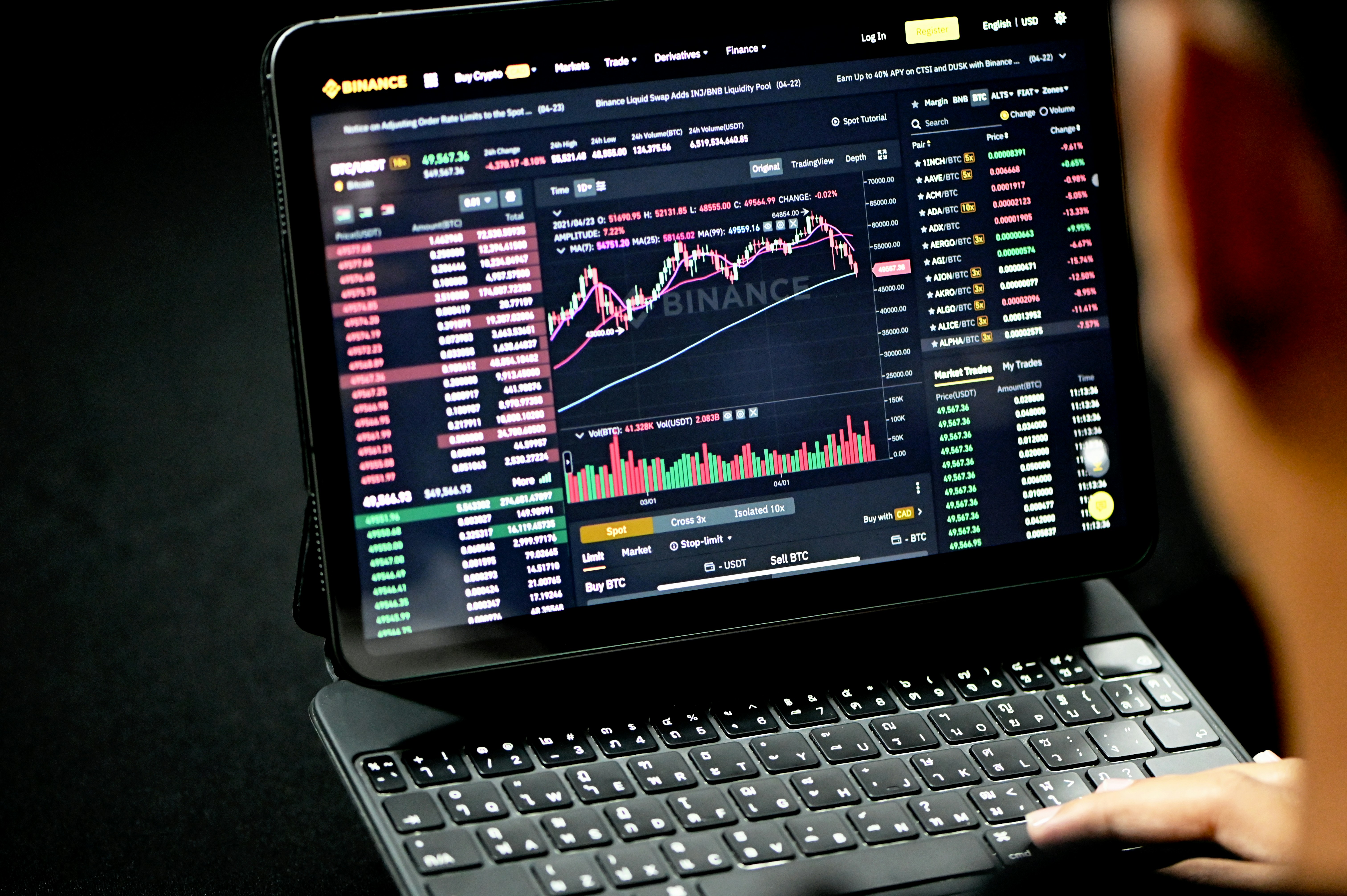
Bots fail when incentives, data, and human processes don’t align with real market friction, and when automation is treated as a set-and-forget appliance instead of a governed tool. These issues are reflected in real-world results: more than 90% of Crypto bot traders lose money, and only about 5% of Crypto bots are profitable, according to analysis from Crypto Trading Insights.
Together, these outcomes indicate a systemic inability to translate backtested edges into durable live performance.
What Objective is the Bot Actually Optimizing?
Most failures start with the wrong objective. Developers tune for headline metrics such as in‑sample Sharpe, win rate, or number of profitable trades, rather than the business outcome a trader cares about, such as preserving capital during stress events or maintaining consistent execution quality.
That trade-off matters because a model chasing a noisy metric will push the bot to behave in ways that amplify risk in stressful moments rather than avoid it.
How Does Garbage in Produce Brittle Bots?
Data problems are subtler than missing candles. Timestamp misalignments across feeds, excluded cancelled orders, and reused label windows create training leakage that looks brilliant on paper but collapses in production. Think of it as training a car on perfect highways, then racing it through alleyways at night; the model never saw the real hazards it must handle.
Why Governance and Rollback Protocols Matter So Much
When we onboarded retail traders, the consistent pattern became clear: people skip configuring risk limits and leave API keys overly permissive because initial setup feels complex and urgent. That habit turns a minor bug into a catastrophic loss because there is no clear kill switch, no versioned rollout, and no rapid rollback plan.
Bots need explicit governance: version control for strategies, emergency stop procedures, and preapproved thresholds that force conservative defaults until a strategy proves itself.
The Fragility of the Stitched Stack
Most teams build bots the familiar way, by stitching signals into scripts and trusting manual checks. That works at first, but as activity scales, the hidden cost appears:
Inconsistent order routing
Fragmented observability
User errors compound
The Resilient Routing Engine
Platforms like Bullpen offer a different path: unified noncustodial routing, real‑time transaction optimization, including landing and priority-fee controls, MEV protection, and social discovery, so traders can compare execution outcomes, helping teams retain strategy intent while reducing operational failure modes.
How Usability Creates Catastrophic Misuse
Complex configuration is a risk vector, not just an annoyance. When users face dozens of knobs—grid spacing, rebalancing cadence, API scopes—they make shortcuts: disabling safeguards, copying popular settings without context, or skipping paper trading. It feels like handing a power saw to an inexperienced carpenter and asking them to build a table, then being surprised when fingers get nicked.
How Incentives Warp Developer Behaviour
Markets reward visible wins. In environments where creators earn attention for short bursts of performance, there is pressure to ship strategies that exploit transient inefficiencies and leaderboard hacks rather than robust, low‑drawdown approaches. That incentive mismatch creates a marketplace of fragile bots:
Attractive in demos
Fragile under continuous stress
What Monitoring Actually Prevents Slow Bleeding Losses?
Passive logs do not cut it. You need live KPIs tied to economic risk: order‑to‑fill ratios, median fill slippage per venue, active exposure by wallet, and cumulative gas cost per realized profit. Alerts should map to business outcomes, for example, pausing a strategy when order fills fall below a threshold for 10 minutes, not just when an exception appears in a log.
The Default Trap
A short anecdote to ground this: in one onboarding we ran, a trader left a leverage parameter at default while switching strategies; the bot kept scaling into a thin market until margin forced liquidation. It was not a model failure; it was human plus defaults, and the cost was immediate and avoidable.
That solution seems tidy, until you realize there is one last blind spot few mention. The frustrating part? This isn't even the most complex piece to figure out.
Related Reading
Why Bots Perform Better With Market-Wide Visibility

Bots perform better with market-wide visibility because visibility supplies the missing context that turns automated rules into informed actions: it lets bots distinguish genuine participation shifts from isolated noise, size entries across venues intelligently, and route fills where liquidity and priority costs are optimal.
With that context, automation stops guessing and starts executing like a teammate who knows the room.
What Changes in a Bot’s Inputs When It Sees Everything?
When you expand a bot’s view beyond a single order book, its raw inputs are no longer just price and volume; they include:
Funding rate trends
Onchain flows
Who is consistently profitable
That lets a bot weight signals by behavioral credibility, not just by backtest correlation, so an apparent breakout backed by rising perpetual longs and leaderboards becomes actionable. At the same time, a thin, isolated spike looks like noise to ignore.
Why Does That Cut False Signals and Slippage?
This challenge appears across spot, perpetual, and prediction markets: fragmentation leaves bots reacting late because they lack cross-market confirmation. It’s exhausting when automation chases chart blips that were actually liquidity reshuffles elsewhere. Market-wide visibility gives bots early warning that a move is broad, which changes sizing, routing, and whether to act at all.
How Does Visibility Improve Measurable Performance?
According to the Botify Blog, bots with market-wide visibility show clear performance gains: they outperform by 85% when operating with a broader context, leading to fewer false entries and higher realized alpha.
The same analysis notes a 30% increase in efficiency with market-wide visibility, which in practice translates into faster route selection, fewer retries, and lower gas and fee waste during execution.
The Observability Blind Spot
Most teams handle this by monitoring single venues because it is fast and straightforward to ship. That familiar approach works early on, but as exposures and instrument types grow, it creates hidden costs: late entries, costly rebalances, and hidden crowding.
Solutions like Bullpen aggregate wallets and venues, surface Hyperliquid insights and verified PNLs, and combine prioritized routing with MEV protections, giving teams a single source of truth. Hence, automation preserves strategy intent while reducing execution friction.
How Do Traders Use Visibility to Avoid Crowding and Preserve Edges?
With leaderboards and wallet aggregation, you can detect when a signal is becoming crowded before returns compress. Practically, that means throttling size, diversifying to correlated but less crowded venues, or switching to hedged entries.
Visibility lets you treat crowding as an execution risk metric, not an afterthought, and to build simple governance rules that pause or adjust bots when correlated exposure exceeds a threshold.
What Engineering Details Matter for Reliable Visibility?
Align timestamps, normalize fills across RPCs, and instrument order-to-fill ratios by venue. Visibility is worthless if latency or reconciliation is poor; you need fast feed normalization, deterministic routing logic, and retry policies that preserve intent.
Low-latency execution plumbing, priority fee controls, and explicit MEV handling are the operational layer that enables visibility to translate into consistent live results.
The City-Wide Perspective
Think of market-wide visibility like having traffic cameras across an entire city, not a single speed trap on one road; you see detours forming before they gridlock main arteries. The following section uncovers what happens when traders actually act on that visibility.
Buy Crypto Today with Bullpen
If you are tired of juggling wallets, bridges, and fragmented feeds while trying to follow traders you trust, that frustration is real and fixable. Platforms like Bullpen put Bitcoin, Solana memes, Hyperliquid perps, and Polymarket into a single noncustodial app so you can:
Follow verified traders on X
Watch a live leaderboard and get instant alerts when leaders open positions
Buy Crypto with Apple Pay or your bank and use leverage
Earn a 500-point bonus on deposit plus a free introductory call when you deposit $1,000 or more.
Related Reading
Last Updated:
February 7, 2026