
Learn how to swing trade Crypto using technical analysis. Master entry points, set stop-losses, and profit from short-term market volatility.
Imagine watching a coin surge while you miss the move and asking yourself, "What makes Crypto go up?" That question sits at the heart of swing trading, where reading momentum, chart patterns, and support and resistance help you pick better entry and exit points across the right timeframes. This guide lays out practical steps on timing, tools, and strategy, from moving averages and RSI to position sizing, stop loss rules, and backtesting trade ideas. Want clear methods for spotting setups, managing volatility, and improving your trade execution?
Bullpen's buy Crypto helps you put those methods into practice with simple charts, straightforward order tools, and alerts that make it easier to place trades and manage risk without clutter.
Summary
Chart patterns are signals, not strategies, and that mismatch shows up in the data: over 80% of traders fail to consistently profit when they trade patterns without first reading market structure.
Execution is an underappreciated alpha source because slippage, widened weekend spreads, and MEV can turn a good setup into a loser, and any average slippage that exceeds your simulation by more than 25 percent signals a procedural problem.
Operational rigor separates the crowd from repeatable winners: only 15 percent of swing traders outperform the market, so pre-trade checks and measurable workflows are the real edge.
Concrete risk rules matter, for example, many swing traders use a 2 percent to 3 percent stop-loss as guidance, and stop-loss strategies can reduce potential losses by up to 50 percent when applied consistently.
Timeframe discipline shapes tactics, with the average swing holding period at about 1 to 4 weeks and single-trade opportunities sometimes returning 10 percent to 20 percent when strategy, execution, and psychology align.
Most traders compound failures by stitching discovery and execution across fragmented UIs, a pattern reflected in surveys showing that roughly 90 percent of swing traders fail to consistently profit, and only about 10 percent sustain trading as a full-time income.
When teams buy crypto at scale, this setup links centralized idea discovery with multi-route execution, automated fee and priority-tip checks, and MEV-aware routing—so they can verify expected slippage, sample cross-exchange depth, and consistently execute staged, non-custodial orders.
Table of Contents
Why Most Traders Get Swing Trading Wrong
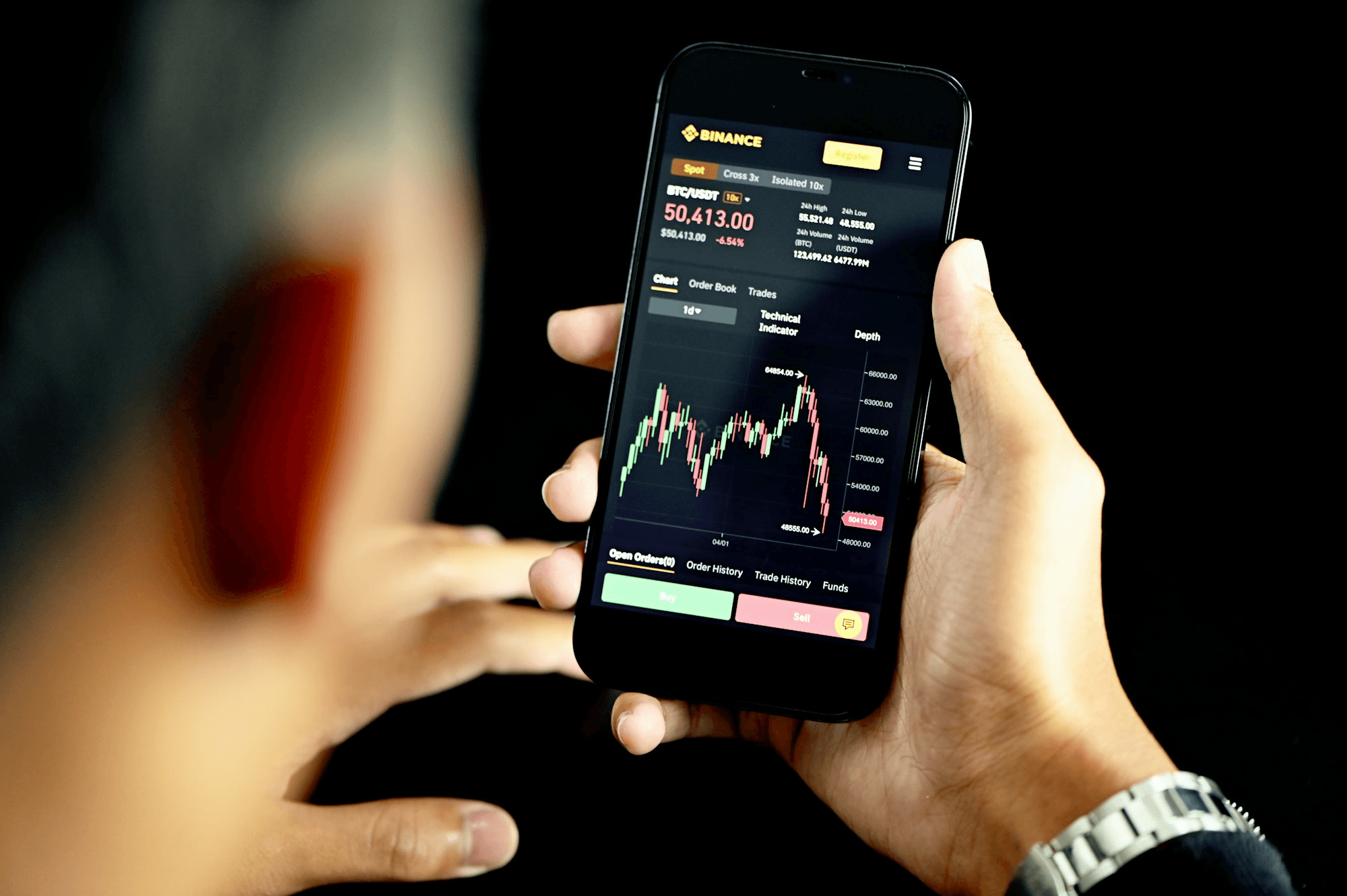
Most traders get swing trading wrong by treating patterns as a strategy rather than as signals within a moving market, so entries are timed to the chart rather than to the context. Success depends on reading when liquidity, volatility, and funding cooperate with your idea, not just on spotting a triangle or breakout.
Why Do Chart Patterns Mislead So Often?
Pattern-based rules work only when the market environment remains stable. Patterns fail when a breakout happens on thin volume, when funding blows out, or when Bitcoin dominance shifts and altcoin liquidity evaporates. This pattern appears consistently across spot token moves and perpetual markets: traders buy into breakouts just as liquidity dries up, then watch fills smear and stop losses cascade. It feels like you did everything right, and then the trade dies because the surrounding market was the wrong one to trade in.
When are You Trading The Idea, Not The Market?
The failure mode is timing, not concept. Entering during sideways Bitcoin action, holding through weekend volume collapse, or ignoring open interest spikes turns an otherwise valid setup into a low-probability bet. The numbers are stark. Investing.com found that over 80% of traders fail to consistently profit from swing trading. That statistic is not an indictment of technical tools; it is evidence that most losses stem from trading without first reading market structure.
How Much Does Execution Change The Outcome?
Execution is an alpha channel that people underestimate. Slippage, widened weekend spreads, routing delays, and MEV extraction turn a neat setup into a ruinous trade at the fill.
It’s exhausting to watch:
You plan an entry, the fill misses
The trend reverses
You’re left wondering what went wrong
This is where reliable fills and cost-efficient routing matter; poor execution converts good ideas into losing outcomes faster than any indicator can detect.
The Execution Gap: Why “Good Ideas” Fail in Manual Markets
Most traders handle discovery with screenshots and single-exchange orders because that approach is familiar and requires no new workflow. That works when market friction is low, but as trade frequency and token breadth grow, those manual methods:
Fragment execution
Time-sensitive signals get missed
Opportunity costs compound
Platforms such as Bullpen centralize:
Discovery and execution
Surfacing social and onchain signals
Providing fast multi-route fills
Automated fee and tip optimizations
MEV protections
Traders keep the idea and remove the execution drag that typically eats returns.
What Practical Shifts Stop Repeating The Same Mistakes?
Treat entry and size as probability management. Use limit and DCA orders to avoid chasing poor-liquidity breakouts, watch funding and open interest for conviction, and step back when macro structure is choppy. This discipline matters because only a small subset of traders consistently beat the market. Investing.com reports that only 15% of swing traders outperform the market. That percentage is the real benchmark, so our job is to design workflows that move you from noise into that 15 percent by making:
Discovery
Execution
Risk is consistent and measurable
Beyond the Chart: Solving the “Low Tide” Execution Problem
Think of it like fishing: the chart is the spot on the map, but if you arrive during a low tide, use the wrong bait, or tie a knotted line, you go home empty-handed. The emotional toll matters too; repeated, mistimed trades lead traders to second-guess their systems and chase ever riskier setups. A better habit is to surface ideas from public performance, verify liquidity and funding cues, size deliberately, and execute with priority-aware routing or staged orders so every trade is repeatable and reviewable. That frustrating part? This problem points to a bigger mistake most traders never confront.
Related Reading
What Swing Trading Actually Means

Swing trading, at its heart, is a plan to hold positions long enough to capture a meaningful leg of price movement, not every little oscillation. You size for the time you expect to be in the trade, set rules for entries and exits, and treat each position as a measurable experiment you can review. When you are ready to move from planning to execution, platforms like Bullpen allow you to buy Crypto with institutional-grade speed and precision.
Why Hold For Days Instead Of Minutes Or Years?
Swing trading aims to exploit moves that take several days to several weeks, as described by Investopedia: “Swing trading attempts to capture gains in an asset over a few days to several weeks,” which means your playbook must account for evolving liquidity, news windows, and sleep cycles rather than instant fills or multi-year fundamentals. Think of it as steering between currents, not racing every wave.
What Do Traders Actually Do Differently When They Swing?
They build a repeatable workflow:
Identify a trend on higher timeframes
Select an entry that respects structure and size so a stop makes sense
Choose an order type that matches the market context
This is a discipline of process more than pattern recognition. The common failure I see is emotional interference: traders shrink stops or chase entries because they are watching hourly candles instead of trusting the original plan, and that friction eats edge.
How Does Risk Management Look In Practice?
A pragmatic rule many apply is to use tight, disciplined stops relative to position size; industry guidance notes that swing traders often use a stop-loss of 2% to 3% to manage risk, as explained by Saxo “Swing traders often use a stop-loss of 2% to 3% to manage risk,” which forces you to size positions so a stop does not wipe out your conviction. To manage these risks effectively, traders often use Bullpen to buy Crypto using advanced order types that protect against slippage and MEV. That choice has a tradeoff: tighter stops reduce capital at risk but increase the chance of being stopped by noise, so the consistent approach is to match stop width to volatility and reduce position size rather than abandon risk control.
Why Do Beginners Get Derailed, And What Fixes That?
This challenge appears across retail and prop contexts:
Traders pick coins on hype
Micromanage entries
Their PnL becomes random
The fix is procedural, not mystical.
Use a checklist that:
Ties thesis
Timeframe
Order types together
Automate the boring parts so emotion has fewer levers. When the human role is discovery and judgment, the mechanical role should be:
Order placement
Execution rules
Post-trade review
The Power of Centralized Signals: From Whale Flows to Order Logic
Most traders still stitch together signals and execution by hand, and that familiarity has a cost. It works at a low scale, but as you chase more opportunities, manual discovery fragments, fills slip, and your ability to measure what actually worked collapses. Platforms like Bullpen consolidate public performance signals, runners, whale flows, leaderboards, and shared trades, while providing priority-aware routing and advanced order options, enabling traders to:
Convert surfaced ideas into staged
Multi-chain fills with non-custodial control
Consistent execution outcomes
This makes it easier to buy Crypto and convert surfaced ideas into staged, multi-chain fills with non-custodial control and consistent execution outcomes.
How Do You Make Swing Trading Repeatable, Not Anecdotal?
Treat every trade like a mini-experiment. Before you pull the trigger, tag the idea with:
A one-line thesis
A time horizon
Objective entry/exit rules
Use limit or DCA sequences for entries, schedule a single mid-trade review point, and log the result against your thesis. Over weeks that build a record you can optimize, instead of a montage of gut calls. That discipline separates occasional winners from repeatable performance. That apparent simplicity hides a practical test that most traders fail. Once you see what breaks a plan, everything about how you:
Choose
Size
Hold changes
4 Common Crypto Swing Trading Strategies

These four approaches cover the practical choices you can use as a swing trader:
Trend follows when momentum is clear
Breakout for sudden moves
Range when price oscillates
News-based when catalysts matter
Pick the one that fits your available hours, liquidity access, and mental bandwidth, then build a repeatable workflow around it. According to Token Metrics Blog, “The average holding period for swing trading is 1 to 4 weeks.”
That timeframe should shape your:
Order types
Sizing
Monitoring cadence
1. Trend-Following Strategy
How do you ride momentum without getting shaken out?
Set up and filters: Define a trend on a higher timeframe, then look for pullbacks on a lower chart that respect that structure. Use a pair of moving averages for regime detection, and add MACD or a momentum oscillator to confirm sustained direction.
Entry and sizing: Enter on a disciplined pullback, size to a stop that sits beyond a volatility band (e.g., ATR times a multiplier), and avoid oversized positions that require you to monitor the candles hourly.
Orders and management: Use staged limit or iceberg orders to avoid paying retail spreads on thin books; split entries across 2 to 3 fills if liquidity is shallow. Set a scheduled mid-trade check rather than babysitting intraday.
When it works best: Strong trending majors and high-liquidity altcoins. It fails when a trend is fake or when major liquidity providers rotate away, so always check cross-exchange depth before moving size.
2. Breakout Strategy
When should you commit to a breach, and how do you survive fakeouts?
Set up and filters: Mark clear horizontal levels or consolidation ranges and pair breakouts with volume or onchain flow confirmation. Confirming liquidity movement or whale transfers often separates real moves from traps.
Entry and sizing: Enter with a limit just beyond the breakout point, or use a small kickoff market leg plus queued limit follow-ups, sizing it so that a stop under the breakout invalidation is tolerable.
Execution nuance: Fast routing matters here because early fills capture the best risk-reward. Use fee/priority-tip optimization and MEV-aware routing to reduce slippage and avoid reordering by onchain extractors.
Trade cadence: This is a higher-activity style within swing timeframes; you should expect to watch order books closely for the first few hours after entry.
From Discovery to Execution: Bridging the Signal-to-Fill Gap
Most teams use screenshots and a single exchange order because it is familiar and simple. That works at low scale, but as you try more tokens, the hidden cost appears:
Missed liquidity across venues
Inconsistent fills
Time lost reconciling partial fills
Platforms like Bullpen address that friction by surfacing high-conviction signals such as runner lists and whale flows, while providing multi-route execution like:
Jupiter Ultra and Hyperliquid
Automated fee and priority-tip adjustments
MEV protections
Traders can convert surfaced ideas into cleaner, faster fills without rebuilding complex routing logic.
3. Range Trading
When should you prefer to buy low and sell high inside a channel?
Set up and filters: Trade clear channels or horizontal bands where indicators such as RSI and Bollinger Bands show consistent band-respecting behavior. Confirm the range with multi-day candles to avoid weekend micro-ranges.
Entry and sizing: Buy near support with a tight risk plan, sell into resistance, and treat each trade as a bounded experiment. Use limit orders at the edges and avoid market entries, except to exit a failing range.
Risk mechanics: Monitor volatility spikes and macro liquidity shifts; ranges break when funding or dominance metrics move sharply. If the range compresses too much, step back, waiting for a breakout often beats forcing a trade.
Emotional fit: This is calmer work, suited to traders who prefer predictable exits and fewer screens to monitor.
4. News-Based or Catalyst Swing Trading
How do you trade events without turning them into gambling?
Sourcing the catalyst: Pre-event volume trends, onchain accumulation, and positive leaderboards or public performance threads can indicate whether the market is already pricing in an outcome.
Timing and posture: Many traders take a position 1 to 3 weeks into a hype run and plan to exit before the event, capturing the run-up rather than the post-event reaction. That requires a clear exit rule tied to a calendar and sentiment heat checks.
Order tactics: Use layered entries and a discrete exit schedule, because news trades often move quickly and then reverse. Protect profits with trailing stops sized to expected intraday volatility.
Emotional guardrails: These trades tax attention and can amplify regret when you miss moves. If you prefer lower stress, restrict size or paper-trade the cadence until you see a consistent edge.
The Psychological Anchor: Aligning Strategy with Life and Sovereignty
After coaching new swing traders and reviewing their journals, a consistent pattern emerged: beginners often select a strategy that does not align with their available time and emotional bandwidth, then overtrade or use leverage to chase faster results. That leads to burnout and loneliness more than to predictable returns, so the practical fix is to:
Match the strategy to your daily rhythm
Choose order types that respect liquidity
Keep noncustodial control over keys while you iterate
The Precision Gap: Bridging High-Return Potential with Systematic Execution
A final note about potential outcomes, taken in the right context: according to Token Metrics Blog, “Swing trading can yield returns of 10% to 20% per trade,” single-trade opportunities can be meaningful, but capturing that requires:
Matching strategy
Execution
Emotional stamina
That solution feels complete until a stubborn problem arises and forces you to rethink everything.
Related Reading
Where Most Swing Trades Fail
Most swing trades fail not on the chart but in the operational seams:
Mismatched holding costs
Token mechanics you did not model
Execution that fragments across chains and venues
When those edges are unmanaged, a correct directional call turns into a losing position before your thesis can play out.
Where Do Token Mechanics Bite You?
Token unlocks, vesting cliffs, and staking lockups change supply and tradable float on a fixed calendar, so you must check the next 30 days of onchain events before sizing a multi‑day trade. A token can double on a skinny order book, then collapse when a scheduled unlock hits liquidity, and that timing failure is procedural, not technical. Think of it as buying a concert ticket for opening night without checking if every section of the orchestra is actually available.
What Execution Frictions Create Orphaned Fills?
Bridging latency, gas spikes, and partial AMM fills can create situations where your position is split and unbalanced across chains, exposing you to directional changes during the split. Measure expected fill cost by sampling cumulative depth equal to two times your intended size across the top venues, then simulate bridge times and onchain gas at peak load for the hours you plan to hold. These pre-trade checks convert surprises into calculated risks.
How Do Behavioral Errors Compound Operational Problems?
When traders average into loser positions without rechecking the original thesis, losses compound faster than edge accumulates. A simple rule I use in operational reviews is to set a single mid‑trade decision point, usually 48 to 72 hours, with objective signals to reassess, if those signals:
Fail
Reduce size
Exit
Without that scheduled review, emotional averaging and revenge trades quietly convert correct hypotheses into ruinous behavior.
Which Measurable Metrics Stop Repeating Mistakes?
Track three things per trade:
Realized slippage versus expected slippage
Cumulative funding or carry paid over the holding window
The percent of target liquidity consumed on each venue
If your average slippage exceeds simulation by more than 25 percent, or funding paid exceeds your expected carry, the trade needs a procedural fix, not another indicator tweak.
From Ad Hoc to Automated: The Shift to Execution Management
Most teams handle discovery and execution across scattered UIs and ad hoc checklists because it feels familiar and low friction, and that habit scales poorly.
As complexity grows:
Duplicated checks
Missed event calendars
Uncoordinated fills waste time and bake hidden costs into every position.
Platforms like Bullpen centralize public signals such as runners and whale flows, pair them with multi‑route execution, like:
Jupiter Ultra and Hyperliquid
Add automated fee and priority‑tip optimizations
MEV protection
Traders can run consistent pre‑trade checks and execute staged orders while maintaining non-custodial, multi‑chain control.
Systematic Survival: Engineering Consistency in a Low-Probability Game
The human cost is real, and the numbers show it: according to Trade That Swing, “90% of swing traders fail to consistently make a profit.” That gap explains why only a small group sustains this work, as the same article notes: “Only 10% of swing traders are able to sustain their trading as a full-time income.” That tidy checklist sounds like an endpoint, but the next problem forces you to rethink how you structure every trade.
How to Swing Trade Crypto the Right Way

You swing trade correctly by turning hypotheses into controlled experiments:
Define a concise thesis
Size with volatility-based math
Enforce a pre-trade checklist that verifies cross-exchange depth and expected fills before you press the button.
When those operational checks pass, traders often use advanced terminals to buy Crypto with staged orders and a single scheduled decision point to remove emotion while the market decides.
What Entry Signal Actually Matters Right Now?
Start with a concrete liquidity sample, not another indicator tweak. Before sizing, pull the cumulative depth equal to two times your intended size across the top three venues you will use, and measure the price you would reach if you took that liquidity. If the simulated slippage exceeds your risk budget, the trade is not tradeable, regardless of how clean the chart looks. In practice, run this check in the 24 to 48 hours before you expect to enter, because fills and spreads widen at predictable times; treat it like checking tide charts before going out to sea.
How Do I Size And Place Stops Without Guessing?
Convert volatility into distance, then convert distance into size. Use an ATR multiple or expected slippage band to set the stop, then compute position size as risk per trade divided by that stop distance. Keep the math simple on a phone: if you will risk $300 and your stop is 3 percent, you size to $300 divided by 3 percent. This makes stop placement mechanical, not devotional. Practically, that discipline forces you to buy Crypto only when the risk-to-reward ratio is mathematically sound, preventing conviction from turning into catastrophic exposure.
How Should You Structure Entries And Exits Over Several Days?
Use layered limit or DCA entries for initial exposure, then queue limit take profits and a clear invalidation stop so the entire plan is visible on the book. Pick exactly one mid-trade checkpoint, usually 48 to 72 hours after entry, where you either scale to plan or cut exposure based on objective signals. This single decision point stops the slow bleed of averaging into losing ideas and keeps you accountable to the original thesis.
Why Do So Many Traders Still Fail Despite Good Setups?
Most traders default to chart-first routines, and that is understandable. According to Phemex Academy, “Over 70% of swing traders use technical analysis as their primary strategy,” so indicators dominate how the crowd frames opportunity, but that does not make the setups tradeable. When we coached a cohort over eight weeks, the failure mode was the same:
Clean patterns
Thin liquidity
Poor fills
Emotional averaging
The result was not a bad analysis; it was operating seams that turned a correct view into a losing position.
What Fixed That Operational Gap For Traders?
Most teams manage discovery and execution by hopping between wallets, exchanges, and screenshots because it is familiar and minimal to set up. That works for one or two trades, but as you scale it creates:
Hidden costs
Fragmented fills
Missed priority
Platforms like Bullpen centralize idea signals such as runners and whale flows, surface who is actually profiting, and link that discovery to multi-route execution, including:
Jupiter Ultra and Hyperliquid
Automated fee and priority-tip adjustments
MEV protection
Traders find that centralizing these steps converts ideas into consistent, measurable fills while keeping noncustodial multi-chain control.
How Should Risk Controls Be Framed So They Actually Protect Capital?
Treat stops as insurance, not punishment. A formal stop-loss plan reduces behavioral drag and preserves your ability to trade another day, which matters because a structured exit reduces the risk of ruin. According to SabioTrade Blog, “A stop-loss strategy can reduce potential losses by up to 50%,” so treat stop rules as a core budget item: calculate expected worst-case drawdown per trade, and run your edge only when expected reward justifies that budget.
What Post-Trade Metrics Should You Record To Actually Improve?
Log these three numbers for every swing:
Realized slippage versus expected
Net carry or funding paid over the hold
Percent of top-book liquidity consumed
After six weeks, that dataset shows which venues bleed you, which order types underperform, and which signal/size pairs produce repeatable edge. When traders use professional tools to buy Crypto and log these metrics, intuition finally becomes a verifiable skill. It sounds complete, but there is one operational snag no one wants to discuss that changes everything.
Buy Crypto Today with Bullpen
If you want to stop juggling wallets and bridges, I recommend Bullpen. It puts Bitcoin, Solana memes, Hyperliquid perps, and Polymarket into one app so you can:
Surface high‑conviction setups
Follow traders with verified PNLs on a live leaderboard
Get instant alerts when top performers open positions
Buy Crypto with Apple Pay or your bank, use leverage and advanced limit or DCA orders for cleaner entries and exits with fast routing and MEV protections, and deposit today to earn 500 points plus a free introductory call when you fund $1,000 or more.
Related Reading
Last Updated:
February 7, 2026