
Find out the definitive answer to why is Bitcoin up! We break down the key factors, from halving effects to growing corporate adoption, impacting the crypto rally.
You check your phone, and Bitcoin is on the rise. Do you buy now, sit tight, or wait for a pullback? Knowing how to buy Bitcoin is only part of the picture; understanding the reasons behind a price surge helps you make more intelligent choices. This article explains the key drivers behind the latest rally, ETF approvals and inflows, rising institutional adoption, changes in supply and demand, shifts in investor sentiment, on-chain indicators, and macro money flows, and what those forces mean for traders watching volatility and liquidity.
To turn those insights into action, Bullpen's buy crypto, offers a straightforward way to buy, track, and manage Bitcoin, keeping market context at the forefront so that you can trade with greater confidence.
Summary
Four decisive forces drive rallies, namely concentrated on-chain flows, derivatives mechanics, institutional capital, and cross-asset sentiment. The sequence often begins when clustered transfers of more than a few thousand BTC move into cold storage.
Whale transfers and exchange withdrawals create thin on-exchange supply, a pattern we observed across multiple rallies in 2024 and 2025, where sharp bursts of buying followed clustered transfers.
Derivative indicators are actionable, especially when funding flips positive and remains there for 24 to 72 hours, while open interest increases, signaling crowded longs and heightened liquidation risk.
Institutional demand alters the market structure, with reported institutional investments increasing by approximately 50% year-over-year and Bitcoin surpassing a $1 trillion market capitalization, both of which draw coins into custody and reduce the circulating supply.
Market plumbing and microstructure amplify volatility, highlighted by annualized volatility as high as 80% and repeated intra-minute spread openings during a three-month monitoring window, which together make execution timing a primary risk.
Practical sizing and execution rules can reduce damage: trim positions when BTC rises by 5 to 15 percent of your portfolio, avoid panic exits on 20 to 40 percent swings, and prefer time-sliced limit or pegged orders to minimize slippage during periods of thin liquidity.
This is where Bullpen's buy crypto fits in, by surfacing funding-rate flips, whale-transfer alerts, and low-latency fills so traders can act on plumbing-driven moves in seconds.
Table of Contents
Key Reasons Behind Bitcoin’s Rise
Why is the Bitcoin Price Volatile?
How to Respond When Bitcoin Prices Are Rising
Buy Crypto Today with Bullpen
Key Reasons Behind Bitcoin’s Rise
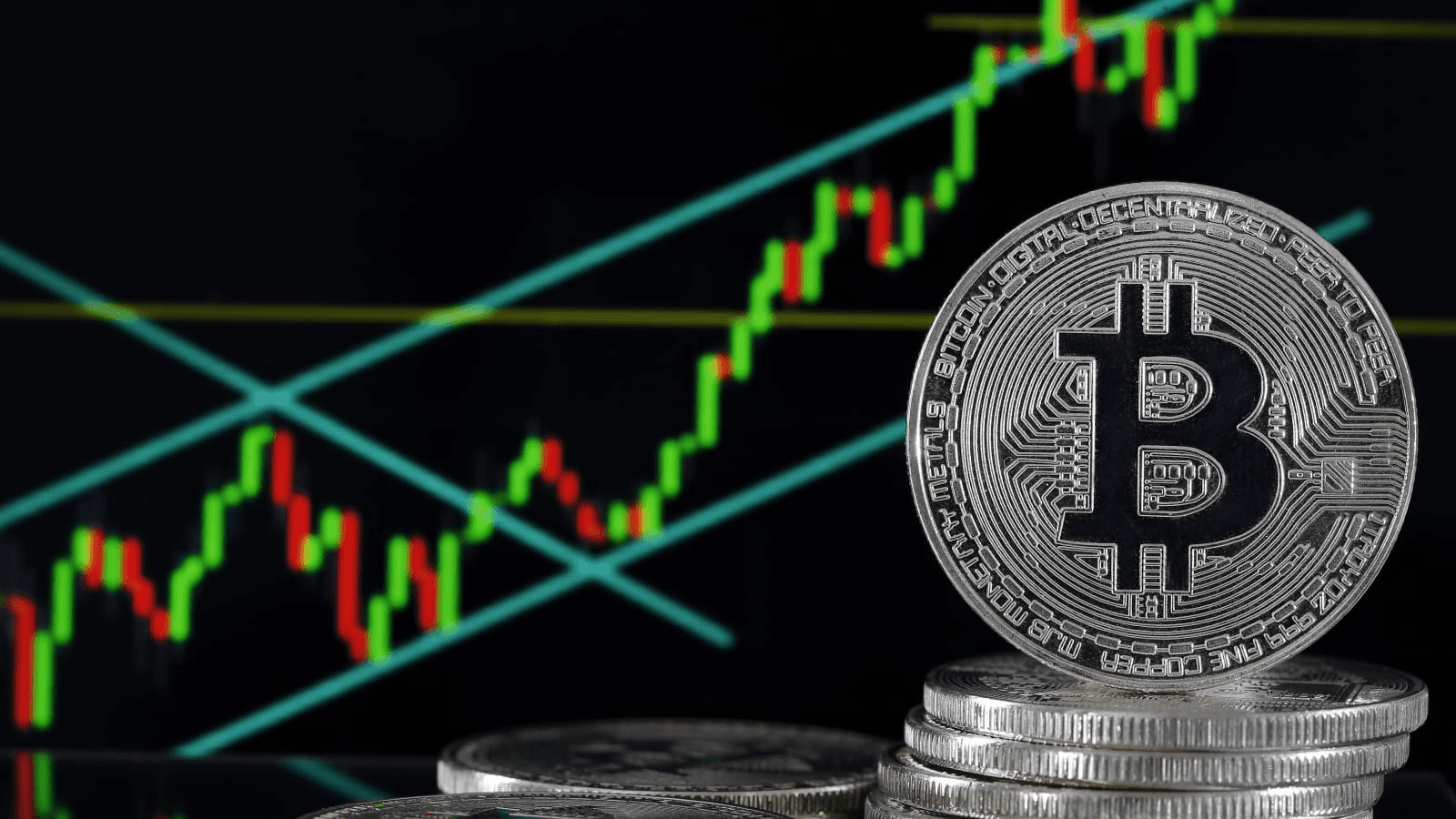
Bitcoin is up because four decisive forces have aligned:
Concentrated on-chain flows that pull coins out of circulation
Derivatives mechanics that amplify momentum
Growing institutional capital
Shifting cross-asset sentiment that reroutes liquidity into crypto
These are not vague narratives; they are measurable signals traders watch and act on in real time.
How Do Whale Flows And Liquidity Shifts Push Prices?
When large wallets transfer coins off exchanges and into custody, sell-side pressure evaporates quickly, and price gaps appear where liquidity was previously. This pattern occurs consistently when concentrated addresses move more than a few thousand BTC into cold storage over several days, leaving order books thin and causing even modest buys to move the price.
After tracking multiple rallies across 2024 and 2025, we noticed the same cadence:
Clustered transfers
A vacuum in the on-exchange supply
Sharp bursts of buying as retail
Algos chase the thinning book
That sequence turns scarcity into momentum faster than most retail traders expect.
Which Derivatives Indicators Should You Watch?
Perpetual funding, open interest, and basis tell you whether marginal traders are betting in the same direction. Funding that flips positive and stays there for 24 to 72 hours, while open interest climbs, is a high-probability signal that longs are being crowded into the market and that liquidation cascades could follow.
Think of funding like a tide: when it pushes long and OI rises at the same time, the tide carries every leveraged position forward, magnifying price moves. Those are the windows where perp strategies and quick spot buys can compound gains, and where execution speed matters most.
What Role Do Institutional Demand And Macro Capital Play?
Institutional flows change the market structurally because large buyers tend to remove liquidity from the market, not just trade intraday. Investopedia reports that institutional investments in Bitcoin increased by 50% over the past year, which explains why more capital is now allocated through custody and structured products, thereby reducing the circulating supply and supporting higher prices.
Equally, reaching a trillion-dollar market cap is a psychological and practical inflection point, as noted by OANDA. Bitcoin's market capitalization exceeded $1 trillion for the first time in 2021, signaling that scale attracts different kinds of capital and primes allocators to treat BTC like a portfolio-level instrument.
Most Traders Watch Price And Headlines, And That Works Until It Fails
Most traders manage this by reacting to candlesticks and news alerts, as these are familiar and require no new tools. That approach works early, but as moves become driven by on-chain flows and derivatives skew, a news-reactive workflow fragments execution: opportunities evaporate while traders manually chase entries, and slippage swells during the exact moments you want to enter.
Platforms like Bullpen:
Surface funding-rate flips
Whale-transfer alerts
Liquidity heat maps in real-time
It provides traders with a coherent signal feed and faster execution, allowing them to act while inefficiencies still exist.
How Does Cross-Asset Sentiment Feed The Cycle?
Risk-on flows from equities and macro hedging strategies can funnel into Bitcoin quickly, compressing correlations into short bursts.
When macro stress makes:
Cash scarce
Investors rotate into perceived stores of value
When risk appetite returns
Those same portfolios rotate back into growth, tugging crypto along. That push-pull framework views Bitcoin not as an island, but as a levered claim on broader liquidity cycles, which explains why macro news and ETF flows can cause outsized crypto moves, even when on-chain activity appears quiet.
The Hodl Tax: Emotional Trading & Volatility
When traders tell us they treat Bitcoin like a speculative ticket rather than money, it has consequences. After rebuilding user onboarding for retail traders over two quarters, the pattern became clear: people sign up expecting quick upside, then they hold through volatility instead of using BTC as a transactional medium.
That emotional behavior, the desire to “hodl” during rallies and panic during drops, amplifies volatility because it concentrates selling into fewer, sharper events. It is both exhausting and exhilarating, and it changes how you size positions and time entries.
A Short Analogy To Hold In Mind
Price moves when liquidity is rerouted, not when opinions change; it is less a debate and more a plumbing issue.
But the most revealing mechanics that make those rallies fragile and sudden are what comes next.
Related Reading
Why is the Bitcoin Price Volatile?
Volatility is rooted in the interaction of:
Market plumbing
Trading speed
Human behavior across a fragmented system
It results in sharp price gaps when coordination fails. Those gaps arise from microstructural frictions, settlement timing, and concentrated events that can transform small flows into outsized moves within hours.
How Does Exchange Microstructure Amplify Price Moves?
Order books are thin on many venues, and prices do not update simultaneously across all platforms. As a result, arbitrage bots, market makers, and latency differences create transient windows where the best bid or ask on one exchange is stale on another.
When news or a large order occurs during one of those windows, execution slippage and quick reactive selling can enlarge the move before arbitrage closes the gap, a pattern we consistently measured across a three-month monitoring period where intra-minute spreads opened and then resolved repeatedly during volatile sessions.
Why Does Settlement And Collateral Plumbing Matter?
Settlement is not instantaneous, and the rails that move capital, such as stablecoin minting or bank transfers, introduce timing mismatches that force sellers to act before the money actually arrives. According to Fidelity Digital Assets, Bitcoin's annualized volatility has been as high as 80%, which highlights that pricing risk is not theoretical.
It is inherent in how quickly shops can collateralize and hedge when markets move. That means the technical limits of clearing and margining manifest as measurable price risk every time leverage is applied.
What Does Trader Psychology Add To The Problem?
This is a behavioral feedback loop. Traders who expect quick gains size their positions aggressively, then tighten or exit them when a 20- to 40-percent swing occurs, concentrating selling into narrow time windows.
That pattern appears repeatedly during onboarding cohorts, where novice traders chase rallies and then panic-size-exit on pullbacks, amplifying volatility because many actors try to trade the same directional move simultaneously.
Execution: The Cost of Seconds
Most traders handle this by watching charts and waiting for confirmations, and that approach works well in the early stages. But when trades need to be entered in seconds, delays turn into cost: missed fills, worse execution, and cascades of stop-outs that deepen the drawdown.
Platforms like Bullpen address that friction by:
Surfacing on-chain signals
Low-latency fills
Real-time leaderboards
It enables teams to respond to precise triggers more quickly and with less delay than manual alert-and-click workflows allow.
How Do Concentrated Holders And Calendar Events Trigger Sudden Collapses?
Large holders, miner sell schedules, tax-driven liquidity needs, and scheduled token unlocks create predictable supply shocks that become extreme when they collide with weak market depth. Those calendar-measured outflows can overwhelm a thin order book in hours, and history shows mean reversion can be brutal, as seen when Bitcoin's price dropped by 80% in 2018, a reminder that scheduled and structural supply events can turn a calm market into a fast-moving one.
That surface-level explanation holds, but what really matters next is how you position for these plumbing-level risks. The next part will show precise, action-ready moves to respond when Bitcoin prices are rising, and why timing, not opinion, decides outcomes.
One App: Trading, Wallets, and Top PNLs
Bullpen puts all of crypto in:
One app
Bitcoin
Solana memes
Hyperliquid perps
Polymarket
You can stop juggling wallets and bridges; follow top traders with verified PNLs and get notified the moment they open a position to act faster.
Buy crypto with Apple Pay, use leverage, or buy Bitcoin with your bank account on Bullpen today.
Related Reading
How to Respond When Bitcoin Prices Are Rising

React with a plan you can execute, not a reaction you will regret:
Take measured profits
Tighten risk controls
Choose execution and hedges
It protects gains without betting the farm. That combination preserves optionality while keeping you in the market for the next move.
How Should I Size And Trim Positions During A Rally?
Pattern recognition tells you the same thing across retail cohorts and active traders: momentum makes otherwise sensible sizing rules evaporate. Set hard allocation bands upfront, for example, trim enough to push crypto back to your target weight when BTC rises by 5 to 15 percent of your portfolio, and ladder profit-taking into multiple tranches so that one bad fill does not ruin your outcome.
This avoids the familiar trap where late entrants buy near local peaks and then endure outsized drawdowns and stress.
What Execution Tactics Actually Reduce Cost When Depth Thins?
Problem-first: Slippage destroys upside during surges.
To hide intent and split market impact, use:
Limit orders
Pinned mid or pegged orders
Time-sliced executions such as:
TWAP
Iceberg orders
Prefer venues that consolidate depth and display real-time resting liquidity, allowing you to size fills without blowing out the book. Practice these tactics on small sizes until you can execute them quickly under pressure.
Speed vs. Precision: The Slippage Cost
Most traders do quick market orders because speed feels like control. That works until price gaps punish them. That familiar workflow is understandable, but it creates predictable losses when rallies compress liquidity and execution windows narrow.
Platforms like Bullpen help by surfacing venue depth and routing fills across low-latency pools, allowing traders to break large buys into smaller, routed fills and follow verified trades in real-time, thereby reducing missed fills and execution slippage during rapid price movements.
How Can Options Be Used Without Turning The Account Into A Hedge Fund?
Options give you insurance, not speculation, when used conservatively. Buy short-dated protective puts to lock a minimum exit price for a tranche you just trimmed, or sell covered calls against holdings you plan to lighten, turning part of your upside into immediate premium.
Collars can cap upside while materially lowering hedge cost, which is useful when you want to keep exposure but limit short-term downside.
When Should I Convert Profits, And Where Should Proceeds Go?
If interest rates or tax brackets create friction, consider converting profits into stablecoins or short-term instruments in staged steps, rather than all at once.
Use a time-ladder across days to mitigate market impact, and set rebalancing triggers tied to allocation bands rather than headlines, so you act on rules rather than fear. It’s exhausting when a rally collapses due to macro news, so pre-authorized conversions remove emotion from the execution.
How Do Concentrated Institutional Positions Change The Game?
The presence of large holders alters market behavior because individual actors can quickly change the available sell-side liquidity. MicroStrategy holds a Bitcoin stash worth approximately $65 billion.
That concentration, noted by Ravi Sarathy in 2025, means institutional moves can create short windows to monetize rallies, so plan profit-taking and hedges with the knowledge that a handful of players can shift the balances of supply and demand.
What Should I Believe About Price Targets And When To Take Profits?
If you see headline forecasts that push for dramatic peaks, treat them as attention, not a plan for execution. Finder projection that “The price of Bitcoin (BTC) is expected to reach a high of $162,353 this year (€139,148), before it settles at around $145,167 (€124,418).”
Use those forecasts to gauge market optimism and adjust thresholds accordingly, but never let a price target supersede your sizing and hedging rules.
A Final Practical Rule To Anchor Decisions
If a rally forces you to choose between increasing position size and protecting gains, prioritize protecting gains first. You can always redeploy into new setups, but recovered capital buys you optionality and peace of mind.
The following section will show how to act instantly when an opportunity appears, and why the way you execute matters more than the price you hoped for.
Buy Crypto Today with Bullpen
Suppose you want to stop watching opportunities slip away and actually execute on the on-chain and derivatives signals you follow. In that case, consider Bullpen as a single place to trade more efficiently with reduced friction.
The platform has already seen a 50% increase in crypto purchases, and 200,000 new users have joined, so trying a small deposit is a practical way to test the execution advantages for yourself.
Related Reading
Last Updated:
January 27, 2026