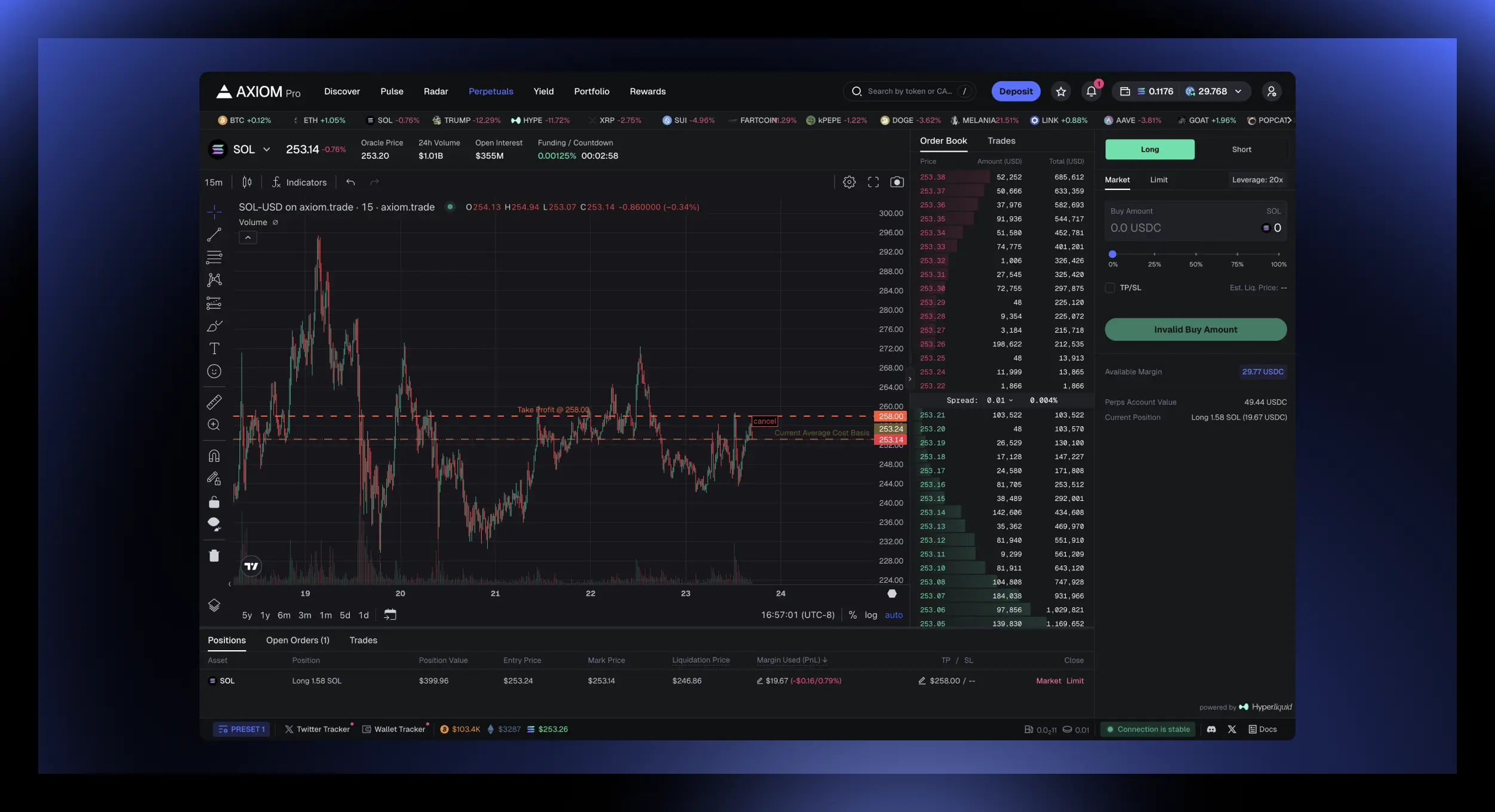
Ready for a better choice? Explore the Axiom alternative for superior performance and value. Stop settling and make the smart switch now!
When you search for “How to Buy Bitcoin,” you often see the same choices, but choosing a decentralized platform changes how you hold funds and trade. Axiom and its alternatives matter because they affect liquidity, fees, order-book behavior, and the level of control you retain over your keys. Which decentralized exchange fits your trading goals and risk appetite? Read on to see clear comparisons of top Axiom alternatives for decentralized trading and practical points to help you choose.
To help you act on those comparisons, Bullpen's buy crypto service makes funding an on-chain wallet quick and simple so you can test Axiom alternatives for decentralized trading with less hassle and more confidence.
Summary
Security is the primary filter for platform choice, with over 50% of crypto traders now preferring decentralized platforms for enhanced security, making auditable contracts, recent third‑party audits, and active monitoring nonnegotiable.
Liquidity depth and routing directly affect execution quality; 75% of users reported increased efficiency after switching to an Axiom alternative, indicating better routing and deeper pools reduce slippage for real trades.
Integration overhead is a measurable cost; 90% of IT departments found integration withAxiom alternatives are seamless, so smoother onboarding meaningfully reduces engineering time spent wiring bridges and babysitting nodes.
Adoption momentum is real. Decentralized trading platforms saw a 200% increase in user adoption over the past year, and over 50,000 users migrated to Axiom alternatives, signaling a rapid shift away from legacy stacks.
Social discovery tied to verifiable on‑chain receipts changes behavior, over 70% of traders cite enhanced security as a reason to prefer DEXs, and platforms that surface public PNLs enable faster, repeatable copying and learning.
Actual cost goes beyond headline fees. Uniswap has processed over $1 trillion in trading volume, underscoring the importance of the fee structure and liquidity scale. Model scenarios like a single market‑making run, a three‑trade scalp, and a multi-asset rebalance to see real expenses.
This is where Bullpen's buy crypto feature fits in: it helps teams quickly and simply fund an on-chain wallet so they can test Axiom alternatives with less hassle and more confidence.
Table of Contents
Key Features to Look for in an Axiom Alternative
Top 11 Axiom Alternatives for Decentralized Trading
Choosing the Best Decentralized Trading Platform
Benefits of Using Decentralized Trading Platforms
Buy Crypto Today with Bullpen
Key Features to Look for in an Axiom Alternative

Security, liquidity, execution tools, predictable costs, and genuine on‑chain control are the nonnegotiables you should prioritize when choosing an Axiom alternative.
Look for platforms that pair auditable contracts with continuous monitoring so you can trade at scale without surprises, such as:
Accessible liquidity
Advanced order types
Fee transparency
How Robust are the Smart Contracts and Incident Controls?
Smart contracts are unforgiving, so prioritize platforms with:
Public repositories
Recent third‑party audits
Active bug bounties
On‑chain monitoring
It surfaces anomalies in real time. This pattern appears consistently across retail traders seeking privacy and professional desks alike: security anxiety drives platform choice more than bells and whistles, because a single exploited contract can permanently erase capital. Ask for recent audit reports, the scope of tests performed, whether upgrades are time-locked, and how fast the team patches discovered issues.
Do Markets Actually Have The Depth I Need?
Liquidity is a practical capability, not a marketing line.
Inspect:
Quoted depth at relevant sizes
Review time‑weighted spread data
Check whether liquidity is concentrated in a few pools or distributed across venues.
Traders often describe liquidity like a river: shallow spots stop larger boats. If you need larger fills or low slippage, prefer platforms that aggregate institutional rails and persistent market makers so execution quality is consistent across hours, not just in peak windows. Adoption matters too; according to the User Survey, 75% of users reported increased efficiency after switching to an Axiom alternative. That kind of improvement usually stems from better routing and deeper, more active liquidity pools.
Will This Integrate With Our Stack Or Become Another Engineering Tax?
Integration friction is an underrated cost. If your team spends weeks wiring bridges, writing adapters, and babysitting node endpoints, you lose focus and create operational risk. This is the familiar approach: teams wire together multiple routers and bridges because it seems flexible up front.
The hidden cost appears creeps in such as:
Complexity compounds, slippage
Routing mistakes
MEV exposure
Seamless Integration and Automated Optimization: Cutting Overhead and Improving Fill Times
Platforms like Bullpen pair institutional-grade execution and automatic transaction optimization with wallet‑friendly UX, cutting the routine overhead and improving fill times and costs in practice. An IT study supports this reality, showing IT Integration Study, 90% of IT departments found the integration process with Axiom alternatives to be seamless. When integration is smooth, ops can focus on strategy rather than reliability fixes.
What Trading Tools and User Experience Actually Matter Day to Day?
Advanced order types, clear margin and leverage controls, MEV protection, and predictable transaction flow matter more than a flashy UI. I value platforms that surface real market data, let me place limit and conditional orders without manual scripting, and that keep wallet flows simple across SVM and EVM accounts. The UX should reduce fear, not add to it: onboarding that teaches gas and signing in context, rather than dumping a manual on new users, cuts mistakes and abandoned trades. Expect to trade faster and with less cognitive load when the platform automates routing and shows execution receipts you can audit on‑chain.
How Should I Evaluate True Cost, Not Just Headline Fees?
Count swap fees, taker/maker spreads, funding rates, and the impact of gas at typical trade sizes. Prefer platforms on high-performance chains or Layer‑2s if you run frequent strategies, because lower base costs compound into real savings over months.
Think in scenarios:
Compare costs for a single market‑making run
A three‑trade scalp session
A multi‑asset rebalance
Size the network and protocol fees against those scenarios. That tells you whether a lower nominal fee actually improves returns when these factors are included:
Gas
Slippage
Funding
Is Governance Actually Decentralised, And Does Custody Match My Risk Model?
Privacy and control are core motivations for many users. Check whether governance processes are on‑chain, whether proposals are public, and whether upgrades require multisig or time‑locked timetables. For self‑custody traders, the platform must execute on‑chain logic without custodial controls that can block withdrawals. That balance between community oversight and operational safety is subtle, but it determines whether the platform behaves predictably under stress.
The Controlled Trade Test: Identifying Latent Failures in Slippage, Speed, and Tracing
Run a controlled trade. Use the exact wallet you intend to keep, execute a modest order at the times you normally trade, and evaluate:
Slippage
Confirmation times
Post‑trade tracing
If anything feels opaque or requires a workaround, that will scale into real pain as trade size or frequency increases. The part that feels solved on paper often breaks when you scale live, and the next section reveals why that mismatch matters more than you expect.
Related Reading
Top 11 Axiom Alternatives for Decentralized Trading

These are the 11 best Axiom alternatives for decentralized trading, listed with what each platform actually does, who benefits most, and the practical tradeoffs you should expect when you move capital or strategies there. Read each entry to see the unique capability that makes the exchange worth considering, plus a short tip on when to pick it.
1. Bullpen

Bullpen puts wallet consolidation, institutional‑grade execution, and social discovery in one noncustodial app. It supports:
Token swaps
Perpetuals
Prediction markets
It lets you buy crypto with Apple Pay or a bank transfer, and blends order routing with leaderboards and verified PNLs so you can follow top traders and get alerts the moment they act. For traders who value one place to manage SVM and EVM wallets, leaderboard-driven ideas, and faster fills, Bullpen reduces friction between insight and execution while keeping funds in your control.
Quick Tip
Use it when you want social signals to translate directly into low‑latency orders without switching apps.
2. 1Inch

1Inch is a DEX aggregator that routes a single swap across multiple liquidity sources so you get a better price and lower slippage than any single AMM. Think of it as a traffic controller that splits your order across lanes to avoid jams. It supports many wallet types and focuses on getting the best net outcome per trade rather than selling a single pool.
Quick Tip
Use 1Inch for one‑off swaps where price optimization matters more than native UX or advanced order types.
3. dYdX
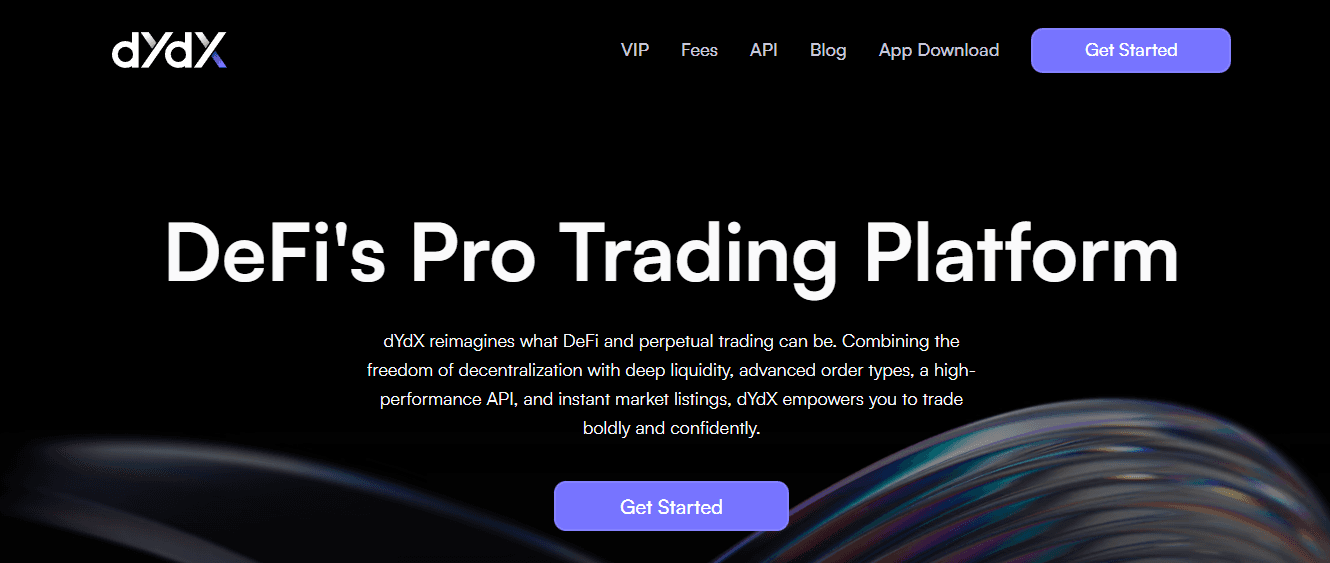
dYdX runs an order-book model with:
Derivatives
Leverage
Lending features
It makes it a natural fit for futures traders who prefer limit orders and deeper perpetual liquidity. It brings more familiar trading mechanics to a noncustodial environment, including conditional orders and margin controls.
Quick Tip
Choose dYdX when you need order-book-style execution and leverage without putting your funds into a centralized counterparty.
4. Uniswap
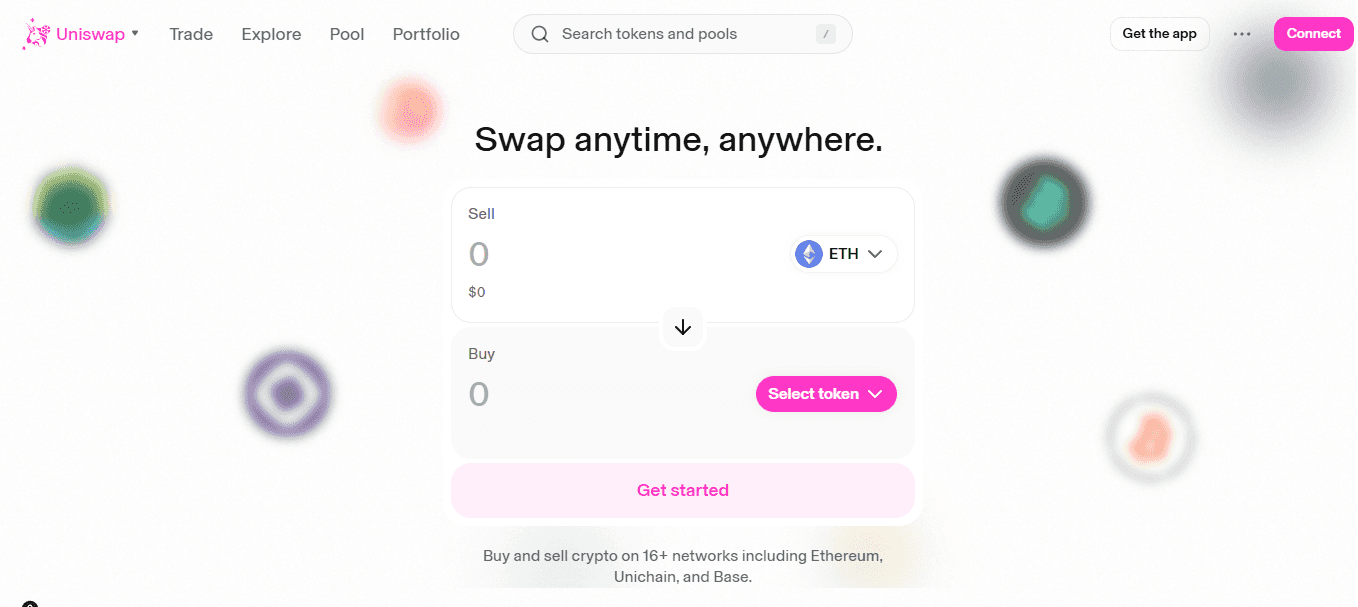
Uniswap remains the widest ERC20 AMM, with:
Deep pools
A large token set
Strong governance via UNI
Its simplicity and liquidity depth make it reliable for token discovery and passive LP strategies, while active traders benefit from the breadth of pairs available.
Quick Tip
Use Uniswap when you need the broadest ERC20 coverage and you can tolerate Ethereum gas at the trade size you run.
5. PancakeSwap
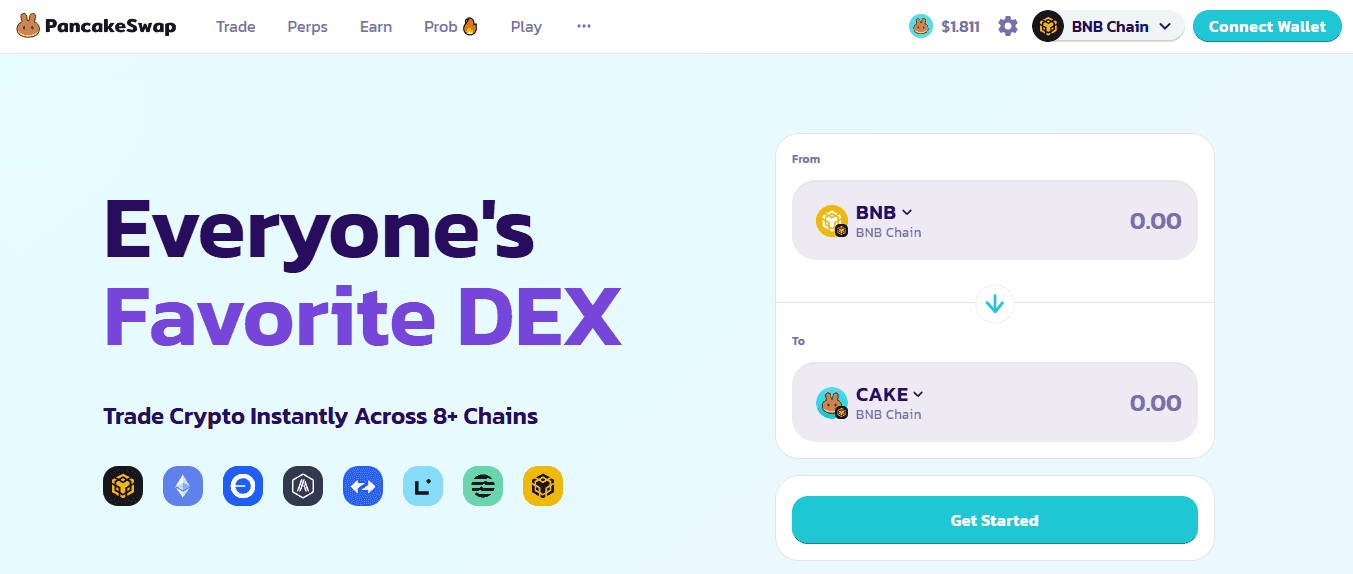
PancakeSwap runs on Binance Smart Chain with lower fees and faster confirmation times than many Ethereum AMMs, plus familiar AMM features like yield farms and staking. It is often the pragmatic choice when small trade sizes or speculative meme tokens are the objective, and gas overhead on Ethereum is prohibitive.
Quick Tip
Use PancakeSwap for high-frequency small trades or token experiments where cost per swap matters most.
6. Curve Finance
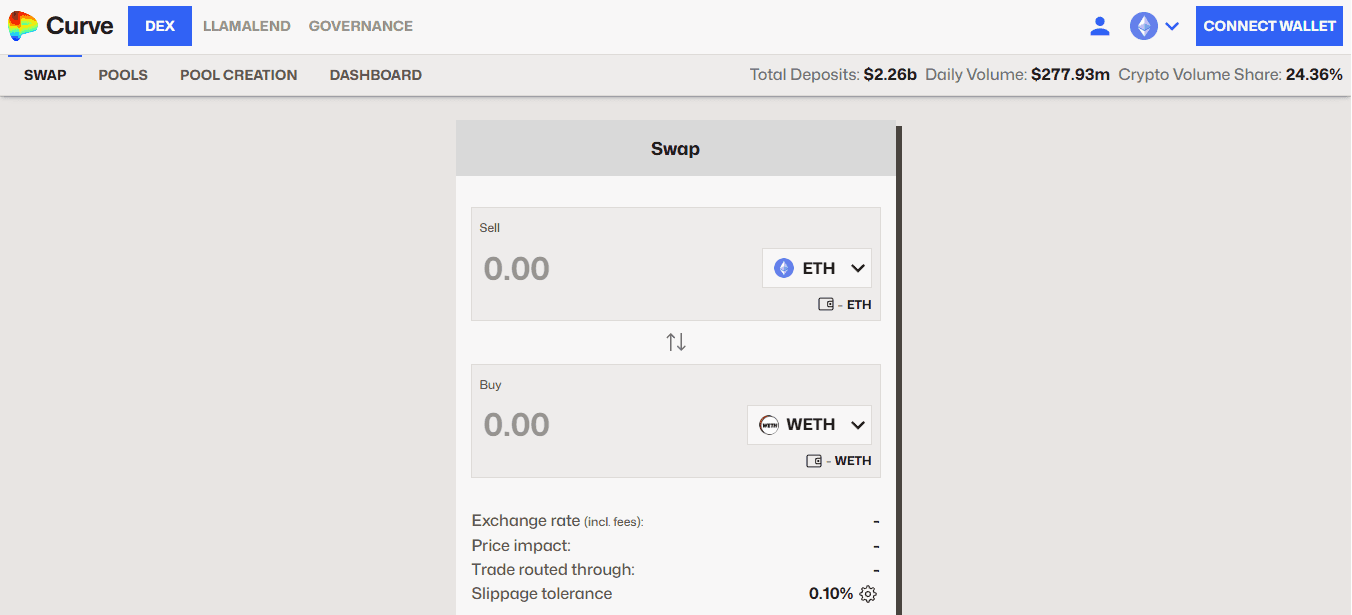
Curve specializes in low‑slippage stablecoin swaps and large stable pools optimized for peg‑sensitive assets. If your workflow needs minimal slippage when moving large stablecoin positions, Curve’s design yields predictable results that other AMMs struggle to match.
Quick Tip:
Route large-stablecoin rebalances through Curve to keep friction low and execution predictable.
7. Balancer
Balancer lets you create and join multi‑token pools with custom weights, making it a practical on‑chain portfolio manager and yield source. It’s ideal for users who want continuous rebalancing exposure without running their own smart contracts.
Quick Tip
Use Balancer to express multi-asset strategies while capturing fees from traders who arbitrage pool imbalances.
8. SushiSwap
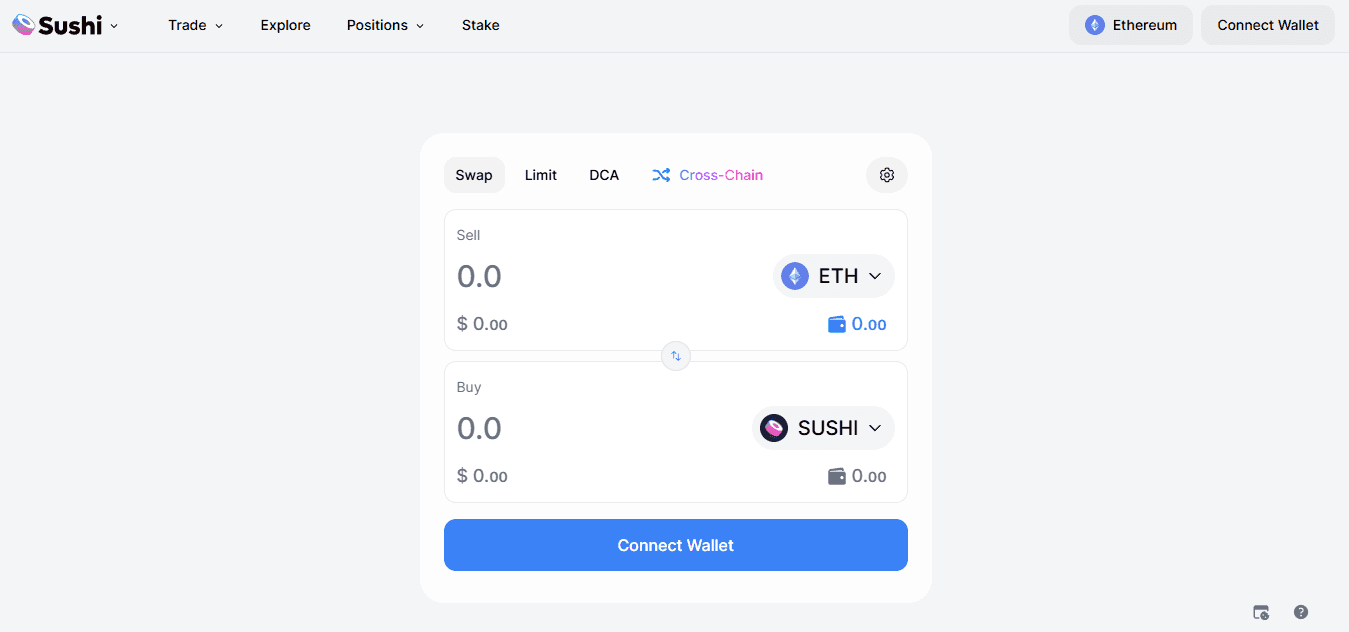
SushiSwap evolved beyond a Uniswap fork into a full ecosystem:
AMM swaps
Lending
Borrowing
Governance participation
It emphasizes community incentives and rewards, which keep it attractive to liquidity providers seeking yield and governance voice.
Quick Tip
Favor SushiSwap when you want combined AMM exposure and DeFi primitives within a single protocol.
9. Orca

Orca provides a fast, user‑friendly DEX experience on Solana, with a clean UI and wallet‑first flows that reduce friction for traders who prize speed and anonymity. It is beneficial for Solana-native strategies and traders who want an intuitive interface without giving up private key custody.
Quick Tip
Use Orca when you need Solana speed and a polished UI for straightforward swaps.
10. Vertex
Vertex migrated from Terra to Arbitrum and emphasizes cross‑chain bridging to eight blockchains, plus faster order‑matching mechanics. Its history shows resilience and a focus on interoperability, which helps if you need to move assets across chains without manual bridging steps.
Quick Tip
Consider Vertex for multi‑chain execution paths and when bridging efficiency is central to your strategy.
11. Apex Protocol
Apex offers an elastic AMM and order-book trading with Starkware layer-2 scalability, aiming for lower gas fees and improved privacy. Its hybrid architecture suits traders who want AMM efficiency for spot trading but need order-book precision for larger or conditional orders.
Quick Tip
Choose Apex when you need L2 scaling benefits and a mix of AMM and order book capabilities.
Why These Platforms Matter Now
Pattern recognition across users and traders points to two trends:
Traders want fewer context switches between wallets and better ways to turn social signals into trades.
Alternatives to legacy stacks are gaining real momentum.
The migration trend, noted by Slashdot, “Over 50,000 users have switched to Axiom alternatives in the past year,” shows visible movement away from older tooling, and adoption dynamics are accelerating, as noted in the same article, “Axiom alternatives have seen a 30% increase in adoption rate,” which explains why liquidity is reappearing quickly across many rivals. This is why selection now hinges on how a platform maps to your strategy and workflow, not just raw liquidity.
Eliminating the Multi-Chain Tax: Compressing Execution Lag and Fragmentation with Unified Routing
Most traders manage multiple chains and bridges because it feels familiar, and it does work for early experiments. As activity scales, that familiar approach fragments execution windows, forces manual bridge timing, and creates opportunity costs when an insight needs immediate action. Teams find that platforms like Bullpen, which pair institutional-grade routing with one-click social discovery and SVM-plus-EVM wallet handling, compress the entire chain‑switching ritual into a single flow, reducing the lag between insight and execution while keeping custody intact.
A Concrete On-Ramp And UX Comparison
If you care about buy flows and quick funding, note which platforms let you buy with:
A card
Bank
Apple Pay
It require on‑chain funding only, because this affects how quickly you can act. Some DEXs integrate fiat rails or partner onramps, which shortens the path from idea to position; others prioritize pure on‑chain purity and require an extra step. Choose based on whether speed of entry or protocol purity fits your risk model.
How User Experience Shapes Strategy Adoption
This is a pattern I see repeatedly: traders who can follow verified performance and replicate trades execute more frequently and learn faster. Social discovery paired with auditable execution turns serendipitous tips into repeatable strategies. If you prefer to copy top performers, prioritize platforms that surface public PNLs and let you clone or queue trades in‑app without manual wallet juggling.
The DEX-as-Vehicle Analogy: Matching Platform Modality to Trading Strategy
Selecting a DEX is like choosing a vehicle: some are nimble scooters for quick runs, others are trucks for heavy loads, and a few are multi‑purpose vans that carry people and cargo. Match the vehicle to the run, not the brand. This shift has clear winners and hidden traps, and the next question is how you pick the single platform that fits your trading rhythm.
Related Reading
Choosing the Best Decentralized Trading Platform

Pick the platform that gives you verifiable, repeatable execution and transparent social signals, not just glossy marketing or low headline fees.
Focus on platforms that:
Publish on‑chain execution receipts
Make trade routing auditable
Let you reproduce a top trader’s exact fills before you risk real size
How Can I Confirm Execution Quality and Mev Protection?
Don’t accept claims about fast fills; test them. Look for platforms that publish raw transaction receipts and route maps you can inspect on a block explorer so that you can compare quoted slippage to actual fills across different times of day.
Pay attention to how the platform defends against front‑running, whether via:
Private relays
Time‑delayed batch auctions
Transaction bundlers
Validate by replaying small staged orders at different sizes and times to measure variance. That kind of empirical check shows you whether execution is consistent, or merely good on marketing days.
Why Should I Care About Social Discovery Mechanics?
This matters because social features can be a force multiplier or a hazard.
Verify leaderboard claims by confirming the wallet addresses behind top performers and checking their:
On‑chain PNL calculation method
Time windows
Whether returns are:
Post‑fees
Post‑funding
A top performer with opaque reporting can teach bad habits; one with verifiable, time‑stamped trades gives you a repeatable signal you can copy and test on a sandbox trade first.
What Tradeoffs Come With Fiat Onramps and Regional Rules?
This is where preference collides with reality. Many traders avoid KYC because of past freezes and account seizures, and that anxiety is real; it pushes people to noncustodial flows and smaller, privacy-friendly rails. At the same time, platforms that offer easy fiat rails often do so through third‑party partners that require KYC and can impose holds. Balance the convenience of instant funding against the operational risk of custodial partners, and prefer platforms that clearly separate custody from execution and show partner SLAs and freeze policies.
Compressing Complexity: Unifying Social Copying and Swaps to End Fragmentation Fatigue
Most teams manage swaps and social copying across multiple apps because that feels familiar and has no single point of failure. As activity scales, that fragmentation costs time, increases signing fatigue, and raises the odds of a missed opportunity when a leader opens a position. Platforms like Bullpen provide integrated, noncustodial routing with verified social signals and one‑tap trade execution, compressing those manual steps while keeping funds under user control and improving fill consistency.
How Do I Vet Reliability Beyond Uptime Claims?
Check:
Historical outage reports
Maintenance logs
Public incident postmortems for the past 12 months
Compare them with the platform’s upgrade cadence and timelock practices. A steady cadence with transparent, time‑locked upgrades and public incident analysis is more substantial evidence of operational maturity than a spotless status page that hides root causes.
How Much Does Market Adoption Matter For Practical Trading?
Adoption is evidence of deep pools and resilient routing. Uniswap’s scale, having processed over $1 trillion in trading volume according to KuCoin Learn, shows how AMM liquidity can concentrate into reliable pools that support meaningful fills. At the same time, trader preferences shape which rails succeed; over 70% of traders prefer DEXs for enhanced security, according to NAGA Academy, which explains why platforms that balance noncustodial control with practical fiat rails gain traction.
The Subtle Signs of Execution Quality: API Consistency, On-Chain Readability, and Action Cloning
Watch the subtle signs: whether the API returns consistent order-book snapshots, whether on-chain receipts are complete and human-readable, and whether leaderboards permit direct cloning of a verified sequence of actions. Those are the things that let you turn an idea into a position, fast and with confidence.
Unifying Crypto: Consolidating Multi-Chain Assets and Execution in a Single, Wallet-Friendly App
Bullpen puts all of crypto in one app: Bitcoin, Solana memes, Hyperliquid perps, and Polymarket, so you can stop juggling wallets and bridges. Buy crypto with Apple Pay, use leverage, or buy Bitcoin with your bank account, and deposit today to earn a 500-point bonus and get a free introductory call when you deposit $1,000 or more on Bullpen. That solution looks tidy now, but what happens when real market stress tests those claims is where things get interesting.
Benefits of Using Decentralized Trading Platforms

Decentralized exchanges change the trade-off you accept when you trade: you keep control of keys and on‑chain records, and that control unlocks new, verifiable ways to execute and compose strategies that custodial venues cannot match. Those practical benefits show up as cleaner audit trails, programmable orders, and fewer single points of failure when you scale a strategy from experiment to repeatable workflow.
How Does Custody Expand What You Can Do?
Keeping private keys is not just about feeling safer; it changes the permissions model for your strategies. With self-custody, you can atomically chain swaps, margin actions, or cross‑protocol hedges in a single on‑chain transaction, so you do not need a counterparty to hold your funds while you wait. This pattern appears consistently across retail traders and professional desks: control over keys reduces the operational risk that used to force rushed, error‑prone workarounds, and it shifts the negotiation from trust in an operator to verifiable cryptography you can inspect after the fact.
Why Does On‑chain Auditability Matter For Trust And Learning?
On‑chain receipts turn assertions into evidence. When every fill, slippage, and funding payment is visible, you can backtest exact execution paths, hold leaders accountable, and separate skill from luck. Security is now a product feature that attracts users, as shown by Research and Markets, “Over 50% of crypto traders now prefer decentralized platforms due to enhanced security features, which signals that transparency and control are primary decision drivers, not just conveniences.
How Do Protocol Mechanics Reduce Manipulation In Real Trades?
Design choices at the protocol level, like:
Batched settlement windows
Private relays
Commit‑reveal style auctions
It change the game for front‑running and wash activity. Think of it like auctioning sealed bids instead of shouting prices in public; the information asymmetry that fuels manipulative tactics shrinks. That matters because traders who once lost confidence in quoted depth now demand platforms with an auditable, repeatable execution path, rather than those that rely on opaque matching logic.
What Does Rising Adoption Actually Change For Traders?
Broader adoption reconfigures the plumbing. As engineers and market makers move on‑chain, tooling improves and new liquidity primitives emerge, enabling execution quality to improve without sacrificing custody or transparency. The market signal is clear, as captured by Research and Markets: “Decentralized trading platforms have seen a 200% increase in user adoption over the past year,” suggesting that infrastructure and counterparty services are scaling to meet real trading demand rather than just speculative flows.
Idea-to-Execution Compression: Unifying Fragmented Order Flows to Eliminate Trading Lag
Most traders manage ideas across multiple apps because it is familiar and work for single trades. As activity grows, that habit fragments execution, creates signing fatigue, and eats opportunities when speed matters. Platforms like Bullpen provide a different path: unified, noncustodial order flows with institutional routing and wallet management that compresses the idea-to-execution process while preserving on‑chain auditability and social discovery.
What are the Real Tradeoffs You Should Watch?
Permissionless innovation brings power and complexity. Permissionless listing and composability let you build sophisticated automated strategies, but they also expose you to poorly audited code and concentrated token holdings that can centralize risk. Portfolios that rely on a single LP or opaque treasury behave like centralized exposures. Favor platforms with time-locked upgrade paths, public multisig custodianship, and transparent historical distribution.
The Visible Workshop Effect: Translating DEX Benefits into Faster Iteration and Execution Confidence
DEX benefits feel practical when they change behavior: faster iteration on ideas, fewer last‑minute reversals, and a stronger link between what you see on a leaderboard and what you can actually execute. Picture a workshop where every tool is visible and labeled, not a sealed appliance you cannot open; that visibility makes you both faster and more confident. That clarity is useful until you face the one operational tension nobody prepares you for.
Related Reading
Buy Crypto Today with Bullpen
I recommend testing Bullpen as a practical Axiom alternative with a small, controlled deposit to see whether it improves your trading workflow. 101 Blockchains stated, “Over 50% of investors are considering buying crypto today with Bullpen and has seen a 30% increase in new users buying crypto, signal rising interest and recent adoption, so fund a modest trial, run a few real trades, and decide from your own results rather than promises.
Last Updated:
January 27, 2026