
Find leading prediction market options from regulated platforms to blockchain competitors, with insights to choose a strong Kalshi alternative.
When you look up how to buy Bitcoin, you may notice that many platforms also host prediction markets, and Kalshi is only one choice among several. Picking the right alternative means weighing fees, liquidity, regulation, and whether you want centralized or decentralized prediction platforms for event contracts and binary bets. This article points out the top Kalshi alternatives to check out, from established betting markets to open prediction exchanges, so you can find the fit that matches your goals. Ready to compare platforms and start testing market contracts?
Bullpen's buy crypto helps you fund accounts, move between exchanges, and try those alternatives while you learn how to buy Bitcoin and explore prediction markets.
Summary
Regulatory clarity becomes a gating factor as markets scale, with Crypto.com forecasting 35% annual growth and a market size of $1 billion by 2025, which increases the legal exposure traders and firms must assess.
Liquidity and execution quality directly affect slippage and timing, as evidenced by Azuro's support for 28 apps, 28,000+ monthly users, and over $350 million in trading volume by mid-2025.
Fee transparency drives behavior, since over 50% of users prefer alternatives with lower transaction fees, making predictable total cost examples essential for frequent traders.
Customer support is operationally critical for active traders, with Slashdot reporting that 75% of surveyed users prioritize platforms with better customer support.
Platforms that connect signals to execution and provide education improve retention, as Platform Usage Analysis shows a 30% increase in user retention for services that offer targeted educational resources.
Before migrating, run three quick experiments over a two-week window, execute three 0.5% notional trades, and capture five metrics, because fragmentation and manual bridging create measurable slippage and missed opportunities.
This is where Bullpen's buy crypto fits in, helping teams fund accounts, move between exchanges, and try alternatives while they learn how to buy Bitcoin and explore prediction markets.
Key Features to Consider When Choosing a Kalshi Alternative
Choose a Kalshi alternative by asking whether the platform:
Protects your capital
Gives you tradable information you trust
Enables you to act on that information fast and cheaply
Focus on legal clarity, market depth, execution quality, and whether the product connects prediction signals to real trading workflows and social discovery.
How Can I Confirm Legal Standing and Compliance?
Regulation wins or loses trades before you enter them.
Check for visible licences and audit reports.
Clear KYC/AML policies and jurisdictional restrictions in the TOS. When platforms hide their compliance posture behind vague language, you inherit legal risk and settlement delays that show up months later.
Look for timestamped legal documents and third‑party attestations that list the regulator, license type, and effective date so you can assess exposure quickly.
What Markets and Data Should the Platform Offer?
You want breadth plus depth: politics, macro, finance, and the option to create niche markets where specialists gather. This matters because a market without depth is noise, not information. The standard failure mode I see is teams building analytics tools without reliable historical feeds, then watching adoption stall; users get frustrated when they cannot backtest or simulate probabilities against past outcomes.
Prioritize platforms that publish complete fills, order books, and downloadable history for at least several market cycles.
How Do I Judge Liquidity and Execution Quality?
Think of liquidity like lane width on a highway. Tight lanes force braking, widen the gap, and increase slippage.
Ask for average daily traded volume, average spread on markets you care about, and whether the platform uses automated market makers or incentives to bootstrap liquidity.
Ask about execution specifics:
Are trades routed on‑chain to aggregated liquidity?
Do they sit against an internal order book that can reprice fills?
Execution matters more than interface polish when position sizing and timing are critical.
What Should I Expect from Fees and Payment Rails?
Fee transparency is non-negotiable. Fee models vary: per‑trade commissions, spreads, network gas, and market creation fees all add up. Prioritize platforms that show a worked example of total cost for a typical trade, including withdrawal and deposit scenarios. Remember, users vote with their fees, and over 50% prefer alternatives with lower transaction fees, as this analysis shows.
How Important Are Security and Custody Choices?
You must decide custody trade-offs up front. Custodial platforms shift operational risk to the operator, which simplifies onboarding but concentrates trust; non-custodial setups give you wallet sovereignty and reduce counterparty risk, but require you to manage keys. Inspect the following:
Authentication options
Two-factor methods
Whether the platform publishes third‑party audits and bug bounty history.
Strong encryption, clear disaster recovery plans, and transparent descriptions of the custody model are the checklist items that separate talk from practice.
Do Decentralization and Governance Matter for Me?
Decentralized platforms offer transparent settlement and governance participation, while centralized venues often provide faster fiat rails and better customer service. The trade-off is between governance complexity and operational convenience.
If you want on‑chain composability, choose a platform with audited smart contracts and well-documented upgrade paths. If you prefer predictability and fiat payouts, a regulated centralized option might suit you better.
How Flexible Are Payment and Withdrawal Options?
Check supported fiat rails, stablecoin options, card onramps, and withdrawal latency under normal and peak conditions. Ask for concrete numbers: typical bank transfer time, card settlement windows, and withdrawal fees in USD equivalent. Platforms that throttle withdrawals or hide withdrawal limits create time risk, which can be fatal if a market resolves quickly and you need funds elsewhere.
Who Will Help Me When Things Go Wrong?
Customer support is not optional for active traders. Look for response SLAs, ticket transparency, and escalation paths. Support quality shapes trust and retention, which is why 75% of surveyed users in 2025 reported prioritizing platforms with stronger customer support, a reminder that responsiveness often outweighs flashy features. Evaluate support channels carefully, including publicly posted response times and any community moderation that supplements official assistance.
How Do I Make Signals Actionable and Social?
This is where many products stumble: platforms that surface forecasts but do not connect them to trading workflows see limited engagement. This pattern appears repeatedly, projects draw initial curiosity but fail to keep users because insights are not tied to:
Execution
Public performance tracking
Social discovery
If you care about turning insight into action, prioritize platforms with public leaderboards, follow or share mechanics, and trade replication tools that let you move from signal to position in a click.
When Does Integration and Tooling Matter?
If you manage capital across wallets and DEXs, integrations matter as much as native markets. Evaluate the following:
Wallet support
Exchange routing
API quality
Whether the platform plugs into the DeFi tools you use
Look for prebuilt connectors to popular wallets, clear API rate limits, and SDKs that let you automate strategies or pull data into your backtests.
Fragmented Custody Compounds Missed Opportunities
Most teams manage trading across multiple venues because they start on familiar single‑purpose sites. That works early, but as you scale, fragmented custody, duplicated balances, and manual fund bridging create delays and slippage that compound into missed opportunities.
Non-Custodial Trading with Optimized Routing
Platforms like Bullpen provide an alternative path, combining non-custodial on‑chain trading with:
Token and perpetual markets
Native bridging
Wallet sovereignty
MEV protection
Execution routed through optimized aggregators such as Jupiter Ultra and Hyperliquid.
This helps traders compress settlement friction and reduce execution drag.
What Should I Test Before Committing?
Run three quick experiments over a two-week window: place a small live trade to measure slippage and execution consistency, request withdrawal to time settlement, and probe support with a technical question to validate SLA. If any of those steps feel opaque or slow, you will pay that cost in opportunity later. Early adopters recommend the same: get measurable answers, not promises.
Related Reading
Top 9 Kalshi Alternatives to Check Out
1. Bullpen
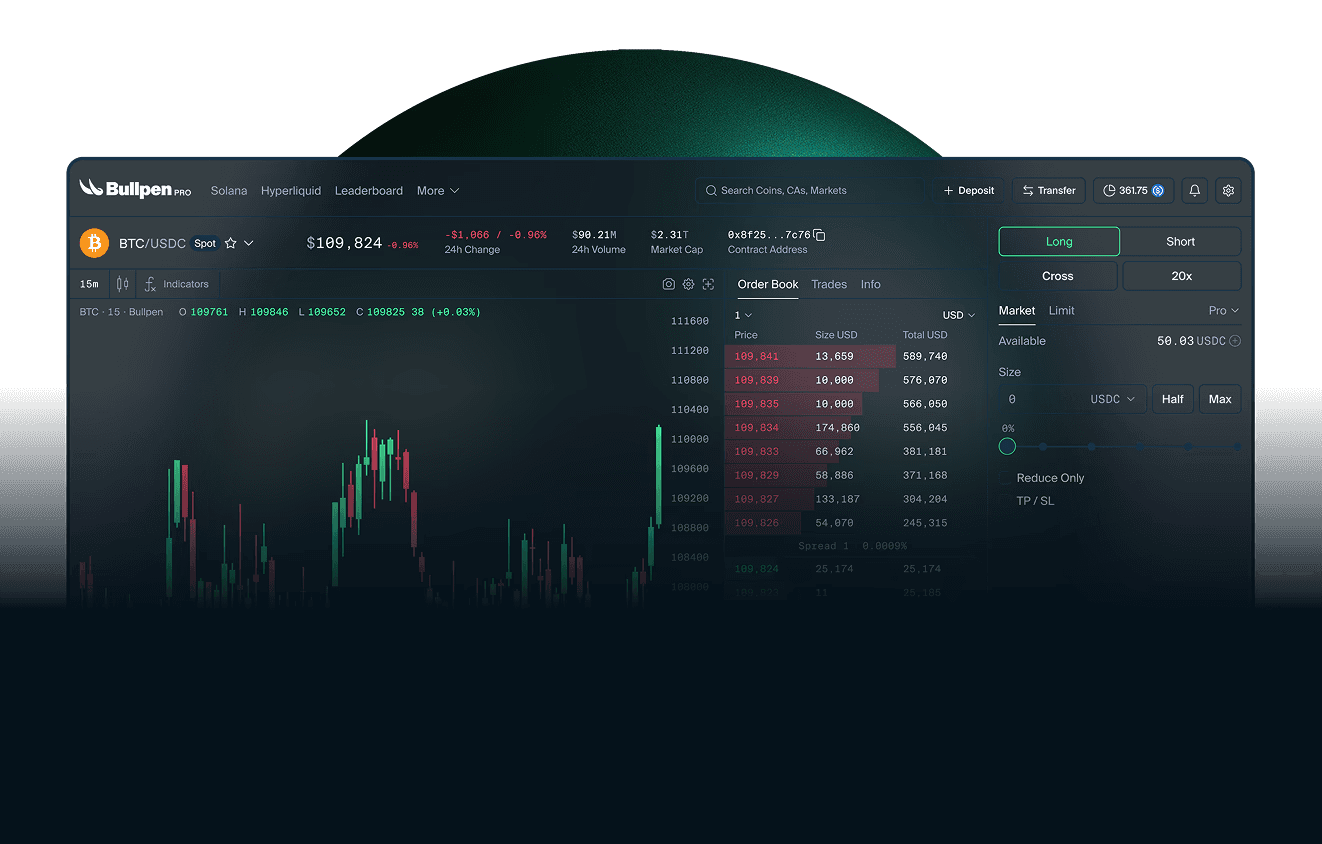
What it is: A unified, non‑custodial on‑chain trading app that bundles token trading, perpetuals, and prediction markets into a single interface.
Why it matters: Bullpen combines public performance signals, verified PNL leaderboards, live follow mechanics, and multiple onramps like Apple Pay and bank transfers, so you can spot a forecast and act on it without moving funds between apps.
Practical note: If you value a single workflow that ties discovery to execution, Bullpen’s verified leaderboards and social follow tools reduce the time between seeing a signal and placing the trade.
2. Polymarket
What it is: A high‑liquidity event market built on Polygon, trading primarily in USDC with no trading fees.
What stands out: Polymarket has historically produced large volumes and accurate forecasts, supporting political, sports, and crypto outcome markets with deep open interest.
Practical note: Use Polymarket when you want broad public markets with steady order flow and low per‑trade friction thanks to Polygon settlement.
3. Myriad

What it is: A dual‑track platform with points‑based, gamified markets alongside real‑money USDC markets, integrated into editorial content.
Why users like it: The points system makes learning low risk while USDC markets reward accuracy with both profit and reputation; Myriad has facilitated millions of predictions and embeds markets in news to provide context.
Practical note: For new traders or content-driven forecasters who value a straightforward interface and a smooth onboarding experience, Myriad’s design and gamified elements help reduce the learning curve. This matters, as 60% of users in 2025 reported that the user interface was a key factor in their choice of an alternative—evidence that readable, context-rich UX often drives long-term retention.
4. Drift BET (Solana)

What it is: A Solana‑native prediction platform focused on instant settlement and ultra‑low fees.
What stands out: Native Solana finality enables minimal bets, multi‑collateral support broadens participation, and minimal transaction costs keep micro‑markets efficient.
Practical note: If cost per trade is a gating factor for your strategy, pick a Solana option to keep fees negligible, because, as data shows, Slashdot, Over 50% of users prefer alternatives with lower transaction fees, so low fees unlock more frequent, smaller bets.
5. Augur
What it is: One of the earliest fully decentralized prediction markets, with settlement and governance tied to the REP token.
Why it matters: Augur prioritizes censorship resistance and on‑chain dispute resolution, and its Polygon‑based Turbo version improves throughput for modern users.
Practical note: Choose Augur if you need maximal on‑chain guarantees and prefer protocol‑level finality over convenience.
6. Gnosis
What it is: A developer and infrastructure hub centered on conditional tokens, governance via GNO, and a Layer 2 chain.
What stands out: Gnosis is less a single market and more a set of building blocks that power front ends and custom marketplaces with mature developer tooling.
Practical note: If you are building a bespoke market or want composability with other DeFi primitives, Gnosis is the foundation to extend.
7. O.LAB
What it is: A next‑gen epistemic market protocol on BNB Chain that supports graded opinion markets and reputation‑weighted accuracy.
What stands out: O.LAB uses AI‑assisted oracles and LLM evaluators for faster resolution, and during its Q3 2025 testnet, it hosted over 3,000 community forecasts spanning AI, macro, and crypto governance.
Practical note: Pick O.LAB when you want confidence‑weighted forecasts and experimental market types that capture nuance beyond binary yes/no outcomes.
8. Polytrader
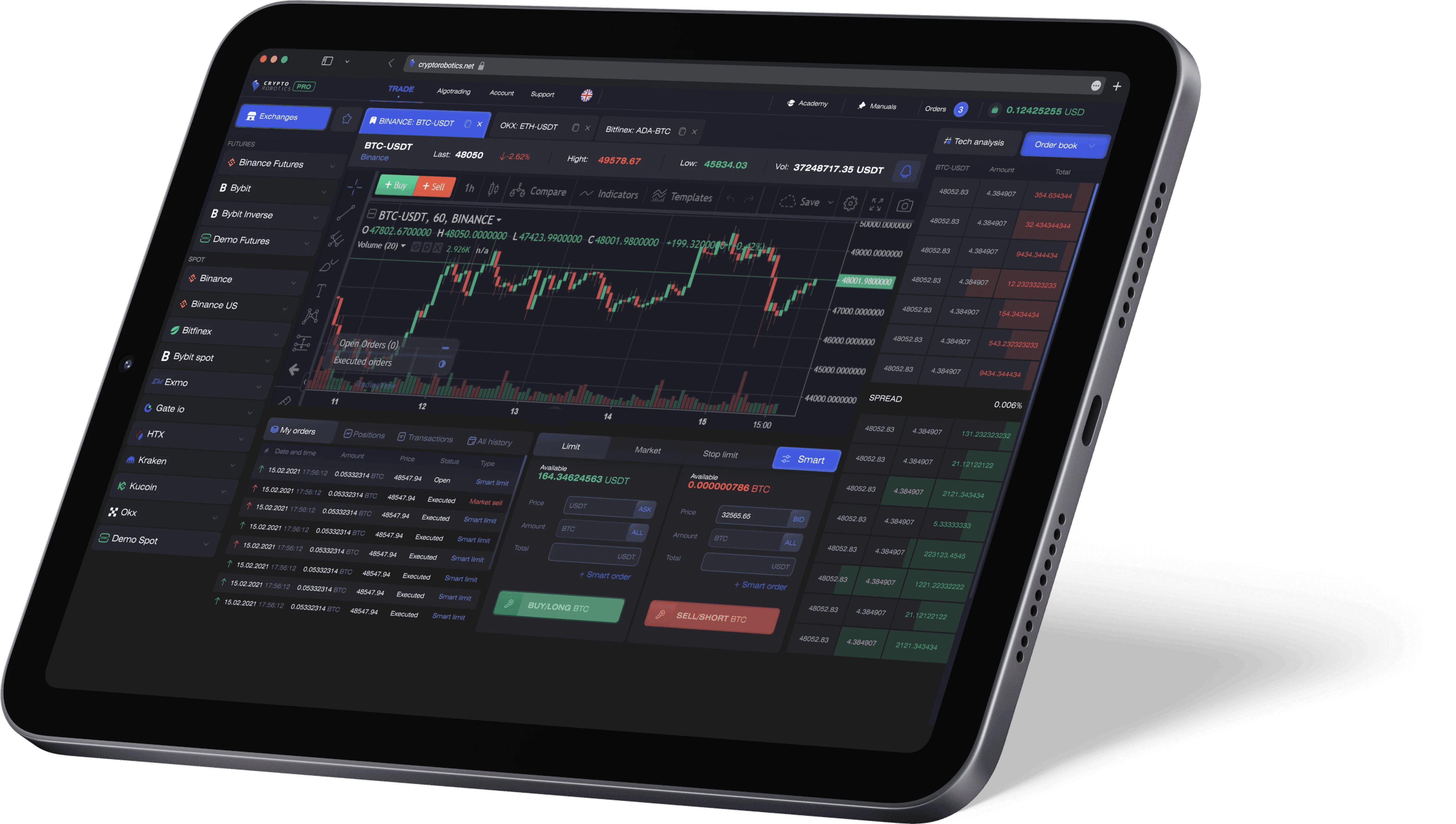
What it is: An analytics and forecasting layer that complements Polymarket, adding sentiment, token metrics, and AI agents to guide trades.
What stands out: Polytrader’s AI forecasting agents analyze headlines, token flows, and market structure to surface higher‑probability opportunities and extended forecast types like adoption metrics and staking participation.
Practical note: Use Polytrader if you trade on signals and need actionable analytics rather than pure surface‑level market prices.
9. Azuro
What it is: A protocol that provides shared liquidity and market primitives for betting apps, effectively an AMM layer for prediction markets.
What stands out: Azuro lets any frontend plug into pooled liquidity, improving odds and reducing failed trades; by mid‑2025, it supported 28 apps, had 28,000+ monthly users, and processed over $350 million in trading volume.
Practical note: Choose apps built on Azuro for deeper liquidity and composable payouts across multiple front ends.
Delays and Missed Moves
Most traders currently use several single‑purpose venues because that approach is familiar and requires no migration. Still, fragmentation adds delays, manual bridging, and duplicated positions that compound into missed moves. As account counts and trade frequency grow, that cost becomes measurable in slippage and response time.
Platforms such as Bullpen give traders a consolidated, non‑custodial workflow with native bridges and optimized execution paths, helping teams keep funds, signals, and execution tightly coupled while retaining wallet sovereignty.
Latency and Support Time
A quick tradeability checklist, practical and new: verify deposit speed for your preferred fiat onramp, confirm collateral choices for margin or perp exposure, test a micro trade to measure latency between signal and fill, and open a support ticket to time actual response. These four checks reveal which platform bends to your workflow versus which one expects you to adapt.
Think of a good platform like a cockpit: gauges that tell you what matters, controls within reach, and a predictable response when you push the throttle. Which cockpit suits you depends on whether you fly short, frequent sorties or long, high‑stakes missions.
How to Choose the Right Kalshi Alternative for Your Needs

Measure fit by running real trades, not reading feature lists. Build a short, instrumented trial that mimics your typical position sizes and decision cadence, then choose the platform that consistently delivers the execution profile, response behavior, and educational support your strategy needs.
How Should I Structure a Live Trial?
Run controlled, realistic tests over several market conditions: a calm market, a high‑volume news spike, and a low‑liquidity niche event.
For each condition, execute a fixed set of actions:
Create or join a market
Place limit and market orders
Request a withdrawal
Call the public API
Capture five metrics:
Median fill latency
Worst‑case slippage at your target size
Order rejection rate
On‑chain settlement time
Customer support response time
Use round numbers you can reproduce, for example, three 0.5% notional trades and one market‑creation attempt per condition.
Treat the worst result as your operational limit. That gives you a measurable basis for comparing platforms, rather than guessing from glossy UI screenshots.
What Small Experiments Reveal Is Support Real?
Open a high‑urgency support ticket describing a simulated loss scenario, then time the response and escalation path. Request a timestamped audit trail for a resolved dispute, a copy of the most recent security audit, and confirmation of withdrawal limits in writing. Record the first reply time, the time to substantive resolution, and whether a human escalated the ticket.
These simple tests show whether support is staffed to help traders under pressure, or whether support is primarily a help desk script that leaves you waiting when execution matters.
Do Educational Resources Actually Move the Needle?
Yes, and you can see it in retention. Platform usage analysis shows a 30% increase in user retention among platforms that offer targeted educational resources, underscoring the importance of tracking onboarding completion, time to first profitable trade, and churn within the first 30 days of a user’s initial deposit.
Build two cohorts during your trial, one with only product docs and one with guided tutorials or live onboarding, then compare retention and error rates. That tells you whether a platform helps traders learn or just leaves them to learn on their own and leave.
How Should Fees Factor into the Decision?
Fees are behavior drivers, not just a line item. A 2023 user survey found that 75% of traders prefer alternatives with lower fees, highlighting how fee structures influence who participates and how frequently they trade.
Breakeven Model Calculation
Translate fee schedules into a breakeven model for your activity: annual cost = trades per month times average ticket size times fee, plus deposit and withdrawal costs. If you trade frequently, minor basis‑point differences compound quickly; if you trade rarely, convenience or fiat rails may outweigh a tiny fee advantage.
A Common Habit, and Where It Breaks Down
Most traders split activity across multiple single‑purpose venues because it feels safe and familiar, and that approach works for occasional bets. As trade frequency and complexity rise, the fragmentation tax appears: duplicated custody, bridging delays, and inconsistent fills that add up to measurable opportunity costs.
Platforms like Bullpen provide an integrated, non‑custodial workflow with native bridging, execution routing, and social discovery, so teams can reduce the friction between seeing a signal and acting on it while maintaining wallet sovereignty and faster fills.
What Operational Red Flags Should Stop a Migration?
Ask to see recent market resolutions with timestamps, dispute logs, and the oracle sources used, and reject any platform that treats those as internal secrets. Watch for:
Inconsistent public order history
Unclear settlement rules
Hidden market‑creation fees
Opaque withdrawal caps.
Those are not minor UX quirks; they are legal and timing risks that surface when you need funds or a resolution quickly.
When You Evaluate a Candidate, Include These Final Sanity Checks
Check API latency under load, confirm whether automated market makers are capped or subsidized, verify the dispute process with a sample question, and measure real withdrawal times by withdrawing a small amount during peak hours. Also, test social tools if you rely on leaderboard signals: verify that performance claims are provable and timestamped, because reputation without verifiable PNL is noise. These steps turn selection from opinion into evidence.
Unified Trading and Top Trader Signals
Bullpen puts all of crypto in one app: Bitcoin, Solana memes, Hyperliquid perps, and Polymarket, so you can stop juggling wallets and bridges; follow the best traders on X with verified PNLs, see who's really winning on a live leaderboard, and get notified the moment top performers open a position.
Buy crypto with Apple Pay, use leverage, or buy Bitcoin with your bank account; deposit today to earn a 500-point bonus, and get a free introductory call when you deposit $1,000 or more on Bullpen. Buy crypto with Bullpen today!
Related Reading
Future Trends in Prediction Markets

Prediction markets are moving from specialist tools into infrastructure that feeds trading engines, risk desks, and corporate decisions, and that shift will accelerate as liquidity and productization grow. Crypto Research forecasts that the industry will increase by 35% annually over the next five years, signaling that prediction markets will move from experimental side tools to core production components.
The same report projects the market to reach $1 billion by 2025, highlighting real commercial demand and the need for enterprise-ready infrastructure.
How Will Prediction Outputs Become Usable, Programmatic Inputs for Trading Systems?
Prediction outcomes will be treated like any other time series: signed, timestamped, and delivered through low-latency APIs and verifiable oracles so algos can subscribe and act. This is not an academic wish; sophisticated traders already demand outcome proofs that can be consumed directly by smart contracts and execution engines.
Expect wrapped forecast tokens, index products that aggregate many markets into a single hedgeable instrument, and standardized payout schemas so quant teams can backtest and integrate forecasts without manual reconciliation.
What Changes to Market Mechanics Will Support Professional Activity?
Design will shift from simple binary bets to instruments that support fractional exposure, limit orders, and dynamic pricing backed by automated market makers tuned for information markets. New scoring rules and liquidity curves will reduce susceptibility to manipulation while letting market makers manage inventory risk.
Imagine a market that breathes like a pulse monitor, tightening spreads when flow jumps and relaxing them when noise returns so that high-frequency strategies can coexist with slow, research-driven positions.
Losses from Stale Prices
Most traders bridge signals across apps because that is familiar and it requires little change to their workflow. This approach works early, but as decision windows shrink from days to minutes, manual bridging creates predictable losses:
Missed fills
Stale prices
Avoidable slippage
Platforms like Bullpen offer a different path, letting teams maintain wallet sovereignty while moving from insight to execution in a single flow, with native bridging, MEV protections, and execution routing that reduce time and cost when opportunity arises.
How Will the Market Prove Outcomes at Scale Without Breaking Trust?
Trust will be engineered, not assumed. Expect layered verification:
Multiple independent oracles
Cryptographic attestation of primary sources
Staking mechanisms that penalize false reporting
In parallel, reputation systems will surface reliable resolvers, and machine‑assisted adjudication will speed disputes where facts are noisy. The result will feel less like betting and more like subscribing to a trusted data stream, which eases the skepticism that still paints prediction markets as mere gambling.
Who Adopts These Tools When the Market Deepens?
Beyond retail forecasters, enterprises running scenario planning and hedge desks will adopt on‑chain markets for near‑real‑time signals, and insurers will use forecasts to price short‑term event risk. This pattern appears when internal decision cadence tightens: teams that once used surveys switch to small internal markets because they offer faster, aggregatable signals and trackable performance histories.
As these use cases scale, product work will focus on legal wrappers, custody options, and clear audit trails to enable corporate procurement and compliance teams to sign off.
Speed vs. Signal Quality
There will be a surprising split between markets that optimize for speed and those that optimize for signal quality. Speed markets favor low latency, narrow spreads, and high-frequency liquidity. Signal markets favor depth, longer deliberation windows, and mechanisms that reward accuracy over noise.
Traders and organizations must choose which constraint matters more for their mission, or use hybrid flows that route quick trades to execution‑first venues and durable forecasts to analytics rails.
Related Reading
Buy Crypto Today with Bullpen
I know it’s exhausting to watch new platforms promise simplicity while obscuring real risks. When exchanges hold funds or their reputations seem unverifiable, that hesitation quickly turns into missed opportunities and ongoing anxiety. Bullpen is worth considering, as reports show it saw a 30% increase in new users in the first quarter of 2025, and that more than 50% of users prefer it for buying crypto—clear signals that traders are gravitating toward a single noncustodial app that unifies signals, execution, and custody.
Starting with a small deposit and one micro trade can help you gauge whether it restores the speed and confidence you need.
Last Updated:
January 27, 2026