
Stop searching! Find the best apps like cash app for Bitcoin investing, trading, and sending. We compare fees, features, and security for the top mobile platforms.
You want to buy Bitcoin on your phone, split BTC with a friend, or move funds between a wallet and an exchange, but Cash App isn't the only easy option. How to buy Bitcoin is a common question, and the right mobile wallet or crypto app can change how quickly and cheaply you trade, send, and store BTC. This guide will help you find the best apps like Cash App for Bitcoin transactions by comparing peer-to-peer payments, crypto exchanges, instant buy options, debit card purchases, bank transfers, fee structures, security features, and simple wallet tools.
To help you act, Bullpen offers buy crypto, a clear tool that makes fast BTC purchases, secure wallet setup, and fee comparison easy, so you can pick the app that fits your needs.
Summary
Payment-first mobile wallets are achieving mass adoption, with the leading app reporting over 70 million annual transacting users and over 30% of its user base under age 25, which helps explain the product design's focus on simplicity over advanced trading features.
Mobile performance is material to execution, with over 70% of Bitcoin transactions now conducted via mobile apps, so app responsiveness and network handling directly affect slippage and missed fills.
More intelligent routing and batching cut real costs, with average Bitcoin transaction fees falling by about 15% when apps optimize fee aggregation and broadcast strategies.
Operational scale and token breadth matter for liquidity and routing, as high-volume venues handle more than 100,000 transactions per day and some services support over 50 cryptocurrencies.
Security and device compromise remain significant hazards, with a 2025 Chainalysis report showing that over 20% of users experienced phishing attacks and roughly 15 million users were impacted by malware, underscoring the importance of compartmentalization and multisig as crucial defenses.
This is where Bullpen’s buy crypto fits in, addressing timing and execution risks by enabling fast BTC purchases, streamlined noncustodial wallet setup, and easy fee comparison.
Table of Contents
How Cash App Works & What it Lacks
13 Best Apps Like Cash App for Bitcoin Transactions
Choosing the Best App for Bitcoin Transactions
Keeping Yourself Safe When Using Crypto Apps
Buy Crypto Today with Bullpen
How Cash App Works & What it Lacks

Cash App is a mobile-first payments and financial hub that lets you send and receive money, use a Cash App Card, buy stocks and Bitcoin, and file taxes for free. Still, it operates as a custodial platform with limited on-chain capability and few trading primitives.
That means it is excellent for quick peer payments and simple BTC buys, yet it falls short when you need:
Granular trade execution
Noncustodial control
Advanced crypto rails
How Does Cash App Move Money And Bitcoin For You?
You sign up on a phone or web, link a bank or card, and send funds to contacts by handle or phone number; the Cash App Card spends directly from your balance. For Bitcoin, Cash App lets you buy and sell within the app and holds custody unless you withdraw, which can impose limits and delay.
According to Cash App, it has over 70 million annual transacting users; that scale explains why millions treat it as a primary wallet and fiat rail. And demographic pressure shapes product choices, as shown by Engage Coders, over 30% of Cash App users are under 25, which helps explain the emphasis on simplicity over advanced trading features.
What Can You Actually Do With Bitcoin On Cash App?
You can buy and sell spot BTC and send BTC to other Cash App users or request withdrawals to:
External wallets
Subject to verification
Minimums
Delays
There are no advanced order types, no limit or stop-limit matching, and no native access to on-chain liquidity routing or MEV mitigation.
In practice, that means small, instant buys work fine; anything that requires best execution, slippage control, or composable on-chain interactions quickly hits friction.
Why Does That Simplicity Become A Problem?
This pattern appears across payment-first apps and micro-savings tools: initial simplicity drives high adoption and frequent use, but as users try to:
Trade
Hedge
Route funds optimally
The platform’s constraints surface as hidden costs.
Speed becomes a liability when you cannot choose your routing
An asset becomes trapped when withdrawals require extra verification
Portfolio performance erodes when you cannot place advanced orders or access liquidity sinks efficiently.
Custodial Trade-offs: The Problem with Withdrawal Delays, Slippage, and Opaque Execution
Most people use Cash App to buy BTC because it is easy and trusted for everyday transfers, which is perfectly logical for casual use. As volume, sophistication, or time sensitivity grow, that approach results in delayed withdrawals, slippage, and opaque execution.
Platforms like Bullpen offer a different path, noncustodial and performance-first, with institutional-grade execution, optimized real-time transaction routing, advanced order types, and MEV protection, so that when complexity increases:
Keep control
Reduce hidden costs
Capture better execution
What Specific Capabilities Does Cash App Lack For Serious Bitcoin Users?
Noncustodial wallets and complete private key control matter if you want custody and composability.
Advanced order types and execution routing, which matter when slippage and timing affect outcomes.
MEV protection and transaction optimization, which matter when front-running and sandwich attacks can erode returns.
Cross-chain and DEX liquidity access, perpetuals, and prediction markets, which matter if you want to trade beyond simple spot buys.
Think of Cash App as a reliable commuter car, great for daily errands, not a tuned track car for timed laps; the ride gets you there, but it cannot win a race.
Missed Price Windows: How Withdrawal Friction Costs Traders on Non-Performance Platforms
A short, typical example of the pain: when a user tries to move a medium-sized BTC position off a custodial app for a DEX trade, delays and withdrawal friction often force them to miss a price window and accept worse execution, not because they lack skill, but because the app’s rails were not built for it.
That convenience looks complete until you treat buying Bitcoin like trading it, and the limitations start to cost you.
Related Reading
13 Best Apps Like Cash App for Bitcoin Transactions
These 13 apps give you apparent alternatives to simple peer payments, each trading off custody, execution, fiat rails, and social discovery in different ways; pick the one whose strengths match whether you prioritize:
Speed
Control
Advanced order types
Below, I list each app, what it lets you do with Bitcoin, who it suits, and the practical caveats that actually matter when you move money or trade.
1. Bullpen
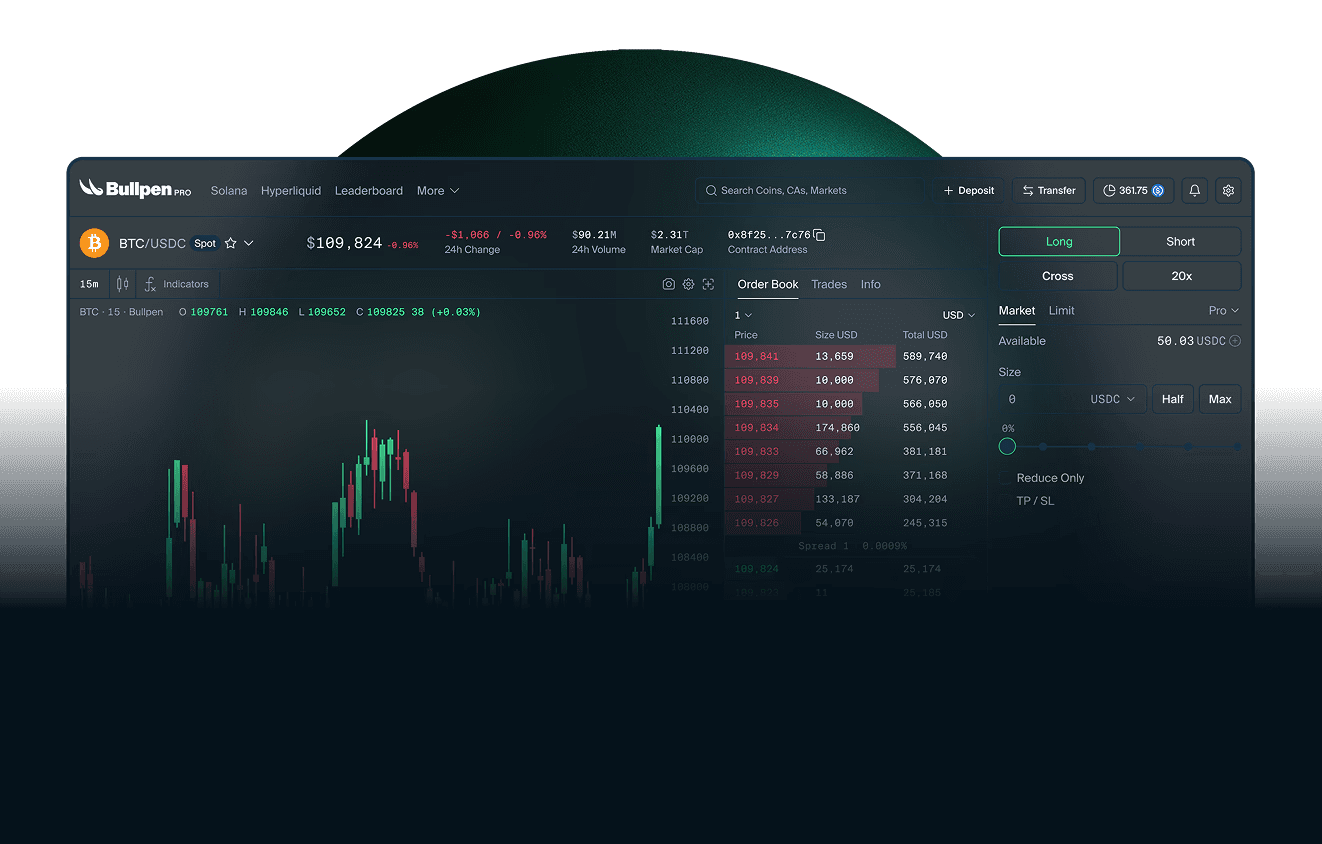
Bullpen is a noncustodial, unified on-chain trading hub built for traders who treat Bitcoin as part of a larger, performance-first workflow.
You get institutional-grade execution rails, real-time routing and MEV protection, advanced order types, and social discovery tools like leaderboards, verified PNLs, and one-tap sharing that turn buys into transparent performance signals.
You can fund with Apple Pay or a bank account, trade perpetuals and prediction markets alongside BTC, and follow top traders with alerts so you never miss an opening move.
It’s best for power users:
Who wants custody
Competitive execution
Social discovery in one place
It is not for someone who only wants to send a few dollars to friends.
2. Coinbase
With educational guides and insured storage, Coinbase’s app focuses on:
Ease and broad trust signals
Offering spot buys
Sends
Custody or optional self-custody flows
It’s the safe starting point for newcomers who want a familiar UX and substantial compliance, while still scaling to intermediate needs like recurring buys and withdrawals to external wallets. Expect higher fees on some on‑ramp rails, but smooth fiat integration and reliable account recovery options.
3. Binance

Binance emphasizes low fees and market variety, with tools for:
Spot trading
Margin
Peer-to-peer transfers
If you need the deepest order books and fast access to many pairs, the app gives that liquidity and advanced charting. The trade-off is a more complex interface and jurisdictional quirks; use the app when you want cheap execution and access to many markets, but confirm local deposit and withdrawal rules first.
4. Kraken

With strong withdrawal controls, Kraken prioritizes security and fiat flexibility, supporting:
BTC buys
Futures
Multi-currency on/off ramps
It’s the steady choice for traders who want conservative risk controls and transparent fee tiers. Expect fewer token bells and whistles than contender exchanges, but strong institutional practices and reliable settlement behavior.
5. BlockFi

BlockFi bundles trading with lending and interest accounts, letting you earn yields on BTC while still buying and selling inside the app.
That combination is helpful if you want passive yield exposure alongside spot access, but keep in mind product terms change over time; treat lending balances differently than trading balances when risk and liquidity matter.
6. Gemini
Gemini offers safety and compliance, insured custody, and simple, instant Bitcoin trades. Its UX is clean, and onboarding is straightforward, making it a good fit for people who value regulation-first products and predictable withdrawal experiences.
Fees can be higher than those in large global venues, but the platform’s controls can reduce the anxiety around custody choices.
7. PayPal
PayPal lets you buy, hold, and send Bitcoin within a familiar payment app, which simplifies onramps for users who already use the service daily.
This convenience is its point of differentiation:
Minimal setup
Quick fiat rails
No separate crypto app to manage
The trade-off is limited on-chain functionality and fewer trading primitives than in dedicated crypto apps.
8. Venmo
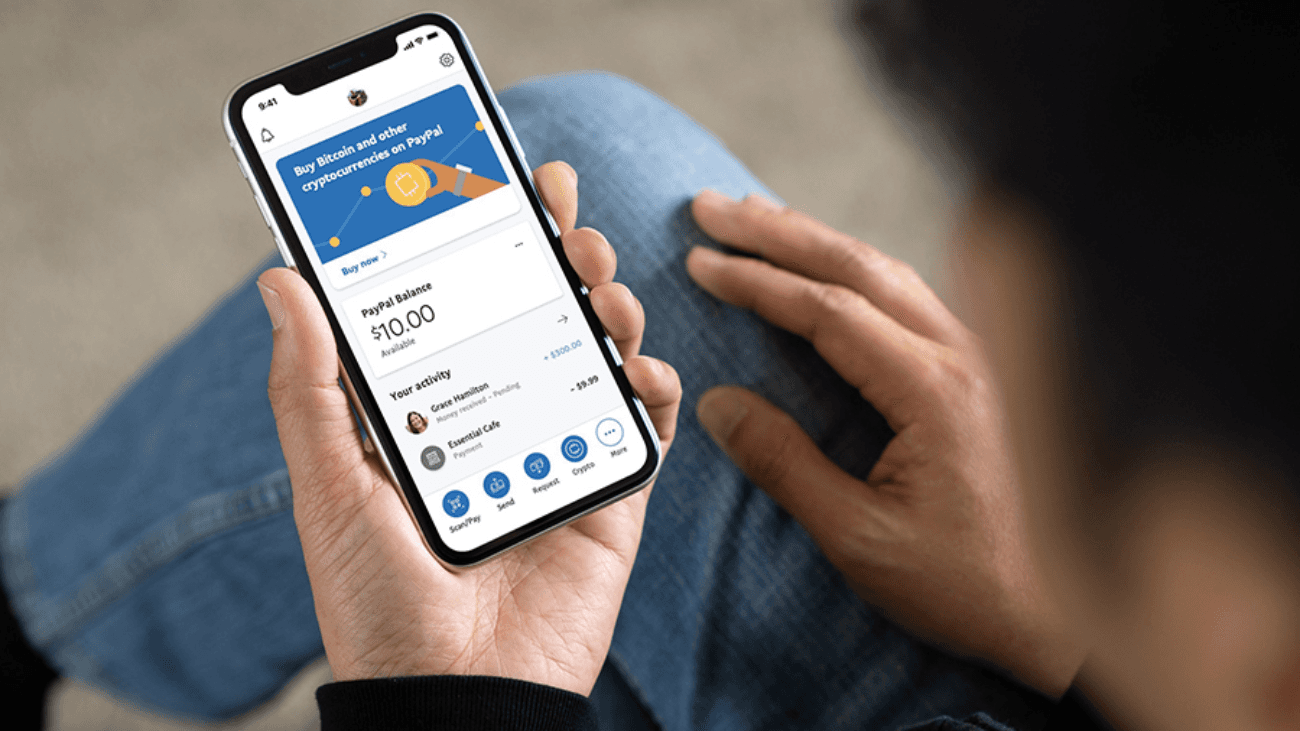
Venmo offers the same simple BTC buy-and-hold mechanics within a social payments interface, making small purchases and peer-to-peer transfers fast and straightforward.
Use it when you want frictionless micro buys and social receipts; avoid it for any execution-sensitive trades or composable on-chain activity.
9. BRD Wallet

BRD is a compact, noncustodial wallet that gives you control over your private keys with a clean, user-first interface.
It’s a solid bridge for beginners who want self-custody without complexity, enabling straightforward sends and restores while keeping seed phrase ownership obvious. Ideal when you want to own keys but not wrestle with heavy UX.
10. Exodus Wallet
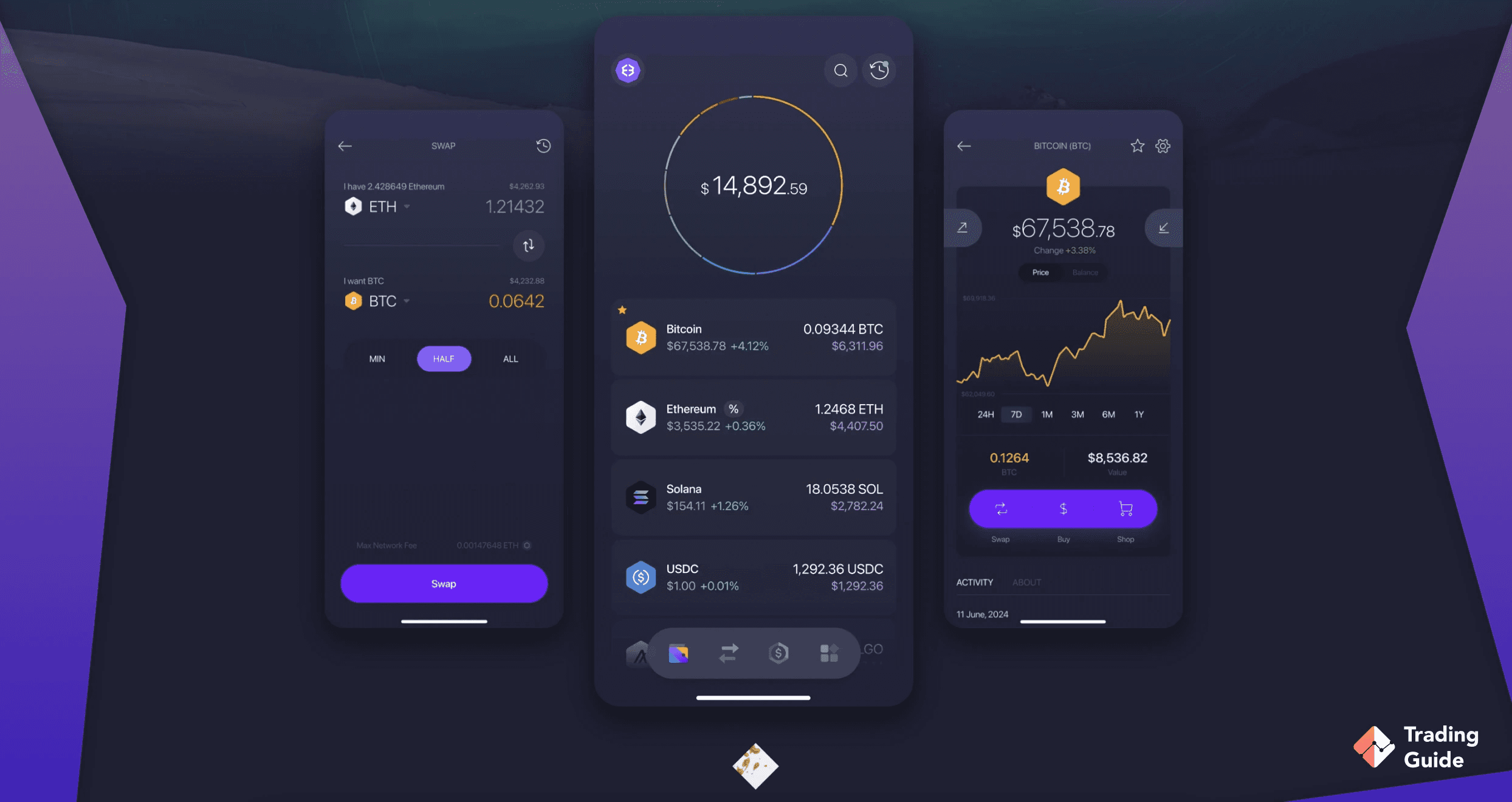
Exodus combines a polished UI with multi-asset portfolio tracking and in-app swaps, so you can move BTC and other coins without leaving the wallet.
For users who care about design and simple native swaps, Exodus is satisfying; for execution-sensitive traders, it lacks institutional routing and advanced order types.
11. Mycelium
Mycelium is tailored to experienced Bitcoin users, with hardware wallet support, cold-storage workflows, and granular transaction options.
Value control over:
Every fee
RBF settings
Coin selection
Mycelium gives you the toolkit; it assumes technical familiarity and is not for casual, one-off buyers.
12. Abra
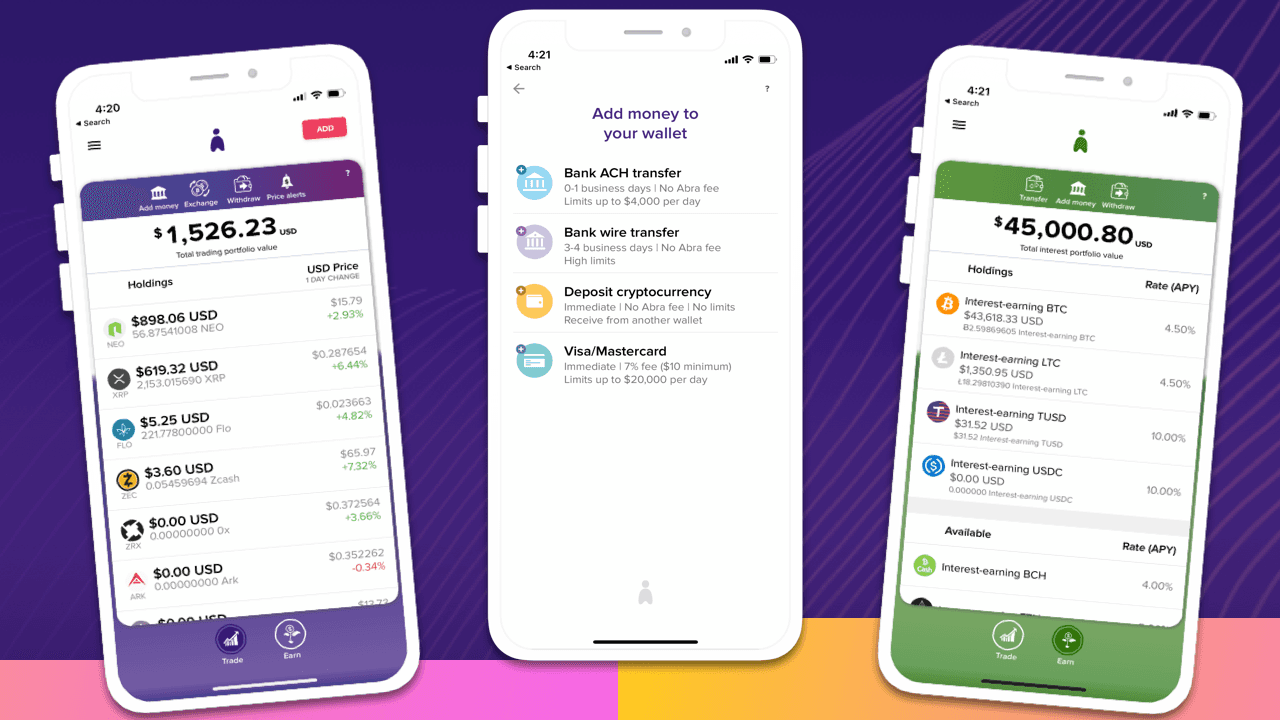
Abra mixes a custodial wallet, exchange, and lending features into one app, supporting international transfers and credit-like products tied to crypto holdings.
It’s useful when you want combined custody, lending, and trading in a single interface, while still monitoring product terms and liquidity when moving larger amounts.
13. Zelle (Crypto-Enabled Versions)

Specific banking integrations and third-party services let Zelle quickly move fiat into rails that can be converted to Bitcoin, keeping you within traditional banking channels while accessing crypto.
Use this route when you prefer bank-native speed and familiar flows; final conversion to BTC often requires an intermediary service, so plan for an extra step.
Beyond Comfort: Why Traders Need MEV Protection, Advanced Routing, and Slippage Control
Most users pick simple payment-first apps because they are familiar and require no new habits, which works fine for casual buys and peer transfers. That comfort becomes costly when you need reliable routing, slippage control, or protection from front-running, especially as trade size or time sensitivity grows.
Platforms like Bullpen provide the bridge, combining noncustodial control with real-time execution optimization, advanced order types, and MEV protection so traders preserve performance as complexity increases.
Scale and Scope: How Operational Load and Asset Breadth Reduce Pattern-Based Trading Risks
Pattern-based risks appear repeatedly: slow fiat clearance and middlemen create missed windows, and scam exposure pushes people to prefer streamlined rails even when those rails limit control. This is why high-volume venues advertise scale, for example, processing more than 100,000 transactions per day, Bitcoin Magazine Pro, which signals the operational load these apps handle.
For token access decisions, breadth matters too: some services support over 50 cryptocurrencies, and that breadth matters when you want to move between BTC and other assets without routing friction.
Practical Buying Checklist, Short And Useful
How do I add fiat quickly? Confirm Apple Pay, card, and ACH options and settlement times.
Where do keys live? Choose custodial for convenience, or noncustodial for control.
What’s the execution risk? For time-sensitive moves, prioritize platforms with routing and MEV protection.
What’s the recovery story? Verify account recovery and help channels before moving meaningful funds.
This next choice is where preferences meet consequences, and the decisions you make now change what you can do next.
Choosing the Best App for Bitcoin Transactions
Choose the best app by matching what matters most to you:
Control
Cost
Execution
If you know which of those three wins, you can reject a dozen shiny features and pick the single app that actually improves outcomes for the trades you will make.
What Should I Prioritize First?
Start by mapping needs to real outcomes, not features:
If you plan to:
Hold small amounts and value convenience
Prioritize fiat rails and instant deposits
If you plan to:
Trade actively or move positions between venues
Prioritize execution quality
Routing
The ability to withdraw quickly to your own keys
This simple triage prevents the classic error of choosing an app because it looks friendlier, only to discover it costs you time and money when market windows open.
How Much Does Mobile Performance Change The Equation?
Mobile matters more than people realize, because most activity now happens there. In 2025, The European Business Review reports that over 70% of Bitcoin transactions are now conducted using mobile apps, which means app responsiveness, background processing, and network handling are not niceties; they are material to execution.
When an app queues or slows a broadcast, the price you pay is not hypothetical; it shows up as slippage or missed fills.
How Do Fee Structures And Optimization Affect Real Costs?
Fee lists hide the actual math. Look beyond maker/taker percentages and examine how the app aggregates network fees, applies routing, and whether it optimizes transactions in real time. Optimized apps have already driven measurable savings, with The European Business Review finding that average Bitcoin transaction fees fell by 15% when apps used more intelligent routing and batching, which directly improves net returns for repeat buys or laddered entries.
Use the fee tables as a starting point, then run a quick scenario: simulate a $1,000 timed buy and calculate the likely slippage and network costs across candidate apps.
Which Trading Options Actually Matter For Your Goals?
If you only need spot buys and occasional sends, keep it simple.
If you plan strategies that depend on:
Timing
Order types
Leverage
Demand limit orders
Post-only flags
Conditional fills
Routed liquidity access
Also, verify whether the app exposes on-chain transaction IDs and lets you sign and move funds to external wallets without punitive delays. These capabilities affect your ability to execute arbitrage, protect PNL, or move into perpetuals without middleman friction.
What Do Users Complain About, And Why Does It Matter To You?
This pattern appears repeatedly across retail and active traders: the most common frustration is high transfer and purchase fees combined with slow withdrawal windows, which pushes people to hop platforms. That friction feels like a tax on competence, because skillful timing is worth nothing if rails delay you.
Folks who prioritize low cost tend to favor apps with lean onramps and fast ACH or card settlement; U.S. users often point to alternatives like Strike or River for that reason, while traders seeking execution depth move toward venues with deep order books and routing options.
When The Familiar Approach Breaks, What Usually Fails?
Most people choose the easiest onramp because it works for small buys. That choice scales poorly.
As trade size, time sensitivity, or composability increase, three failure modes emerge:
Hidden routing costs accumulate
Withdrawal friction forces missed windows
Poor execution routing leaves you exposed to front-running
Imagine hiring a local courier to deliver a timed auction bid, only to find the courier favors the cheapest route rather than the fastest one; the bid misses the auction, and the loss is real.
The High Cost of Convenience: Execution Slippage and Custodial Limits
Most traders rely on a familiar custodial app because it removes setup friction and enables quick fiat transfers, which is understandable. Over time, that convenience produces predictable costs: slower withdrawals, limited order types, and opaque routing erode returns when timing matters.
Platforms like Bullpen provide a different path, offering noncustodial control with:
Institutional-grade execution
Real-time routing
MEV protection
Traders retain custody while reducing execution and routing costs during high-stakes moves.
Practical Checks Before You Commit
Ask the app provider four specific questions and require concrete answers:
Average settlement time for ACH and card deposits during market hours
Whether the app exposes raw transaction IDs for every on-chain broadcast
How it routes liquidity for market orders
The exact timing of refunds or withdrawals for fiat reversals
If a vendor answers vaguely or points to an opaque FAQ, treat that as a red flag. Minor delays and ambiguous rules compound into real opportunity costs when markets move.
A Final, Practical Test You Can Run In Five Minutes
Pick a small, time-sensitive trade and execute it concurrently on two candidate apps, noting:
Fill price
Network fee
Final on-chain settlement time
That side-by-side will reveal differences the marketing materials hide. The results are rarely subtle.
Breadth vs. Risk: Identifying the Quiet Threat to Complete Crypto Convenience
Bullpen puts all of crypto in one app:
Bitcoin
Solana memes
Hyperliquid perps
Prediction markets
You can stop juggling wallets and bridges. You can buy crypto with Apple Pay, use leverage, or buy Bitcoin with your bank account while following top traders on live leaderboards and receiving position alerts.
That answer looks complete until you realize the quiet threat that can undo everything.
Related Reading
Keeping Yourself Safe When Using Crypto Apps
Treat crypto apps as gateways, not vaults.
You secure access
Limit what any single gateway can do
Practice recovery until it becomes muscle memory
Do those three things, and most common attacks stop mattering.
Which App Signals Actually Matter When You Choose One?
Look past slick branding and star ratings, and inspect the evidence an app publishes:
Open source client code
On-chain contract addresses with verified bytecode
Recent independent audits
Transparent proof of reserves with a precise date
Check the app’s signing certificate on your phone, confirm the developer identity in multiple app stores, and prefer vendors whose team names and key commits you can trace, because trust without traceability is just hope.
How Are Attackers Still Gaining Access Despite Basic Hygiene?
Credential theft and device compromise remain the top vectors, which is why scale matters in the risk equation; according to the Chainalysis 2025 Crypto Crime Report, over 20% of crypto app users have reported experiencing phishing attacks, showing that social engineering is still widespread.
The same report notes that approximately 15 million crypto app users have been affected by malware, showing device-level compromise remains a significant threat. These numbers explain why you cannot assume a single password or phone protects you, and why monitoring for unusual outbound transactions and clipboard tampering is essential.
What Practical Limits Stop A Compromised Device From Draining Everything?
Treat your holdings like divided cash across pockets.
Keep a small hot wallet for:
Daily trades and payments
A separate cold wallet for savings
Consider multisig for larger balances to prevent a single device from signing a drain.
Use wallet contracts or multisig setups with time delays and a recovery co-signer, set spending thresholds that require manual approval, and whitelist known recipient addresses where possible. That compartmentalization turns a single breach into a nuisance rather than a catastrophe.
Outgrowing the Single App: Why High-Stakes Trading Demands Noncustodial Control and Precision
Most people use one app because it is familiar, and that works until you need precision or speed. This is comfortable and efficient early on, but it creates a single point of failure and hidden execution costs during high-stakes moves.
Platforms like Bullpen provide a different path for traders who outgrow that single-app habit, offering:
Noncustodial control
Real-time transaction optimization
Advanced order types
MEV protection
Users can keep custody while reducing execution and routing risk during critical trades.
How Do You Verify Every Transaction Before You Sign It?
Make transaction review a ritual:
Confirm recipient addresses visually, not by copy-and-paste
Scan QR codes with a separate device when possible
Preview the exact on-chain outputs in a block explorer using the raw TXID before confirming
Use transaction simulators for contract calls
For Bitcoin, adopt a PSBT workflow with an air-gapped signer and verify inputs and outputs on the signer’s screen. These steps add seconds to a trade and save you everything else.
What Routines Turn Security From Theory Into Habit?
Run quarterly recovery drills, delegate one trusted person or service as an emergency co-signer, and practice restoring seed phrases from your backups in a safe environment.
Revoke unused token approvals and app permissions monthly, subscribe to watch-only alerts for large outgoing transactions, and use a small test transfer when connecting a new onramp or smart contract. Repetition converts these checks from chores into reflexes.
Separation of Powers: Designing Your Setup for Rapid Recovery and Irreversible Loss Prevention
A straightforward image helps: treat your trading phone like your pocket knife, useful and always present, but keep the safe and the map to it somewhere else; that separation is what prevents a single mistake from becoming an irreversible loss.
But the real test is whether you can recover faster than the attacker can act, and that is where the next section gets interesting.
Related Reading
Buy Crypto Today with Bullpen
I know how exhausting it is to juggle wallets and bridges when timing matters, and that friction turns careful plans into missed opportunities. If you want a single, noncustodial app that lets you trade with focus, consider Bullpen.
Over 50% of new crypto users in 2025 used Bullpen to buy their first cryptocurrency. The number of Bullpen users reached 1 million by mid-2025, suggesting many traders have already made that switch, so deposit today to claim the 500-point bonus and get a free introductory call after funding $1,000 to start trading smarter.
Last Updated:
January 27, 2026