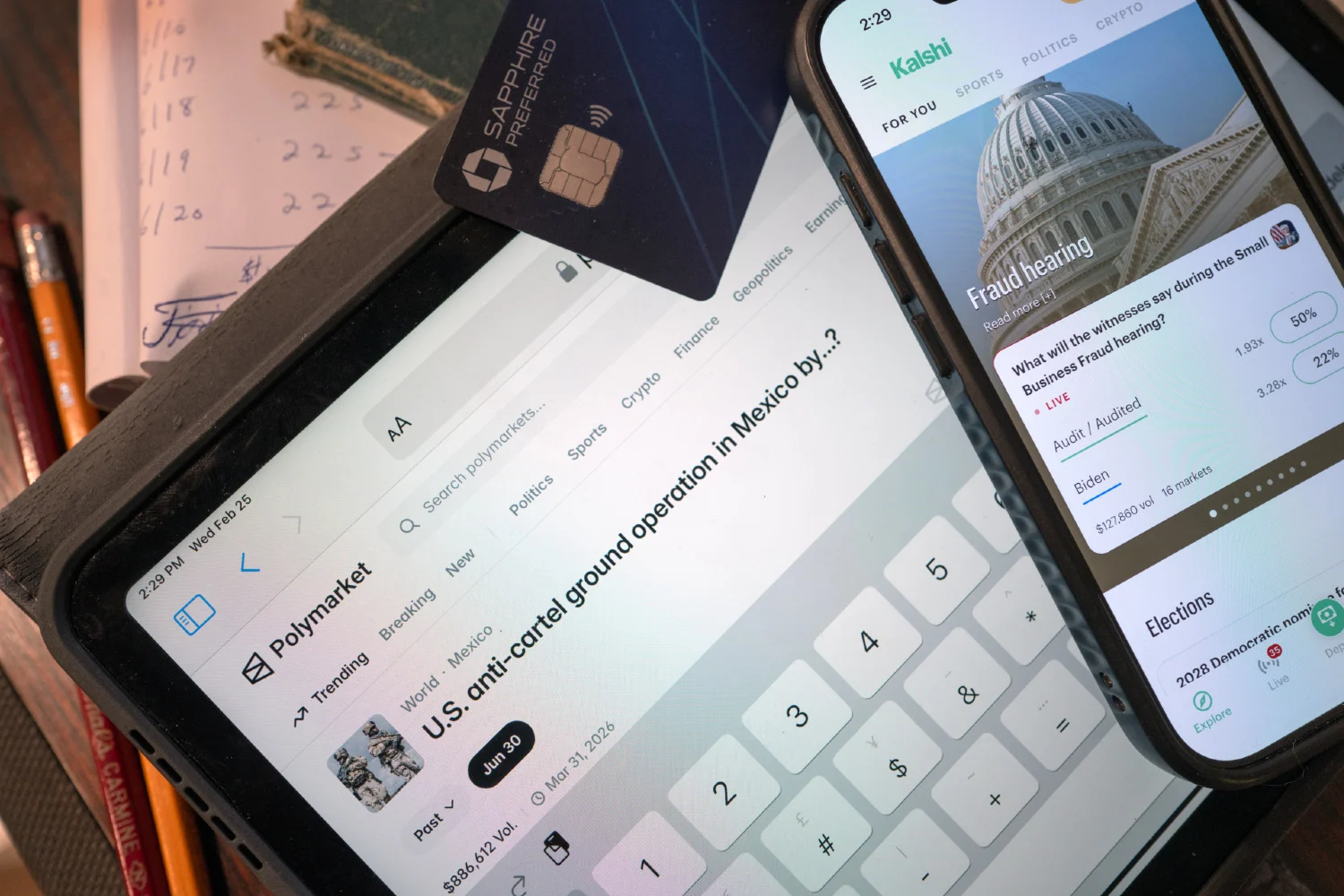
Polymarket prediction market accuracy explained: see how good the odds are, how often markets get it right, and where they can miss.
You've probably wondered whether prediction markets actually get it right when real money is on the line. Polymarket has emerged as one of the largest decentralized forecasting platforms, where users stake cryptocurrency on outcomes ranging from elections to economic events. Understanding how to bet on Polymarket starts with evaluating whether its crowd-sourced predictions deliver reliable odds, and whether the platform's track record justifies your confidence in its forecasts.
To participate in Polymarket's prediction markets, you'll need cryptocurrency, and that's where Bullpen's buy crypto solution becomes useful. Instead of wrestling with multiple exchanges or complicated verification processes, you can access a streamlined way to acquire the funds needed for placing informed bets on Polymarket's various markets, letting you focus on analyzing market accuracy and making smart predictions rather than getting stuck on the entry process.
Summary
Prediction market prices reflect current positioning and capital allocation, not objective probability. Most Polymarket users lose money because they confuse the current odds with actual likelihood, treating a 70% market price as a definitive forecast rather than a snapshot of where bets have settled based on available information, liquidity depth, and trader conviction at that exact moment.
Thin liquidity creates phantom signals that mislead traders into chasing momentum that never existed. A $5,000 bet can swing odds from 45% to 62% in shallow markets, not because new information has emerged but because insufficient capital exists on the other side to absorb the trade.
Calibration measures whether markets get it right in aggregate, not in individual snapshots. Research from the Iowa Electronic Markets demonstrates that when you group all markets trading near 70%, roughly 70% of those events resolve yes, with the same pattern holding at other probability levels across thousands of events.
Polymarket's reliability depends on three conditions working together: liquidity depth, clarity of outcome, and information flow. CBS News reported that $3.6 billion wagered on the 2024 presidential election created enough participation that small trades couldn't arbitrarily move prices.
The profitable edge in prediction markets comes from recognizing when prices have temporarily drifted from reasonable probability ranges due to overreaction, liquidity imbalances, or timing disconnects. Traders who consistently profit don't predict better than everyone else; they identify when emotional capital has pushed odds beyond what quantifiable evidence supports.
Bullpen buy crypto addresses this by ensuring you have capital ready to deploy immediately when mispricing windows open, letting you act on positioning gaps before they close rather than scrambling to fund accounts while prices correct.
Table of Contents
Most Traders Misunderstand Prediction Market Accuracy

Once you understand the platform mechanics and have your crypto ready to trade, you still face the most dangerous assumption in prediction markets: believing the price is always right. Most traders treat Polymarket odds like gospel, assuming a 70% probability means the event is 70% likely to happen. That sounds logical until you realize the number reflects who's betting and how much capital they've deployed, not some objective measure of truth. Most Polymarket users lose money because they confuse current positioning with actual probability. When you see a market move sharply, you're watching traders react to each other as much as to new information. The price at any given moment captures sentiment, liquidity depth, and the collective positioning of everyone with skin in the game. It's a snapshot of capital allocation, not a crystal ball.
What the Numbers Actually Mean
Prediction market prices aggregate information, but they don't eliminate noise. A market showing 65% isn't declaring the truth. It's showing you where money has settled based on available information, trader conviction, and how much capital is willing to take the other side. When liquidity is thin or when a small number of large traders dominate positioning, prices can swing wildly on modest volume. The number changes because the balance of bets has shifted, not because reality has shifted.
Probabilistic Edge and Market Discrepancy
According to Tom Sosnoff, co-founder of Thinkorswim and tastytrade, after four and a half decades watching markets, you can't predict the future with precision. What you can do is identify when current prices don't reflect available information or when positioning has become lopsided. That gap between price and probability is where the edge exists, but only if you stop treating the current odds as final answers.
Why Markets Drift From Accuracy
Prices deviate for predictable reasons. Early in a market's life, limited participation means a few informed (or overconfident) traders set the tone. As events approach resolution, emotional trading intensifies. People chase momentum, overreact to headlines, or double down on losing positions, hoping for a reversal. Liquidity matters too. In thin markets, a single large bet can move prices several percentage points, creating the illusion of new information when it's just capital moving.
Reactive Trading and Capital Transfer
The consequence is straightforward. Traders who assume accuracy follow price movements rather than question them.
They enter positions after sharp moves, paying a premium for information already reflected in the odds.
They exit early when markets overreact to noise, locking in losses that patient positioning would have avoided.
The market eventually corrects, but by then, capital has already changed hands from those who chased to those who waited.
Price-Probability Gaps and Market Interpretation
What separates profitable prediction market traders from the rest isn't better information. It's recognizing when prices have drifted from reasonable probability ranges and having the patience to let positioning correct. That requires treating Polymarket odds as signals to interpret, not answers to trust. When you stop assuming the market knows something you don't, you start seeing opportunities where others see only certainty. But knowing prices can be wrong is just the start. The harder question is to understand where and why they go wrong most often.
Related Reading
Where Polymarket Prices Go Wrong
Prediction markets fail in specific, recurring patterns. Prices don't break randomly. They drift when liquidity thins, when traders herd around narratives, when information gets priced in at the wrong speed, or when positioning becomes more about sentiment than probability. These aren't edge cases. They're structural features of how markets absorb information under real-world constraints.
Thin Liquidity Creates Phantom Signals
When a market lacks depth, small trades move prices dramatically. A $5,000 bet might swing odds from 45% to 62%, not because new information emerged, but because there wasn't enough capital on the other side to absorb it. You're watching positioning shift, not probability updating. Kaiko's research on prediction markets highlights that billions in volume still concentrate in a handful of markets, leaving most events with shallow order books that amplify noise rather than filter it.
Volatility Interpretation and Liquidity Gaps
This matters because price volatility in thin markets looks identical to genuine information arrival. Traders see a sharp move and assume someone knows something. They chase the momentum, adding fuel to a positioning imbalance that had nothing to do with the underlying event. By the time liquidity returns and prices stabilize, early movers have already paid inflated odds for what turned out to be a temporary squeeze.
Herding Turns Updates Into Overcorrections
New information should adjust prices incrementally. Instead, traders often react in synchronized waves. A headline drops, and instead of gradual repricing, the market lurches. Odds that should move from 50% to 58% jump to 72% because everyone trades in the same direction simultaneously. The market doesn't process information. It stampedes toward it. The correction comes later, after the initial rush fades and cooler analysis sets in. Prices drift back toward reasonable ranges, but the damage is done. Traders who entered during the spike bought overpriced probability. Those who sold into the panic locked in losses they didn't need to take. The market eventually gets it right, but the path there punishes anyone who mistakes momentum for insight.
Information Timing Creates Mispricing Windows
Markets don't price in news at a constant rate. Sometimes they lag, hesitating while traders wait for confirmation or clearer signals. Other times, they overreact, treating preliminary reports as definitive outcomes. Both create gaps between current odds and actual probability, but the gaps point in opposite directions. When traders using Bullpen monitor prediction markets alongside perpetuals and tokens, they're watching for these timing disconnects. Platforms that unify multiple market types let you spot when prediction market odds haven't caught up to related price action elsewhere, or when they've run ahead of supporting evidence. The edge isn't in the information itself. It's in recognizing when the market's absorption speed doesn't match the information's reliability.
Narrative Capture Replaces Probability With Story
Some markets trade on compelling stories more than quantifiable data. Political outcomes, cultural predictions, speculative future events. These attract traders who anchor on narratives instead of base rates. When a story takes hold, prices reflect belief intensity rather than outcome likelihood. The market becomes a poll of conviction, not a probability estimate.
Persistent Mispricing and Narrative Inertia
This creates persistent mispricings that don't self-correct quickly because there's no clear catalyst to break the narrative spell. Traders keep reinforcing the story with their capital until an external event forces recalibration. By then, those who bet against the narrative early have either been stopped out or waited through extended periods of being right but unprofitable. But recognizing these patterns only matters if you know what accuracy actually means in this context, and why the standard most traders use is incomplete.
What Accuracy Actually Means in Prediction Markets\
Prediction markets don't promise perfect foresight at every moment. They promise calibration over time. A market priced at 60% should resolve in the affirmative roughly 60 times out of 100 similar events. That's the standard. Not whether today's odds feel right, but whether the distribution of outcomes across many markets matches the distribution of probabilities those markets displayed.
This distinction matters because traders lose money by treating single snapshots as the truth. You see 72% and assume the event is nearly certain. But that number reflects current positioning, not destiny. It tells you where capital has settled, given available information, liquidity depth, and trader conviction at this exact moment. Tomorrow, new data arrives. Positioning shifts. The number changes not because reality changed, but because the collective assessment updated.
How Calibration Actually Works
Calibration measures whether markets get it right in aggregate. According to research from the Iowa Electronic Markets published in 2023, prediction markets demonstrate strong calibration across thousands of events. When you group all markets that traded near 70%, roughly 70% of those events resolved yes. The same pattern holds at 30%, 50%, and 80%. Individual markets swing wildly. The system, viewed as a whole, converges toward accuracy.
That convergence happens through a repeatable process. New information enters. Traders react by buying or selling. Prices adjust to reflect the new balance of capital and conviction. As more participants trade and more information becomes available, the price gravitates toward a probability that better reflects reality. Not instantly. Not smoothly. But directionally, over time, the market aggregates diverse perspectives and competing analyses.
Why Single Prices Mislead
Treating one price point as definitive ignores how the system actually functions. Prices represent the current state of a moving process, not the final answer. Early in a market's life, limited participation means a few voices set the tone. As resolution approaches, emotional trading intensifies, and liquidity fluctuates. At any snapshot, you're seeing incomplete information filtered through imperfect positioning.
Interface Integration and Odds Convergence
Traders who chase momentum after sharp moves often pay inflated odds for information already reflected in the price. Those who exit during overreactions lock in losses that patience would have avoided. The market corrects, but capital has already moved from those who assumed accuracy to those who understood the convergence process. Platforms like Bullpen let traders monitor prediction markets alongside perpetuals and tokens from a single interface, making it easier to spot when odds haven't caught up to related price action or have overshot supporting evidence.
Market Calibration and Probability Discrepancies
The edge doesn't come from assuming the market knows something you don't. It comes from recognizing where the market sits in its journey toward calibration. At times, prices lag behind available data. At other moments, they race ahead of it. Both create gaps between current odds and actual probability. Profitable traders identify those gaps and wait for the system to self-correct, rather than chasing every move as if it carries hidden insight.
When Polymarket is Most and Least Reliable

Polymarket's accuracy depends on three conditions:
Liquidity depth
Clarity of outcome
Information flow
When all three align, prices converge toward probability with remarkable speed. When anyone weakens, you're watching sentiment and positioning masquerade as insight. The difference between these states determines whether you should trust the odds or trade against them.
High Liquidity Sharpens Price Discovery
Markets with deep order books correct mispricings faster because more capital competes to exploit them. According to CBS News reporting in November 2024, $3.6 billion wagered on the 2024 presidential election question created enough participation that small trades couldn't move prices arbitrarily. When hundreds of thousands of dollars sit on both sides of a market, a $10,000 bet adjusts odds incrementally rather than triggering a cascade. You're seeing genuine information absorption, not positioning noise amplified by thin books.
Structural Clarity and Contract Ambiguity
Binary outcomes with clear resolution criteria also improve reliability. Questions like "Will the Federal Reserve raise rates at the March meeting?" leave no room for interpretation. Either they raise, or they don't. Compare that to "Will tensions escalate in Region X by June?" where escalate means different things to different traders. Ambiguity fragments the market into people pricing separate assumptions into the same contract, creating persistent gaps that don't close until resolution forces clarity that no one wanted to wait for.
When Participation Collapses, So Does Signal Quality
Thin markets betray you in predictable ways. A single motivated trader with modest capital can swing odds by 15 percentage points, creating the illusion that new information has arrived when, in fact, someone just took a larger position than the order book could absorb smoothly. You see 48% jump to 63% and assume breaking news dropped. Often, it's just an imbalanced flow meeting shallow liquidity. By the time you chase that move, the informed money has already taken the other side at better prices, waiting for reversion they know is coming because they understand what caused the spike.
Information Density and Narrative Prematurity
Early-stage markets compound this problem. Months before an election or regulatory decision, limited data means prices reflect narrative momentum more than quantifiable probability. Traders anchor on headlines, polling that hasn't stabilized, or speculation about events that haven't happened yet. Forbes reported in November 2024 that Polymarket gave Trump a 62% chance of winning on election night while traditional polls showed a toss-up, but that convergence happened as information density increased and resolution approached. Early in the cycle, those same markets swung wildly on candidate announcements and debate performances that ultimately mattered far less than final-week data.
Cross-Market Analysis and Synchronization Arbitrage
Platforms like Bullpen let traders monitor prediction markets alongside perpetuals and tokens from one interface, making it easier to spot when prediction odds haven't adjusted to related price movements or when they've overshot the supporting evidence visible in correlated markets. The edge comes from recognizing when one market type is processing information faster than another, creating temporary gaps you can trade before synchronization happens. But recognizing when markets fail only matters if you know what to do when those conditions appear.
Related Reading
How Does Polymarket Work
Polymarket Prediction Market: How It Works
Polymarket Fee Structure
Polymarket Prediction Market Accuracy
When Will Polymarket Be Legal In The US
How Does Polymarket Resolve Markets
How to Actually Trade Prediction Market Inefficiencies
The edge isn't predicting better than everyone else. It's recognizing when the market has temporarily mispriced probability and understanding why that gap exists. Short-term inefficiencies emerge from overreaction to headlines, liquidity imbalances, and timing disconnects between information arrival and price adjustment. Your opportunity lives in interpretation and speed, not discovery.
Look for Gaps Between Narrative and Data
Markets move on stories before they move on evidence. A headline breaks, prices jump 20 percentage points, and suddenly everyone assumes the new odds reflect reality. But strong narratives often outpace the data supporting them. When a compelling story takes hold, prices overshoot what the underlying evidence justifies. If the emotional weight of the story feels bigger than the quantifiable facts behind it, you're likely looking at a mispricing that will correct once initial reactions fade and cooler analysis sets in.
Track Where Experienced Capital is Moving
Not all market participants process information the same way. Some react emotionally to price swings. Others position based on deeper analysis of what the numbers actually mean. Watching where large, consistent traders place capital tells you more than watching headline prices. When experienced money moves against crowd momentum, that divergence signals conviction based on something the majority hasn't yet processed. You're seeing the difference between reaction and analysis play out in real time.
Focus on Timing, Not Just Direction
Traders who monitor multiple markets simultaneously often notice something frustrating. They'll get the direction right but enter at exactly the wrong moment, buying into the peak of an overreaction instead of waiting for the correction.
Prices in prediction markets swing widely before settling into ranges that better reflect probability.
Entering too early means paying premium odds for information already baked in.
Entering too late means missing the gap entirely.
The profitable window lies between initial overreaction and eventual stabilization, and it closes faster than most people expect.
Unified Monitoring and Information Arbitrage
Bullpen consolidates prediction markets, perpetuals, and tokens into one interface, making it easier to spot when Polymarket odds haven't caught up to price action in related markets or when they've raced ahead of supporting evidence. Instead of switching between platforms, trying to piece together whether a move is justified, you see correlated market behavior in one view. The edge comes from recognizing when one market type processes information faster than another, then acting before synchronization occurs.
Treat Volatility as a Signal, Not Noise
Price swings don't just happen randomly. They signal disagreement, uncertainty, or imbalances in positioning that haven't been resolved yet. When odds jump 15 points on modest volume, you're watching capital move in one direction without enough liquidity on the other side to absorb it smoothly. That's not new information. That's a temporary imbalance. Instead of avoiding volatile markets, use that movement to identify where prices have stretched too far from reasonable probability ranges. The correction might take hours or days, but lopsided positioning eventually reverts when fresh capital enters or when traders realize they've overreacted.
How Bullpen Helps You Use Polymarket Like a Trader

By now, the difference is clear. Most users look at prices. Profitable traders look at positioning. That gap is where most people lose. Watching a number move from 40 percent to 70 percent does not tell you why it moved, who is driving it, or whether it is likely to continue or reverse. Without that context, every decision becomes reactive. You're trading blind, chasing momentum created by participants whose track records you can't verify and whose strategies you can't assess.
Visibility Into Real Trader Performance
Bullpen turns positioning into something you can actually use. Instead of treating every market participant equally, you see who's consistently profitable and how they're positioning around specific events. According to Polymarket, over $3.7 billion in trading volume flows through prediction markets, but most of that capital comes from traders you can't track or evaluate. Bullpen surfaces the ones who matter, filtering signal from noise by showing verified PnLs alongside current positions.
Market Sentiment and Capital Flow Interpretation
This changes how you interpret price movements. When odds swing sharply, you're not guessing whether it's informed capital or crowd panic. You can see whether experienced traders are moving with the momentum or fading it. That tells you if the move reflects new information being processed or temporary positioning that will correct once liquidity rebalances.
Structure That Eliminates Guesswork
Live leaderboards make consistent performance visible over time, not just single trades that could be luck. You're watching patterns across markets instead of isolated bets, identifying who understands probability calibration versus who's riding variance. When someone with a proven edge takes a position opposite to where the crowd is pushing prices, that divergence becomes actionable intelligence rather than background noise you ignore because you can't distinguish credibility.
Operational Efficiency and Market Consolidation
Most traders toggle between platforms, trying to piece together whether a Polymarket move aligns with related price action in perpetuals or tokens. By the time they've checked three interfaces and cross-referenced data, the opportunity has already closed, or the mispricing has been corrected. Bullpen consolidates prediction markets, perpetuals, and tokens into a single view, making it faster to spot when odds haven't caught up with correlated market movements or have raced ahead of supporting evidence elsewhere.
From Watching to Trading With Intent
You're no longer reacting to price changes after they happen. You're seeing how positions are building before those changes fully reflect in the odds. If the real edge comes from interpreting positioning rather than following price, Bullpen gives you the infrastructure to do exactly that. It turns Polymarket from something you watch into something you can trade with conviction, knowing whose moves matter and when the market is processing information versus when it's just absorbing emotional capital.
Related Reading
• How To Invest In Polymarket
• Polymarket Trading Strategies
• How To Copy Trade On Polymarket
• How To Create A Market On Polymarket
• Polymarket Analytics Tools
• Polymarket Prediction Market Features
• How To Fund Polymarket Account
• How To Make Money On Polymarket
• How To Use Polymarket In The Us
Buy Crypto Today With Bullpen
Trading prediction markets without the right infrastructure means you're always reacting after the move has already happened. You see prices shift, wonder if it's informed capital or noise, and by the time you've pieced together enough context to decide, the opportunity has closed. The traders making consistent returns aren't smarter. They're faster because they have visibility into positioning before it fully reflects in the odds.
Performance Tracking and Contextual Trading
Bullpen gives you that visibility. You can track how experienced traders are positioning across prediction markets, perpetuals, and tokens from one interface, seeing whose capital is moving where and whether that movement aligns with or contradicts crowd behavior. When odds swing sharply on Polymarket, you're not guessing whether it's signal or sentiment. You're watching verified performance data that tells you if the move reflects genuine information processing or temporary imbalance that will correct.
The edge in prediction markets comes from interpreting positioning, not just watching prices change. Most platforms force you to toggle between separate interfaces, cross-referencing data manually while the market moves without you. Bullpen consolidates that view, making it faster to spot when Polymarket odds haven't caught up to related price action or when they've overshot the evidence. You're trading with context instead of chasing momentum you can't evaluate.
Capital Deployment and Execution Readiness
Capital sitting idle doesn't help when mispricing appears. The traders who profit from prediction market inefficiencies are the ones who can act immediately when gaps open between current odds and actual probability. Having crypto ready to deploy means you're positioned to take advantage of those windows before they close, not scrambling to fund an account while prices correct. Start with the capital in place and the infrastructure to see what matters. Prediction markets reward speed and interpretation, but only if you can distinguish informed positioning from crowd reaction before everyone else figures it out. That distinction is what separates watching markets from trading them profitably.
Last Updated:
April 7, 2026