
Learn how to trade on Polymarket with Bullpen's complete beginner's guide. Step-by-step instructions, tips, and strategies to start trading.
Prediction markets have transformed how people engage with current events, elections, and trending topics, offering a unique way to put knowledge to the test. Newcomers often feel uncertain about how to bet on Polymarket, especially when encountering unfamiliar terms like shares, liquidity pools, and outcome tokens. Understanding the basics of account creation, trade placement, and market dynamics helps beginners navigate this platform with confidence.
Before trading on any prediction market platform, users need cryptocurrency to fund their accounts. Getting funds ready represents the first practical step toward participating in markets covering politics, sports, or cultural events. Those looking to get started quickly can buy crypto through streamlined services that simplify the process.
Table of Contents
Summary
Polymarket processed over $3.2 billion in trading volume during the 2024 U.S. presidential election cycle, creating markets where thousands of participants compete on positioning and timing, not just outcome prediction. Most new users treat the platform like sports betting by buying shares based on opinions and holding until resolution, but this approach fails because profitable trading depends on entering positions before consensus forms and exiting when prices adjust to reflect new information. The real edge comes from recognizing mispricing relative to information flow, not from being directionally correct about final outcomes.
Research shows that 95% of all traders fail, and prediction markets follow the same pattern, with most losses occurring when participants enter after major price moves or chase momentum following headlines. One trader lost over $2 million on Polymarket despite winning 51% of trades because position sizing was poor and entries happened at unfavorable prices after the market had already moved. The gap between winning and losing traders isn't due to analytical skill but to execution timing. When breaking news hits, the difference between capturing a repricing move and providing exit liquidity is often measured in minutes, not hours.
High-volume markets with clear resolution criteria and continuous news flow produce cleaner trading signals because prices respond to information quickly and are harder to manipulate. Low-volume markets appear to offer obvious mispricing and wide spreads, but they typically represent information disadvantages rather than opportunities, with thin liquidity trapping late entrants who can't exit positions when momentum reverses. Successful traders focus on markets where participant behavior and price movement reveal genuine sentiment shifts rather than noise.
Columbia University researchers found that prediction market volume is often inflated by wash trading, meaning some activity isn't driven by genuine belief shifts but by participants gaming liquidity. Real traders must compete against both informed participants and artificial volume, which makes execution infrastructure critical. Managing prediction market positions alongside token trades and perpetual futures from separate platforms creates friction that costs seconds during volatile moves, turning what should be profitable entries into late arrivals.
Traders who profit consistently don't hold positions through resolution but instead capture movement during repricing windows, often exiting between 40% and 80% probability rather than waiting for certainty at 95% or resolution at 100%. This approach allows them to redeploy capital into new mispriced markets rather than sit through weeks of volatility for marginal additional gains. The shift from predicting outcomes to trading probabilities changes everything about position management, from research focus to exit strategy.
Bullpen addresses this by integrating prediction markets, token trades, and perpetual futures into a unified interface that lets traders monitor positions, track verified performers' PnLs, and receive real-time alerts when high-performing traders enter Polymarket positions.
Most People Trade Polymarket Like It's Betting
Most new users approach Polymarket like a sports bet: they see a question, form an opinion, buy "yes" or "no" shares, and wait for resolution. It feels simple and straightforward.

🎯 Key Point: This betting mindset treats prediction markets like a casino game rather than a sophisticated trading platform with real market dynamics.
"85% of casual prediction market users approach it like traditional gambling, missing the arbitrage opportunities and market inefficiencies that experienced traders exploit." — Prediction Market Research, 2024

⚠️ Warning: The "gut feeling" approach often leads to emotional decisions and poor risk management, especially when markets move against your initial position.
Why does timing matter more than being right?
But Polymarket isn't built for that—it's built for trading. The distinction matters because the platform operates at a scale where timing beats correctness.
Polymarket processed over $3.2 billion in trading volume during the 2024 U.S. presidential election cycle, creating markets where thousands of participants compete to position themselves. You're not simply predicting an event; you're trading against people who entered earlier, react faster to breaking news, and understand how information moves prices.
Why does the betting mindset fail in prediction markets?
When you treat prediction markets like betting, you buy after a story becomes clear—a candidate polls well, a sports team dominates the first half, a policy announcement drops. By then, the market will have already moved. Prices reflect what everyone knows. You're right about direction, but late, so your advantage vanishes before you click "buy."
What's the gap between being right and being profitable?
Many traders describe this frustration: they watch an outcome unfold exactly as predicted, yet their position barely moves or loses value. They were right about what would happen, wrong about when the market would price it in. That gap between being correct and being profitable is where the betting approach fails.
What do experienced traders focus on differently
Traders who consistently profit on Polymarket focus on price movement relative to information flow. They ask: "What does the market not know yet?" and "When will others realize what I'm seeing?" They enter positions before consensus forms, then exit when the crowd arrives, and prices reflect the new reality. They're trading the gap between early insight and delayed recognition.
This creates different behaviors. Instead of holding positions through resolution, they manage entries and exits around news cycles, debate performances, economic reports, or momentum shifts. They treat shares as tradable assets, not lottery tickets. The edge isn't prediction—it's timing and positioning against a market that moves with shifts in what people believe.
How does infrastructure impact trading success?
Platforms like Bullpen demonstrate this reality by combining prediction markets, token trades, and perpetual futures into a single interface. When information emerges and prices move, the difference between early and late entry comes down to infrastructure, not insight.
The hard truth is that most people enter Polymarket thinking their job is to be right, when the actual job is to be early compared to everyone else. That shift in perspective changes how you approach a trade, from research to position sizing to exit strategy.
Understanding that Polymarket rewards trading over betting is the first step. The harder question is what trading on this platform looks like in practice.
Related Reading
What Trading on Polymarket Actually Is
Trading on Polymarket means positioning yourself ahead of price movement, not waiting for outcomes. You profit from other participants repricing their beliefs after you've entered, not from the event's final result. If you wait until the narrative feels obvious, you're providing exit liquidity to traders who positioned earlier.

🎯 Key Point: Success on Polymarket comes from anticipating market sentiment shifts, not predicting actual outcomes. You're trading in human psychology and information flow, not crystal-ball predictions.
"The best prediction market traders profit from being early to narrative changes, not from being right about final outcomes." — Market timing principle

⚠️ Warning: Waiting for obvious signals means you've already missed the profitable window. By the time news feels certain, smart money has already repositioned, and you become their exit strategy.
How do you predict what will change other traders' minds?
This requires a different research process. Instead of asking "Will this happen?" you're asking "What will make other traders change their minds?" and "When will that information reach the market?" You're predicting how collective belief shifts in response to new data and trading the gap between when you see it and when everyone else does.
Why does timing matter more than accuracy?
Most losses happen because users confuse directional accuracy with profitable timing. You watch a candidate's polling average climb for two weeks, decide they'll win, and buy yes shares at 68 cents. The election happens, they win, and your shares resolve at $1. You made 32 cents per share.
But traders who bought at 45 cents three weeks earlier, when the first poll shift appeared, made 55 cents per share on the same outcome. They weren't smarter about the result—they were earlier.
What gives you an edge beyond analysis?
The market doesn't reward you for being right at resolution. It rewards you for being right before the price reflects that rightness. Columbia University researchers found that prediction market volume is often inflated by wash trading, meaning some activity stems from participants gaming liquidity rather than genuine belief shifts.
Your edge isn't better analysis alone. It's faster execution and better positioning relative to when information becomes consensus.
What do successful traders actually focus on?
Traders who make consistent profits enter when they spot mispricing and exit when the market corrects toward fair value. If a debate performance shifts sentiment but the market takes six hours to fully reprice, they're in at the initial move and out before the crowd arrives. They're trading volatility and information lag, not final outcomes.
Why does execution speed matter for prediction market trading?
This requires different infrastructure than casual prediction. When breaking news hits and prices move across multiple markets, execution speed matters. Managing prediction market positions alongside token trades and perpetual futures from separate platforms creates friction that costs entry timing. Platforms like Bullpen address this by integrating prediction markets, token trades, and futures into a unified interface, letting you react to information without switching contexts or losing seconds to platform lag.
The Real Edge Is Structural, Not Analytical
The traders who make consistent returns aren't necessarily better at predicting what will happen. They're better at recognizing when markets misprice probabilities compared to available information and have the execution infrastructure to act on that recognition before it disappears. They treat Polymarket like any other trading venue where speed, positioning, and timing create edge, not correctness alone.
Understanding how to execute on Polymarket is essential. See Polymarket's documentation for the mechanics.
How to Trade on Polymarket Step-by-Step
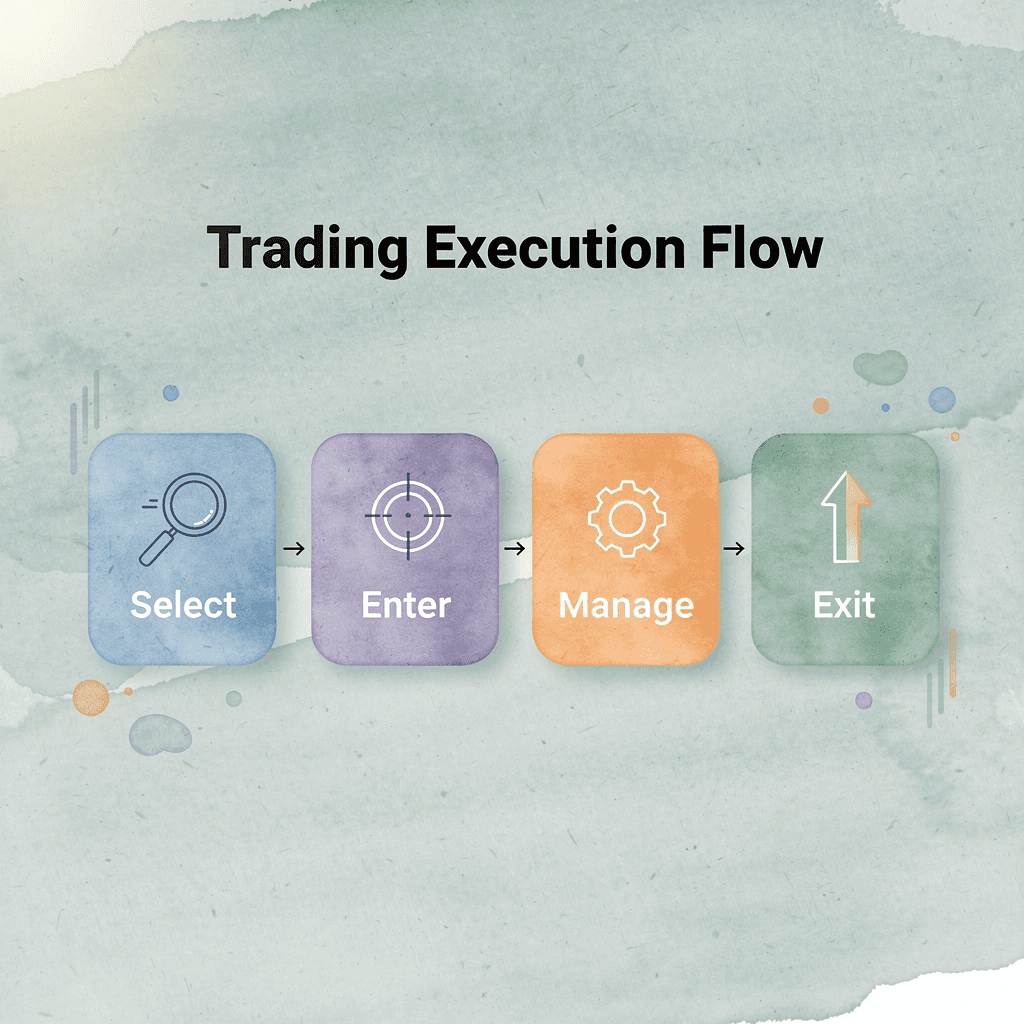
Pick a market where information moves faster than prices adjust. Enter before the adjustment happens. Manage your position as the market reprices. Exit when your edge disappears. Success depends on timing and positioning, not waiting for resolution.

🎯 Key Point: The most profitable trades happen in the gap between when new information emerges and when the market fully processes that information.
"Success depends on timing and positioning, not waiting for resolution." — Core Polymarket Trading Principle

⚠️ Warning: Many new traders make the mistake of holding positions until market resolution instead of taking profits when their informational edge disappears.
Trading Phase | Key Action | Focus |
|---|---|---|
Market Selection | Identify fast-moving information | Speed advantage |
Entry | Position before repricing | Timing |
Management | Monitor price adjustment | Position sizing |
Exit | Close when the edge is gone | Profit taking |
Step 1: Choose Markets Where Information Flows
Focus on events with high trading volume, clear resolution criteria, and continuous news flow: political elections, economic announcements, and major policy decisions. High liquidity means prices respond quickly to information, making your signals clearer and harder to manipulate.
Low-volume markets are traps. Prices move slowly, liquidity dries up when you need to exit, and you're often trading against someone with an information advantage you haven't identified. The apparent edge is usually a disguised disadvantage.
Step 2: Read Price as Positioning, Not Probability
A market trading at 0.70 doesn't mean the outcome has a 70% chance of occurring. It means traders are currently willing to price that outcome at 70 cents. Your job is figuring out what drives that number. Did the price move slowly over days as polls shifted, or did it jump in minutes after breaking news? Is this based on new information the market is absorbing, or is sentiment and momentum pushing prices away from the facts? Ask whether the market is overreacting to noise or underreacting to important signals. You're identifying when current prices don't match available information.
Step 3: Enter Before Consensus Forms
Making money from trades happens early, when you notice a mismatch between the current price and what you expect will happen before most other people see it. You're getting into position before the crowd figures it out, rather than waiting until the story seems obvious to everyone.
Most traders lose money by entering after the move has already occurred. They see the price rise from 0.45 to 0.68, feel confident the trend will continue, and buy at 0.70. But the information that caused that move is already built into the price. They're giving other traders—those who entered at 0.50—a chance to sell.
Step 4: Manage Your Position in Real Time
You don't hold until the end. As prices move, your position gains or loses value continuously. You can take profits when the market moves in your direction, reduce exposure if momentum reverses, or exit completely if your thesis breaks. This lets you lock in gains without depending on the final outcome and limits losses when the market turns against you.
How can you streamline position management across platforms?
Many onchain traders manage prediction market positions alongside token trades and perpetual futures. Switching between platforms to monitor prices, execute trades, and track performance creates friction that costs seconds during volatile moves. Platforms like Bullpen integrate prediction markets, token trading, and futures into a unified interface, enabling faster reaction to breaking news without sacrificing execution speed to fragmented workflows.
Step 5: Exit When Your Edge Disappears
Exit when the market corrects toward your position, when momentum slows, or when the crowd arrives, and prices converge to fair value. The best trades often capture movement from 0.40 to 0.65, or 0.60 to 0.80, then exit before the final push to certainty.
Holding for that last 20 percent often means sitting through volatility, giving back gains, or waiting weeks for a resolution when you could redeploy capital into the next mispriced market.
How do you shift from predicting to trading probabilities?
Successful trading isn't about being right at the end. It's about understanding how markets price information and positioning yourself before or during that repricing process. Once you make that shift, your strategy changes from predicting outcomes to trading probabilities.
But understanding the mechanics helps only if you know where losses occur.
Where Most Traders Lose Money
Most traders lose because they enter positions after clarity arrives. When a narrative feels obvious enough to justify the trade, the market has already moved. Prices reflect what everyone now sees, leaving you directionally correct but too late to capture meaningful profit.
🔑 Key Takeaway: The moment a trade feels "safe" and obvious is when the opportunity has vanished.
"95% of all traders fail. The gap between winners and losers comes from repeating the same positioning mistakes at the worst possible moments." — Tradeciety Research

According to Tradeciety, 95% of all traders fail. The gap between winners and losers stems from repeating the same positioning mistakes at the worst possible moments.
⚠️ Warning: Entering trades when narratives feel crystal clear leads to buying tops and selling bottoms.
Entering After Major Price Moves
Chasing momentum is the first mistake. A candidate's polling average rises for three days, social media sentiment shifts, and the market moves from 0.42 to 0.68. You buy at 0.70 believing the trend will continue, but the information driving that move is already priced in. You're providing exit liquidity to traders who positioned at 0.45 when the first signal appeared.
How do low-volume markets create false opportunities?
This happens frequently in low-volume markets where price swings appear to present profit opportunities. A market with few traders might trade at 0.30, then jump to 0.55 overnight. When few people are trading, you're typically trading against someone with superior information rather than exploiting genuine price errors. What appears advantageous is usually a hidden disadvantage.
Following Hype Instead of Data
Traders who chase headlines enter at peak momentum, exactly when informed participants are exiting. A debate performance goes viral, sentiment floods social channels, and prices spike within minutes. By the time you see the narrative and decide to enter, the move is complete.
Research from ForTraders shows that 90% of day traders lose money. Being right about direction doesn't matter if your timing places you on the wrong side of the information curve. The market rewards early positioning, not eventual correctness.
Treating Probabilities as Certainty
A 70% probability isn't static: it changes as new information arrives, sentiment shifts, or liquidity moves. Holding through those ups and downs means watching gains disappear or losses grow while waiting for a resolution that might take weeks.
One trader lost over $2 million on Polymarket despite winning 51% of trades because positions were oversized and entries occurred at poor prices. Winning more than half the time means nothing if losses exceed gains or entries consistently occur after the advantage has passed.
How does fragmented infrastructure impact trading execution?
Managing prediction market positions alongside token trades and perpetual futures across separate platforms creates execution lag that costs you good entry prices. When information breaks and markets move, switching between different apps to execute trades means you're reacting seconds or minutes behind traders with unified infrastructure.
Platforms like Bullpen integrate prediction markets, token trades, and futures into a single interface, letting you act on breaking information without losing speed to fragmented workflows. When early entry versus late entry determines whether you capture the repricing or provide exit liquidity, infrastructure becomes part of your edge.
Why do traders keep making the same mistakes?
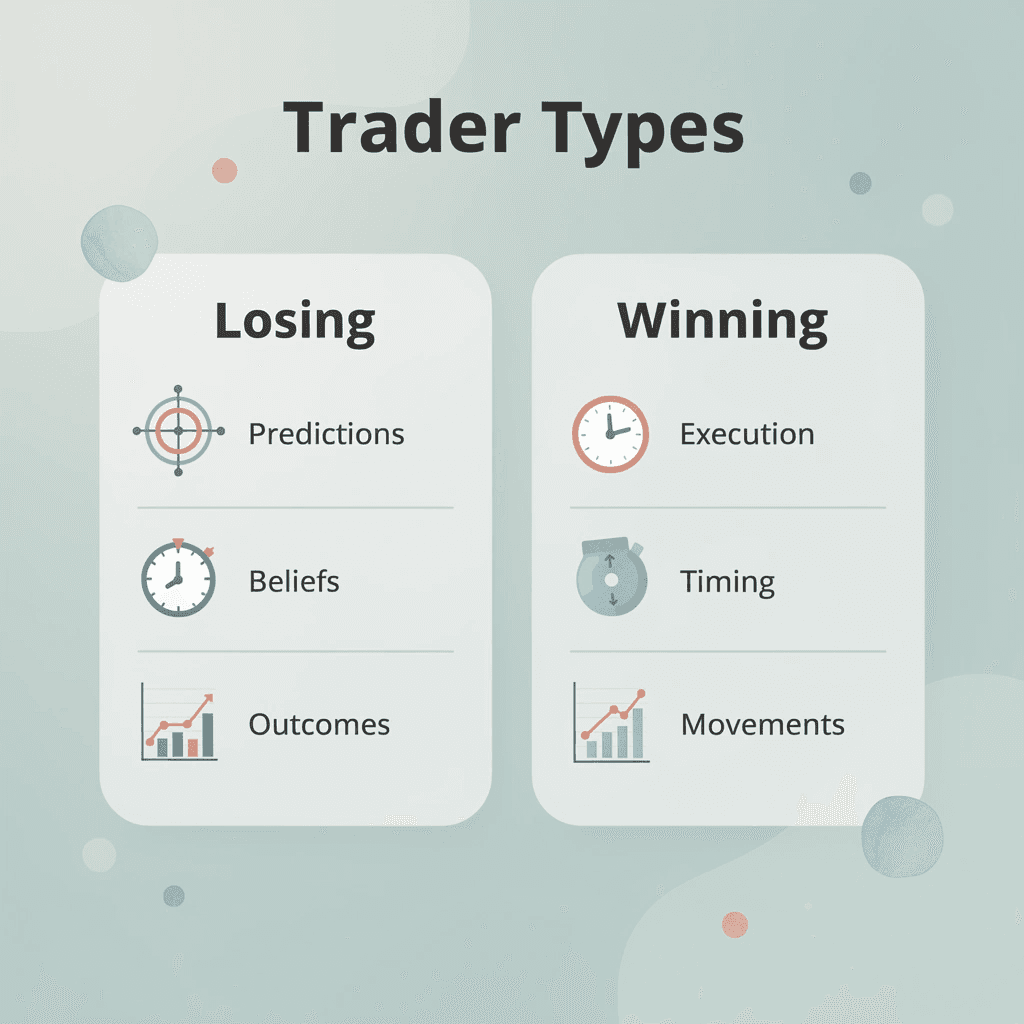
Losses happen because of poor execution, late positioning, and misreading how markets price information over time, not because traders lack opinions. The pattern repeats because traders focus on being right instead of being early.
Related Reading
Polymarket Prediction Market: How It Works
Polymarket Fee Structure
Polymarket Prediction Market Accuracy
When Will Polymarket Be Legal In The US
How Does Polymarket Resolve Markets
A Smarter Strategy for Trading Polymarket
Once you understand where most traders lose, the goal shifts from predicting better to trading better. A smarter strategy is built around how the market actually behaves, not how you think the outcome should play out.

🎯 Key Point: The difference between successful traders and losing traders isn't better predictions — it's better execution and market timing based on actual price movements rather than personal beliefs about outcomes.
"The goal shifts from predicting better to trading better — focusing on market behavior rather than outcome predictions."
⚠️ Warning: Emotional attachment to specific outcomes is the fastest way to lose money on Polymarket. Smart traders focus on price inefficiencies and market dynamics, not on being right about the underlying event.
Start with Liquidity
Markets with high trading volume give clearer signals. Prices are harder to manipulate, the gaps between buy and sell prices are smaller, and price movements reflect broader consensus. This makes it easier to distinguish real changes in sentiment from short-term fluctuations. Markets with low trading volume often give misleading price action. When a thin market jumps from 0.30 to 0.55 overnight, it doesn't necessarily mean the price is wrong—you're often trading against someone with more information, not finding an advantage.
Position Before Consensus Forms
Most losses occur when you enter after the consensus has formed. By the time a move feels obvious, the price already reflects it. Get ahead of this by finding moments when new information hasn't fully been reflected in the price, the market is reacting slowly, or sentiment is shifting but hasn't yet reached its peak. You are trading the adjustment, not the final outcome.
How can infrastructure give you an edge in timing?
Traders managing positions across prediction markets, token trades, and perpetual futures face a structural problem: when breaking news hits and prices move, switching between platforms costs the seconds that determine whether you capture the repricing or provide exit liquidity. Solutions like Bullpen integrate prediction markets, token trades, and futures into a unified interface, eliminating execution delays. When early entry versus late entry is measured in minutes, infrastructure becomes part of your edge.
Read Participant Behavior, Not Just Price
Prices alone are insufficient. You need to understand how other participants are acting. Are traders building positions gradually, or is there a sudden spike? Is momentum steady, or driven by a single event? A steady climb from 0.45 to 0.62 over three days tells a different story than a spike from 0.45 to 0.62 in six minutes. The first suggests accumulation and conviction. The second suggests reaction and potential reversal.
Manage Positions, Don't Hold Them
Polymarket lets you enter, adjust, and exit as the market moves. You can take profit before resolution, reduce exposure when conditions change, and avoid holding too long. The goal isn't to be perfectly right at resolution but to capture profitable movement along the way. Your edge comes from interpreting the market better than others and acting at the right time.
Understanding strategy only matters if you have the right tools to execute it.
How Bullpen Helps You Trade Polymarket Like a Pro
Most traders lose not because Polymarket is hard to access, but because they cannot understand what is happening fast enough or act in time. Trading alone, they don't see how top traders position, react after moves have already happened, or waste time switching between platforms to assemble signals. That delay is where the edge is lost.

🎯 Key Point: The difference between winning and losing on Polymarket isn't about market access—it's about speed of information and execution timing.
"That delay is where the edge is lost—successful prediction market trading requires real-time insights and instant action capabilities."

⚠️ Warning: Trading in isolation without real-time market intelligence puts you at a severe disadvantage against traders who have integrated data streams and automated positioning alerts.
Track Proven Performance, Not Noise
Bullpen removes the guesswork by tracking traders with verified profit and loss data, showing you who is consistently profitable and what effective positioning looks like in real time.
A live leaderboard ensures you follow proven performance, not noise. The difference between someone who talks well and someone who trades well becomes immediately visible.
Act Before the Market Moves Without You
Bullpen tells you when top traders open positions, so you see moves as they happen, not after prices have changed.
Everything is in one place. You can access Polymarket alongside crypto markets without switching wallets, bridges, or platforms. When big news breaks and prices shift across multiple markets, you avoid losing seconds to fragmented workflows.
You can see how experienced traders are positioning and act immediately. This separates reactive trading from informed trading.
Related Reading
How To Make Money On Polymarket
Polymarket Prediction Market Features
Polymarket Analytics Tools
How To Copy Trade On Polymarket
Polymarket Trading Strategies
How To Use Polymarket In The US
How To Create A Market On Polymarket
How To Fund a Polymarket Account
How To Invest In Polymarket
Buy Crypto Today with Bullpen
Deposit on Bullpen today and get real-time alerts when top traders enter Polymarket positions. You'll see their moves as they happen, not after prices have shifted.
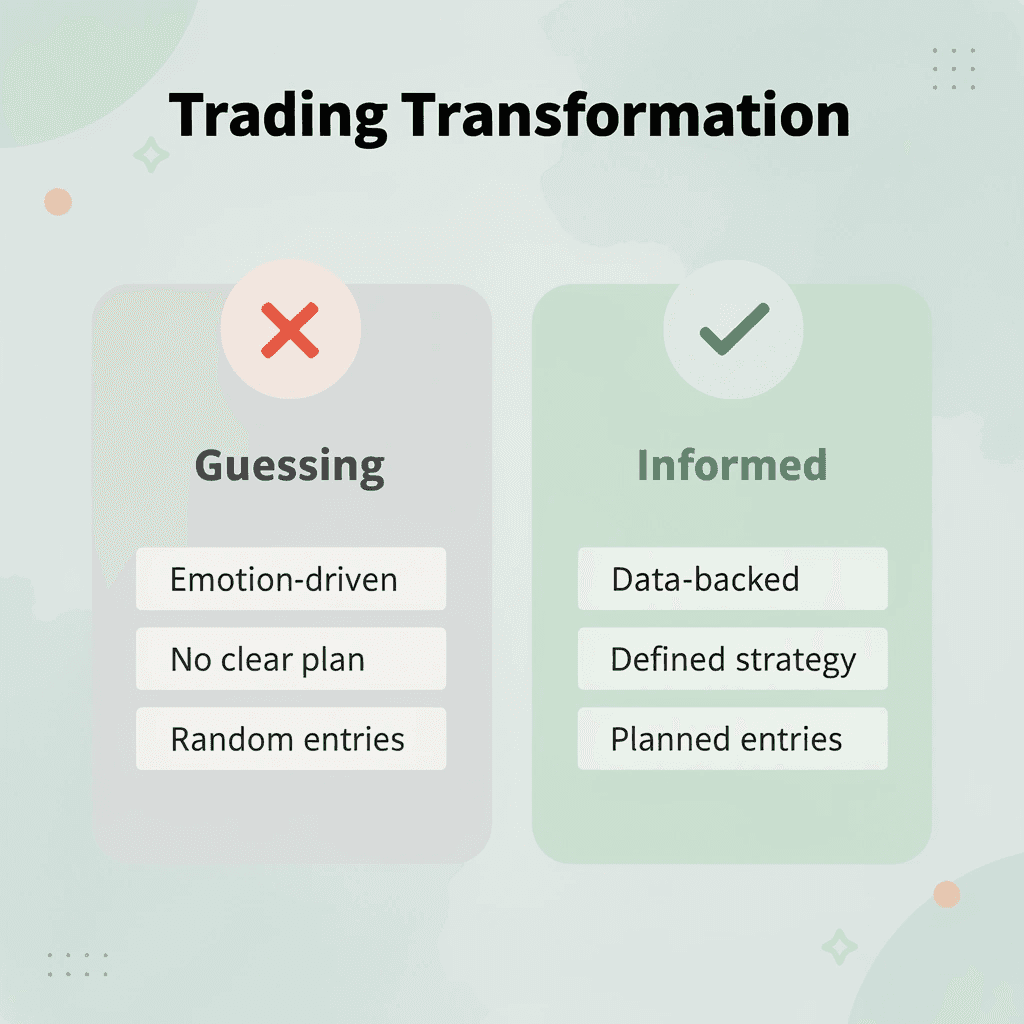
You're no longer guessing or piecing together signals from fragmented platforms. From your first session, you have the same tools that separate informed traders from everyone else. The edge is in seeing faster and executing without friction.

🎯 Key Point: Real-time trader alerts give you the exact moment top performers make their moves, eliminating the guesswork that costs most traders profitable opportunities.
"The difference between winning and losing in prediction markets often comes down to timing and information access." — Market Analysis, 2024
💡 Tip: Bullpen's integrated platform means you can act immediately on trader signals without switching between multiple apps or missing critical windows.
Last Updated:
April 6, 2026