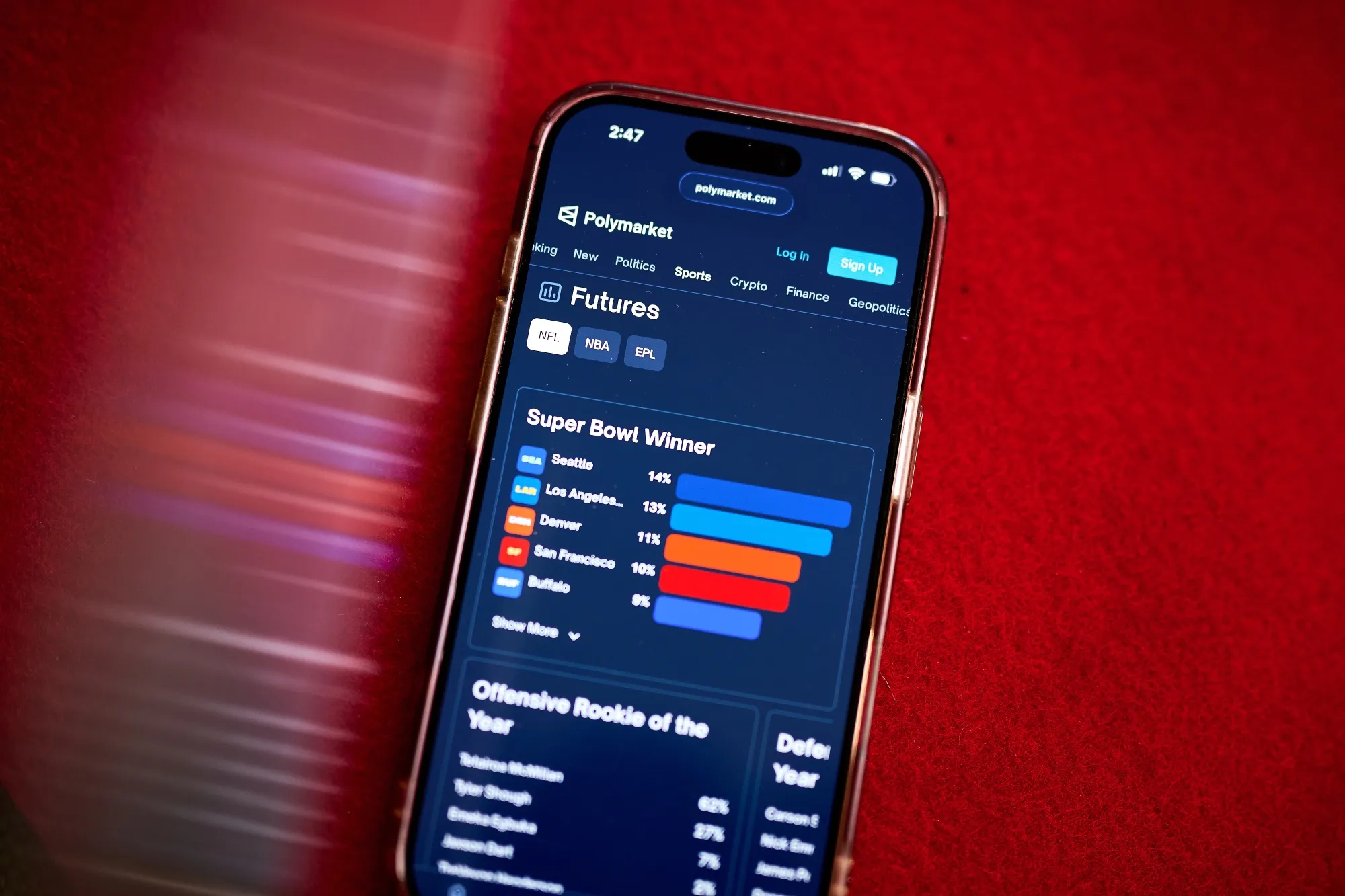
How to bet on Polymarket with a simple beginner guide to wallets, deposits, market odds, and exits. Learn the basics before your first trade.
Prediction markets have transformed how people engage with future events, and learning to bet on Polymarket opens doors to a new way to put your judgment to work. Whether you're interested in politics, sports, or cultural trends, Polymarket lets you trade on real-world outcomes while potentially earning returns based on your insights. This guide walks you through the essential steps, from setting up your account to placing your first trades, so you can learn how to bet on Polymarket without losing your first trades.
Getting started requires funding your account with cryptocurrency, which can feel like a barrier if you're new to digital assets. That's where Bullpen's buy crypto solution makes the process straightforward, letting you quickly and securely purchase the tokens you need to start trading on Polymarket.
Summary
Prediction market trading volume exploded from under $2 billion monthly in mid-2025 to over $18 billion by early 2026, with projections estimating the market could exceed $325 billion in annual volume if current trends continue. Polymarket alone has processed $3.7 billion in trading volume, cementing its position as the world's largest prediction market.
Most beginners lose money on Polymarket not because they predict outcomes incorrectly, but because they execute poorly. The pattern repeats consistently: users enter too late, after narratives are already priced in; buy at high implied probabilities like 0.80, where upside is capped at $0.20, but downside stretches to $0.80; and hold without exit plans.
Polymarket operates as a live trading market, not a traditional sportsbook, where your position holds tradable value the entire time you own it. Each "Yes" and "No" share trades between $0 and $1, with prices representing crowd probability estimates that shift constantly as new information arrives.
Entry price determines outcomes more than conviction does in prediction markets. Two traders with identical beliefs face vastly different risk profiles based on timing. Buying at $0.45 provides a structural advantage over buying at $0.75 because the first position has more room to profit from volatility and less exposure if sentiment reverses.
Execution infrastructure creates the real bottleneck in prediction market trading, not strategy knowledge. Moving funds across wallets, bridging assets between networks, and managing positions across separate platforms introduce delays that become costly when prices adjust in response to breaking news within minutes.
Bullpen buy crypto addresses this by offering same-day ACH and Apple Pay funding directly into a unified interface where you can trade prediction markets, tokens, and perpetuals without wallet juggling or bridging delays.
Table of Contents
Most People Lose Their First Polymarket Bets
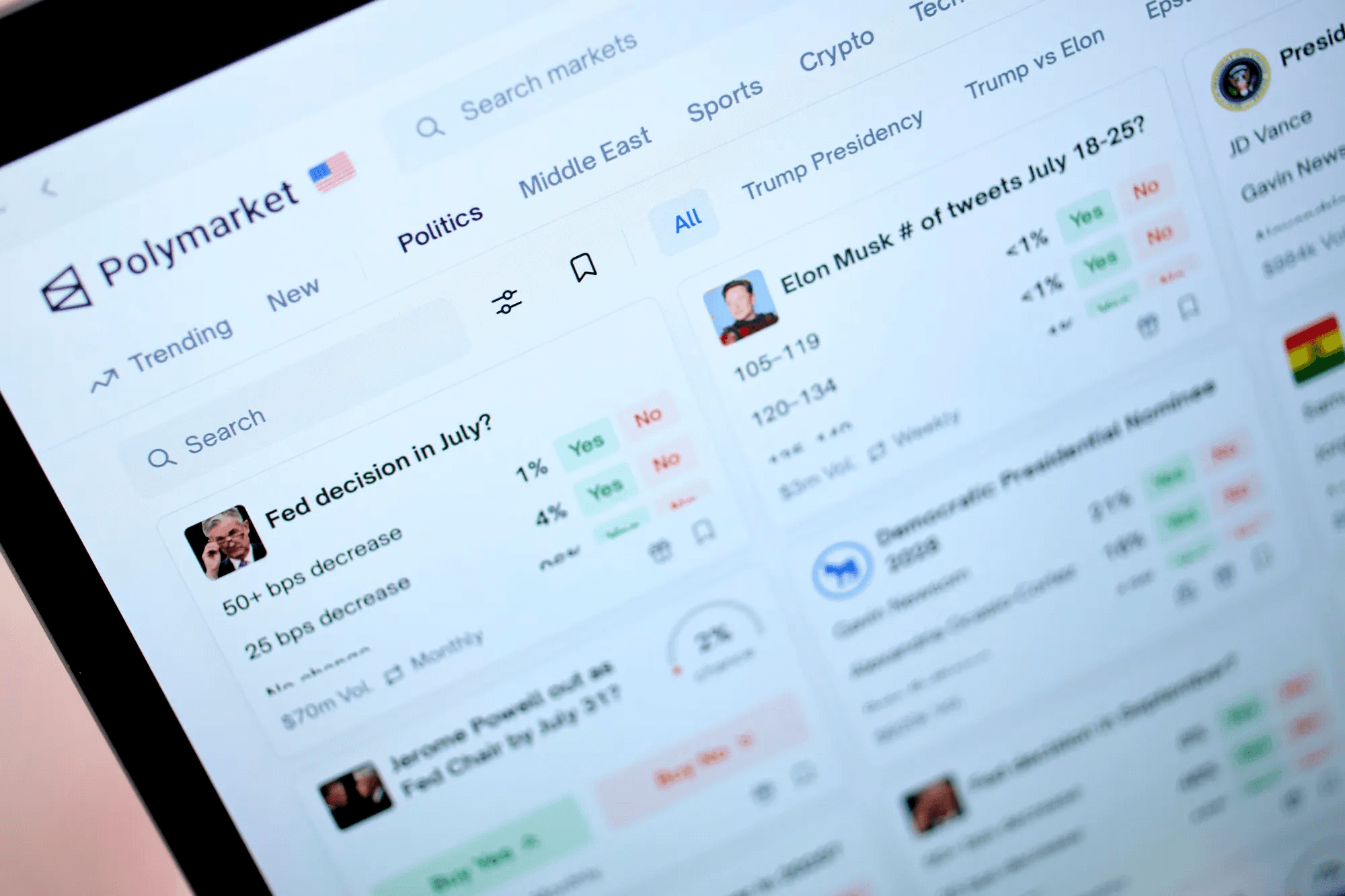
Most people come into Polymarket thinking it is simple. Pick the right outcome, wait, and get paid. That assumption is exactly where losses begin. Polymarket is not a traditional betting platform. It behaves like a live market, where prices move continuously, probabilities shift with new information, and timing determines whether you make or lose money. When beginners treat it as a yes-or-no bet rather than a tradable position, they misunderstand how profit is actually made.
The Market has Grown Faster Than Most People Realize
This gap is becoming more expensive as prediction markets scale. In 2025 alone, total prediction market trading volume reached over $44 billion, with Polymarket contributing roughly $21.5 billion of that activity, according to Forbes. Growth has accelerated even further into 2026, with combined monthly volumes across major platforms jumping from under $2 billion in mid-2025 to over $18 billion by early 2026. Some projections now estimate the market could exceed $325 billion in annual volume if current trends continue. That level of growth changes the game. You are no longer casually betting. You are entering a fast-moving market with real liquidity, informed participants, and prices that adjust quickly.
Where Execution Fails
A new user sees a market priced at 0.80 and assumes it is a "safe" bet. In reality, they are buying at a high implied probability with limited upside and meaningful downside. If sentiment shifts and the price drops to 0.60, they panic and sell. Even if the outcome later resolves in their favor, the loss is already locked in. The mistake is not the prediction. It is the execution. This pattern repeats across the first trades. Users enter too late, after the market has already priced in the narrative. They hold positions without a clear plan, assuming they need to wait for a resolution. They react emotionally to volatility rather than understanding that price movement reflects the market's adjustment of probabilities in real time. The result feels counterintuitive: they were right, but still lost money.
Strategic Transition and Probability Modeling
That is because Polymarket does not reward being right in isolation. It rewards entering at the right price, managing risk, and exiting at the right time. Until that shift happens (from thinking like a bettor to thinking like a trader), most first trades follow the same path. High conviction, poor timing, and losses that feel confusing, but are entirely predictable in a market that is growing faster and becoming more efficient every month. But understanding what went wrong is only half the picture.
What Polymarket Actually Is (And Why It’s Different)
Polymarket is a prediction market where you trade shares representing outcomes, not place fixed bets. Each market offers "Yes" and "No" shares priced between $0 and $1, with the price reflecting the crowd's current estimate of the probability. If "Yes" trades at $0.63, according to WixenCo, the crowd is currently assigning a 63% chance to "Yes." That number moves constantly as new information arrives and traders react. This is not a sportsbook. You are not locking in odds and waiting for a whistle to blow. Your position holds value the entire time you own it, and you can exit whenever the price suits you.
Why Liquidity Changes Everything
Traditional betting locks you in. Once you place the wager, you wait. Polymarket operates more like a stock exchange for events. You can buy at $0.40, watch the market climb to $0.65 as sentiment shifts, and sell without waiting for the final outcome. Profit comes from reading the market's direction, not just predicting the end result correctly. That shift in mechanics rewrites how risk works. If you buy at $0.70, you are paying for a consensus that already exists. Your upside is capped at $0.30 per share, but your downside stretches to $0.70 if the narrative reverses. Buying at $0.40 flips that equation. You have more room to gain, less to lose, and time to react if the market moves against you.
The Platform Has Scaled Faster Than Most Traders Realize
As of early 2026, Polymarket has processed $3.7 billion in trading volume, cementing its position as the world's largest prediction market. That volume brings liquidity, but it also brings speed. Prices adjust in seconds when news breaks. Casual participants now compete with traders who monitor multiple feeds, track correlations across markets, and move capital quickly. Most platforms force you to juggle multiple tools to act on that speed. You spot an edge in a prediction market, but your funds sit on a centralized exchange. You need to transfer, wait for confirmations, then execute. By the time you are ready, the price has moved. Platforms like Bullpen collapse that friction by letting you trade tokens, perpetuals, and prediction markets from a single interface, with same-day ACH funding and no CEX dependency. When execution windows narrow to minutes, removing those steps is not convenient. It is a competitive advantage.
What Most People Miss About Probability Pricing
The price you see is not the truth. It is a consensus, and consensus shifts when the crowd updates its beliefs. A market priced at $0.80 does not mean the outcome is 80% certain. It means traders collectively believe it is right now, based on the available information. New polls, breaking news, or even large trades from informed participants can move that number in either direction.
The Arbitrage of Probability Pricing
That is why the entry price determines outcomes more than conviction does. Two traders can believe the same thing with equal confidence, but the one who buys at $0.45 has a structural advantage over the one who buys at $0.75. The first has room to profit from volatility. The second is exposed the moment doubt enters the market. Once you see Polymarket as a live pricing system instead of a yes-or-no gamble, the platform stops feeling unpredictable. But most beginners never make that mental shift, and that is exactly where the pain starts.
Related Reading
What Is Polymarket Prediction Market
Why Is Polymarket invite-only
Where Is Polymarket Based
How To Withdraw From Polymarket
How Old Do You Have To Be To Use Polymarket
Why Does Polymarket Have A Waitlist
When Will Polymarket Be Legal In The Us
Where Most Beginners Get It Wrong
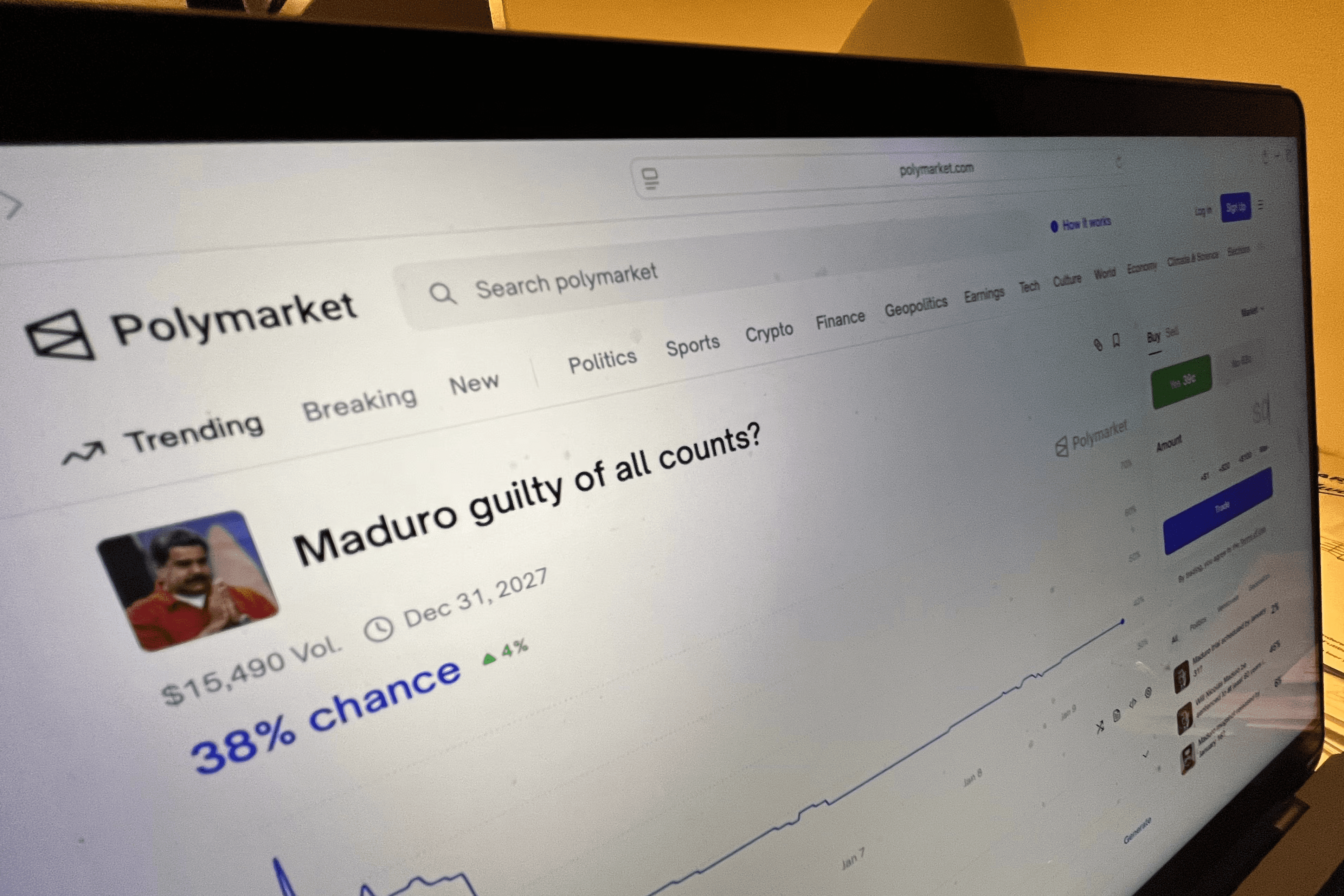
The answer is not that beginners pick the wrong outcomes. It is that they execute those ideas incorrectly. In a market shaped by thousands of participants reacting in real time, the mistakes that feel minor at entry become expensive at exit.
Treating Markets Like Binary Bets Instead of Tradable Positions
Beginners focus entirely on being right about the outcome. They buy "Yes" simply because they believe it will happen, without asking whether the current price already reflects that belief. That leads directly to the second mistake: buying late. By the time a narrative feels obvious, it is usually already priced in. A position at 0.75 or 0.80 leaves very little upside and significant downside if sentiment shifts even slightly. The third issue is ignoring liquidity and spread. Not all markets are equally tradable. In thinner markets, the gap between buy and sell prices can be wide, meaning you lose value the moment you enter and again when you exit. As prediction market volumes have grown, FalconX notes that liquidity has concentrated in major markets, leaving smaller ones more prone to slippage and pricing inefficiencies. Beginners often overlook this and pay for it in execution.
Why Most Profitable Trades Happen Before Resolution
The final mistake is not exiting when the market moves in their favor. Many users think they need to hold until the resolution to "win." In reality, most profitable trades come from capturing price movement before the outcome is decided. Failing to take profit turns winning positions into losses as volatility continues. Most platforms force you to monitor multiple feeds, manage positions across different interfaces, and execute trades while your edge narrows. Platforms like Bullpen eliminate that friction by letting you trade tokens, perpetuals, and prediction markets from a single unified interface, with same-day ACH funding and no dependence on CEXes. When execution windows compress to minutes, removing those steps is not convenient. It is the difference between capturing a move and watching it pass you by.
Execution Asynchrony and Outcome Misalignment
Put together, these mistakes create a consistent pattern. A user identifies the right outcome, enters too late at a poor price, ignores trading conditions, and holds without a plan. When the market moves against them, they exit under pressure. The outcome feels confusing. They were right, but they still lost money. That is not a flaw in the platform. It is a mismatch between how beginners think Polymarket works and how it actually behaves. But knowing what not to do only gets you halfway there.
Related Reading
How Does Polymarket Work
Polymarket Prediction Market: How It Works
Polymarket Fee Structure
Polymarket Prediction Market Accuracy
When Will Polymarket Be Legal In The US
How Does Polymarket Resolve Markets
How to Bet on Polymarket (Step-by-Step)
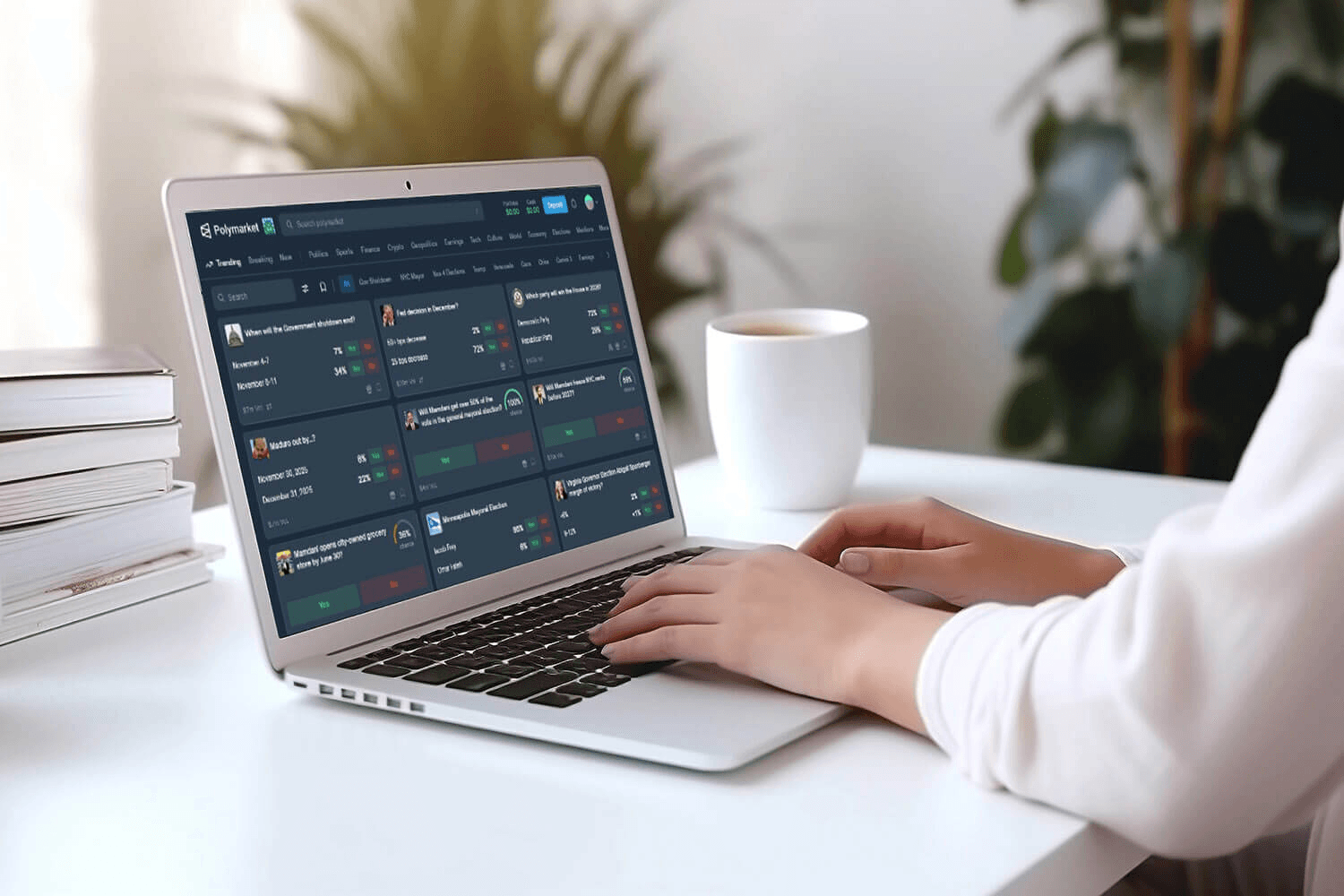
Start by selecting a market with a tight bid-ask spread and consistent volume. Low liquidity means you pay more to enter and receive less when you exit, even if your thesis is correct. The spread eats into profit before the market even moves. Look for markets where large positions trade without significantly shifting the price. That tells you other participants are active, information is flowing, and execution will not cost you an extra five or ten cents per share just to get in.
Read the Price as Probability, Not Confidence
Every price represents implied probability. A market at 0.55 means the crowd currently assigns a 55 percent chance to "Yes." Your edge is not whether you believe the outcome will happen. Your edge is whether you believe the current price undervalues or overvalues that probability. If you think the true chance is 70 percent and the market sits at 0.55, that gap is where profit lives. If the market is already at 0.75 and you still believe 70 percent, you have no edge. You are paying for a consensus that already exists.
Enter When the Price Offers Asymmetry, Not When Conviction Peaks
Conviction without favorable pricing is expensive. Buying at 0.70 because you feel certain caps your upside at 30 cents and exposes you to 70 cents of downside. Buying at 0.40 flips that ratio. You gain more room to profit from volatility and less exposure if sentiment reverses. Wait for dips. Wait for overreactions. The market will give you better entries if you are patient enough to let noise create opportunity instead of chasing moves that have already happened. Platforms like Bullpen compress the gap between spotting an edge and acting on it. Most traders monitor Polymarket separately from their token positions and perpetuals, forcing them to move funds across platforms when opportunities appear. By the time execution happens, the price has shifted. Bullpen lets you trade prediction markets, tokens, and perps from a single interface, with same-day ACH funding and no CEX dependency. When windows narrow to minutes, removing those steps is not convenient. It is a structural advantage.
Define Your Exit Before You Enter
Decide upfront whether you are holding to the resolution or trading out early. Without that plan, decisions become reactive. You watch the price climb to 0.68, hesitate, then watch it fall back to 0.52. You were up, but you did not take it. Now you are underwater and unsure whether to cut or hold. That confusion disappears when you set the rule in advance. If the market hits 0.65, you sell. If it drops below 0.35, you exit. The plan removes emotion from execution. Most profitable trades happen before resolution. The market prices in new information constantly. If you buy at 0.42 and the price moves to 0.64 after a poll release, you can lock in that gain without waiting weeks for the final outcome. Traders who think they must hold until the end often give back profits as volatility continues. The market does not reward patience. It rewards timing. But execution speed only matters if the infrastructure supports it.
The Real Bottleneck: Fragmented Crypto and Execution Friction

The strategy is rarely the problem anymore. Most users grasp the basics:
Enter at favorable odds
Manage exposure
Exit when the market moves
The breakdown happens in the infrastructure required to execute that strategy. To place a single Polymarket trade, you often move through a sequence of disconnected steps.
Fund a wallet.
Bridge assets across networks.
Connect to the platform.
Manage positions separately from the rest of your portfolio.
Each step introduces delay, and in a market where prices adjust to new information within minutes, delay is expensive.
Why Fragmentation Costs More Than Time
That friction compounds when your positions live in different places.
Your funds sit in one wallet.
Your trades execute on another platform.
Your tracking happens somewhere else entirely.
There is no unified view of exposure or performance, which makes real-time position management nearly impossible during volatile periods. When a poll drops or breaking news hits, you need to see your full picture instantly. Instead, you switch between tabs, reconcile balances, and calculate risk manually while the price you wanted slips away.
Information Asymmetry and Signal Fragmentation
The problem deepens when you lack visibility into what experienced participants are doing. You can see current prices, but not who is consistently profitable, what positions they hold, or how they are managing trades. That leaves newer participants relying on public narratives that are already priced in or reacting to sentiment shifts after the move has happened. The information asymmetry is not about access to news. It is about access to actionable patterns and proven decision-making in real time.
When Execution Windows Compress to Seconds
Prices on Polymarket move quickly, especially around major events. If it takes ten or fifteen minutes to move funds or switch between platforms, the entry you identified is gone. What looked like a strong position at 0.42 is now 0.58, and your edge has evaporated. Users describe this gap between seeing an opportunity and being able to act on it as one of the most frustrating aspects of prediction market trading. The idea was sound. The timing was right. But the infrastructure could not keep up. Platforms like Bullpen collapse that friction by letting you trade tokens, perpetuals, and prediction markets from a single interface with same-day ACH funding and no CEX dependency. When execution windows compress to seconds, removing the need to move funds across platforms or manage multiple wallets is not convenient. It is a competitive infrastructure. The difference between profit and loss often comes down to whether you can act when the signal appears, not five minutes after.
The Hidden Cost of Scattered Tools
Even sound strategies fail when execution is fragmented. Entries happen too late because funding is slow. Positions are mismanaged because tracking is scattered. Opportunities are missed because there is no visibility into what informed traders are doing. At that point, the issue is no longer knowledge. It is infrastructure. And in a market that rewards speed and precision, better execution is often the only edge that matters. But infrastructure alone does not solve the problem if you are still trading blind.
Related Reading
How To Fund a Polymarket Account
How To Make Money On Polymarket
How To Invest In Polymarket
How To Copy Trade On Polymarket
Polymarket Prediction Market Features
Polymarket Analytics Tools
Polymarket Trading Strategies
How To Create A Market On Polymarket
How To Use Polymarket In The US
How Bullpen Helps You Trade Polymarket More Effectively
At this point, the pattern is clear. Most people do not lose on Polymarket because they cannot predict outcomes. They lose because execution breaks down, funding takes too long, tools are fragmented, and there is no clear signal on what experienced traders are actually doing. Bullpen is built to remove those exact bottlenecks. Instead of juggling wallets, bridges, exchanges, and separate platforms, Bullpen brings everything into one app so you can focus on the trade itself, not the setup around it. With Bullpen, you can:
Access Polymarket alongside Bitcoin, Solana memes, and Hyperliquid perps in one place
Buy crypto instantly using Apple Pay or your bank account, removing funding delays
Follow top traders on X with verified PNLs, so you can see who is actually profitable
Get real-time notifications when high-performing traders open positions
Track performance through a live leaderboard, instead of guessing who to trust
How Does This Solve the Real Problem
Earlier, the biggest issue was not a lack of strategy. It was execution friction. Bullpen directly addresses that. Fragmented tools become one streamlined environment. No more switching between wallets, bridges, and platforms just to place a trade. Guesswork becomes signal-driven decisions. You can see what proven traders are doing, instead of relying on delayed narratives. Slow execution becomes faster entries and exits. Funding and trading happen in the same place, so you do not miss price movements. For example, instead of seeing a Polymarket opportunity and missing it while moving funds across wallets, a user on Bullpen can instantly fund their account using Apple Pay or a bank transfer, see a top trader with verified performance entering a position, and enter at a similar price point before the market shifts. That difference in speed and visibility is what turns good ideas into well-executed trades.
Why Social Transparency Changes Behavior
The leaderboard is not decoration. It is accountability. When you can see which traders consistently profit and which ones do not, you stop following noise. You stop taking advice from anonymous accounts with no track record. You start watching people whose results are verifiable, whose entries and exits are public, whose risk management is visible in real time. According to Forbes, Polymarket processed over $3.7 billion in trading volume during the 2024 election cycle. That scale means the platform now attracts serious capital and informed participants. If you are competing in that environment without visibility into who moves markets and why, you are trading blind. Bullpen removes that opacity by surfacing performance data that most platforms hide or scatter across disconnected tools.
What Happens When Infrastructure Stops Being the Bottleneck
Speed matters, but only if you know what to do with it. Bullpen compresses the time between signal and execution, but it also gives you the context to act with confidence. You see a trader with a strong track record open a position. You receive a notification. You check their reasoning, review the market, and decide whether to follow or fade. All of that happens in seconds, not minutes, and without leaving the app. That is the shift. Prediction markets reward timing and information. If your tools slow you down or leave you guessing, you lose before the outcome even resolves. But getting the infrastructure right is only part of the equation if you still need to fund your account.
Buy Crypto Today With Bullpen
If most Polymarket losses stem from poor execution, not bad predictions, the advantage lies in removing friction and acting faster. Bullpen collapses that gap by letting you fund your account with same-day ACH or Apple Pay, then trade prediction markets, tokens, and perpetuals through a single interface. No wallet juggling. No bridging delays. No missed entries because your funds were stuck on a CEX when the price moved. Deposit on Bullpen to earn a 500-point bonus. Fund $1,000 or more, and you get a free introductory call to set up your first Polymarket trade with a clear, execution-focused plan. That means walking through market selection, entry timing, position sizing, and exit strategy before you risk capital on a platform that punishes hesitation. The call removes guesswork and gives you a framework that works whether you are trading election outcomes, economic indicators, or cultural events.
Unified Execution and Strategic Consolidation
Most platforms treat prediction markets as a separate product requiring separate infrastructure. Bullpen treats them as one component of a broader onchain strategy, which means your Polymarket positions sit alongside your token holdings and perp trades in a single portfolio view. When volatility hits, you see your full exposure instantly. When opportunities appear, you act without switching apps or moving funds. That structural advantage matters more as prediction market volumes continue to scale and execution windows shrink. The difference between profit and loss in prediction markets is rarely about being smarter. It is about being faster, better positioned, and equipped with tools that do not slow you down when timing matters most. Bullpen gives you that infrastructure, the bonus gives you a reason to start, and the introductory call gives you a plan that actually works when the market opens.
Last Updated:
April 6, 2026