
Polymarket prediction market: how it works, how prices reflect odds, and where traders may find an edge. See the guide.
Ever wondered what separates a lucky guess from an informed prediction? Prediction markets like Polymarket turn opinions into tradable assets, where real money backs forecasts about everything from election outcomes to sports events and crypto prices. Understanding how to bet on Polymarket opens up a world where market dynamics reveal collective wisdom, and knowing the mechanics, from binary outcome markets to liquidity pools and share pricing, gives you the foundation to participate intelligently in this growing ecosystem.
Getting started requires more than just understanding market mechanics and trading strategies. Before you can place your first trade or analyze probability curves, you need cryptocurrency to fund your account. Bullpen's solution to buy crypto makes this entry point straightforward, letting you convert traditional currency into USDC tokens that power Polymarket transactions without getting tangled in complicated exchange processes or wallet setups.
Summary
Around 70 percent of Polymarket traders lose money, according to Yahoo Finance, while a small minority capture most profits. The difference is not access to information but how traders interpret the market. Most users treat Polymarket as a prediction tool and buy based on what they think will happen, holding until resolution.
Prediction markets become accurate over time as information accumulates, but remain frequently mispriced at any single moment. A 2008 study in the International Journal of Forecasting found prediction markets were closer to final election outcomes than polls 74 percent of the time over the long run, yet short-term reactions often overshoot before settling.
Informed traders have netted $143 million in profit since 2024, according to Business Insider, largely by reacting early to information rather than holding positions to resolution. Timing matters more than direction. The lag between when something becomes knowable and when it is fully reflected in price is where profitable traders position themselves, acting before the market completes its correction.
Liquidity determines how smoothly prices move and how vulnerable markets are to distortion. Research on prediction market manipulation shows that markets with higher trading volume and more participants remain stable, whereas lower-volume markets experience sharp swings driven by individual trades.
Price movements alone cannot reveal who is driving a move or how strong their conviction is. Experienced traders track positioning and sentiment to understand whether shifts reflect genuine information or temporary reactions. Large positions building quietly over hours signal different conditions than sudden spikes from reactive buying, and distinguishing between these patterns separates profit from prediction.
Bullpen's buy crypto option addresses the entry barrier by converting traditional currency into USDC tokens that power Polymarket transactions, allowing traders to fund accounts and execute across prediction markets, tokens, and perpetuals from a single unified interface, rather than managing fragmented exchange processes.
Table of Contents
Most Users Misunderstand How Polymarket Works
Most users approach Polymarket as if they are simply betting on outcomes. They see a yes-or-no question with a percentage beside it and assume they are making a prediction about what will happen. That is not what is actually happening. Polymarket is a market, not a prediction tool. Every "Yes" or "No" share is a price representing a probability. If a contract is trading at 0.40, that reflects a 40 percent implied likelihood at that moment. But that number is not fixed. It moves constantly as traders buy and sell based on new information, changing sentiment, and shifting positions.
The Divergence Between Market Accuracy and Trader Profitability
This is where most users get it wrong. They treat the price as the answer when in reality it is just a snapshot of current positioning. The consequences of this misunderstanding are clear in the outcomes. According to Yahoo Finance, around 70% of Polymarket traders lose money, while a small minority captures most of the profits. At the same time, research on prediction markets shows they can be highly accurate over time, often converging toward the correct outcome as more information enters the market.
Both of these things can be true at once. The market can become accurate, and most participants can still lose. The difference is not access to information. It is how the market is interpreted. Most users behave as if they are predicting outcomes. They buy based on what they think will happen and hold until resolution. But price moves long before outcomes are known. Profit is made in those movements, not just in being right at the end.
Shifting From Outcome Prediction to Probability Trading
When users ignore this, they fall into predictable patterns. They chase price after it has already moved. They treat probabilities as fixed instead of dynamic. They enter trades too late because they are reacting to what the market has already priced in. The reason this misunderstanding persists is the way Polymarket is designed. The interface simplifies everything into clean percentages and binary choices. It feels like a prediction tool, even though it operates like a financial market underneath.
Once you see that distinction, the perspective shifts. You are not trying to guess the final outcome. You are trading how probabilities change over time. Most users try to be right. Profitable traders focus on pricing, positioning, and timing. But understanding this shift only matters if you know what you are actually buying when you place a trade.
Related Reading
What a Polymarket Trade Actually Represents

A Polymarket trade is not a bet on whether something will happen. It is a position on how the market is pricing that outcome right now, and how that price might change. When you buy "Yes," you are buying a probability estimate, not a guaranteed result.
The Price is the Probability
Prices on Polymarket range from 0 to 1. According to WixenCo, if "Yes" trades at $0.63, the crowd currently assigns a 63% probability to "Yes." But that number is not static. It moves constantly as traders react to new information, shift positions, and respond to each other. The price you see is a snapshot of collective belief at that moment, not a fixed truth. This is the part most users miss. They think profit comes from being right at the end. In reality, profit comes from how the price moves after you enter. If you buy "Yes" at 0.40 and later sell it at 0.65, you have made a profit, even if the event has not yet resolved. You captured the change in probability, not just the final outcome.
You are Trading Probability Movements
The key shift is understanding what you are actually trading. You are not trading events. You are trading how probabilities change over time. This is why Polymarket behaves more like a trading market than a betting platform. You are not locked into waiting for a resolution. You can enter and exit positions as prices move. That means your edge comes from identifying when the market is mispriced and acting before it corrects.
It also means being "right" about the final outcome is not always enough. If you enter at the wrong price, you can still lose. If you enter at the right price, you can profit even if you don't hold to the end. Traders who lose money often treat positions like predictions. They buy based on what they believe will happen and hold until resolution. But price moves long before outcomes are known. Profit is made in those movements.
Unifying Infrastructure for High-Velocity Execution
Platforms like Bullpen eliminate the friction of trading across fragmented markets by unifying prediction markets, tokens, and perpetuals into a single interface. Instead of context switching between platforms to track probability movements, traders can execute faster and monitor positions with the same execution infrastructure that powers their other onchain trades. This matters when timing and speed determine whether you capture a probability shift before the market corrects. But none of this matters if you do not understand where those prices come from in the first place.
How Prices are Set on Polymarket
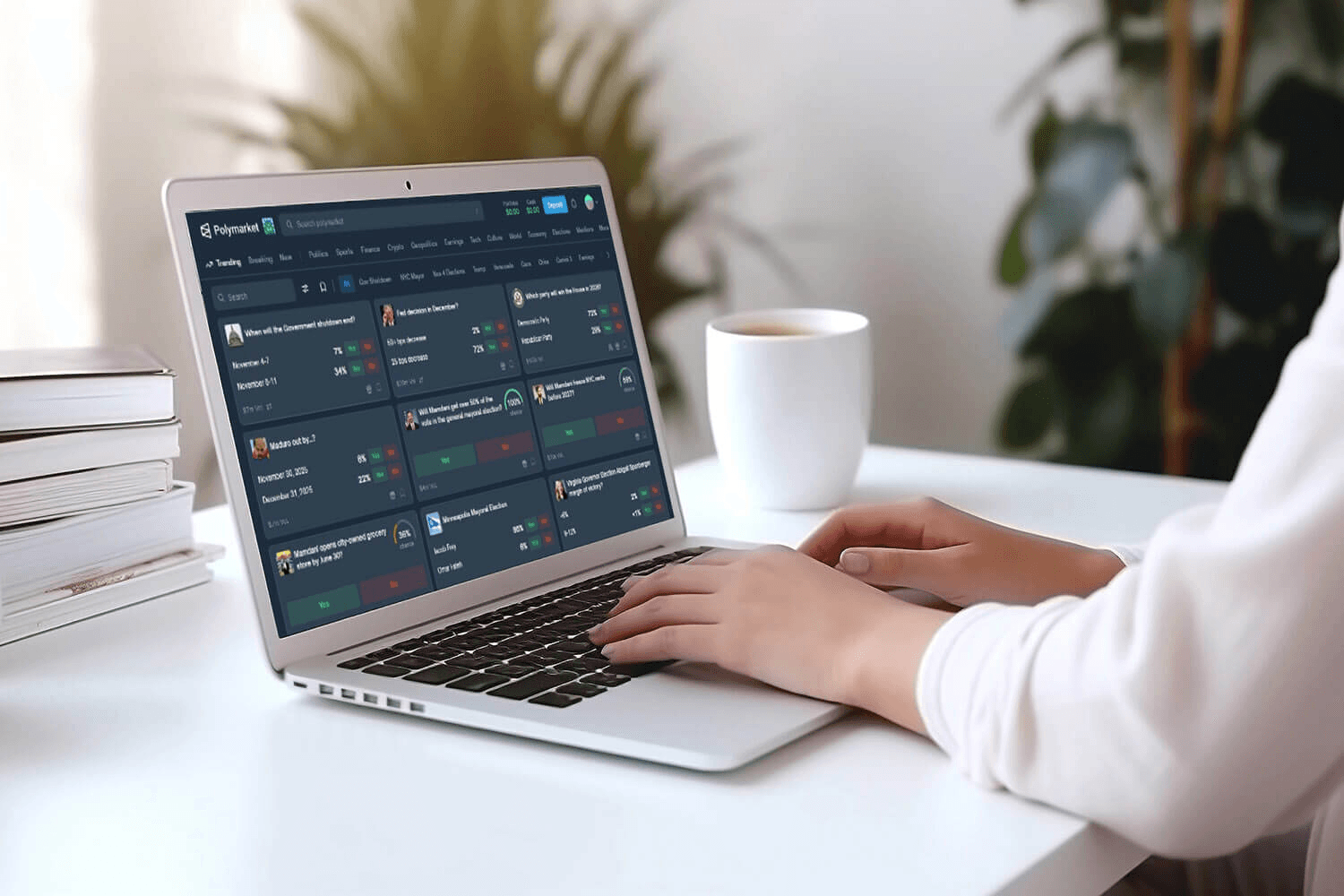
Prices emerge from the collision of traders with conflicting beliefs. No central authority calculates a fair value and posts it. Instead, every transaction between buyers and sellers shifts the balance, and the price updates to reflect where supply meets demand at that exact moment. When more traders want to buy "Yes" shares than sell them, the price climbs. When selling pressure dominates, it falls. The mechanism underneath is continuous negotiation. Each participant enters the market with their own interpretation of what should happen. Some react to breaking news. Others analyze polling data or historical patterns. A few are purely speculating on shifts in sentiment. Every trade is a statement about probability, and every statement pushes the price in one direction or another.
Information Drives Action
New information creates movement. A headline drops, a data point releases, or sentiment shifts on social platforms. Traders interpret that signal and decide whether the current price accurately reflects it. If they believe the market undervalues, "Yes," they buy. If they think it overvalues the outcome, they sell. The price adjusts as those trades execute, creating a feedback loop between information and positioning.
This process never stops. Prices are not snapshots. They are live negotiations that update as quickly as traders can react. When the event resolves, the correct outcome pays out $1 per share while the incorrect outcome pays $0. But before resolution, the price reflects collective belief rather than certainty. That belief changes constantly.
Liquidity Shapes Volatility
Liquidity determines how smoothly prices move. In markets with deep liquidity, it takes significant capital to shift the price meaningfully. Trades get absorbed without causing sharp swings, and prices tend to move incrementally as new information arrives. In thin markets, even modest trades can create dramatic price changes. A single participant with conviction can push the market several percentage points in seconds.
This is why some prediction markets feel stable while others whipsaw unpredictably. The difference is not the quality of information. It is the amount of capital ready to absorb trades at various price levels. Traders who ignore liquidity often enter positions that move against them immediately, not because their thesis was wrong, but because their trade size overwhelmed available depth.
Why Prices Move (and Misprice)
Prices shift because information arrives unevenly, liquidity varies, and traders behave emotionally under uncertainty. A headline drops, traders react before understanding the full context, and the price jumps. Then, as more complete information emerges or calmer participants enter the market, the market corrects. The gap between those two moments is where mispricing lives.
Information Creates Immediate Reactions
New information triggers movement, but not always in proportion to its actual importance. A poll released showed a candidate surging. Traders who see it first buy aggressively, pushing the price up sharply. Others follow the momentum without verifying the source or sample size. The price reflects urgency, not accuracy. According to a 2008 study published in the International Journal of Forecasting comparing prediction markets to 964 polls across U.S. elections, markets were closer to the final outcome 74 percent of the time over the long run, but that does not mean they were accurate at every single moment. Short-term reactions often overshoot before settling.
Liquidity Amplifies Distortion
Thin markets magnify every move. When fewer participants are ready to absorb trades, even modest position sizes can swing prices by several percentage points in seconds. A trader with conviction enters a $5,000 position in a low-volume market, and the price jumps from 0.42 to 0.58 instantly. That move does not reflect new information. It reflects insufficient liquidity to absorb the trade smoothly. Research on prediction market manipulation shows that markets with higher trading volume and more participants are harder to distort and more stable, while lower-volume markets remain vulnerable to sharp swings driven by individual trades.
Enhancing Precision through Unified Liquidity Visibility
Platforms like Bullpen unify prediction markets with tokens and perpetuals in one interface, letting traders monitor liquidity depth across markets without switching contexts. Instead of reacting blindly to price moves, you can see whether a shift reflects genuine information or just thin order books before entering a position. That visibility matters when a single trade can create the illusion of a trend.
Behavior Drives Herd Effects
Traders follow price momentum more often than they challenge it. When a market starts moving, others interpret the movement itself as a signal. If "Yes" climbs from 0.50 to 0.65 quickly, new participants assume someone knows something they do not. They buy, pushing the price higher still. The move extends beyond what the underlying information justifies because behavior feeds on itself. Narrative compounds this. In markets where outcomes are uncertain or hard to quantify, compelling stories often override data. A candidate's debate performance gets framed as a turning point, and the market prices in a dramatic shift even when polling data shows minimal change.
Capitalizing on Information and Pricing Gaps
The distinction that matters is this: prediction markets become accurate over time as information accumulates and positions stabilize. But at any single moment, they are frequently mispriced because reactions happen faster than understanding. That gap is not a flaw. It is the structure of how prices form when humans trade probabilities under uncertainty. But knowing prices are mispriced does not tell you how to act on it.
Related Reading
How Does Polymarket Work
Polymarket Prediction Market: How It Works
Polymarket Fee Structure
Polymarket Prediction Market Accuracy
When Will Polymarket Be Legal In The US
How Does Polymarket Resolve Markets
How Profitable Traders Actually Use Polymarket
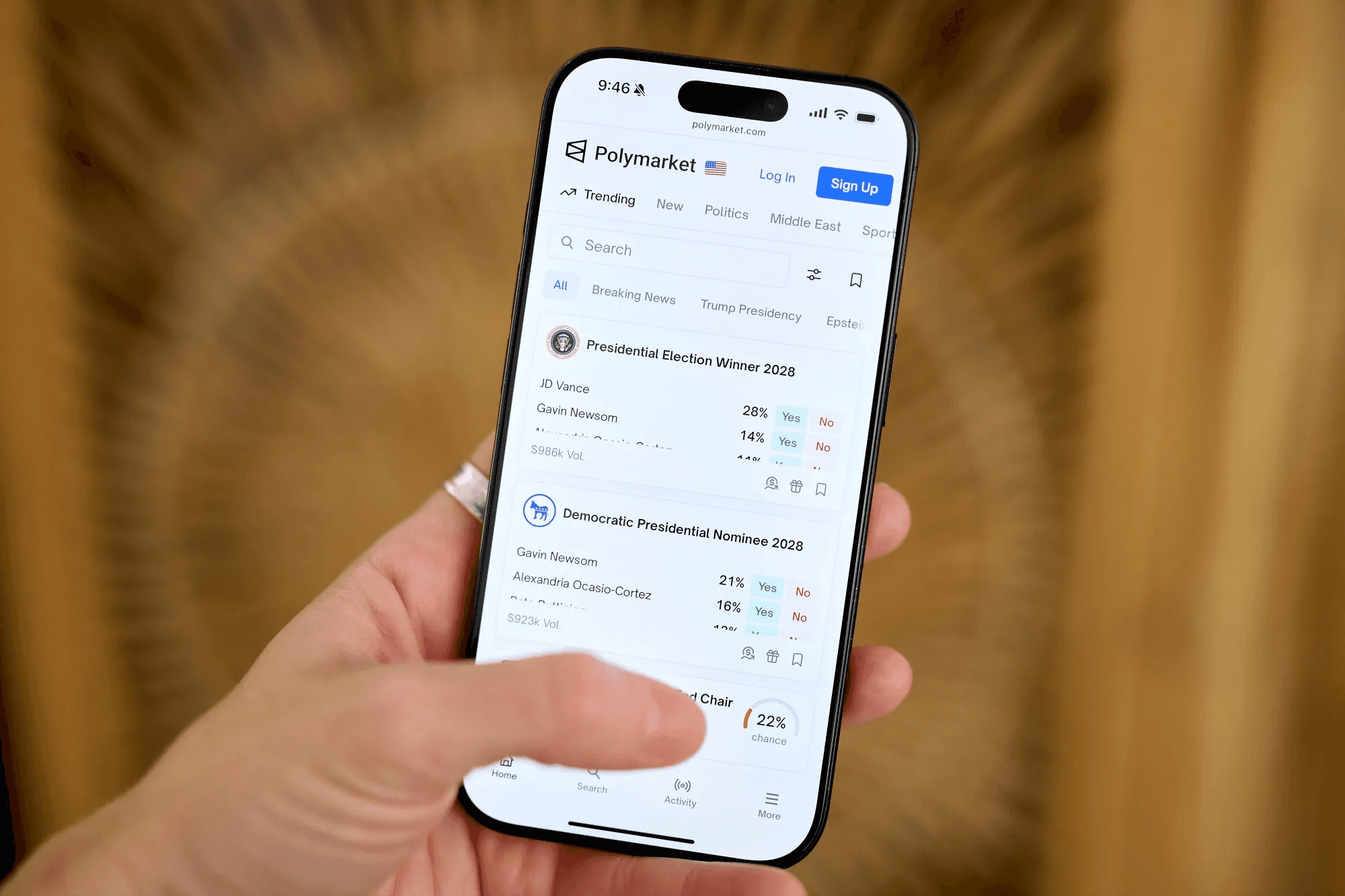
Profitable traders focus on identifying temporary price inefficiencies rather than predicting outcomes. They ask whether the current price accurately reflects available information, not whether an event will happen. This shift transforms the activity from guessing to valuation, where profit comes from spotting when the market has overreacted, underreacted, or mispriced a probability before it corrects.
Timing Matters More Than Direction
Markets do not instantly absorb new information. There is always a lag between when something becomes knowable and when it is fully reflected in price. Profitable traders enter positions during that gap, before the market has adjusted completely. They are not reacting to moves that have already happened. They are positioning ahead of the correction. According to Business Insider, informed traders have netted $143 million in profit since 2024, largely by reacting early to information rather than holding positions to resolution. This reinforces what separates profit from prediction: timing the price movement, not just getting the final outcome right.
Reading Beneath the Surface
Prices alone do not reveal who is driving a move or how strong their conviction is. Experienced traders track positioning and sentiment to understand whether a shift reflects genuine information or temporary noise.
Are large positions building quietly over hours, or is the move driven by a sudden headline that triggered reactive buying?
Is sentiment shifting gradually as new data emerges, or spiking suddenly based on speculation?
This context helps distinguish between real shifts and overreactions. When a price jumps from 0.45 to 0.62 in minutes, the question is not whether the move happened. It is whether the move was justified by the information or exaggerated by herd behavior and thin liquidity. Profitable traders step back when others chase momentum.
Volatility as Information
Most users see sharp price swings as risk and either chase them or avoid them entirely. Profitable traders see volatility as a signal. Large swings indicate disagreement, overreaction, or low liquidity. Those conditions create mispricing. Instead of reacting to volatility, they use it to identify opportunities where the market has temporarily moved too far in one direction. Platforms like Bullpen eliminate the fragmentation of monitoring prediction markets, keeping them separate from tokens and perpetuals. Instead of switching between interfaces to track probability shifts, traders can execute across all three asset types with the same execution infrastructure, capturing price inefficiencies before the market corrects. That speed matters when the gap between mispricing and correction lasts minutes, not hours. The result is a completely different engagement model. Profit does not come from simply being right at the end. It comes from interpreting the market in real time and acting before it adjusts.
How Bullpen Helps You Use Polymarket Like a Trader
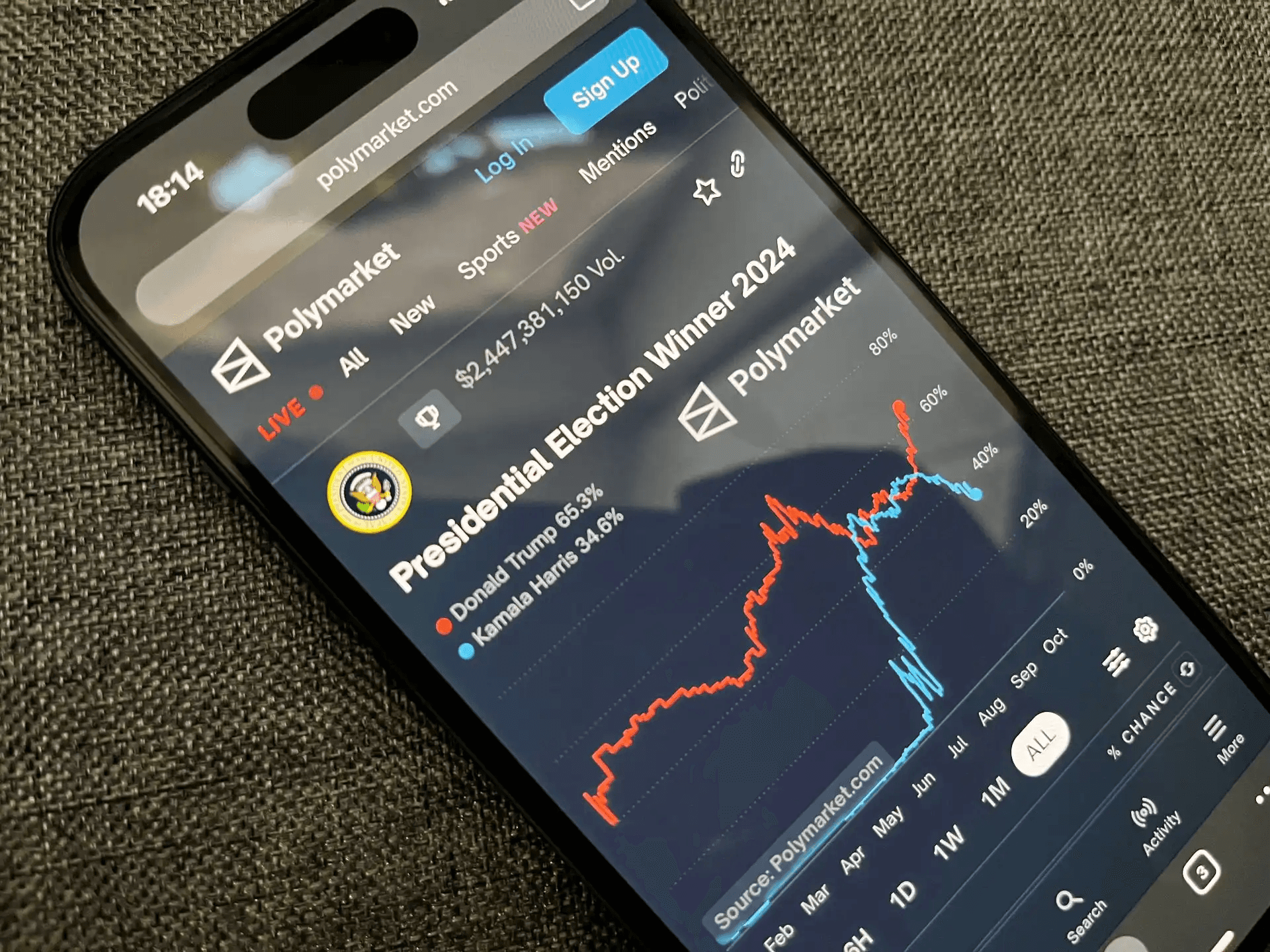
Most users watch prices move and assume the movement reflects the truth. Profitable traders focus on positioning. They want to know who is behind the move, how conviction is building, and whether the price reflects informed action or crowd reaction. That gap determines who profits and who reacts too late. Bullpen turns Polymarket from something you observe into something you can trade with structure in place. Instead of interpreting price movements in isolation, you gain visibility into the behavior driving them. You can track top traders with verified PnLs, which immediately changes how you evaluate the market. Not all participants are equal, and Bullpen makes that visible.
Tracking Traders Who Have Demonstrated Edge
You are no longer guessing whose activity matters. Verified PnL data filters out noise from random participants. When you see a trader who has consistently captured price movements before they fully resolve, you are looking at someone who understands positioning, not just outcomes. That distinction matters when you are deciding whether a price move reflects informed conviction or short-term reaction.
Real-time visibility extends this further. You can see who is performing well, how they are positioning, and how that positioning evolves around key events. This gives you context that price alone cannot provide. A price move could be driven by informed positioning or by herd behavior. Without context, those look identical. With positioning data, you can start to distinguish between them.
Understanding Intent Before the Move Completes
Each part of the system addresses a specific failure point. Tracking traders solves the problem of credibility. Position visibility helps explain why prices are moving. Leaderboards make consistent performance visible, so you can identify patterns rather than isolated trades. You stop reacting to price after it moves and start understanding how positions are building before the move is fully reflected.
Platforms like Bullpen unify prediction markets with tokens and perpetuals in a single interface, eliminating the need to switch between platforms to track probability shifts. Instead of monitoring Polymarket separately from the rest of your onchain activity, you can execute across all three asset types with the same execution infrastructure. That speed matters when the gap between mispricing and correction lasts minutes, not hours.
Gaining Insight Into Market Conviction and Positioning
If Polymarket is a market, not just a prediction tool, then the edge comes from understanding how it is being traded. Bullpen gives you that layer of insight so you can act with more clarity, not just more speed. You are not chasing price movements after they happen. You are interpreting how conviction is building before the market fully adjusts. But understanding how to trade Polymarket only matters if you have the infrastructure to act on it.
Buy Crypto Today With Bullpen
If Polymarket is a market, not just a prediction tool, the edge comes from understanding how it is being traded. Bullpen shows you how top traders are positioning before the price fully moves, so you can act earlier and with more confidence. You are not reacting to outcomes. You are interpreting conviction as it builds. Deposit today to earn a 500-point bonus, and get a free introductory call when you deposit $1,000 or more on Bullpen. Trade prediction markets, tokens, and perpetuals from one unified interface, with the same execution speed and social discovery tools that surface alpha before it trends. The infrastructure is already here. The question is whether you are ready to use it.
Related Reading
• How To Invest In Polymarket
• Polymarket Trading Strategies
• Polymarket Prediction Market Features
• How To Use Polymarket In The US
• How To Create A Market On Polymarket
• How To Fund Polymarket Account
• Polymarket Analytics Tools
• How To Make Money On Polymarket
• How To Copy Trade On Polymarket
Last Updated:
April 8, 2026