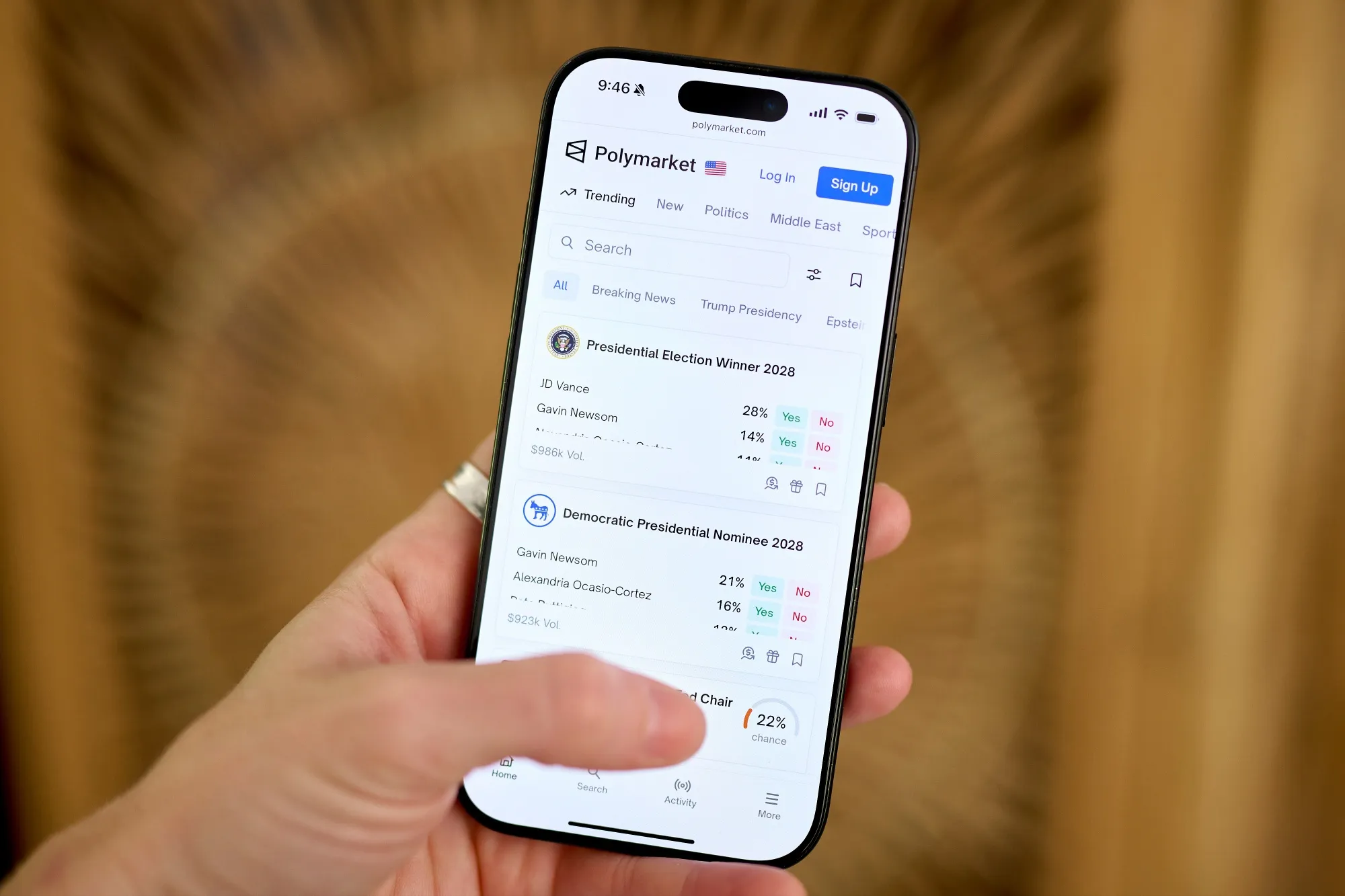
How accurate is Polymarket? Learn how often its odds match real outcomes, what Brier scores mean, and what the data shows.
You've seen Polymarket's bold predictions splash across social media, claiming to forecast elections, sports outcomes, and world events with startling precision. But before you risk your money, you need to know: are these prediction markets actually reliable, or just sophisticated guesswork dressed up in blockchain technology? This article cuts through the marketing noise to examine what the data really shows about Polymarket's track record, comparing its forecasts against actual outcomes and exploring whether understanding how to bet on Polymarket requires trusting its accuracy claims.
Getting started with prediction markets means funding your account first, which makes buying crypto essential. Bullpen makes purchasing cryptocurrency simple and fast, removing the usual barriers that stop people from participating in platforms like Polymarket. When you're ready to test these markets yourself, having a straightforward way to convert your dollars into the digital currency needed for placing bets lets you focus on evaluating prediction accuracy rather than wrestling with complicated exchange platforms.
Summary
Polymarket prices don't represent forecasts. They represent a trading equilibrium shaped by who's participating, how much capital they're deploying, and what narratives are driving their decisions at that specific moment. When you see a contract trading at 70 percent, you're not looking at a 70 percent probability of the event occurring.
Prediction markets become reliable when three conditions converge: deep liquidity, widespread attention, and continuous information flow. The 2024 U.S. presidential election cycle demonstrated this pattern, with markets reacting within minutes to debate performances and polling releases. As election day approached, probabilities tightened around leading candidates, reflecting informed consensus rather than speculation.
Low liquidity breaks prediction markets completely. In thin markets with limited trading activity, a few trades can swing prices dramatically without reflecting genuine shifts in probability. A Texas gubernatorial candidate's contract briefly showed an 18 percent chance of victory in March 2026, despite consistently polling below 8 percent.
Most users treat Polymarket as a certainty generator rather than a trading system that requires interpretation. They see 0.70 and read it as a guarantee rather than asking whether that probability is backed by $5 million in trading activity or just $8,000 from a handful of participants.
Volume, price stability over time, and trader diversity determine whether a Polymarket signal carries weight. A steady climb from 40 percent to 65 percent suggests information being gradually priced in, while a sudden spike from 40 percent to 80 percent often signals a reaction to headlines rather than confirmation.
Bullpen addresses this by integrating prediction markets with token trades and perpetual futures in one interface, so when you spot a mispriced contract or identify momentum building before it's fully priced in, you can execute immediately without the lag that erases opportunity.
Most People Think Prediction Markets are Always Right
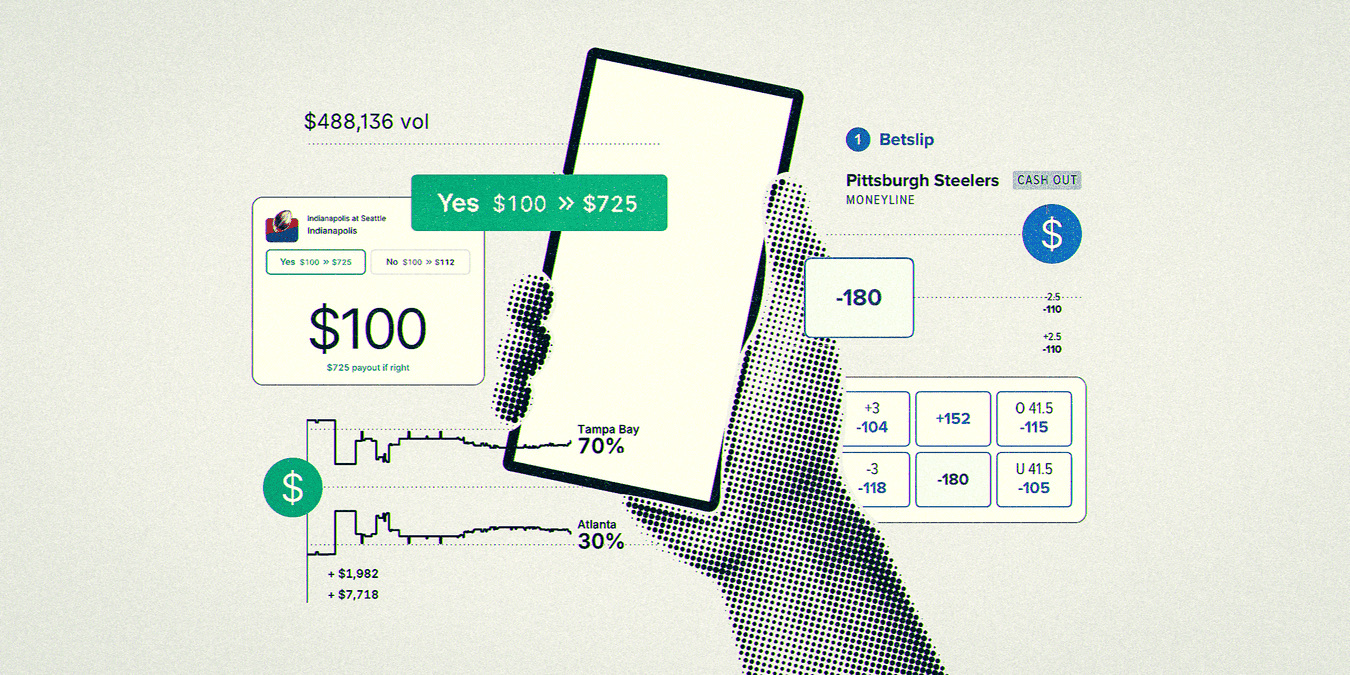
People assume Polymarket is accurate because it reflects the market. If a contract is trading at 70 percent, it feels like there's a 70 percent chance the event will happen. That belief comes from a powerful idea: markets aggregate information, and when money is involved, prices should reflect the best available estimate of reality.
Polymarket's rapid growth has made that belief even stronger. Prediction markets quadrupled resting capital to $13B in 2025, signaling massive confidence in the model. When you see that level of participation and capital, it's easy to assume the market must be accurate.
What Prices Actually Reflect
That assumption breaks down in practice. Polymarket is not a forecasting model. It's a trading system. Prices are shaped by who is trading, the amount of liquidity available, and the narratives driving attention at any given time. The data behind those prices isn't always as clean as it appears.
Research has identified structural issues that distort market signals. Some trading volume may be inflated by wash trading or incentive-driven activity, and over $143 million in profits have been linked to informed or advantaged trading behavior on the platform. This doesn't mean the market is useless. It means it's not neutral. Prices reflect positioning and incentives, not just objective probability.
Why Traders Misread the Signal
The result is a subtle but important mistake. Users treat Polymarket prices as the truth when they're actually snapshots of market sentiment in motion. A contract trading at 65 percent doesn't mean there's a 65 percent chance the event will happen. It means that's where buyers and sellers currently agree, given the information they have, the capital they're willing to deploy, and the narratives influencing their decisions.
Traders who understand prediction market signals as informational edges, not certainties, can act on insights faster than those waiting for confirmation. Platforms like Bullpen let you move between token trades, perpetual futures, and prediction markets without switching apps, so when you spot a mispriced contract or a signal worth acting on, you can execute immediately. That speed matters when market sentiment shifts in hours, not days.
How Polymarket Actually Works

Polymarket is a marketplace where users buy and sell shares in outcomes.
Each market poses a binary question:
Will candidate X win?
Will inflation exceed 3% by December?
Traders purchase yes-or-no shares based on their expectations, and prices move entirely on supply and demand.
If yes trades at $0.63, the crowd currently assigns a 63% probability to yes. But that framing masks what's actually happening. The price doesn't represent a forecast. It represents the current equilibrium where buyers and sellers agree, given their beliefs, capital, and available information. There's no central algorithm calculating probabilities. The number you see is purely a function of trading activity.
Prices Reflect Positioning, Not Certainty
When a contract trades at 0.70, most people read it as a 70% probability. That interpretation feels intuitive because markets are supposed to aggregate wisdom. But what you're actually seeing is a snapshot of collective behavior at a specific moment. Prices reflect what traders believe, how confident they feel, how much capital they're willing to risk, and how they're reacting to breaking news or narrative shifts.
That distinction matters because it changes how you interpret the data. A market trading at 65% isn't telling you the event has a 65% chance of occurring. It's telling you that's where participants are positioned right now, shaped by incentives, liquidity constraints, and the timing of their entry. The price can shift dramatically if new information arrives, if a large trader enters, or if sentiment changes faster than capital can adjust.
The Trading System Underneath
Polymarket processed over $3.7 billion in trading volume during the 2024 election cycle, underscoring the model's appeal to serious participants. But volume alone doesn't guarantee accuracy.
The system operates like any other market:
Liquidity pools form around popular events
Spreads widen on obscure questions
Price discovery happens through continuous negotiation between buyers and sellers
When the event resolves, the correct outcome pays $1 per share. The incorrect outcome pays zero.
Distinguishing Market Sentiment From Reality
Understanding this structure reveals why Polymarket isn't a prediction engine. It's a coordination mechanism that allows people to express their convictions through capital allocation. The price at any given time tells you where the market stands, not where reality will land.
Traders who grasp this difference can spot mispriced contracts or identify when sentiment has overreacted to noise, creating opportunities to act before the crowd adjusts.
Capturing Opportunities Through Unified Execution Speed
Platforms like Bullpen eliminate the friction of switching between token trades, perpetual futures, and prediction markets. When you identify a signal worth acting on, whether it's a mispriced Polymarket contract or a momentum shift in another asset class, you can execute immediately without leaving the interface. That speed matters when market positioning changes faster than most platforms can keep up with.
But knowing when the market actually gets it right requires understanding the conditions that make prediction markets work.
Related Reading
Why Is Polymarket invite-only
Where Is Polymarket Based
How To Withdraw From Polymarket
How Old Do You Have To Be To Use Polymarket
When Will Polymarket Be Legal In The Us
When Polymarket is Surprisingly Accurate
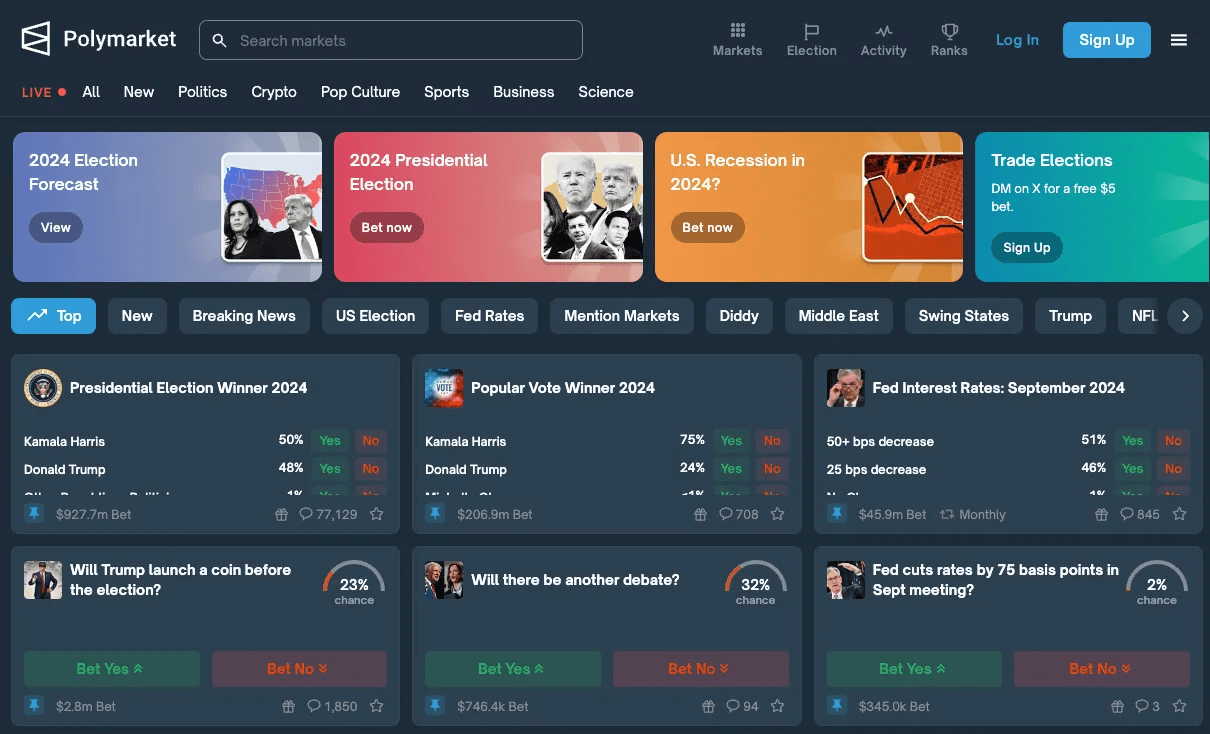
Polymarket becomes reliable when three conditions converge:
Deep liquidity
Widespread attention
Continuous information flow
When capital moves quickly, and participants actively incorporate new data, prices track reality with precision. This accuracy sharpens as events approach resolution and uncertainty narrows.
High-Attention Events with Clear Resolution
The 2024 U.S. presidential election cycle clearly demonstrated this pattern. Markets reacted within minutes to debate performances, polling releases, and major campaign announcements. As election day approached, probabilities tightened around leading candidates, reflecting informed consensus rather than speculation.
The Iowa Electronic Markets, operating since 1988, has consistently shown that prediction markets match or outperform traditional polls in the final weeks before elections. Markets update continuously. Polls capture periodic snapshots. That difference matters when information moves fast.
Real-Time Information Aggregation and Speed
Binary outcomes with defined deadlines produce similar accuracy. Regulatory approval decisions, ETF launch dates, or executive actions tied to specific timeframes create markets where credible signals trigger immediate price adjustments.
When the SEC released preliminary guidance on crypto ETF frameworks in late 2023, related Polymarket contracts moved within hours, pricing in new probability ranges before most analysis pieces were published. That speed reflects real-time aggregation of information at scale.
Macro Events With Rich Data Streams
Interest rate decisions and central bank policy moves show the same pattern. As Federal Reserve meeting dates approach, Polymarket prices converge toward the eventual outcome as participants continuously incorporate economic data, Fed communications, and market positioning.
According to Polymarket's live markets, 106 active 2025 prediction contracts cover everything from inflation targets to regulatory changes, each operating as a real-time information processor when attention and capital concentrate around them.
Execution Speed as a Competitive Edge
Accuracy improves because informed participants trade more actively as uncertainty decreases. Large capital pools narrow spreads. Breaking news gets priced immediately. Participants with an edge deploy more capital as confidence increases. The market isn't guessing. It's synthesizing data faster than traditional forecasting methods can.
When you spot these high-confidence signals before they fully price in, execution speed determines whether you capture the edge. Switching between platforms to act on prediction market insights creates lag that erases opportunity. Traders who can move from signal to position without friction gain minutes that matter when markets reprice in real time.
When Polymarket Gets it Wrong
Low liquidity breaks prediction markets. In thin markets with limited trading activity, a few trades can swing prices dramatically without reflecting genuine shifts in probability. You might watch a contract move from 35 percent to 65 percent on $2,000 in volume, creating the illusion of meaningful change when it's just noise from small capital movements.
Narrative Momentum Overrides Analysis
When topics trend on social media or dominate news cycles, markets become reactive rather than analytical. Traders pile into positions based on headlines and sentiment rather than verified information, pushing prices far beyond what underlying probabilities justify. The crowd confuses attention with accuracy, and contracts spike on narrative momentum that evaporates when the news cycle shifts.
According to Polymarket data from March 2026, a Texas gubernatorial candidate's contract briefly showed an 18% chance of victory despite consistently polling below 8%. The discrepancy wasn't insight. It was a small group of traders moving a low-liquidity market based on speculative positioning, not data. Within days, prices corrected as broader participation restored balance, but anyone acting on that initial signal would have misread the market entirely.
Large Traders Distort Consensus
Because Polymarket concentrates capital among relatively few participants compared to traditional financial markets, individual traders with significant resources can disproportionately influence prices. This doesn't require manipulation.
It simply means market prices sometimes reflect the positioning of a handful of players rather than the broad consensus. When a whale enters or exits, the price moves, and that movement looks like new information even when nothing fundamental has changed.
Navigating Ambiguity and Market Distortions
Complex or ambiguous resolution criteria introduce another failure mode. When the event definition is unclear or the outcome can be interpreted multiple ways, traders price uncertainty unevenly. Some participants bet on literal interpretation, others on likely intent, and the resulting price becomes a messy average of conflicting assumptions rather than a clean probability estimate.
Platforms like Bullpen let you monitor prediction markets alongside token trades and perpetual futures from one interface, so when you spot these distortions, you can act on the mispricing immediately or hedge exposure across asset classes without switching apps.
Volatility Masquerading as Insight
News-driven reversals create another pattern of failure. Markets swing hard on early reports, speculation, or partial information, only to correct later when clearer data emerges. That initial volatility looks like price discovery, but it's often just a reaction without substance. Traders mistake speed for accuracy, assuming rapid price movement signals informed positioning when it frequently reflects panic, excitement, or incomplete understanding.
The pattern repeats across failure modes:
Prices stop aggregating information cleanly and start reflecting who's trading
How much capital do they control
What narratives are driving their decisions
High-volume, information-rich markets behave entirely differently from thin, narrative-driven ones. Treat them the same, and you'll consistently misread what the price actually means.
Related Reading
How Does Polymarket Work
Polymarket Prediction Market: How It Works
Polymarket Fee Structure
Polymarket Prediction Market Accuracy
When Will Polymarket Be Legal In The US
How Does Polymarket Resolve Markets
The Real Problem: Most Users Don't Know How to Interpret the Data
The issue isn't whether Polymarket works. The issue is that most users treat it as a magic number generator rather than a trading system that requires interpretation. They see 0.70 and read it as certainty. They watch a price spike and assume new information has emerged. They enter positions without asking whether the signal behind that number is strong, stable, or backed by meaningful capital.
The Questions Nobody Asks
Volume determines whether a price means anything. A 70 percent probability backed by $5 million in trading activity reflects broad consensus and deep liquidity. That same probability backed by $8,000 reflects a handful of trades from a small group. The number looks identical. The signal strength is completely different.
Whose trading matters just as much. Is the market attracting diverse participants with varied perspectives, or is it dominated by a few traders with strong opinions or coordinated incentives? When capital concentrates in the hands of a small group, prices reflect their positioning, not collective wisdom. You're not reading the crowd. You're reading about a few people who moved first.
Analyzing Price Volatility vs. Signal Stability
Price movement over time reveals whether a signal is converging toward the truth or reacting to noise. Stable, gradual shifts suggest participants are incorporating new data and adjusting positions methodically. Sharp swings with every headline suggest the market is narrative-driven, not information-driven. Most users never check the chart. They see the current price and assume it's meaningful without understanding how it got there.
Why This Leads to Poor Decisions
According to Gartner, 73% of organizations admit they struggle to turn customer data into actionable insights. The same pattern plays out in prediction markets. Access to data doesn't solve the problem. Interpretation does. Users follow momentum rather than analyzing whether it reflects genuine information or just hype.
They enter trades late, after extreme probabilities have already been priced in for most of the opportunity. They mistake probability for certainty, treating a 65 percent contract as a near-guarantee while ignoring the 35 percent chance they're wrong.
Execution Agility in High-Noise Environments
The familiar approach is to check the price, read a headline, and decide. That works until you realize the price moved because three traders reacted to speculation, not because anything fundamental changed. As markets grow and capital flows increase, distinguishing between signal and noise becomes harder, not easier.
Platforms like Bullpen eliminate the friction of switching between prediction markets, token trades, and perpetual futures, so when you identify a mispriced contract or a signal worth acting on, you can execute immediately without losing time to context-switching. That speed matters when market positioning shifts faster than most traders can react.
A Smarter Way to Use Polymarket Data
Once you understand that Polymarket prices reflect positioning, not certainty, your use of the platform has to change. The mistake most users make is passive reading. They look at a number and accept it at face value. A smarter approach is active interpretation. Instead of asking "Is this accurate?" you start asking better questions.
Is There Enough Liquidity to Trust This Price?
A market with millions in volume carries more weight than one with thin participation. When Polymarket's 116 live best of 2025 prediction markets show vastly different trading volumes, that variance tells you which prices reflect a broad consensus and which ones represent a handful of trades. A contract at 72 percent backed by $8 million in volume signals collective conviction. That same probability backed by $12,000 signals noise. The number looks identical. The underlying signal strength is completely different.
Is the Market Stable or Volatile?
A steady climb from 40 percent to 65 percent suggests that information is gradually being priced in. A sudden spike from 40 percent to 80 percent often signals reaction, not confirmation. Check the chart. If the price has been bouncing wildly with every headline, you're watching narrative momentum, not information aggregation. If it's moving steadily in one direction as new data emerges, you're watching informed participants adjust positions methodically.
Are Informed or Consistent Traders Positioning in the Same Direction?
Markets become more meaningful when multiple credible participants converge on the same side. You can track whether a price shift came from a single large trade or from distributed activity across many wallets. When dozens of participants independently move in the same direction over hours or days, that convergence carries weight. When one trader moves the price 15 points in minutes, that's positioning, not consensus.
Optimizing Execution in Fragmented Information Environments
The familiar approach is to check the price, read a headline, and decide. That works until you realize the price moved because three traders reacted to speculation, not because anything fundamental changed. As capital flows into prediction markets and 106 live 2025 prediction markets compete for attention, distinguishing between signal and noise becomes harder, not easier.
Platforms like Bullpen let you monitor prediction markets alongside token trades and perpetual futures from one interface, so when you spot a mispriced contract or identify momentum building before it's fully priced in, you can execute immediately without switching apps. That speed matters when market positioning shifts in hours, not days.
How Bullpen Helps You Trade Smarter Using Polymarket Signals
The shift from reading prices to acting on them requires infrastructure most traders don't have. You need to see who's moving, where capital is flowing, and whether a signal is strong enough to justify a position. Then you need to execute before the opportunity disappears. That entire cycle, from identification to execution, determines whether you capture the edge or arrive too late.
Track Performance, Not Opinions
Most trading decisions start with the wrong inputs. Someone shares a hot take. A contract spikes. You enter without knowing whether the person behind that move has a track record worth following. Bullpen surfaces traders with verified profit-and-loss histories, so you're seeing people who've consistently made money, not just those who talk loudly. When you see a top performer open a Polymarket position, you're watching someone with skin in the game and a history of getting it right.
That context changes how you interpret signals. A 15-point price move means something different when it's driven by traders who've been profitable across multiple market cycles than when it's driven by random participants reacting to headlines. You stop guessing about whether a signal matters and start evaluating based on who's behind it.
Act When It Matters
Timing collapses opportunity. By the time you notice a Polymarket contract moving, check your wallet, switch platforms, and set up the trade, informed participants have already repositioned. Bullpen eliminates that lag by integrating prediction markets, token trades, and perpetual futures into a single interface. When you identify a mispriced contract or spot positioning that signals momentum before it's fully reflected in price, you execute immediately without context-switching.
Bullpen aggregates over 20,000 prediction markets alongside broader crypto trading activity, so you're not just watching Polymarket in isolation. You're seeing how prediction market signals correlate with token movements, perpetual funding rates, and liquidity shifts across the onchain economy. That cross-market visibility reveals patterns most traders miss because they're stuck in single-platform workflows.
Stop Juggling Platforms
The friction isn't just inconvenient. It costs you positions. Every time you switch between a prediction market interface, a wallet, a bridge, and an exchange, you're adding seconds or minutes that erase your edge. Bullpen collapses that workflow into a unified system where signals, execution, and portfolio tracking happen in the same place. You're not piecing together information from five tabs. You're watching how capital moves across markets and acting on it without losing momentum to platform friction.
That reduction in friction matters most when markets reprice fast. A regulatory announcement drops. A prediction market contract spikes. Token prices react. If you're still switching apps to figure out your next move, you've already missed the best entry. Traders using integrated systems capture those moments because they're positioned to act, not scrambling to connect the dots.
Related Reading
• How To Invest In Polymarket
• Polymarket Trading Strategies
• How To Create A Market On Polymarket
• How To Make Money On Polymarket
• How To Copy Trade On Polymarket
• Polymarket Analytics Tools
• How To Fund a Polymarket Account
• Polymarket Prediction Market Features
• How To Use Polymarket In The US
Buy Crypto Today With Bullpen
The other half is positioning yourself to act when those signals appear. Understanding volume, stability, and trader behavior only matters if you can execute the moment you spot an edge. If you're still copying wallet addresses, bridging funds, or switching between five different platforms when a contract starts moving, you've already lost the opportunity. The traders who win aren't smarter. They're faster because they eliminated the steps that slow everyone else down.
Deposit on Bullpen today and get real-time alerts when top traders take positions on Polymarket markets, so you can stop guessing what the odds mean and start acting on how winning traders are actually trading them.
Unified Execution and Real-Time Capital Signaling
When a verified performer opens a position, you see it immediately alongside your token trades and perpetual futures, all in one interface.
No switching apps.
No bridging delays.
No missed entries because you were three clicks away from execution.
The onchain economy rewards participants who treat data as a signal, not certainty, and who move before the crowd realizes what just happened. Prediction markets aren't crystal balls. They're information systems that reveal where informed capital is flowing in real time.
Building a Competitive Edge Through Execution Speed
The question isn't whether Polymarket is accurate. The question is whether you're equipped to interpret what the market is actually telling you and positioned to act before that information gets priced in everywhere else.
Most people will keep reading prices like headlines, entering late, and wondering why they're always behind. You can choose differently. Build your edge around speed, context, and the ability to see what's moving before it's obvious. That's how consistent performers separate themselves from everyone else chasing the same stale signals.
Last Updated:
April 6, 2026